Seasons & Gifts How-to
How to Get a Dog Used to Wearing a Coat, With or Without a Harness
Short answer
Introduce the coat at home in short, treat-filled steps: let your dog sniff it, drape it over their back, fasten one closure, then build up wearing time indoors before the first walk. With a harness, put the harness on first and pull its leash ring through the coat’s harness opening; without an opening, fasten the harness over the coat.
Before you start: fit, timing and a few supplies
Training goes faster when the coat itself isn’t the problem. A coat that pinches under the front legs or drags at the neck gives your dog a real reason to object, so take the three measurements in how to measure a dog for a harness, collar or coat and compare them with the maker’s size chart. Once it’s on, your dog should be able to walk, sit and lie down without it pulling, twisting or riding up.
It also helps to know your dog needs one. Small, short-coated, lean and older dogs often benefit on cold walks, while a healthy dog with a thick double coat may simply get too warm; how cold is too cold to walk a dog covers who benefits and how long winter walks should be. Still choosing the garment? Dog coat vs sweater compares the two.
Then start at home a week or two before you expect cold walks, so nothing is rushed. With a puppy, keep sessions to a minute or two and recheck the fit as they grow; if the coat is for early-morning bathroom trips, see potty training a puppy in winter.
What you need
- The coat, opened up. Undo every closure before your dog comes over, so the first thing they meet is a quiet piece of fabric.
- Small, soft treats your dog loves, cut pea-sized so you can hand out plenty without filling them up.
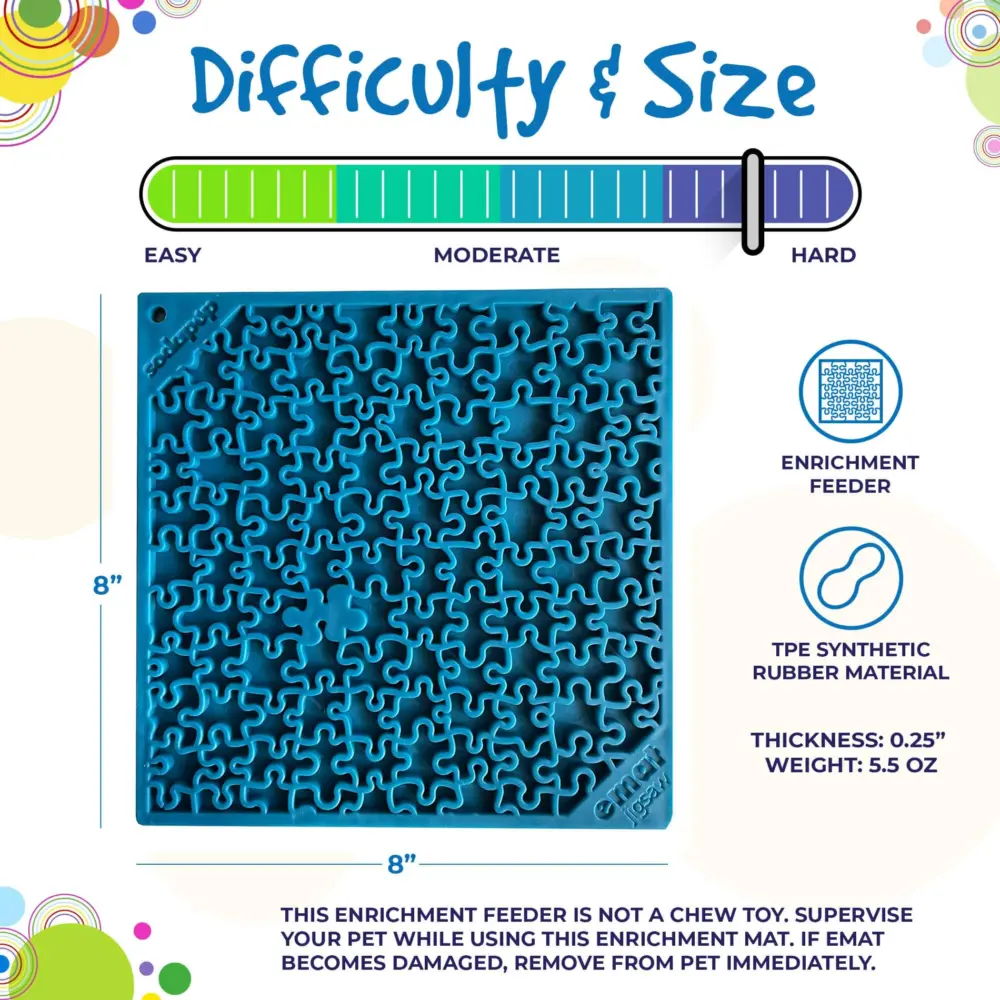
- A lick mat, if you like, spread thinly with a soft food to keep your dog busy and still while you work the closures. Stay with your dog while they use it.
- The collar or harness and leash your dog already walks in, for the later steps.
- A towel by the door for the first wet walk.
-
Doggie Couture NY
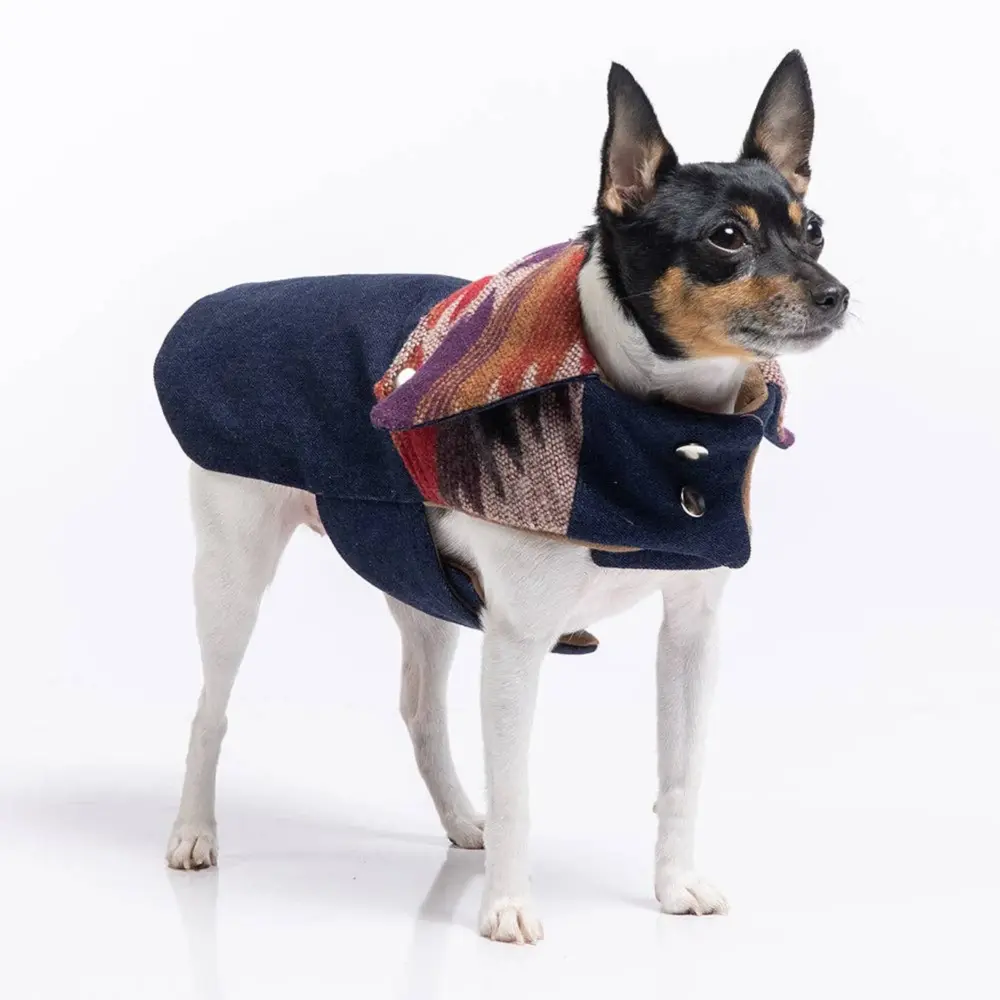
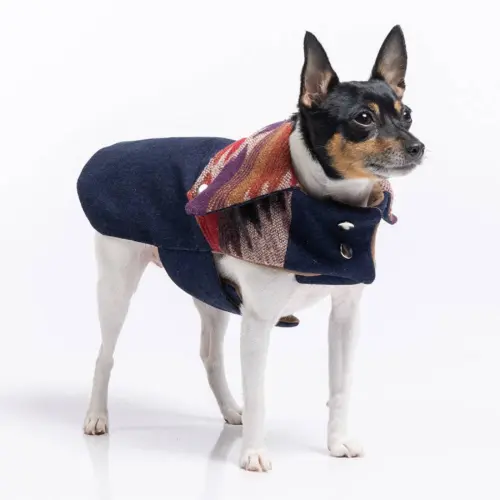
DCNY Ranch Dog Coat, Choose size & color
$72.95
Why it fits: Hook-and-loop closures at the chest and belly let you fasten one at a time; small-dog sizes XXS to Medium only, harness opening on S and M.
-
SodaPup
Jigsaw Enrichment Lick Mat for Dogs & Cats, Choose color
$25.95
Why it fits: Keeps your dog busy and still while you fasten each closure; bring it out with the coat and put it away once the coat is off. Any size.

Step by step: from first sniff to first walk
This follows the gradual, reward-based approach in the AKC’s guide to getting your dog comfortable wearing clothes: let your dog explore the garment, reward every bit of interest, and build up wearing time around the house before you head out. Keep each session to a few minutes, and repeat a step until your dog stays relaxed through it.
- Leave it on the floor. Lay the open coat where your dog likes to rest and drop a few treats on and around it. Praise any sniff or nudge, and let your dog come to it.
- Hold it, then touch. Hold the coat and treat each time your dog sniffs it. Then touch it briefly to their shoulder, treat, and take it away. Repeat until your dog leans in, expecting the treat.
- Drape it over the back. Lay the open coat across your dog’s back for two or three seconds while you feed treats, then lift it off and stop the treats. Move on once your dog keeps eating calmly.
- Fasten one closure. Close the chest closure only, treat, then open it again. Next, fasten chest and belly, feed treats for ten to twenty seconds, and take the coat off before your dog starts to fidget.
- Wear it around the house. Leave the fastened coat on for a minute, then a few, while you toss treats to chase, play a short game or practice a trick. Take it off while your dog is still relaxed.
- Add the harness and leash. Once your dog moves normally in the coat, dress them in walking order (see the harness section below), then walk a few loops of the house or yard, rewarding as you go.
- Take a short, easy walk. Pick a familiar, quiet route on a dry day and keep the treats and praise coming. Lengthen walks once your dog trots along in the coat the way they do without it.
How fast to go is up to your dog. VCA’s introduction to desensitization and counterconditioning suggests moving to the next step only after two or three successful sessions, and ending a session straight away if your dog pants, trembles or tries to escape. A dog who stops taking treats is another sign you’ve moved too fast. Some dogs accept a coat within a day or two; a wary dog may need weeks of short sessions, and that’s fine.
Tip
If the rip of hook-and-loop makes your dog flinch, work on the sound by itself first: open and close a closure across the room, treat after each one, and move a little closer over a few sessions. Peeling it open slowly also makes the noise less sudden.
When your dog freezes, scoots or rolls in a coat
A first coat often stops a dog in its tracks, because the pressure across the back and around the belly is new. It can look funny, but freezing or becoming rigid is on the AKC’s list of signs a dog is stressed, along with lip licking, yawning, whale eye and a tucked tail. Treat it as a cue to make the next step easier, not a pose to wait out.
- Freezes and won’t move. Don’t pull on the leash. Toss a treat a step or two away to get your dog moving, praise the first steps, then take the coat off and go back a step next session.
- Walks stiffly or high-steps. This usually fades with more short sessions indoors. If it doesn’t, check that nothing presses into the armpits and that the coat isn’t too long for the back.
- Scoots, rolls or rubs against furniture. Your dog is trying to shift the coat, or something bothers them. Check for a strap rubbing behind the front legs or a belly closure that squeezes or catches fur; two fingers should slide under each closure. Then shorten the sessions.
- Chews or paws at it. Calmly redirect your dog to a treat or toy, take the coat off and end sooner next time.
- Backs away when the coat comes out. Training has moved faster than your dog. Return to the floor step with better treats, and leave the coat out in sight between sessions.
- Fine indoors, frozen outside. Outdoors adds wind, cold and noise. Practice just outside the door or in the yard first, and keep the first walks very short.
- Growls, snaps or flinches when touched. Stop dressing your dog and talk to your veterinarian, since a sore neck, back or joint can make handling hurt. For fear without pain, a reward-based trainer can help.
Mistakes that make coat training harder
- Dressing for the first time at the door. A first coat, a hurried owner and a dog keen to go out add up to a struggle.
- Putting it on and waiting it out. A dog left standing frozen in a coat learns that the coat is unpleasant, not that it’s fine.
- Holding your dog still or forcing legs through. Restraint adds to the worry. If your dog pulls away, let go and make the next step smaller.
- Using it only before things your dog dislikes. If the coat comes out only before the vet or the groomer, it starts to predict them. Pair it with walks and play.
- A coat that’s too tight or too loose. The AKC’s clothing guide notes that tight clothes are uncomfortable and restrict movement, while oversized ones can tangle or trip your dog. No amount of treats makes up for a poor fit.
Coat and harness: which goes on first
When a coat has a harness opening, the harness goes on first, against the fur, and the coat goes over it. Fit the harness as you normally would, fasten the coat on top, then pull the harness’s leash ring up through the coat’s opening and clip on. The AKC’s guide to choosing a winter coat for your dog suggests looking for a built-in hole for a harness’s leash attachment to pass through, which makes it easier to wear a coat over a back-clip harness. At home, reverse the order: leash, coat, then harness.
- New to both? Teach one at a time. Get your dog relaxed in the harness first, then add the coat with the steps above, so they aren’t learning two new feelings at once.
- Coats with a harness opening. On the DCNY Ranch Dog Coat, Small and Medium have a harness opening. Check the chest fit with the harness underneath, since it adds bulk: the closures should still meet without squeezing.
- Coats with a leash clip. XXS and XS in the same coat have a built-in leash clip instead of a harness opening. Practice the whole setup indoors before the first walk, and ask us if you’re unsure how it works with your dog’s gear.
- Front-clip harnesses. The ring sits at the chest, where many coats fasten. Make sure you can reach it and that the leash doesn’t drag the coat sideways; front-clip vs back-clip harnesses explains how each attachment works.
- Harness over the coat. With a coat that has no opening, the harness can go on top, but straps adjusted over a coat are too loose without it. Refit them every time you switch, so your dog is less likely to back out.
Choosing a harness to wear under a coat? The Mr. Peanut’s PetTrek padded harness and leash set comes in XS to Large, with quick-release buckles and adjustable straps. Check its size chart in the product photos against your dog’s chest, taken around the widest part just behind the front legs.
After wet walks: drying, washing and storing
- Dry your dog first. Peel the coat off at the door and towel your dog, paying attention to the legs, belly and the fur along the coat’s edges, which a coat doesn’t keep dry.
- Dry the coat all the way through before the next wear, because a damp coat holds the chill against your dog. Follow the care label; the DCNY coat is laid flat to dry.
- Wash it regularly. The AKC’s coat guide notes that coats collect hair and dander and can become a breeding ground for bacteria, especially if put away damp. Fasten the hook-and-loop before washing so it doesn’t snag other laundry or fill with lint.
- Store it where walks start. Once it’s dry, hang it by the leash. When the coat coming off the hook means a walk is on, your dog may start to look forward to it.
Once the coat is accepted, the next problem is mechanical. Harness under or over a dog coat covers the layering order and the rubbing it causes.
When to take the coat off
- As soon as you’re indoors. In a heated home a coat can make your dog too warm, and straps can rub or catch. Our guide to keeping a dog warm at night covers what helps indoors instead.
- When your dog seems too warm: panting at rest, restless pacing or stretching out on the coolest floor.
- On milder, dry days, for a dog who only needs a coat in real cold.
- If it rubs. For the first few weeks, check the armpits, belly and neck after each wear. Red or bare patches mean a break and a fit check; ask your veterinarian about skin that doesn’t settle.
Safety note
Never leave a coat on a dog who is crated or left unattended, including overnight. The AKC’s clothing safety advice warns that clothes can snag or catch and become a choking hazard, and a dog who chews at a coat could swallow pieces of it.
Browse our dog clothes, or find more cold-weather advice in our seasonal guides.
Related guides
-
Checklist
When to Replace Dog and Cat Gear: A Monthly Wear Check
A five-minute monthly check for everything your dog or cat uses: the wear signs that mean a collar, harness, leash, toy, bowl, lick mat or scratcher insert should go, the fit checks growing and changing pets need, and what only needs a wash.
-
Buying guide
Made in USA Dog Products: Collars, Harnesses, Coats, Bowls and Wipes
Six dog items we stock carry a Made in USA claim from their maker or listing: two Lupine Pet walking pieces, a DCNY coat for small dogs, a SodaPup slow feeder and lick mat, and Mr. Peanut’s wipes. Learn what the label should mean, what it leaves out and how to check a claim yourself.
-
How-to
How to Keep a Dog Calm and Safe During Fireworks
A fireworks plan for the Fourth of July and New Year’s Eve: ID and harness checks, an early walk and dinner, a quiet den, a licking job, how to comfort a scared dog, practice for next year, cats, and when to call your veterinarian.