How to Keep a Dog Warm at Night Indoors: Bed, Blankets and Drafts
Start at floor level, where your dog sleeps and the room is coldest. Set the bed on a rug or a raised base instead of bare tile or concrete, keep it away from exterior doors and floor vents, and give your dog a rimmed bed or a loose blanket to burrow into. Dry a damp coat before lights out and be careful with anything that plugs in. For most healthy dogs in a heated home, that is how to keep a dog warm at night.
Short answer: lift the bed, block the draft and give your dog something to curl into
- Off the floor. A rug, mat or raised base under the bed on tile, concrete or a slab.
- Out of drafts. Away from exterior doors, sliding doors, windows and floor vents.
- Something to curl into. A rimmed bed and a loose blanket.
- Dry at bedtime. Towel the coat, belly and paws.
- Coat off indoors. It is for the walk, not the bed.
- Heat with care. See the precautions below.
Do dogs get cold at night? Which dogs feel it most
They can. Cold air sinks, so a dog lying on the floor sleeps in the coolest layer of the room, and many homes turn the thermostat down overnight. You have a comforter; your dog has their coat and whatever bed you give them. Some dogs run colder than others:
- Small and toy dogs, which have less body to hold heat.
- Dogs with short, thin or single coats, lean breeds such as Greyhounds and Whippets, and dogs fresh from a short clip.
- Puppies and seniors, which have a harder time regulating their body temperature.
- Dogs with a health condition. Ask your veterinarian how warm to keep them.
Keeping a small dog warm in winter mostly means a raised, snug bed indoors and a well-fitted coat for walks. Dogs with thick double coats often pick the coolest floor instead; offer a warm bed, but let them choose.
Signs your dog is cold at night
- Shivering or trembling while lying down.
- Curling into a tight ball with the nose tucked under the tail.
- Burrowing under blankets, cushions or laundry.
- Leaving the bed to press against you or another pet.
- Ears and paws that feel cold to your touch.
- Getting up, circling and resettling again and again.
Some of these are also just how dogs sleep, so look for a change from normal and several signs together. Shivering can also come from pain, fear or illness; if it doesn’t stop once your dog is warm and dry, or your dog seems weak, unusually sleepy or wobbly, call your veterinarian. Ask about stiffness or limping on cold mornings too.
How to keep a dog warm at night: off the cold floor and out of drafts
The ASPCA’s cold weather safety tips sum up the goal: a warm place to sleep, “off the floor and away from all drafts.” Check the spot after dark, once the heat has cycled down:
- Kneel where the bed goes and hold the back of your hand near the floor. Moving air means a draft.
- Look for gaps or light under exterior doors, sliding glass doors and the door to the garage.
- Find the floor registers and return-air vents. A bed on one swings between hot air and cool drafts as the heat cycles, and it blocks airflow.
- Feel the floor. Tile, stone, slab and basement floors stay cold even when the air feels fine.
- Leave a room thermometer on the floor by the bed overnight. That reading, not the thermostat on the wall, is what your dog sleeps in.
On a cold floor, put a rug, foam mat or folded blanket under the bed. A raised cot lifts your dog off the slab, but air moving underneath keeps it cool, so add a pad on top in winter. Block door gaps with a draft stopper or rolled towel, and close curtains over sliding doors at night. Choose a quiet spot by an inside wall, but don’t shut your dog in a closet or small bathroom; they need fresh air and room to move.
If the warmest spot is your bedroom and you want your dog in their own bed, see our guide to getting your dog to sleep in their own bed. The same draft check works for cats; see how to keep an indoor cat warm in winter.
Beds and blankets that hold warmth
Dogs keep warm by curling up around their own body heat. A bed helps most when it works with that habit:
- A raised rim. Something to curl against and rest a chin on keeps the body tucked in.
- A snug size. Measure your dog curled up asleep and allow a few extra inches; a much bigger bed is just more space to warm.
- A deep, soft top. Thick plush or fleece feels warmer than a thin, slick cover.
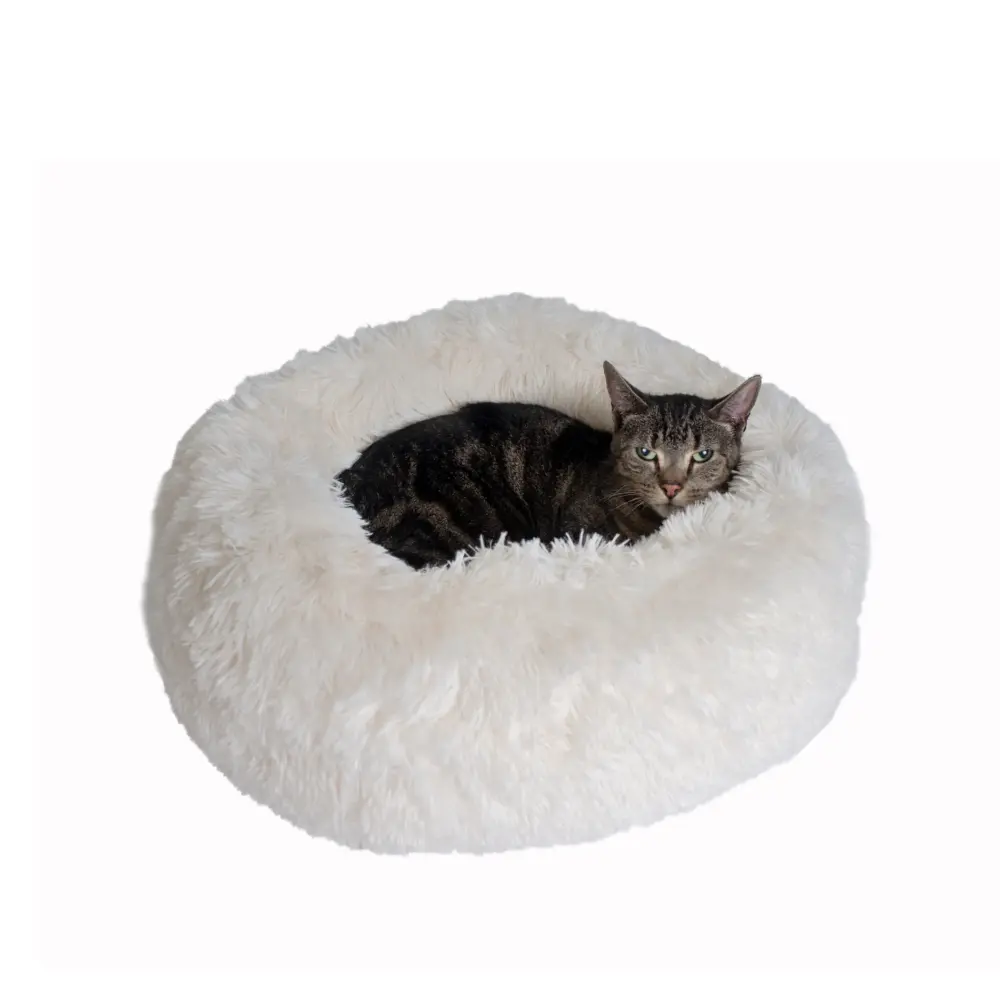
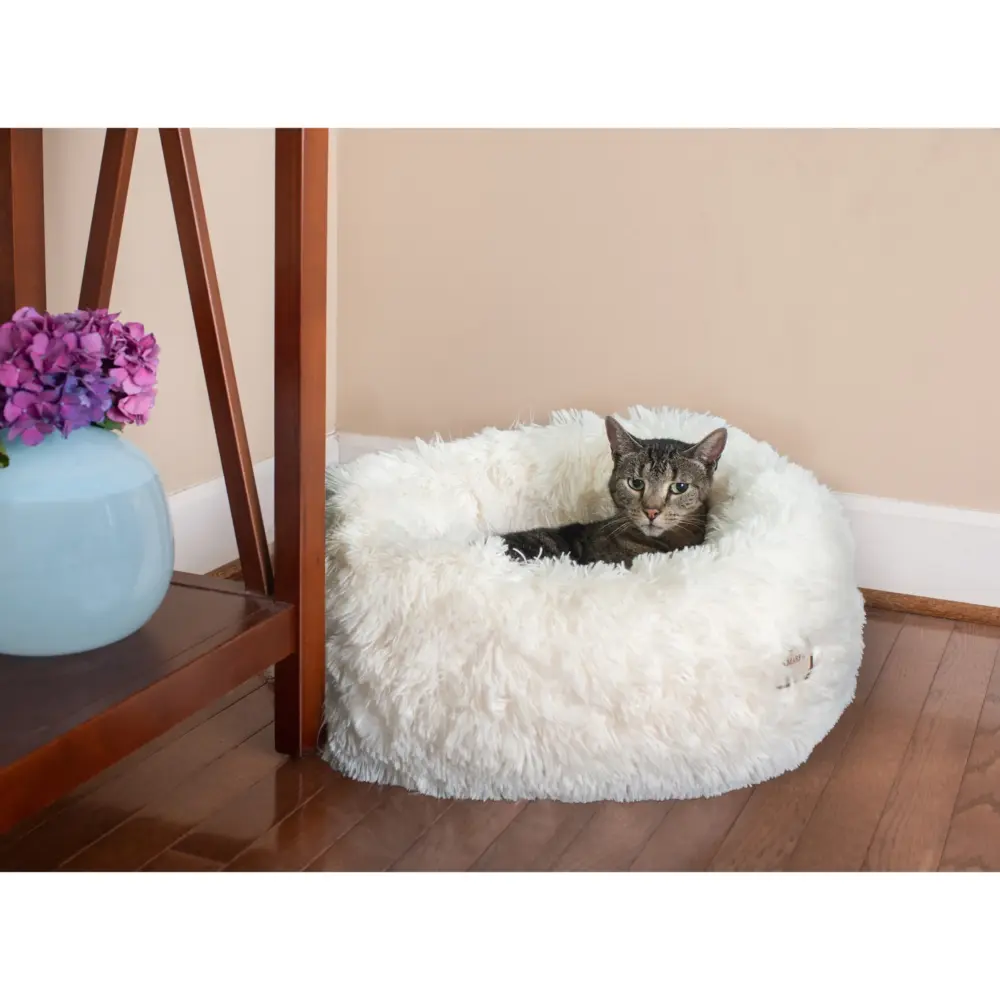
For small dogs that sleep curled up, the Armarkat Ultra-Plush Cuddler Bed fits that shape: a round bed in ultra-thick plush that holds warmth, with a raised bolster all the way round for head support and a water-resistant, skid-free base that keeps it where you put it. It comes in Small (22 × 22 × 8 in) and Medium. The Medium’s measurements aren’t listed, so if your dog is between sizes, send us their curled-up measurements before you order.
It is machine washable on a gentle cycle, though hand washing keeps the plush at its best. A damp bed is a cold bed, so dry it all the way through; see how to wash a dog bed, and how often. Browse our beds for cats and small dogs or more guides on beds and comfort.
-
Armarkat
Ultra-Plush Cuddler Bed for Cats & Small Dogs
Price range: $55.95 through $72.95

Before bed: dry your dog off, and dress for the last walk
Wet fur loses much of its insulation, so a dog who goes to bed damp gets cold faster. During cold spells, bathe less often, and early in the day so the coat is dry by bedtime. After the last trip outside:
- Towel the back and sides, then the chest and belly.
- Dry each paw and between the toes, where snow and wet grit collect; our routine for cleaning dog paws after a walk covers mud and road salt.
- If you use a hair dryer, keep it on a cool or low setting and keep it moving.
- Let your dog finish drying in a warm room before bed.
The last walk is often the coldest of the day. Take the coat off once you are inside: in a heated house it can make your dog too warm, and straps can rub or catch during sleep. To judge when it is too cold to go out at all, see how cold is too cold to walk a dog.
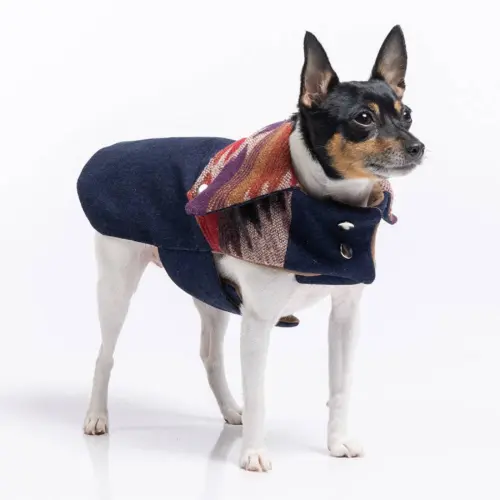
For that late trip, the DCNY Ranch Dog Coat comes in small-dog sizes XXS through Medium, with wide hook-and-loop closures at the chest and belly that make it easier to get on at the door and off again inside. For extra warmth, look at the Sherpa Lined Denim style, which has a sherpa lining; the other two are Home by Sunset and Smoked Charcoal. Machine wash it on a gentle cycle and lay it flat to dry. Check the fit with our guide on how to measure a dog for a harness, collar or coat, or see more dog clothes.
-
Doggie Couture NY
DCNY Ranch Dog Coat
$72.95
Heaters, heating pads and hot-water bottles: safety first
Most dogs in a heated home don’t need extra heat. If you add some, your dog must always be able to move away from it.
- Space heaters. Keep one well away from bedding and curtains, choose a model with tip-over and overheat shutoff, keep the cord out of reach, and switch it off when you leave the room or go to bed.
- Heating pads and heated beds. A pad can slowly get hot enough to burn a dog who sleeps deeply or is slow to get up, so older, arthritic and sick dogs are most at risk. Use only products made for pets, ideally with automatic shutoff, on the lowest setting under several layers of blanket. Cover only part of the bed, keep cords away from chewers, use it only while you are home, and never put one in a closed crate.
- Hot-water bottles. Use warm, not boiling, water, wrap the bottle in a towel and tuck it under the bedding. Skip it for dogs that chew.
Ask your veterinarian before using heat for a dog that is ill, recovering from surgery or slow to get up. Often a thicker bed and an extra blanket in a better spot do the job without it.
If the power goes out: how to keep a dog warm without electricity
AKC’s tips on keeping a dog warm without power include closing off unused rooms, giving your dog plenty of blankets and layers to curl up in, and insulating the crate with blankets over the top. Let your dog sleep close to you, put a sweater on a small or thin-coated dog while you can watch, and leave out plenty of fresh water. Never run a generator, grill or camp stove indoors or in an attached garage; carbon monoxide harms pets too, so check that your detectors work.
Bedding solves most of this, and a light layer helps some dogs. Do dogs need pajamas covers which dogs benefit and the rules for anything worn unsupervised overnight.
Cold nights FAQ
Should I cover my dog with a blanket at night?
Offer one and let your dog decide. Lay a soft blanket in or beside the bed to burrow under or push off, rather than tucking it around them, and skip loose blankets for dogs who chew fabric.
What temperature is too cold for a dog to sleep inside?
There is no single number for every dog. If you would feel chilly lying on the floor in light clothes with no blanket, a small, thin-coated, young or old dog probably does too, so warm the room or add bedding. Go by the floor-level reading and the signs above, not the thermostat.
Should I cover my dog’s crate with a blanket at night?
In winter it can help, if the crate sits in a warm, draft-free spot off a cold floor. Drape a blanket over the top and three sides, leave the front open for air, and put a bed inside. Remove the cover if your dog pulls it through the bars to chew.
Related guides
-
Buying guide
Gifts for Small Dogs: Beds, Coats, Car Seats and More That Fit
Gift ideas chosen by size, not breed: a rimmed cuddler bed, a coat in XXS to Medium, a booster seat for dogs up to 24 lb, a backpack carrier up to 25 lb, a padded XS or Small harness set and a 10-inch plush fox, plus the measurements to get before you order.
-
Buying guide
What to Get Your Dog for Christmas: Gifts for Tuggers to Nappers
Choose your dog's Christmas gift by what they already do: a stuffing-free fire hose toy for tuggers and shredders, a plush fox for gentle carriers, a lick mat or slow feeder for lickers and fast eaters, and a cuddler bed or coat for small dogs, plus safety checks, unwrapping and gifts to skip.
-
Checklist
How to Keep Pets Warm During a Power Outage: A Winter Storm Plan
A winter storm plan for dogs and cats when the heat goes off: what to have ready, how to set up one warm room, bedding and coats that work without power, carbon monoxide and candle safety, short potty trips, and the signs it’s time to take your pets somewhere with heat.