How to Get Your Dog to Sleep in Their Own Bed: Where to Put It and a Calm Bedtime Routine
To get a dog to sleep in their own bed, choose a bed that suits how they sleep, put it in a quiet, draft-free spot near you, teach a “bed” cue with treats during the day, and end every evening with the same short routine. This works for puppies and for adult dogs who have claimed your pillow. Later, you can move the bed out of your bedroom a few feet at a time.
Why your dog won’t sleep in their own bed
When a dog won’t sleep in his bed, the reason is usually practical. Dogs like to rest near their people, so a bed in an empty room loses out to the floor beside you, or to your mattress.
- Wrong place: too far from you, beside a noisy appliance, in a draft or in a walkway.
- Wrong size or shape: a sprawler hangs off a small round bed; a curler can feel exposed on a flat mat.
- Wrong temperature: warm-running dogs pick a cool floor, and cold ones go looking for your blankets.
- Old habits: your bed is soft, smells of you and keeps them close; after months there, a new place takes steady practice.
- Competition: in a multi-dog home, one dog may claim the best bed; give each their own, a few feet apart.
A change in sleep habits can also have a medical cause: if your dog suddenly avoids a bed they used to like, struggles to lie down or get up, or seems restless at night, ask your veterinarian before training.
Where to put a dog bed: quiet, near you, out of drafts
The best place to put a dog bed is somewhere your dog already chooses to rest, with a wall behind it and a view of the room.
- Bedroom: often the easiest start. Put the bed against a wall on your side, out of the path to the door. A young puppy is safer in a crate beside your bed, with the bedding inside.
- Living room or den: good for dogs that sleep well apart from you, in a corner away from the TV.
- Hallways and entryways: usually a poor choice, since people step over the bed and the front door brings doorbells and cold air.
- Laundry room, garage or basement: often too noisy, isolated or cold.
Check the spot for vents, glass doors and cold floors
- Floor vents and radiators: a floor register blasts hot or cold air whenever the system runs. Move the bed a few feet away, and keep it well clear of radiators and space heaters.
- Sliding glass doors: they can be drafty in winter and sunny in summer, and a yard view keeps a watchful dog on duty.
- Slab and tile floors: they stay cool, which can feel chilly on winter nights. A rug under the bed helps; see our guide to keeping a dog warm at night indoors.
Choosing a bed your dog wants: curlers and sprawlers
Match the bed to how your dog already sleeps.
- Curlers sleep in a tight circle, nose tucked in. A round bed with a raised rim gives them an edge to rest the chin on.
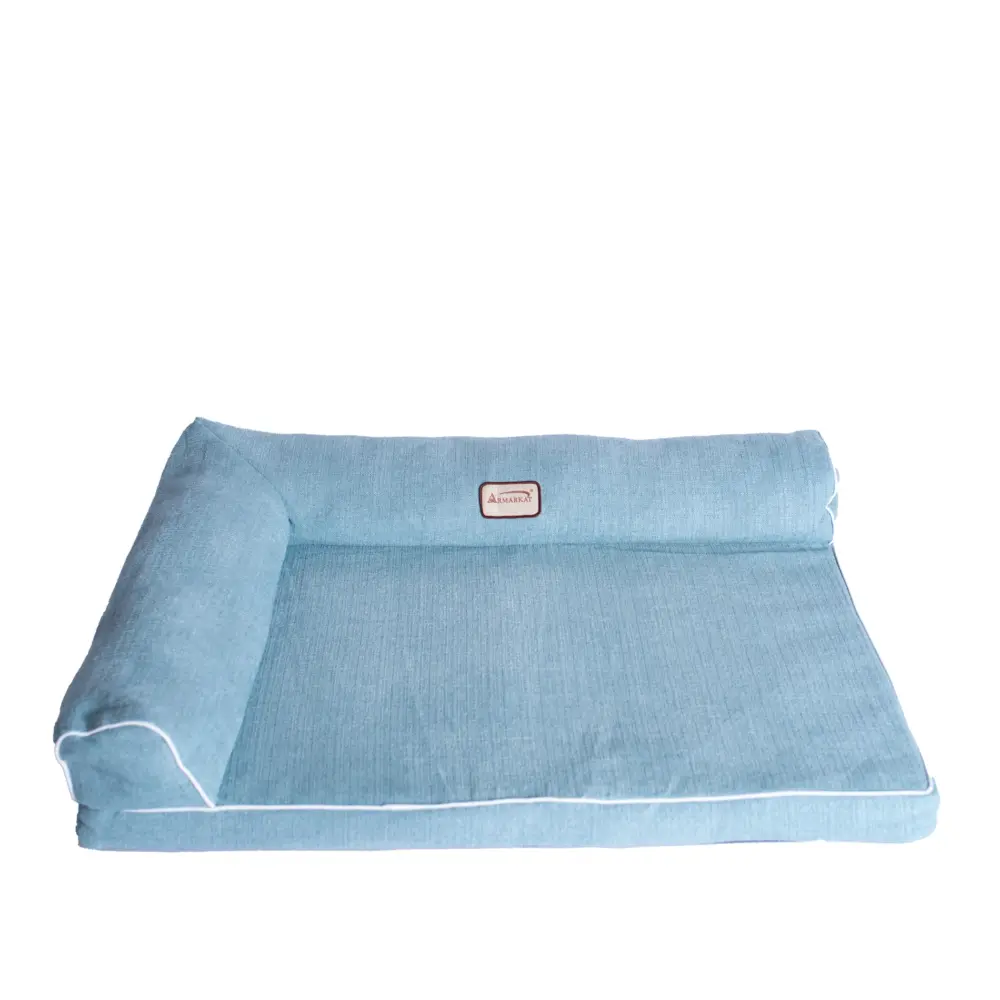
- Sprawlers stretch out on their side or back and need a flat, rectangular bed long enough for them fully stretched.
- Older dogs do best with a low edge to step over and a supportive base that is easy to get up from.
For a sprawler, measure nose to base of tail while your dog lies stretched out, and add several inches; for a curler, measure across the circle they make asleep and add a few. Many dogs avoid a bed that slides on a hard floor, so look for a non-slip base. A new bed smells of packaging, not home, so add a T-shirt you have worn or your dog’s own blanket.
Dogs that run warm may still leave a good bed for a cool floor, and that is fine; in summer, a cooling mat beside the bed gives them a cool spot of their own.
How to get a dog to sleep in their own bed: a “go to bed” cue, step by step
Teach the cue during the day, when your dog is calm, in three- to five-minute sessions with small, soft treats. Pick a cue such as “bed” and a release word such as “free” that means your dog may get up.
- Toss a treat onto the bed. When your dog steps on, say “yes,” then toss the next treat off the bed to reset. Repeat five to ten times.
- Pause. When your dog steps on without a toss, say “yes” and drop a treat on the bed.
- Wait for a down, or ask for one, and place the treat between their front paws.
- Add the cue: say “bed” just as your dog heads for it. After a few sessions, say it first.
- Build time slowly: reward after 3 seconds, then 5, 10, 20 and 30, working up to a minute or more. End every stay with your release word.
- Add distance, then distractions, one at a time. If your dog starts getting up early, go back a step.
- Once the cue works in the day, make it the last step of your evening routine.
Never send your dog to bed as a punishment or pull them there by the collar; the bed should be the best place in the house. The American Kennel Club’s guide on how to teach a dog to go to their place has more detail.
A bedtime routine for the first two weeks
Dogs settle faster when evenings follow the same order. Run this every night for two weeks, weekends included; after that, keep the order and swap most treats for praise.
- Earlier in the evening: a sniffy walk or play session, finished at least an hour before bed.
- Wind down: dim the lights and offer a chew on the bed while you sit nearby, then pick it up before lights out.
- Last potty break: take your dog out calmly just before bed.
- Cue and reward: say “bed,” reward when they lie down, and add quiet praise.
- Lights out: stay calm and quiet. If your dog gets up or jumps onto your bed, repeat the cue without fuss and reward once they settle.
If your dog growls or freezes when asked to get off your bed, don’t grab the collar: toss a treat onto the floor, and ask your veterinarian or a certified behavior professional for help.
Young puppies usually need a potty trip during the night: keep it brief, then straight back to bed. Our new puppy checklist covers the crate and first nights.
Moving the bed out of your bedroom gradually
Start with your dog’s bed right beside yours; plenty of people leave it there for good. To get it into another room, move it in stages, and move again only once your dog settles quickly where it is.
- Beside your bed, on your side, for the first week or so.
- A few feet away, toward the door, for a few nights.
- In the bedroom doorway, with the door open.
- Its final spot, with doors open at first, then closed if you prefer.
Only the location changes; keep the bed, blanket and routine the same. If your dog starts whining or wandering, go back a step for a few nights.
A dog that pants, paces, drools, howls or tries to get out when shut away from you may be anxious rather than untrained. Don’t punish it. Talk to your veterinarian or a certified behavior professional, and read the ASPCA’s overview of separation anxiety in dogs.
For small dogs and cats: a cuddler with a raised rim
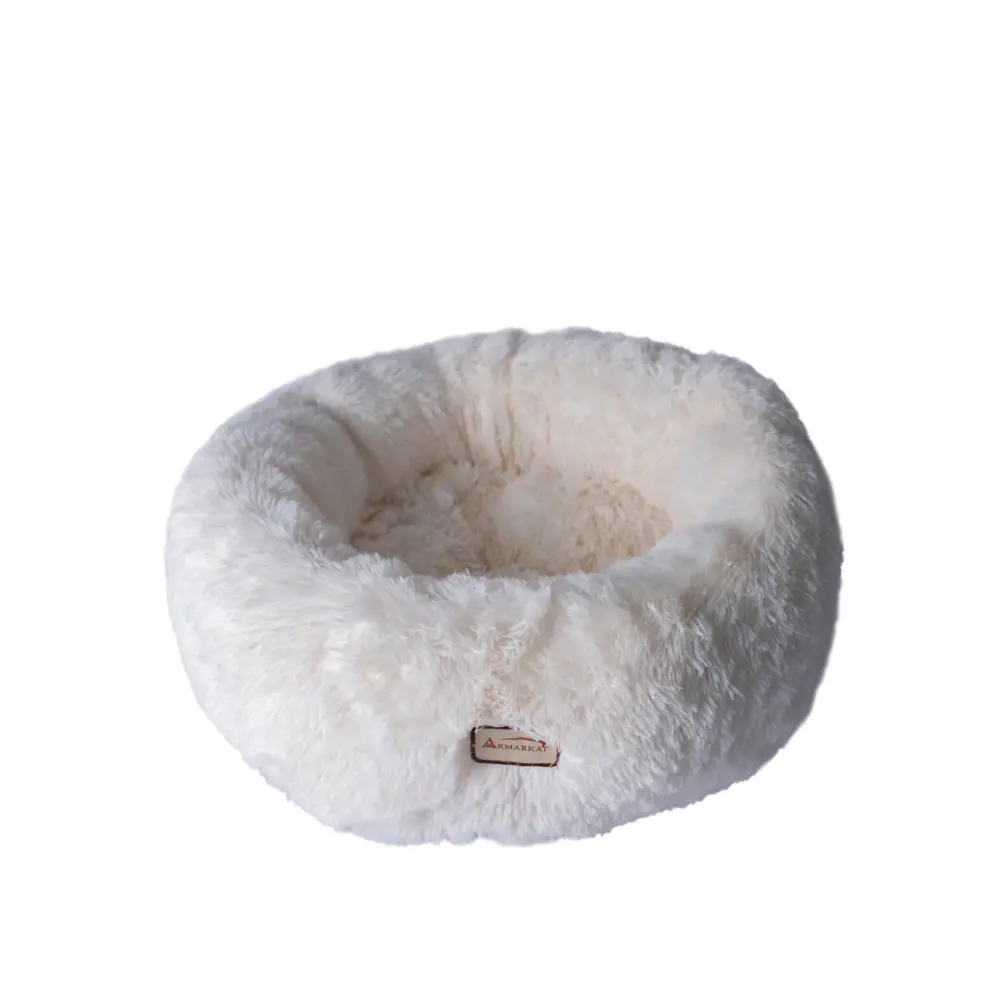
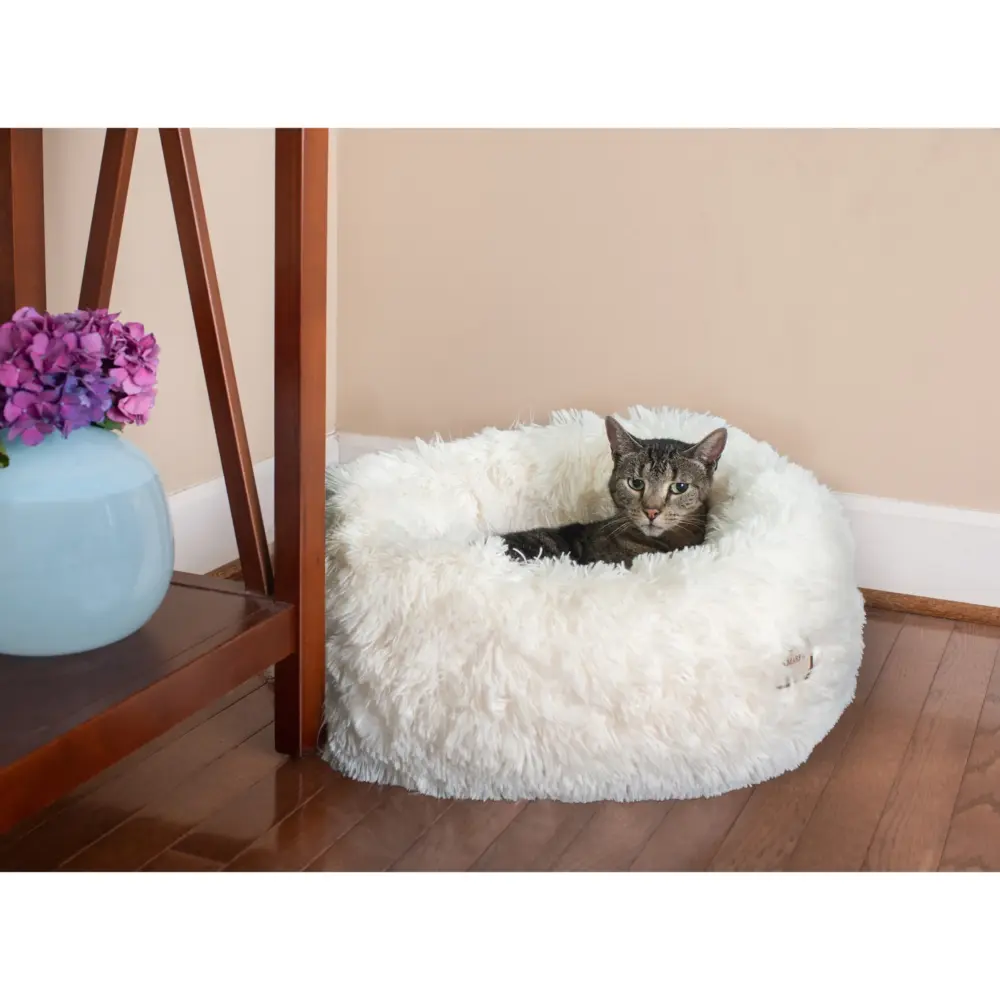
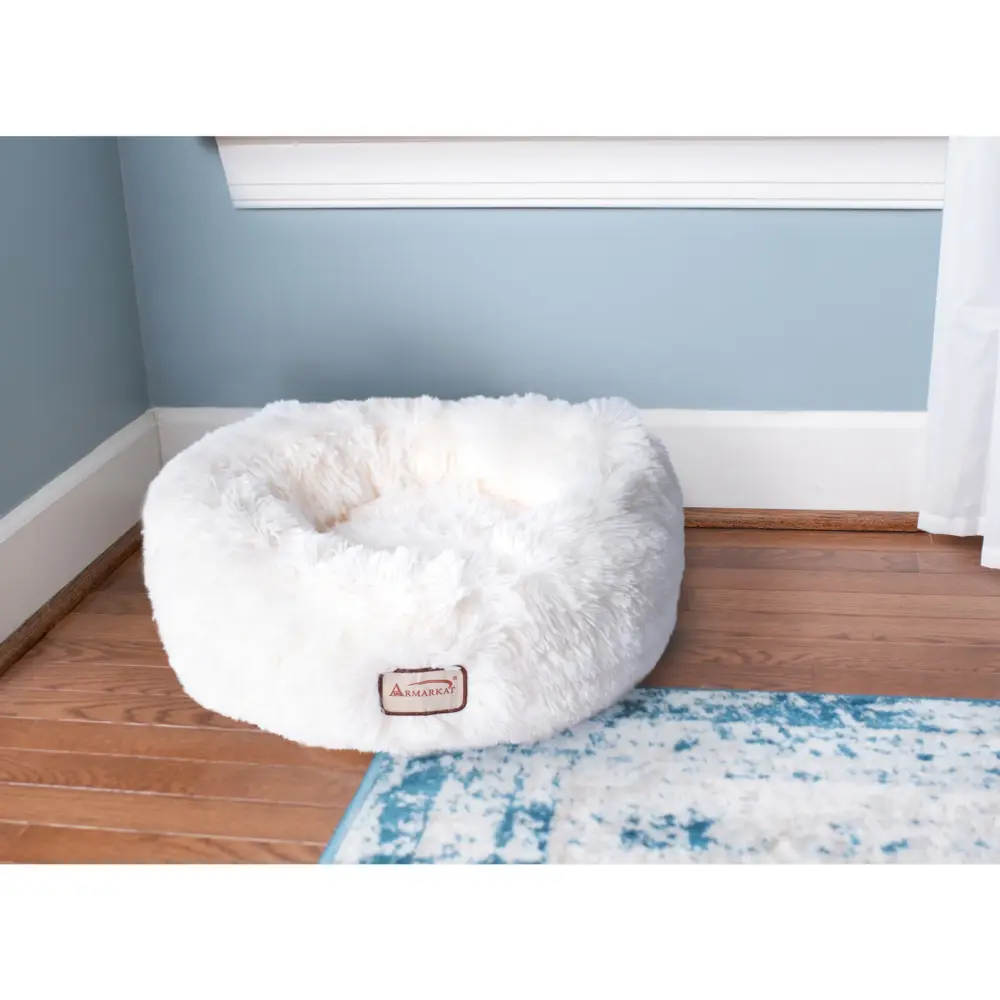
We don’t stock beds for larger dogs, and the method above works with any bed. For toy and small dogs that sleep curled up, the Armarkat Ultra-Plush Cuddler Bed has a raised bolster all the way round to rest a head on, and a water-resistant, skid-free base that keeps the bed where you put it.
Its thick plush holds warmth for cooler months. It comes in Small, 22 × 22 × 8 in, and Medium; the Medium’s dimensions aren’t listed, so email info@iglomart.com with your dog’s curled-up measurements and we will confirm the size first. It is machine washable on a gentle cycle, though hand washing keeps the plush at its best; see how to wash a dog bed.
-
Armarkat
Ultra-Plush Cuddler Bed for Cats & Small Dogs
Price range: $55.95 through $72.95

The same cuddler suits cats; see how to choose a cat bed your cat will actually use. Or browse our beds for cats and small dogs, everything we carry from Armarkat or more beds and comfort guides.
Dog bed training FAQ
Should my dog’s bed be in my bedroom?
It can be, and for many dogs it is the easiest place to start; you will also hear a puppy who needs to go out. To have your dog sleep elsewhere, move the bed gradually once they use it every night.
Why does my dog sleep on the floor instead of his bed?
Usually because the floor is cooler, or the bed is the wrong size, shape or spot. Move it to where your dog already lies, or offer a flatter bed to a sprawler. If an older dog starts avoiding a familiar bed, ask your veterinarian.
How long does it take to train a dog to sleep in its own bed?
It depends on the dog and how long the habit has run. The cue often comes together in a week or two of short sessions; a dog who has shared your bed for years may need several weeks. Letting your dog up “just this once” slows things down.
Should I ignore my dog whining at night?
Not until you have ruled out a need: a young puppy may need to go out, and any dog may be too warm, too cold, thirsty or unsettled in a new spot. Then wait for a moment of quiet before you go to them, so whining doesn’t become the way to get attention. If the crying is frantic, lasts for hours or is new for an adult dog, talk to your veterinarian.
Related guides
-
Comparison
Bolster vs Flat Dog Bed: What Your Dog’s Sleeping Position Tells You
The shape of a bed matters more than the price, and the way your dog already sleeps tells you which shape to buy. This compares bolstered and flat beds for curlers, sprawlers and leaners, covers the overhang problem on big dogs, and what changes as a dog gets older.
-
Guide
Why Do Dogs Dig in Their Beds? Normal Nesting and When It’s a Problem
Digging, scratching and circling before lying down is normal nesting. Learn why dogs do it, how to tell a normal routine from a frantic one, what extra digging says about the bed, how to handle a bed shredder and when to call your veterinarian.
-
Checklist
When to Replace a Dog Bed: 7 Signs, Plus Cat Beds and Gel Mats
A checklist for deciding when a dog or cat bed is past saving: the fold-and-press test for flat filling, smells that return after a proper wash, tears that put a chewer at risk, worn bases, rims and gel mats, a pet who has outgrown the bed, and what only needs a wash.