How to Measure a Dog for a Harness, Collar or Coat
To measure a dog for a harness, wrap a soft tape around the widest part of the chest, just behind the front legs, while your dog stands square, then choose the size whose girth range includes that number. Collars need a neck measurement, and coats add back length. A two-finger check confirms the fit once the gear arrives.
Short answer: three measurements, taken while your dog stands square
Many sizing mistakes start with a dog that is sitting or twisting toward a treat. Stand your dog on all four feet, head level, and take three measurements in inches:
- Chest girth around the widest part of the ribcage, for harnesses and coats.
- Neck where a collar rests, midway between the ears and shoulders, for collars. For a coat, measure lower, at the base of the neck.
- Back length from the base of the neck to the base of the tail, for coats.
Measure each one twice; if the readings differ, take a third and use the number that repeats.
What you need: a soft tape, a few treats and two minutes
A flexible sewing tape is easiest, or use string and a ruler. A helper with treats keeps your dog’s head forward; if your dog gets restless, finish later.
How to measure a dog for a harness: chest girth
The widest point just behind the front legs
- Stand your dog square on a non-slip surface.
- Find the deepest part of the ribcage, just behind the elbows.
- Wrap the tape around, level rather than angled toward the belly.
- Pull it snug so it lies flat on the coat without squeezing.
- Read the number where the tape overlaps and write it down.
Reading a girth range: the Lupine no-pull harness in 16–26 in and 26–38 in
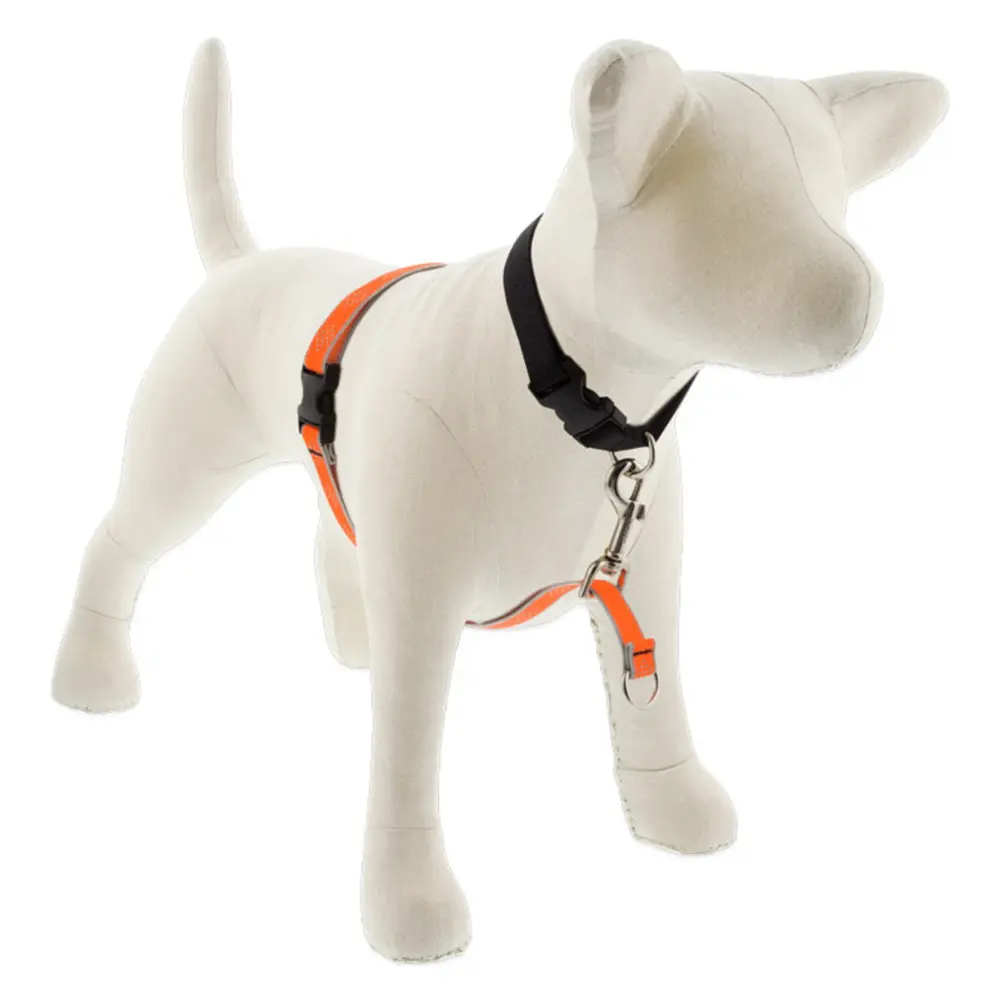
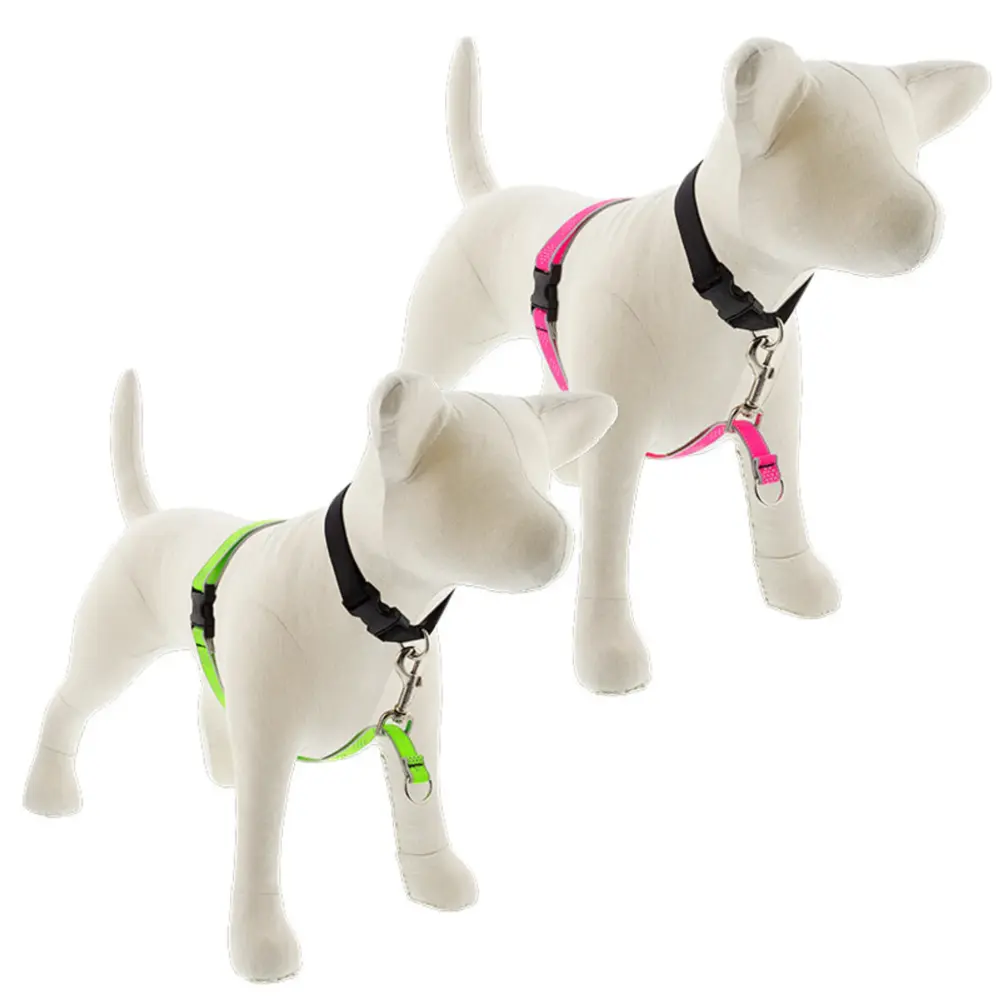
The Lupine no-pull harness comes in a 3/4-inch-wide version for a 16–26 inch girth and a 1-inch-wide version for 26–38 inches. A dog measuring 21 inches lands mid-range, with room to adjust either way.
At exactly 26 inches, a young dog still filling out, or one about to grow a winter coat, suits the larger range. A grown, smooth-coated dog may fit the smaller one, but only if the two-finger check still passes with the straps fully let out; if it doesn’t, choose the larger.
Using the PetTrek size chart, XS to Large
The PetTrek padded harness uses letter sizes, with a size chart in the product images. Compare your chest girth with that chart, not another brand’s, because one company’s Medium can be another’s Large.
Measuring the neck for a collar
Where the collar naturally sits, not behind the ears
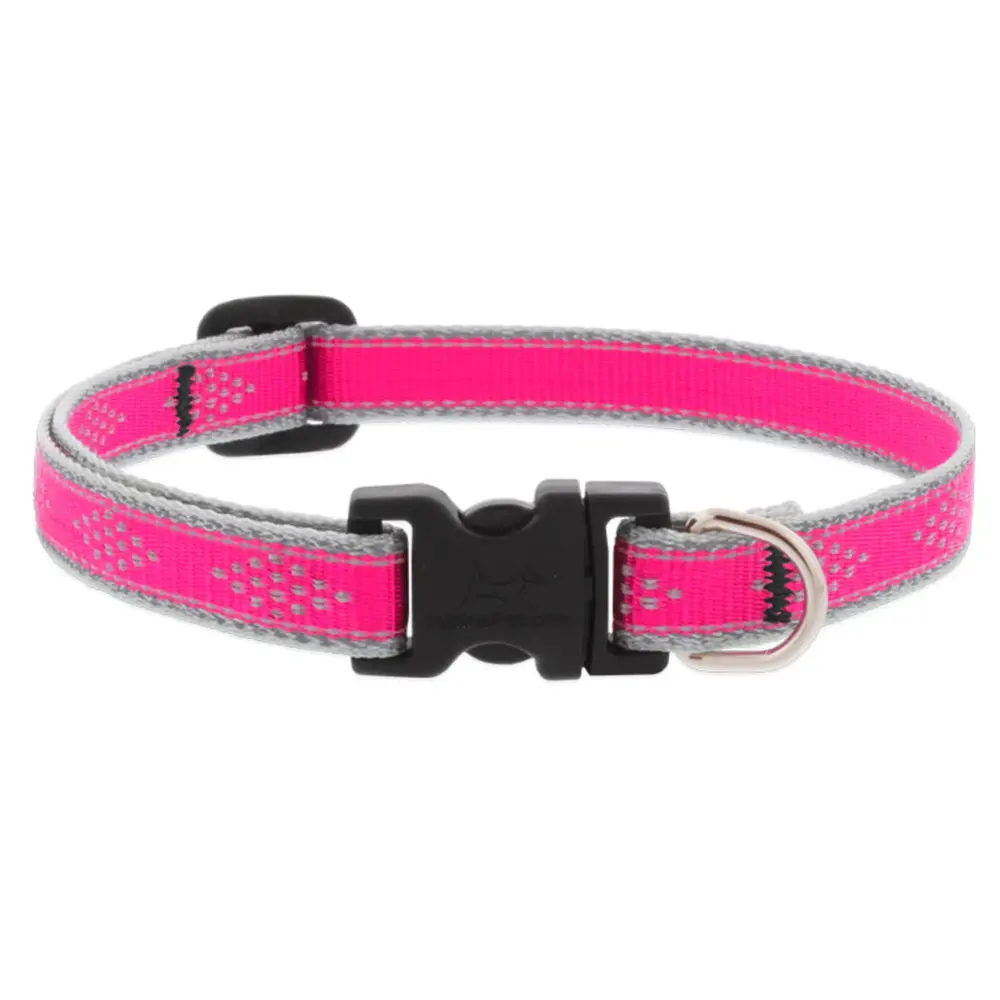
Measure around the middle of the neck, where a flat collar settles on its own. The Lupine reflective collar comes in overlapping adjustable ranges from 6–9 inches up to 25–31 inches; choose one that includes your dog’s measurement, ideally near its middle.
The two-finger fit check
How tight should a dog collar be? Snug enough that two fingers slide flat underneath without forcing. If they will not fit, loosen it; if more than two fingers slide in easily, or the collar can be pulled forward over the ears, tighten it. Use the same check under each harness strap.
Measuring for a coat: back length, chest and neck
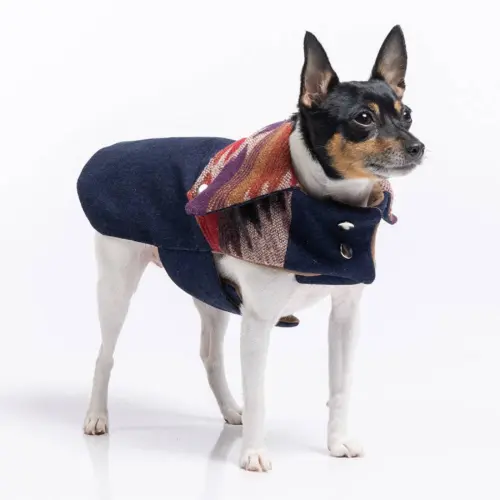
A coat uses all three numbers. Back length sets coverage, chest girth decides whether the closures meet comfortably, and the neck, measured at its base where the neckline sits, tells you whether the coat will rub there. A good fit stops at the base of the tail and leaves the front legs free to stride.
DCNY ranch coat: leash clip on XXS and XS, harness opening on Small and Medium
The DCNY ranch coat comes in XXS to Medium and fastens with wide hook-and-loop closures at the chest and belly. The harness opening on Small and Medium lets your dog wear a harness underneath; if yours will, allow for its bulk when checking the chest fit.
When your dog is between sizes
If your dog is between harness sizes, do not size up by default. Loose gear is easier to back out of and rubs as it shifts. Instead:
- Pick the size where your measurement sits nearest the middle of the range.
- Lean larger for a growing puppy or a coat about to thicken.
- Lean smaller for a slim, smooth-coated adult, if the two-finger check still passes.
Fit troubleshooting: rubbing, twisting, slipping out, collar spinning
- Rubbing behind the front legs: the girth strap may be too tight or sitting right against the elbows. Loosen it slightly or adjust the straps so it sits a little further back, and look for red or bare patches after walks; ask your veterinarian about skin that stays irritated.
- Twisting to one side: usually loose or uneven straps. Adjust both sides equally so the chest piece sits centered.
- Slipping out: a dog that backs out of its gear needs a closer fit; recheck before each walk.
- Collar spinning: some rotation is normal as tags pull the D-ring down. If the collar slides toward the ears, tighten it slightly and recheck with two fingers.
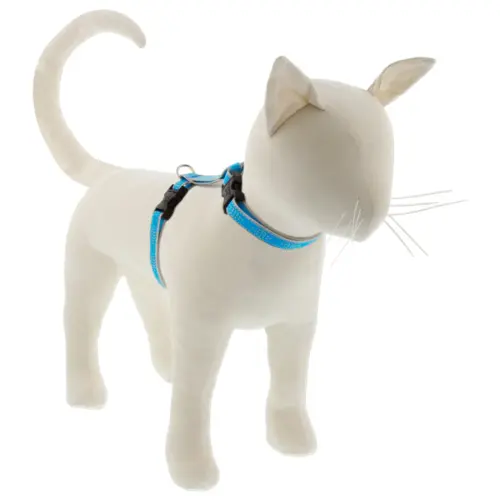
Measuring a cat for an H-style harness (9–14 in and 12–20 in girth)
To measure a cat for a harness, take the girth just behind the front legs, plus the neck. The Lupine reflective cat harness has adjustable neck and girth straps and comes in two girth ranges, 9–14 and 12–20 inches. A cat measuring 12 to 14 inches fits either. The smaller range suits a slim adult nearer 12 inches; a cat at 14 inches, or one still growing, is better in the 12–20 inch range.
Cats reverse out of loose gear easily, so fit it snugly, with room for no more than a finger or two. Let your cat wear it indoors for a few short, supervised sessions before the first outing, take it off afterward, and never leave a harnessed cat unattended or tied up, indoors or out.
Puppies and coat changes: when to re-measure
Puppies can outgrow gear in a few weeks, so check the fit weekly and re-measure as the straps near the end of their adjustment, before the two-finger check stops passing. For adults, re-measure after a short haircut, a seasonal coat change or a noticeable weight change. If weight or shape changes unexpectedly, mention it to your veterinarian.
The harnesses, collars and coats in this guide
- Lupine Pet Reflective No-Pull Dog Harness: a front-clip harness for medium and large dogs who pull, used with your existing collar and leash. Made in the USA by Lupine Pet.
- Mr. Peanut’s PetTrek Padded Reflective Dog Harness & Leash Set: a padded harness and matching leash, with reflective stitching.
- Lupine Pet Reflective Dog Collar: an everyday collar with woven reflective threads. Made in the USA.
- DCNY Ranch Dog Coat: a small-dog layer in three fabric finishes, machine washable.
- Lupine Pet Reflective H-Style Cat Harness: for cats starting leash walks, in six reflective designs. Made in the USA.
-
Doggie Couture NY
DCNY Ranch Dog Coat
$72.95
-
Lupine Pet
Reflective Dog Collar
Price range: $22.95 through $28.95
-
Lupine Pet
Reflective H-Style Cat Harness
$28.95
-
Mr. Peanut’s
PetTrek Padded Harness and Leash Set
Price range: $24.95 through $26.95
-
Lupine Pet
Reflective No-Pull Dog Harness
Price range: $41.95 through $45.95



Browse more leashes and harnesses in walking and training and outerwear in dog clothes. Our dog walking essentials guide covers what else to carry.
If your dog rides in the car on a seat-belt tether from travel and car accessories, clip it to a well-fitted walking harness, never to a collar, and not to the Lupine no-pull harness, which connects to your dog’s collar. A tether keeps your dog in the back seat and reduces distraction; it is not crash protection. To protect the seat itself, read dog hammock vs seat cover.
If it doesn’t fit: how returns work
Try new gear on indoors first. Returns are accepted within 30 days of delivery, but a wrong size you chose is a change-of-mind return: you pay return postage and a 15% restocking fee applies, so measure twice. Unsure of a size? Email info@iglomart.com before you order.
Items that arrive damaged, defective or not what you ordered should be reported within 7 days and are replaced or refunded in full. Details are on our returns page.
Harness and collar sizing FAQ
Where do you measure a dog’s chest for a harness?
Around the widest part of the ribcage, just behind the front legs, with your dog standing.
Should I size up if my dog is between sizes?
Not automatically. Choose the size where the measurement sits nearest mid-range, leaning larger only for a growing puppy or thickening coat.
How many fingers should fit under a dog collar?
Two, slid flat under the fastened collar without forcing.
How do I know if a harness is too tight?
If two fingers will not slide under the straps, or it leaves marks or rubbed patches, loosen it. Ask your veterinarian about irritation that persists.
How often should I re-measure a puppy?
Check the fit weekly and re-measure as the straps approach their limit, before they feel snug.
Related guides
-
Checklist
When to Replace Dog and Cat Gear: A Monthly Wear Check
A five-minute monthly check for everything your dog or cat uses: the wear signs that mean a collar, harness, leash, toy, bowl, lick mat or scratcher insert should go, the fit checks growing and changing pets need, and what only needs a wash.
-
Checklist
What to Tell Your Dog Walker: A Handover Checklist
Everything a new dog walker needs on one page: where the gear lives and how it goes on, how your dog walks, leash and route rules, medications and treats, emergency contacts, the door routine, weather rules and a first walk together.
-
Buying guide
Made in USA Dog Products: Collars, Harnesses, Coats, Bowls and Wipes
Six dog items we stock carry a Made in USA claim from their maker or listing: two Lupine Pet walking pieces, a DCNY coat for small dogs, a SodaPup slow feeder and lick mat, and Mr. Peanut’s wipes. Learn what the label should mean, what it leaves out and how to check a claim yourself.