Dog Walking Essentials: What to Bring on Every Walk, Including After Dark
Dog walking essentials come down to a short list: a collar with a current ID tag, a harness or collar and leash, poop bags plus a way to carry full ones, water, a few treats and your phone. In most of the U.S., daylight saving time ends on the first Sunday in November (November 1 in 2026), and darker evening walks then call for reflective gear and a light.
Below: what to bring on a dog walk, how to set up each item and a printable checklist.
Dog walking essentials: the short list
- A collar with an ID tag showing your current phone number
- A harness or collar, plus a leash in good condition
- Poop bags and a pouch for full ones
- Water and a bowl, or a bottle with one built in
- A few treats for recall
- Your phone, charged
- After dark: reflective gear and a light
Collar, ID tag and harness
ID goes on every walk. Many owners keep tags on a flat collar and clip the leash to a harness, which takes pressure off the throat.
A reflective collar for tags and visibility
A flat collar is the simplest home for ID tags. Look for a sturdy D-ring and reflective threads woven into the webbing, which catch headlights without batteries. On Lupine Pet collars, they are woven into the pattern rather than printed on top. Once fastened, two fingers should slide underneath.
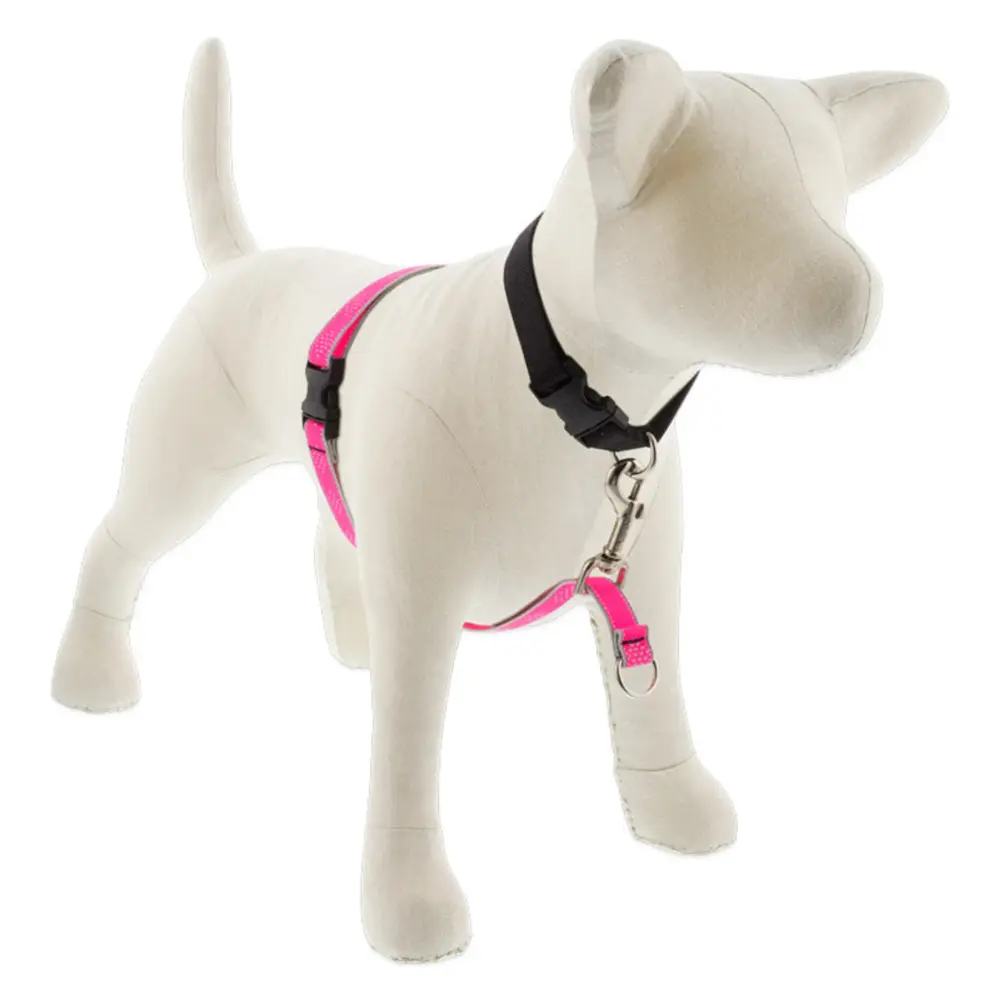
No-pull or everyday padded harness
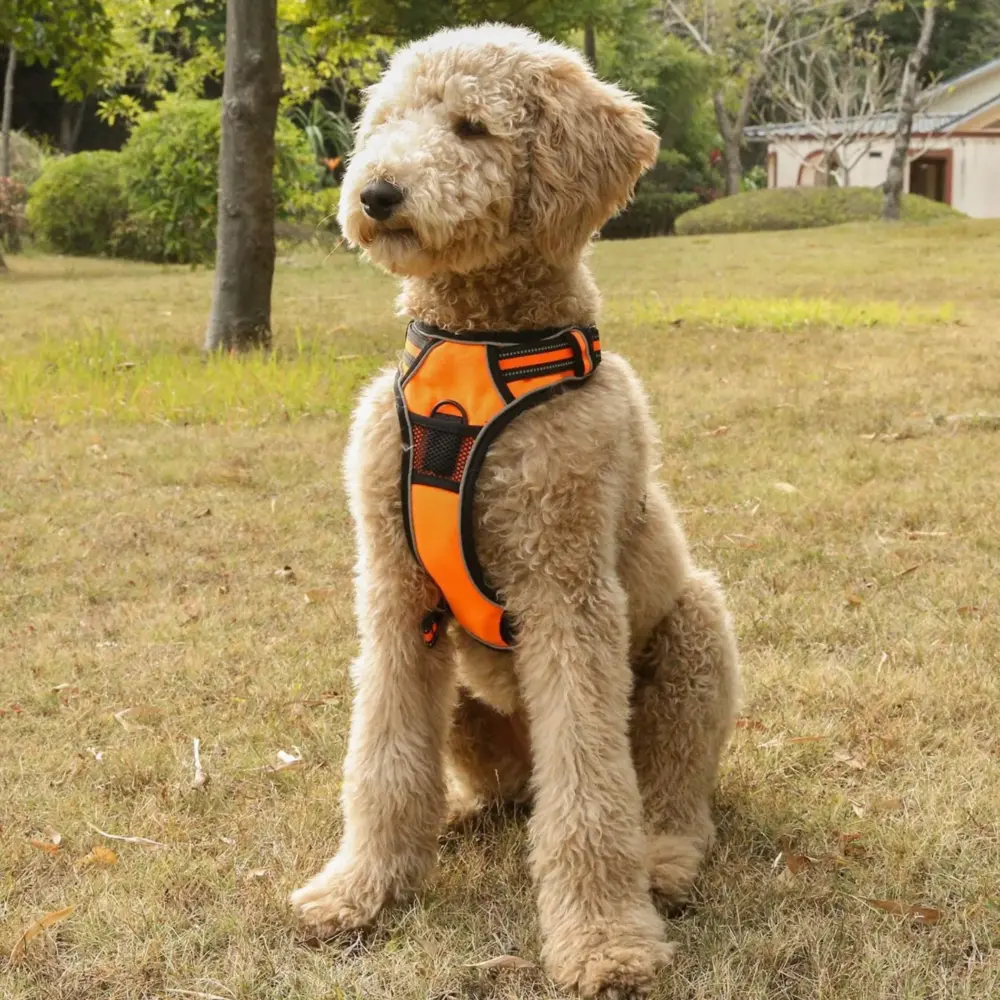
If your dog surges ahead, a front-clip (no-pull) harness redirects that forward momentum back toward you, which makes loose-leash walking easier to reward. It works alongside training, not in place of it. A padded back-clip harness suits dogs who already walk calmly.
Before ordering, read our guide on how to measure a dog for a harness, collar or coat. Once it is on, two fingers should slide under each strap. The harness should not rub behind the front legs, and your dog should not be able to back out of it. Recheck the fit after the first few walks.
Bags, and a way to carry full ones
Picking up is easy. Carrying the full bag until the next bin is the awkward part.
Dispenser or full-bag carrier: what each one does
A dispenser holds a roll of empty bags on the leash so one is always handy. A full-bag carrier holds a used bag, closed away, until you pass a bin. Many owners use both.
A zippered, waterproof pouch that clips to the leash
The simplest way to carry a full poop bag on a walk is a waterproof pouch with a zippered top. It clips to the leash, a belt or a stroller, helps contain odor and wipes clean. An extra-large pouch such as the Yucky Puppy XL holder suits a big dog, two dogs or long routes with few bins.
Water on the go: a bottle with a fold-out bowl and a wrist strap
For anything longer than a short loop, carry water and offer it at breaks. A water bottle for dog walks with a fold-out bowl replaces two items: pour, let your dog drink and fold it away.
Look for a wrist strap, so you can hold bottle and leash together, and a closure that seals. The push-button closure on the Flipo Fold-A-Bowl, for example, helps keep water in the bottle rather than in your bag.
Walking after dark
When the clocks go back in early November, the walk after work moves into dusk or full dark for many households.
Reflective weave and trim on the collar, harness and leash
Reflective gear for walking a dog at night bounces headlight beams back toward the driver. Reflective threads in the collar and harness mark your dog, and reflective stitching on the leash shows the line between you, which matters at driveways.
A light for you, familiar routes and walking facing traffic
Reflective material is passive: it shows up only when headlights hit it, so it does little around corners or on unlit paths. Carry a headlamp or small flashlight so others can see you coming and you can spot curbs, broken glass and whatever needs picking up.
Reflective gear helps drivers notice you sooner, but it does not replace caution near traffic. Stick to familiar, well-lit routes and use a fixed-length leash rather than a retractable one near roads. Where there is no sidewalk, walk facing oncoming traffic and keep your dog on the side away from the road.
Hot and cold days: shorter walks, shade and water
On hot days, walk early or late, shorten the route, choose shade and offer water often. Sun-baked pavement and asphalt can get hot enough to hurt paw pads. Press the back of your hand on the surface for about seven seconds; if it is too hot for your hand, it is too hot for your dog’s paws, so stick to grass and shade or wait until it cools.
If your dog pants heavily, slows down, stumbles or seems unwell in the heat, stop the walk, move into shade, offer water and call your veterinarian right away.
On cold days, small and short-coated dogs often do better with shorter outings, and ice-melt salt collects between the pads. Wipe paws when you get home to remove salt. If you notice limping or cracked or sore pads, ask your veterinarian for advice specific to your dog.
Back at the door: wipe or wash paws before your dog reaches the floor
Keep a towel and large pet wipes by the door, and end every walk on the mat:
- Stop on the mat with the leash still clipped on.
- Wipe each paw between the pads and toes, then dry wet paws with the towel.
- Wipe legs, chest and belly after a muddy route.
- Unclip, hang the leash and empty the pouch into the outdoor bin.
For heavy mud, rain or road salt, see our guide to cleaning dog paws after a walk and our clean-up supplies.
Walking gear we stock
These come mainly from our walking and training gear.
- Lupine Pet Reflective Dog Collar: woven reflective threads, a strong D-ring and sizes from tiny dogs to XXL. Made in the USA by Lupine Pet.
- Lupine Pet Reflective No-Pull Dog Harness: a front-clip harness for medium and large dogs that works with your existing collar and leash. Made in the USA.
- Mr. Peanut’s PetTrek Padded Reflective Dog Harness & Leash Set: padded oxford nylon with reflective stitching on harness and leash, XS to Large. Suits everyday walks and new owners who want a matching harness and leash.
- Yucky Puppy Waterproof Poop Bag Holder, XL, Set of 2: zippered, waterproof and machine washable. The extra-large pouch measures about 6.75 × 9.25 in; check the size option on the product page before ordering.
- Flipo Fold-A-Bowl Dog Water Bottle: 26 oz, with a fold-out food-grade TPU bowl, push-button closure and wrist strap. Find more in feeding and enrichment and travel and car accessories.
- Mr. Peanut’s Naturals Pet Wipes: 150 large 6 × 10 in wipes for paws, ears and coat, made in the USA.
-
Flipo
Fold-A-Bowl Dog Water Bottle with Fold-Out Bowl
$28.95
-
Lupine Pet
Reflective Dog Collar
Price range: $22.95 through $28.95
-
Mr. Peanut’s
Naturals Pet Wipes
$26.95
-
Mr. Peanut’s
PetTrek Padded Harness and Leash Set
Price range: $24.95 through $26.95
-
Yucky Puppy
Waterproof Poop Bag Holder
Price range: $23.95 through $24.95
-
Lupine Pet
Reflective No-Pull Dog Harness
Price range: $41.95 through $45.95






Printable dog walking checklist
Print it or save it to your phone.
Before you head out
- ID tag on and readable
- Harness fitted, buckles closed, leash clipped
- Spare bags on the leash, pouch attached
- Water bottle filled, treats in a pocket, phone charged
- After dark: reflective gear on, light in hand
On the walk
- Zip full bags into the pouch
- Offer water at breaks
- No sidewalk: walk facing traffic
Back home
- Wipe and dry paws on the mat
- Empty the pouch into the outdoor bin
- Rinse and dry the water bottle
- Restock bags and hang the leash by the door
Dog walking FAQ
What should I bring on a dog walk?
An ID collar, a harness or collar with a leash, poop bags and a pouch for full ones, water, treats and your phone. After dark, add reflective gear and a light.
How do I carry a full poop bag on a walk?
Tie the bag closed and zip it into a waterproof pouch clipped to the leash or your belt. The pouch helps contain odor and leaves your hands free until you reach a bin.
What should my dog wear for a walk at night?
A collar with ID and a harness with reflective weave or trim, plus a leash with reflective stitching. Carry a light so others can see you and you can see the ground.
How much water should I bring for my dog?
For most neighborhood walks, one full bottle is enough. Bring more for long or warm outings, a large dog or two dogs, and offer water at every break. Needs vary with size, age and weather, so ask your veterinarian how much water your dog needs.
How many poop bags should I carry?
Carry at least two more than you expect to use, since bags tear and dogs sometimes go twice. Add a few for each extra dog.
Two of these deserve more thought than they usually get: what to look for in a poop bag holder and, for dark mornings, reflective gear for night dog walks.
Related guides
-
Checklist
What to Tell Your Dog Walker: A Handover Checklist
Everything a new dog walker needs on one page: where the gear lives and how it goes on, how your dog walks, leash and route rules, medications and treats, emergency contacts, the door routine, weather rules and a first walk together.
-
How-to
How to Walk Two Dogs at Once Without Tangles or Pulling
Two dogs, two leashes and no knots: train each dog alone first, give each one a usual side, walk at the slower dog’s pace, untangle crossed leashes safely and know what to do when one dog pulls or reacts.
-
Checklist
Pet Emergency Kit Checklist: What Your Dog or Cat Needs to Evacuate
Everything your dog or cat needs to evacuate with you: records and ID, two weeks of food, water and medicine, a carrier or harness per pet, sanitation and first aid, plus where pets can stay and when to refresh the kit.