Walking & Training How-to
How to Walk Two Dogs at Once Without Tangles or Pulling
Short answer
Train each dog to walk on a loose leash alone, then walk them together somewhere quiet, each on its own fixed-length leash and harness. Give each dog a usual side, keep slack short so leashes rarely cross, and match the slower dog’s pace. Stop whenever a leash tightens or the leashes cross; walk on once both are slack and clear.
First, each dog walks well on its own
Two dogs’ pulling adds up, each dog’s excitement feeds the other’s, and you have one hand per dog instead of two. That’s why the AKC’s advice on walking multiple dogs starts with training each dog individually. Before the first walk together, check that each dog, walked alone, can:
- Walk a familiar loop on a loose leash for most of the way.
- Stop when you stop, and wait at curbs and doors.
- Turn with you on a cue such as let’s go, even when something interesting is ahead.
- Look at you when you say its name, so you can cue one dog without the other.
- Settle again after a squirrel, a passing dog or a loud truck.
If one dog isn’t there yet, it gets more solo practice; our plan to stop a dog pulling on the leash works through it in four stages. The AKC also suggests teaching each dog cues for backing up, an emergency turn, a stay and walking past distractions. Those cues are your way out when two dogs want to go two ways.
Tip
Put the dog’s name before every cue. Rosie, wait asks one dog to wait and leaves the other walking, which matters once you’re giving instructions with a leash in each hand.
Leashes, harnesses and couplers for two dogs
No special equipment is needed, just a full setup for each dog:
- A separate leash for each dog. Fixed length, 4 to 6 feet. The AKC suggests matching leashes of the same length with similar handles. Separate leashes let you reward, slow or stop one dog without involving the other.
- No retractable leashes. The AKC notes that they let a dog hit the end of the leash every time it goes out, which winds dogs up. With two dogs, the extra line is also more to cross and wrap.
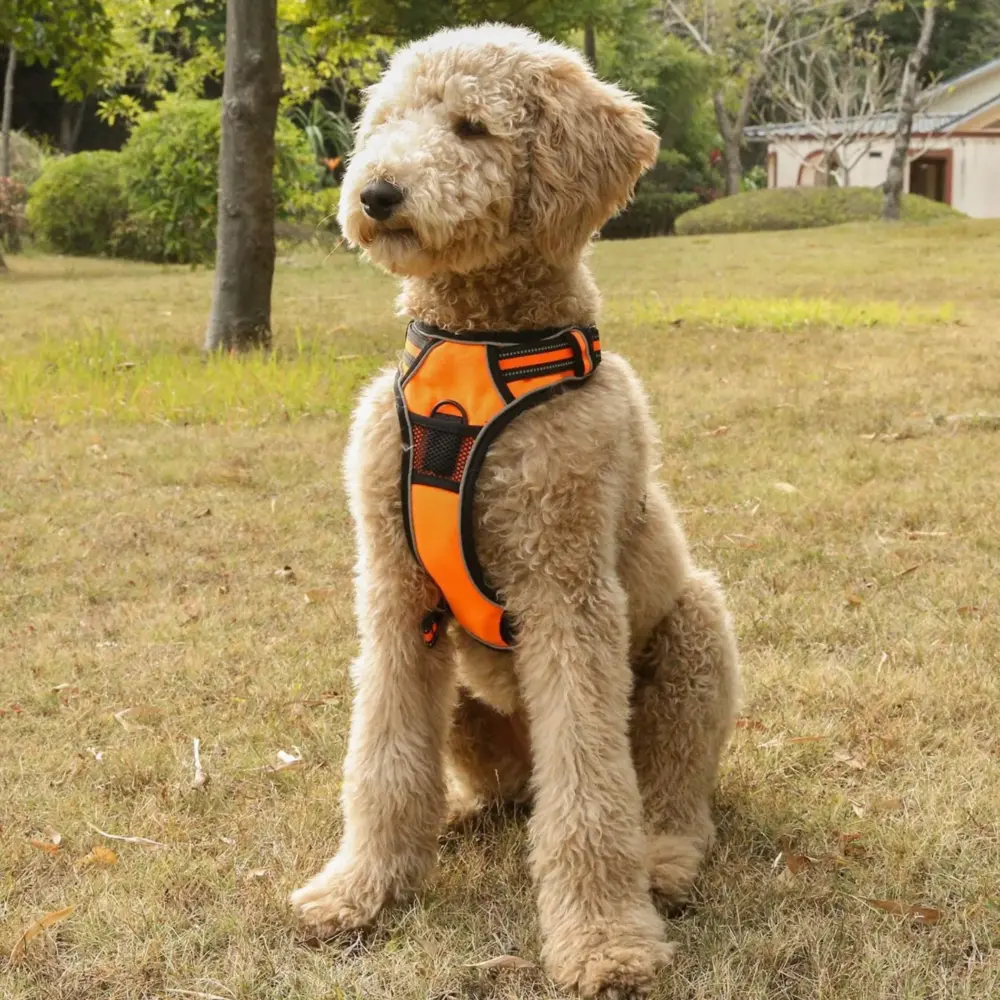
- A fitted harness for each dog, to keep the force of a lunge off the neck. Size each one with how to measure a dog for a harness; similar-sized dogs can still need different sizes.
- A front clip for the puller. It turns that dog’s pulls back toward you. Keep its slack short, since a long loop hanging from the chest catches front legs; see front-clip vs back-clip harnesses.
- ID tags on both dogs, in case one slips away while you’re busy with the other.
Couplers, double leashes and waist leashes
A coupler is a short, forked lead that joins two dogs to a single leash; a double leash does the same with two short ends on one handle. Both tie the dogs together: a lunge from one yanks the other, a big dog can tow a small one, and you can’t stop or reward one dog alone. The AKC recommends a coupler only for unflappable dogs who know each other well and keep a similar pace.
A waist leash frees both hands to reward a dog on each side, but your hips take every pull, so it suits a pair who already walk well. Nilosi doesn’t sell couplers, double leashes or waist leashes, and nothing on this page needs one: two ordinary leashes do the job.
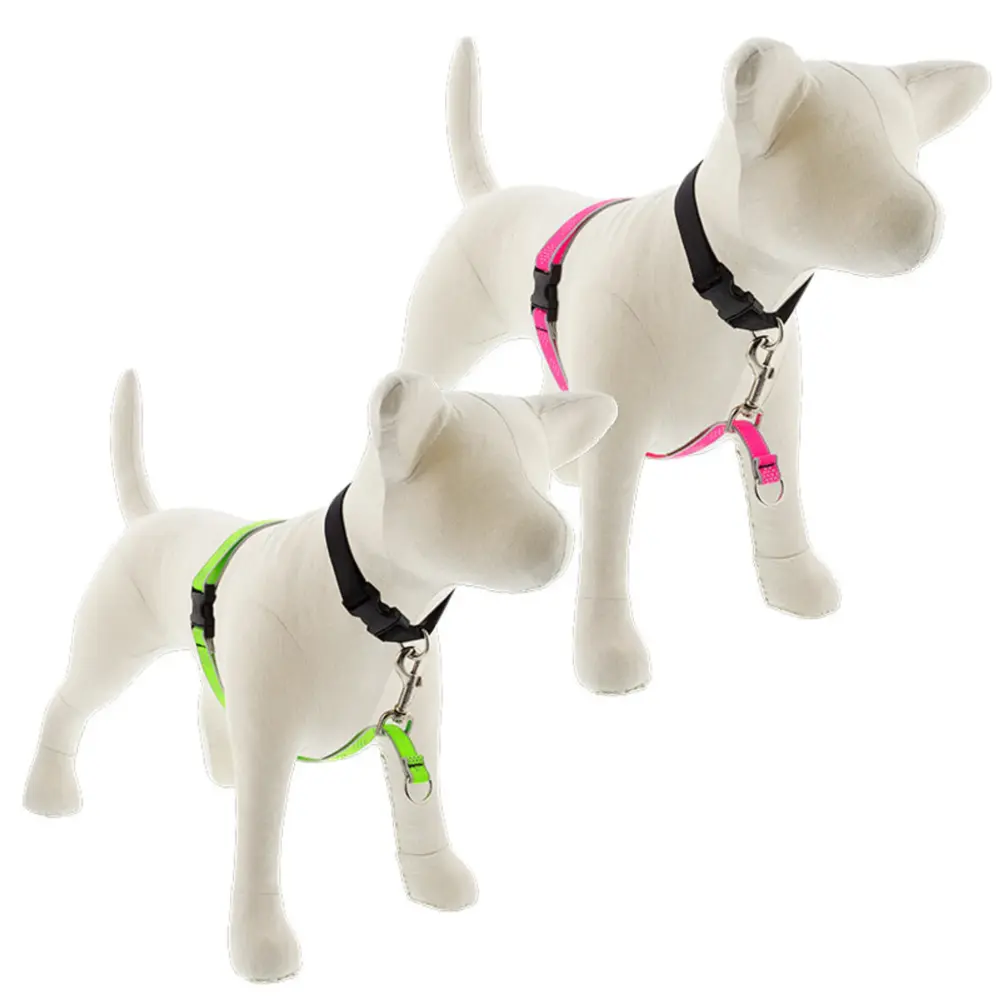
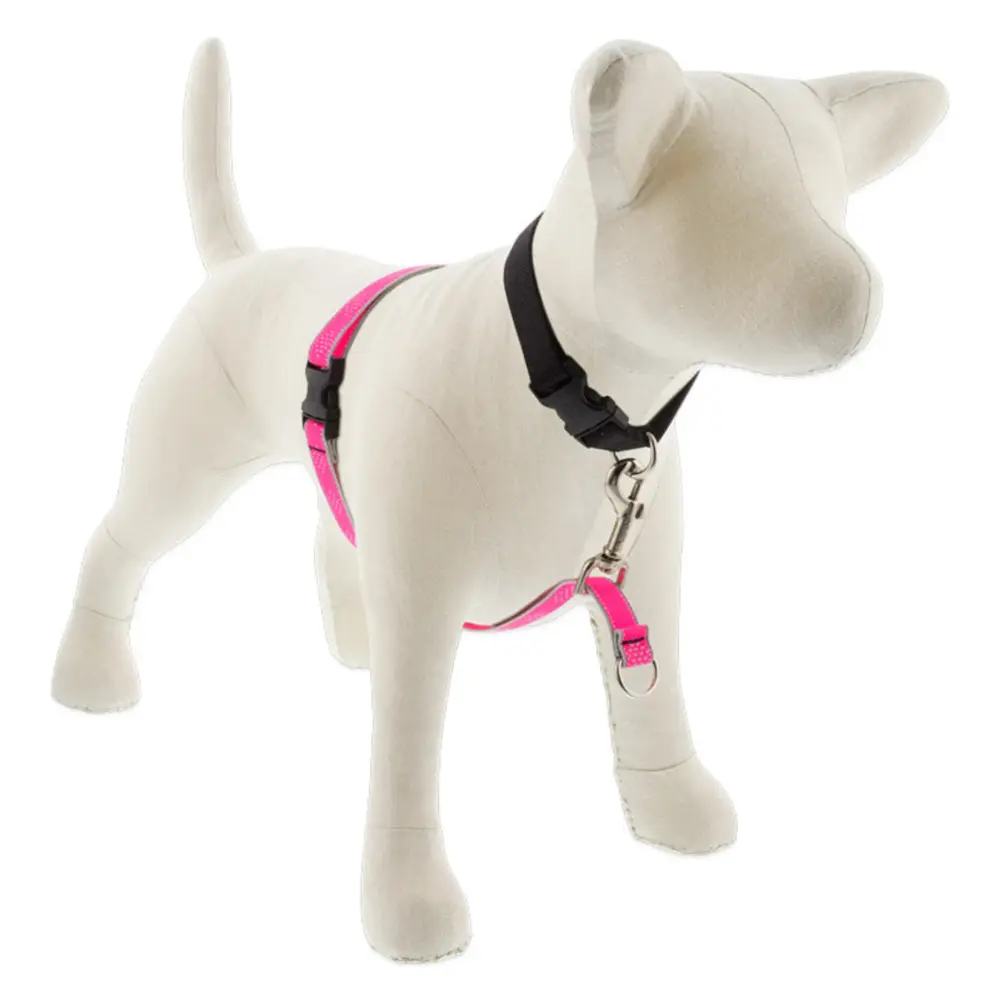
Our walking and training range has two dog harnesses, so each dog can be fitted to its own size and habits; check the size limits in each reason. The Lupine clips to the dog’s own flat collar and leash, such as the Lupine Pet reflective collar.
-
Mr. Peanut’s
PetTrek Padded Harness and Leash Set, Choose size & color
Price range: $24.95 through $26.95
Why it fits: A padded harness and matching leash in XS to Large; choose two of the four colors so you can tell the dogs’ leashes apart at a glance.
-
Lupine Pet
Reflective No-Pull Dog Harness, Choose size & design
Price range: $41.95 through $45.95
Why it fits: A front-clip harness for the stronger puller; medium and large dogs only, in 16 to 26 or 26 to 38 in girths, and it uses your own collar and leash.


One dog on each side, or both on one side?
Either works. What matters is that each dog has a usual place and keeps it, so neither one wanders across your path.
| Setup | Works well for | Watch out for |
|---|---|---|
| One per side | Wide paths, dogs who bump or compete | One hand per leash; fills the sidewalk |
| Same side | Narrow paths, roadsides, passing people | Dogs drift across each other more |
| Switching | Apart when quiet, one side to pass | Teach the switch at home first |
Which dog goes where
- The dog who needs more help walks closest to you when both share a side: the puller, the youngster or the one who reacts.
- A big dog and a small dog usually do better on opposite sides, so the big dog’s stride and any lunge stay clear of the small one.
- Near traffic or a passing dog, move so you’re between it and both of yours.
- Teach each dog its side in the hallway: say its name and side, guide it into place and reward at your leg. Practice alone, then together.
Holding two leashes
With a dog on each side, hold one leash in each hand, thumb through the loop and any extra folded into your palm; our guide to holding a dog leash covers that grip. With both dogs on one side, hold both handles in the hand farther from them and use the near hand to guide, separate and reward. Keep treats where you can reach them without letting go.
Safety note
Never wrap a leash around your hand or wrist, or loop both over your arm. Two dogs lunging at once can hurt your fingers or pull you off balance. If the pair together is more than you can hold, walk them separately until training catches up.
How to walk two dogs at once, step by step
Plan the first walks together for a quiet time of day, on a route both dogs know, and keep them short. What you need:
- Two fixed-length leashes and a fitted harness for each dog.
- Small, soft treats both dogs like, and more than you’d take on a solo walk, since you’re rewarding two dogs.
- Poop bags for two, and somewhere to carry the full ones.
- A helper for the first walk or two, if you can get one.
- Take the edge off first. The AKC suggests letting the dogs burn some energy beforehand, with a run in a fenced area or a game of catch.
- Practice standing together. In the yard or hallway, leash both dogs, put each in its place and reward each by name for standing calmly. Take a few steps, then reward again.
- Wait at the door. Open it only when both leashes are slack. If either dog surges, close it and try again.
- Start with a helper. Each of you walks one dog, side by side. Then take both leashes yourself for short stretches while your helper walks alongside.
- Go at the slower dog’s pace. Walk a short, quiet loop of 5 to 10 minutes, rewarding each dog on its own side every few steps while its leash stays loose.
- Stop when either leash goes tight. Stand still. Walk on once both leashes are slack, and treat the dog who stayed loose so it learns that waiting pays too.
- Release both for a sniff. At a good patch of grass, give your release cue and let both dogs sniff, then call them back to their sides with let’s go.
- Add difficulty slowly. Longer routes and busier streets come later. If a walk falls apart, go back to the last route that went well.
- End while it’s going well. A few short, easy walks together do more for the habit than one long walk that ends in a knot of leashes.
Untangling crossed leashes
Tangles start when a dog switches sides behind or in front of you, steps over the other leash while sniffing, or gets a leg through its own slack. Keeping each dog on its side, with each leash in a loose curve rather than a loop that brushes the ground, prevents most of them. When the leashes do cross, the AKC’s advice is simply to stop and fix it:
- Stop walking and ask both dogs to wait.
- Keep hold of both handles. Don’t drop one leash to free the other.
- Follow each leash from your hand to its dog to see which is on top. Two leash colors make this quicker.
- Move yourself or the leash, not the dogs: step around, lift a leash over a dog’s head, or pass the handles between your hands if the dogs have swapped sides.
- If a leash is around a leg, let it go slack and lift the leg out gently while the dog stands still.
- Reward both dogs back in their places, then walk on.
If a leash wraps around your own legs, stop at once, before either dog moves off. If the same dog keeps crossing over, it is usually chasing a scent or trying to get ahead: reward it more often on its own side and build sniff stops into the walk so it doesn’t have to cross to get one.
Different speeds, sizes and sniffing habits
Few pairs walk the same way. Plan for the differences instead of dragging one dog along on the other’s schedule.
- Speed. The AKC’s rule is to go only as fast as your slowest dog. If the faster dog still has energy afterward, give it a game of fetch or a walk of its own.
- Energy and age. For an older, low-energy dog, the AKC suggests a short walk together, then taking the older dog home and carrying on with the young one. Lagging, limping or stiffness the day after is a reason to shorten walks and check with your veterinarian.
- Size. A big dog’s easy walk can be a hurried trot for a small one, and a big dog’s lunge can land on a small dog. Give them opposite sides and some space; our guide to whether big and small dogs can live together covers life at home.
- Sniffing. One dog wants every lamp post, the other wants to keep moving. Take turns: one dog sniffs while you reward the other for waiting, then switch, with a few spots where both sniff at once.
- Bathroom stops. When one dog goes, ask the other to wait beside you and reward it for staying put.
When one dog pulls or reacts
One dog pulls
Stop when its leash goes tight, as in the steps above, and keep rewarding the dog who is walking nicely so it doesn’t lose out. If the puller drags every walk, take that dog back to solo training for a while, ideally in a front-clip harness, and walk the calm dog alone in the meantime so its good habits don’t slip.
One dog reacts
A dog who barks or lunges at other dogs, people or bikes is reacting, not just pulling. Get ahead of it: as soon as you spot a trigger, use your emergency turn or cross the street, and keep yourself between the trigger and both dogs. Give your two dogs some room from each other while one is worked up. In its overview of aggression in dogs, the ASPCA explains redirected aggression with the example of two dogs barking at someone from behind a fence, when one sometimes turns and attacks the other. Two leashed dogs fixed on the same trigger are in a similar spot.
For a leash-reactive dog, the AKC says to work on its triggers until it can walk calmly by your side alone, so walk that dog on its own while you do. A certified professional dog trainer, a veterinary behaviorist or a certified applied animal behaviorist can help, and your veterinarian can check whether pain is part of the picture.
Safety note
If your two dogs snap or scuffle with each other on a walk, stop walking them together and get professional help. Keep your hands away from their heads, and lead them apart once they have separated.
Bags and water for two dogs
Two dogs means twice the pickups and twice the drinks, with your hands already full.
- Bag with one hand. Move both handles into one hand, ask both dogs to wait, and pick up with the other. Bag both dogs before you walk on rather than doubling back.
- Keep full bags out of your leash hands. A pouch clipped to your belt carries them to the next trash can.
- Water one dog at a time. Offer a drink to one while the other waits a few feet away, then switch. If either dog guards food or water, give them more room or water them apart.
For the rest of what goes on every walk, from ID tags to after-dark visibility, see our dog walking essentials. Two pieces from our catalog help with a pair:
-
Yucky Puppy
Waterproof Poop Bag Holder, Choose size
Price range: $23.95 through $24.95
Why it fits: Keeps full bags off your leash hands in a waterproof zippered pouch on your belt; the extra-large size suits multiple dogs, and you get two.
-
Flipo
Fold-A-Bowl Dog Water Bottle with Fold-Out Bowl, Choose color
$28.95
Why it fits: A 26 oz bottle with a cover that folds out into a bowl; the wrist strap keeps it on your wrist between drinks, with a leash still in each hand.


Mistakes that make two-dog walks harder
- On-leash greetings with both dogs. Three dogs and three leashes tangle fast, and tension spreads. Give other dogs a wide berth while you’re learning.
- Phones and earbuds. The AKC’s advice is no earbuds, phones or distracting conversations; with two dogs, one missed trigger can mean two dogs reacting.
- Counting the shared walk as all the exercise a high-energy dog gets. At the slower dog’s pace, it often needs a run or game of its own.
- Handing over both leashes to a child, or to a walker who hasn’t handled the pair before.
Related guides
-
Checklist
What to Tell Your Dog Walker: A Handover Checklist
Everything a new dog walker needs on one page: where the gear lives and how it goes on, how your dog walks, leash and route rules, medications and treats, emergency contacts, the door routine, weather rules and a first walk together.
-
Guide
Dog Walking Essentials: What to Bring on Every Walk, Including After Dark
What to bring on every dog walk, from an ID collar and harness to water and a way to carry full poop bags, plus reflective gear and a light for darker evenings after the clocks change in November.
-
How-to
Teaching Kids to Walk the Dog: When They’re Ready and How to Start
Your child wants to take the leash. Here’s how to tell whether your child and your dog are both ready, how to run practice walks with a backup leash, and what your child should do when the dog pulls, lunges or meets another dog.