Toys & Play Guide
Can Big and Small Dogs Live Together? Play Rules and Separate Spaces
Short answer
Yes, if you manage the size gap. Supervise all play, pause it often and exercise the big dog first, since a body slam can injure a small dog. Give the small dog a gated retreat, keep meals, chews and beds separate, give each dog solo time, and expect several months of supervision before leaving them alone.
Judging the match before they live together
Size alone rarely decides it; what each dog brings to the pairing does. The AKC article Can a Big Breed Live With a Small Breed? lists four things to weigh: age and energy, breed tendencies, each dog’s history with other dogs, and resource guarding. Look at all four for both dogs, plus one practical question about your home.
- Energy and age. A bouncy young big dog with a quiet or older small dog is the trickiest mix. A large-breed puppy can outweigh a small adult dog within months, and its play gets heavier well before its manners catch up.
- Interest in small animals. Some breeds were developed to chase small animals, but the individual dog matters most. Watch how the big dog reacts to squirrels, cats and small dogs on walks. A dog who stares, stalks or lunges at small, fast-moving animals may react the same way to a small dog that squeals and runs, and that pairing needs a trainer’s help from the start.
- History with other dogs. A small dog who has been rushed or hurt by a bigger dog may bark, growl or snap to keep a newcomer at a distance. That is often defensive, and it calls for a slower start rather than a correction.
- Guarding. If either dog stiffens, freezes or growls over food, toys, beds or a person, plan how you will keep those things apart before the dogs share a room.
- Your space and time. You need a way to separate the dogs, such as a gated room, a pen or a crate for each, and time to exercise them on separate outings at first.
Take the first meetings slowly. Trainer Amber Quann, quoted in the same article, suggests leashed walks in parallel with a helper, one dog each on opposite sides of the street, then side-by-side sniffing walks, with baby gates at home so the dogs get used to each other before they share open space. If the newcomer is a puppy, our guide on how to introduce a puppy to an older dog walks through the first meeting and the first month.
A small dog joining a big dog, or the reverse
- Small dog arriving. The big dog’s habits are already set: charging to the door, flopping onto the couch, barreling down the hall. Have the small dog’s gated room ready before it comes home, and practice a sit-and-wait with the big dog at doorways and before it jumps on furniture.
- Big dog arriving. The small dog is giving up space it had to itself. Leave its bed, bowls and favorite spots where they are, keep its meal and walk routine, and give the newcomer its own room and crate. With a large-breed puppy, start calm-manners training right away.
Play rules for big and small dogs
In a mixed-size home, even friendly play carries risk. The AKC’s guide to whether small and large dogs can play together safely puts it plainly: the larger the size difference, the greater the risk of injury, even when both dogs play gently. It also says play should only happen when you can supervise.
Signs the play is going well
- Loose, wiggly bodies and bouncy, exaggerated movement.
- Play bows, with the front end down and the back end up.
- Turn-taking: each dog chases and gets chased, and each ends up on top some of the time.
- The big dog holding back, by lying down, softening its mouth or letting the small dog catch it.
- Both dogs coming back for more after a pause.
These match the signs of healthy play in the AKC’s guide to telling whether dogs are playing or fighting, and a big dog who tones itself down for a small playmate is the best sign of all.
When to step in
- The small dog tries to leave, hides under furniture, or stays low with its tail tucked.
- Stiff bodies, raised hackles, pinned ears or a closed, tight mouth.
- The big dog pins the small dog, stands over it or body-slams it.
- The chase goes quiet and intense: a fixed stare, fast straight-line running and no turn-taking.
- A yelp that doesn’t make the big dog back off.
- Play getting faster, louder and rougher by the minute.
A quick consent check
When you aren’t sure, call the big dog away, or lead it a few steps off by the harness, and watch the small dog for a few seconds. If the small dog comes straight back to invite more, both dogs are enjoying it. If the small dog shakes off, wanders away or heads for a hiding spot, play is over for now.
House rules that keep play safe
- Exercise the big dog first. A walk or a tug session with you takes the edge off before shared play. Quann notes that a big dog who gets enough exercise may be more composed around the small one.
- Short sessions, frequent pauses. Call both dogs out of play every so often, well before either one is wound up. The AKC’s play guide recommends interrupting play regularly to check that both dogs will come back to you.
- A place cue for time-outs. Teach each dog to go to its own mat or bed and settle there. A time-out is a calm break, not a punishment, and it works best when both dogs know the cue before you need it.
- Good footing. Keep play on rugs or grass, away from stairs, slick floors and the edge of the couch, where a small dog can be knocked off.
- Tug with you, not with each other. With a large size gap, a big dog tugging against a small one can pull it off its feet. Let each dog tug with you instead.
Safety note
If the small dog yelps and then limps, holds up a leg, cries when touched or has any bite mark, call your veterinarian, even if it seems fine a few minutes later. VCA’s guide to bite wounds in dogs warns that small puncture wounds from canine teeth can close over quickly and be missed.
Escape routes and separate spaces at home
The small dog needs places to go when it has had enough, and the big dog needs to learn that those places are off limits. Set them up before the dogs live together, not after the first scare.
- A gated room or pen. A baby gate or pet gate across a doorway gives the small dog a room of its own, with a bed, water and its toys. Some pet gates have a small built-in pet door that lets a small dog through and keeps a big one out; check that the big dog can’t squeeze or wedge its head through the opening. We don’t sell gates.
- Hiding spots. The AKC’s big-and-small article suggests places where the small dog can escape by getting under a chair or table. Low gaps the big dog can’t fit into work best, so keep a few clear rather than filling them with storage, and call the big dog away if it tries to follow.
- A crate for each dog. Size each crate for its own dog and use it as an open den or, with the door closed, for time apart. The small dog’s crate is never the big dog’s hangout.
- Couch and bed access. If the small dog is allowed on furniture, a ramp or dog stairs spares it the jump down. Keep the big dog off while the small one is up there, so it can’t be knocked off the edge.
- Separate rooms when you go out. The AKC article notes it could take several months before you can safely leave a small and a large dog unsupervised, so plan on separate rooms or crates until you have seen a long run of calm behavior.
In the middle of a rough moment, scooping the small dog up can help or backfire: a big dog who is already excited may jump up at your arms. Our guide on when to pick up a small dog covers when lifting helps and how to do it safely.
Toys, chews and meals: sized for each dog, and apart
Anything the dogs share has to suit the bigger mouth. The AKC’s play guide says to make sure all toys are large enough, because small toys that suit small dogs can be choking hazards for large dogs, and to put small-dog toys away when a large dog comes to play.
- Shared toys: big-dog sized, checked often and picked up when play ends. Our toy rotation plan gives multi-dog homes at least one of each kind of toy per dog, plus a spare, so two tuggers aren’t left competing over one toy.
- Small-dog toys: in the small dog’s gated room only.
- Chews and favorite toys: given in separate rooms or crates and collected before the dogs are back together.
- A big dog who shreds: tough, stuffing-free toys under supervision, with every scrap picked up, since loose pieces are a swallowing hazard for either dog. Our guide to toys for dogs who destroy toys sorts the options by chewing style.
- Meals: fed in separate rooms, on either side of a gate or in crates, with bowls picked up once both dogs finish. A big dog who eats faster may head straight for the small dog’s bowl next.
- Treats: one dog at a time, by name. The AKC article suggests teaching both dogs to wait their turn for food and treats.
- Water: a bowl in the shared space and another in the small dog’s room.
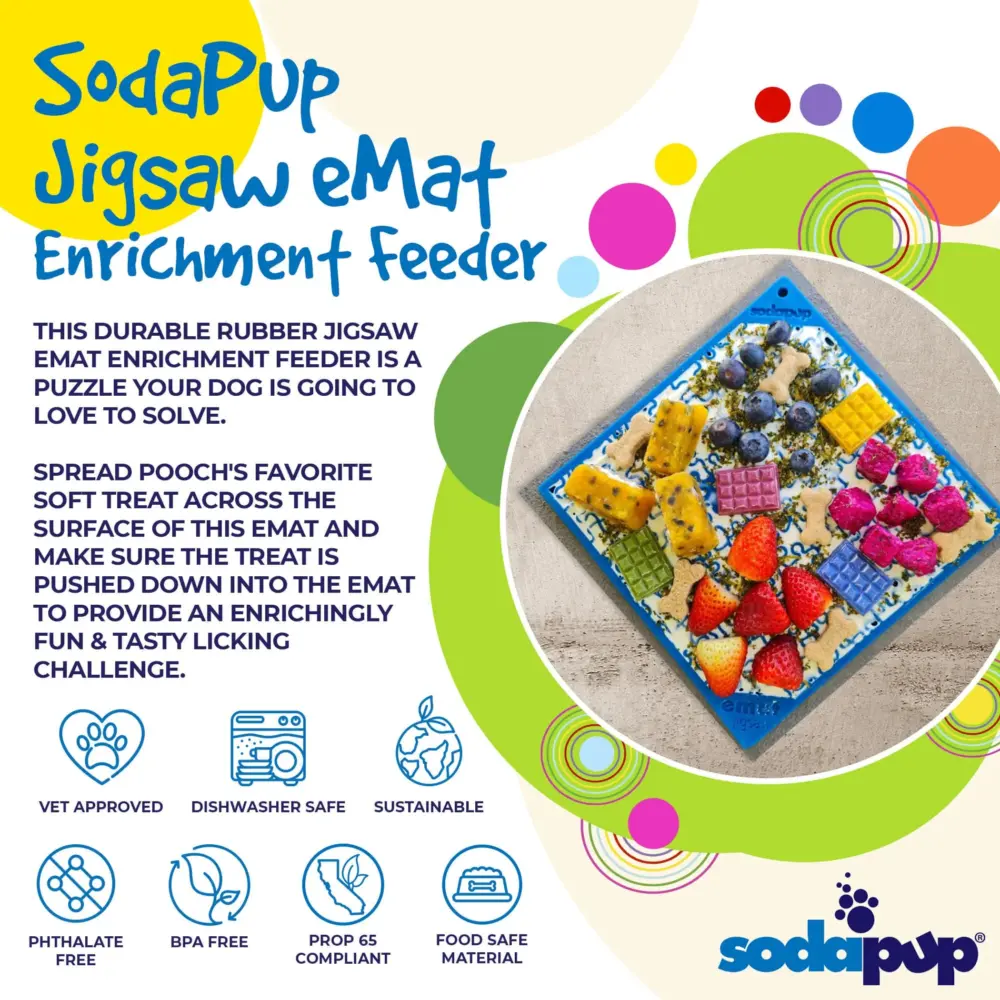
Two toys from our toys and play range fit this split, one for each dog, and a lick mat gives either dog a quiet job once play is over.
-
Fire Hose Crocodile Dog Toy, View product
$30.95
Why it fits: About 26 in long and stuffing-free, it gives the big dog a tug game with you to burn energy before shared play. Supervise, and retire it once it shows wear.
-
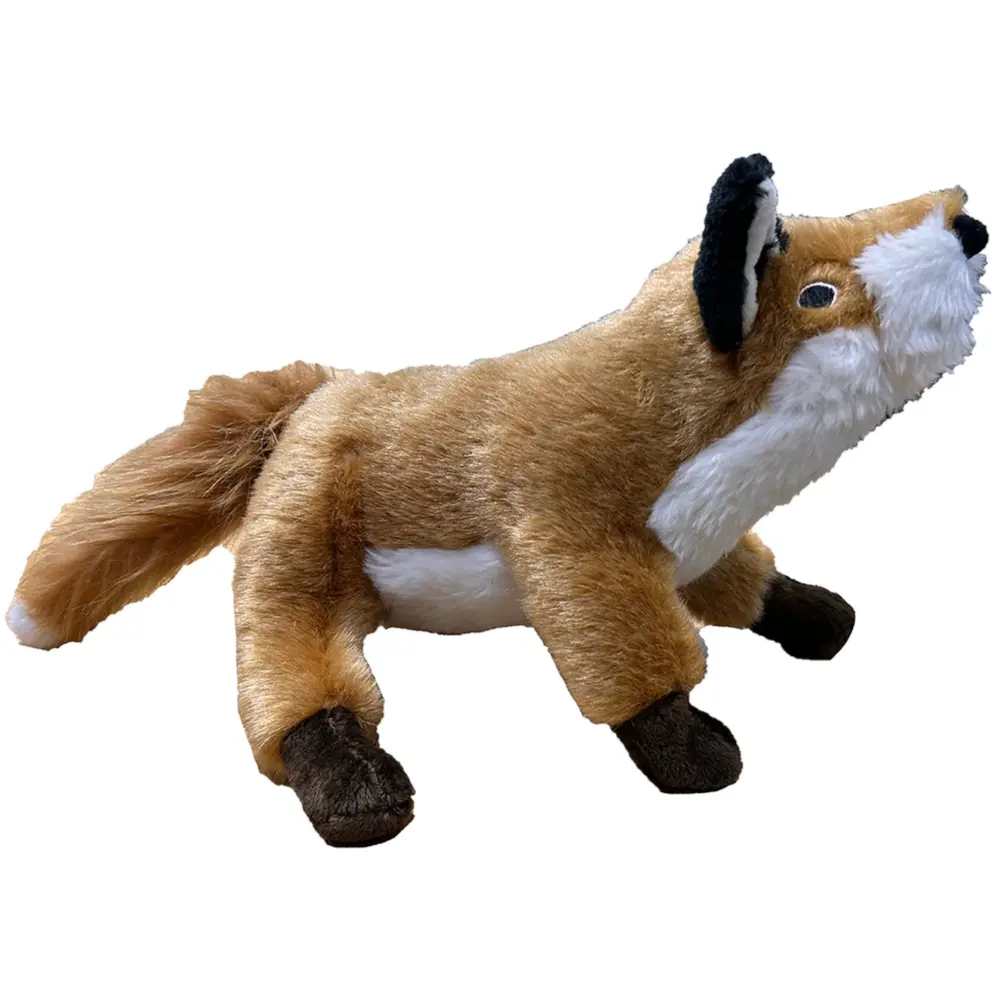
Realistic Plush Fox Dog Toy with Squeaker, View product
$30.95
Why it fits: Soft plush about 10 in long with a 6 in tail, best for gentle to moderate chewers: a carry toy for the small dog's own room, kept away from a big dog who shreds.
-
SodaPup
Jigsaw Enrichment Lick Mat for Dogs & Cats, Choose color
$25.95
Why it fits: Suits dogs of all sizes and is dishwasher safe: a calm job after play, given to one dog at a time or with a mat for each dog on opposite sides of a gate, so neither has to guard it.



Beds and resting spots
Both dogs need sleep they don’t have to defend. Give each its own bed, sized for its own body, and put the small dog’s inside its gated room, where the big dog can’t flop onto it or nose it awake. The small dog borrowing the big bed is fine if the big dog doesn’t mind; the big dog squeezing into the small bed leaves the small dog nowhere to go, so send the big dog back to its own.
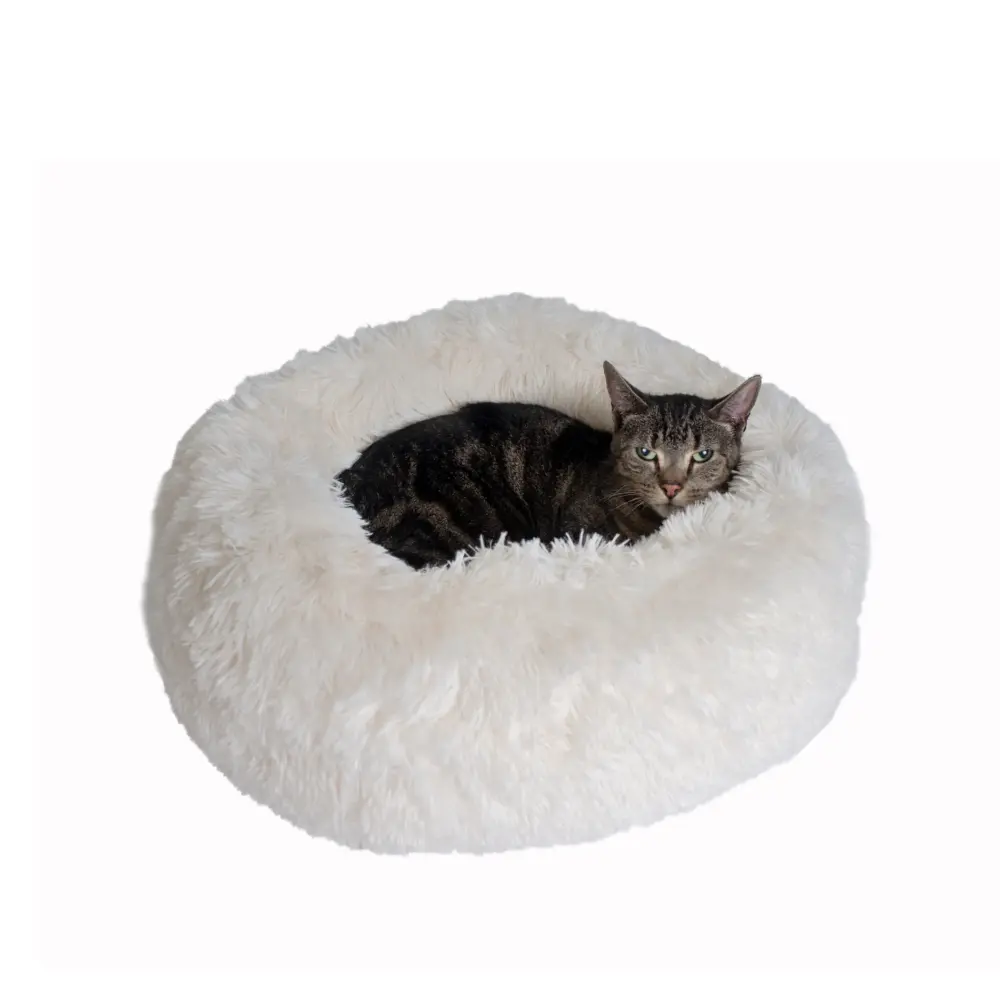
Until you trust the dogs alone together, keep their nighttime sleeping spots apart as well. For the small dog’s gated retreat, the Armarkat Ultra-Plush Cuddler Bed in our beds and comfort range is sized for cats and small dogs, with the Small at 22 x 22 x 8 in, a raised rim to curl against and a skid-free base. It’s a bed for the small dog, not one for the big dog.
Walking a big dog and a small dog together
Walk them separately until each one walks well on a loose leash alone, then try short walks together somewhere quiet, each dog on its own leash and in a harness fitted to its own size.
- Set the pace for the small dog. Short legs take more steps to cover the same loop, so a walk that barely warms up the big dog can be a full outing for the small one. Do the shared walk at the small dog’s pace, then give the big dog an extra walk, run or game of fetch on its own.
- Leave room for a lunge. Give the dogs enough space that if the big dog lunges at a squirrel or another dog, it doesn’t land on the small dog or yank its leash across it.
- Split up when one dog is struggling. A tired, sore or nervous dog does better on a short walk alone than being dragged along on the other dog’s schedule.
If either dog needs a harness, our walking and training range has one for each end of the gap; measure each dog’s chest and check the size chart first.
-
Mr. Peanut’s
PetTrek Padded Harness and Leash Set, Choose size & color
Price range: $24.95 through $26.95
Why it fits: Comes in XS to Large with a matching leash and reflective trim, so the small dog gets a padded harness sized to its own chest and a lead of its own.
-
Lupine Pet
Reflective No-Pull Dog Harness, Choose size & design
Price range: $41.95 through $45.95
Why it fits: For medium and large dogs only, in 16 to 26 in and 26 to 38 in girths: the front clip turns a pulling big dog back toward you on shared walks. Uses the leash you already own.


Our guide on how to walk two dogs at once covers leash positions, untangling and what to do when one dog reacts. Car rides follow the same idea, one restraint per dog and space between them; see traveling with two dogs in the car.
When to call a trainer
Get help from a certified trainer who uses reward-based methods, or a veterinary behaviorist for serious aggression, if you see any of these:
- A fight, or any injury to either dog.
- The small dog avoids rooms, hides for much of the day or won’t eat when the big dog is nearby.
- The big dog stalks, stares at or chases the small dog and can’t be called off.
- Growling, snapping or freezing over food, toys, beds or people that keeps happening.
- You can’t interrupt play once it starts.
- Things are getting worse, not better, after several weeks of careful management.
Until then, keep the dogs apart whenever you can’t watch them, using gates, crates or rotating rooms, so neither one gets to practice the problem. If either dog’s behavior changes suddenly, book a check with your veterinarian first: a dog in pain can be less tolerant of play and handling, and an older small dog with sore joints may start snapping at a big dog it used to put up with.
Related guides
-
Buying guide
Gifts for Small Dogs: Beds, Coats, Car Seats and More That Fit
Gift ideas chosen by size, not breed: a rimmed cuddler bed, a coat in XXS to Medium, a booster seat for dogs up to 24 lb, a backpack carrier up to 25 lb, a padded XS or Small harness set and a 10-inch plush fox, plus the measurements to get before you order.
-
Buying guide
What to Get Your Dog for Christmas: Gifts for Tuggers to Nappers
Choose your dog's Christmas gift by what they already do: a stuffing-free fire hose toy for tuggers and shredders, a plush fox for gentle carriers, a lick mat or slow feeder for lickers and fast eaters, and a cuddler bed or coat for small dogs, plus safety checks, unwrapping and gifts to skip.
-
Guide
Why Do Dogs Like Squeaky Toys? And How to Keep Squeaker Play Safe
A squeak sounds like small prey and goes off the instant your dog bites, so every chomp pays off. Why some dogs squeak for hours or whine with a toy, what to do about a dog who digs out the squeaker, how to choose a squeaky toy and how to live with the noise.