Puppies & Kittens How-to
How to Introduce a Puppy to an Older Dog: First Meeting to First Month
Short answer
Meet outdoors on neutral ground first, each dog on a loose leash with its own handler, for a few minutes. At home, use gates or a pen and separate bowls, beds and chews so the puppy can’t pester your older dog at meals, over toys or at rest. Supervise all time together; settling in can take weeks or months.
Before day one: separate beds, bowls and a retreat
Set the house up before the puppy arrives, so the first days are about getting used to each other rather than competing for the good bed. Be realistic about what your older dog can give: the AKC article on when to get a second dog points out that an old dog may not be physically able to play with or tolerate a puppy. Plan for a dog who mostly wants to be left alone, and treat any friendship as a bonus.
- A puppy-free retreat for your older dog: a room behind a baby gate, or its usual bed in a corner the puppy can’t reach, with water nearby.
- A pen or crate for the puppy, so it has somewhere to nap and the dogs can see each other without contact. Our new puppy checklist covers crate sizing and the rest of the shopping list.
- Separate bowls and feeding spots, chosen before the first meal rather than at it.
- Your older dog’s treasures put away: favorite toys, chews and anything it has ever guarded, out of the puppy’s reach.
- A harness and leash for the puppy, fitted before the meeting, plus a second adult to hold one leash.
- A vet check for both dogs. Your older dog should be up to date on vaccines and recently examined; ask your veterinarian where the puppy can safely go before its own vaccines are finished.
If your older dog has a history of snapping at other dogs or guarding food and toys, talk to a qualified trainer before the puppy comes home, not after the first scuffle.
Two items cover the puppy’s side of the list, one from our walking and training gear and one from our feeding and enrichment range:
-
Mr. Peanut’s
PetTrek Padded Harness and Leash Set, Choose size & color
Price range: $24.95 through $26.95
Why it fits: A harness and matching leash for the puppy's first meeting, in XS to Large; measure the chest behind the front legs and refit as it grows.
-
SodaPup
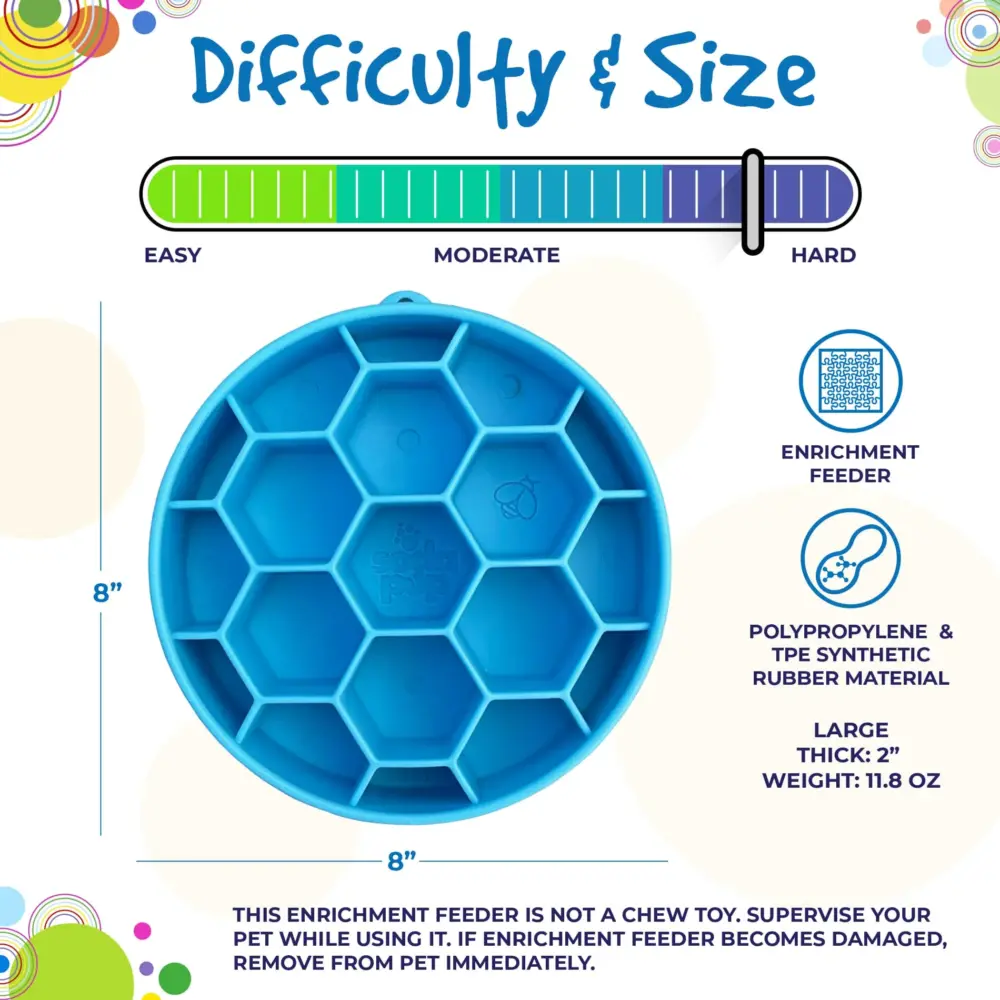
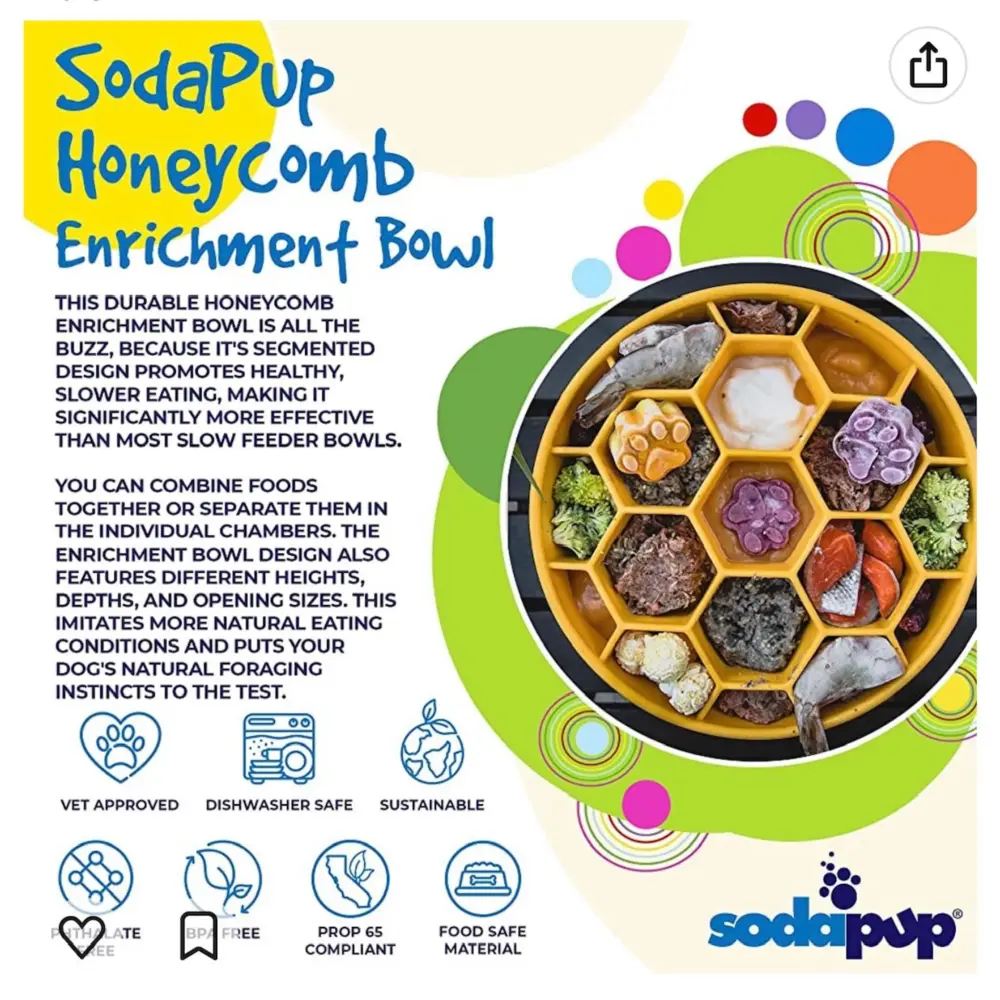
Honeycomb Slow Feeder Dog Bowl, View product
$30.95
Why it fits: A bowl of the puppy's own for meals apart; honeycomb ridges make a fast eater slow down and work for each mouthful instead of gulping.


The first meeting: outdoors, on loose leashes
The AKC advises introducing the dogs on leash in a neutral place, with another adult handling one of them, and the steps below follow its advice. Away from home, your older dog has no doorway, yard or sofa to defend. For a puppy that hasn’t finished its vaccines, skip parks and busy sidewalks; a friend’s yard that only healthy, vaccinated dogs use is safer, and your veterinarian can confirm the choice.
- Walk your older dog first, at its own pace, so it arrives relaxed rather than restless.
- One handler per dog. Clip the puppy’s leash to its harness rather than its collar, and keep slack in both leashes so neither dog feels held back.
- Walk before you greet. Pick a route your older dog doesn’t usually take and walk a few yards apart, in the same direction. A puppy that can’t walk on a leash yet can sniff around nearby instead.
- Let them sniff for a few seconds. Praise calmly, then have each handler call their own dog away with a treat before either one gets wound up.
- Go again only if both look relaxed. Loose bodies, soft wags and polite sniffing mean try another greeting. A stiff body, a hard stare or a growl means end it there.
- Stop within a few minutes, even if it’s going well. A short, dull meeting beats a long, exciting one.
- At home, let your older dog walk in first. The puppy goes straight to its pen, and indoor visits start once both have settled.
Tip
An older dog that sniffs once and walks off has passed the first meeting. Ignoring a puppy is a polite way of saying not now, and it’s exactly the reply you want to protect.
Bringing the puppy inside: gates, pens and short visits
Indoors, the same AKC article suggests letting the dogs interact safely using a crate or pen, alternating one dog in and one dog out, so either dog can walk away when it has had enough. Move through these stages at your older dog’s pace, not the puppy’s. The AKC says the adjustment period could take days, weeks or months.
| Stage | What it looks like | Move on when |
|---|---|---|
| Gate only | Puppy in its pen, older dog loose | Older dog eats and rests as usual |
| Short visits | A few minutes together, puppy leashed | Older dog stays relaxed or walks off |
| Longer visits | Gate open while you watch | Puppy backs off when warned |
| Free time | Together whenever you are watching | Unsupervised only once fully settled |
Time visits for when both dogs are calm: after your older dog’s walk and after the puppy has played and been out to potty, not the minute it wakes up bursting with energy. Keep your eyes on both dogs whenever they’re together until the adjustment period is over, as the AKC advises. When you can’t watch, the puppy goes in its pen or crate.
If your puppy will end up much bigger than your older dog, rough play turns risky long before it’s full grown; our guide on whether big and small dogs can live together covers play rules for a size gap.
Meals, toys and chews: heading off the flashpoints
Most early friction in a puppy-and-older-dog home starts over something one dog has and the other wants. Take those things out of the shared space for now.
Meals
- Feed the dogs in separate rooms, in crates or on either side of a gate, at the same times every day.
- Pick up each bowl as soon as that dog has finished. The AKC advises separate food and water bowls and no food bowls left out after mealtime.
- If your puppy eats more meals a day than your older dog, serve the extra ones with your older dog in another room.
- A puppy that bolts its food and then heads for the other bowl needs a slower meal and more distance; our guide on how to slow down a dog that eats too fast covers feeding several dogs apart.
Toys and chews
- The AKC suggests holding back bones and toys until the dogs have shown they get along.
- After that, put out more than one of each kind so there’s no single prize. Our toy rotation plan suggests at least one of each kind per dog, plus a spare.
- Give chews and long-lasting treats in separate spaces, and collect them before the dogs are back together.
- Keep your older dog’s favorite toys in its retreat, where the puppy never gets them.
- If the puppy grabs your older dog’s toy, call the puppy away and trade it a treat for the toy, rather than leaving your older dog to take it back.
Older dog growling at the puppy: what’s normal
Expect some of it. The AKC’s second-dog article says your older dog may correct your puppy with a growl or snap from time to time. Puppies climb on faces and chew ears and tails, and many miss the first quiet hints, so an adult dog may move from a look to a lip lift to a growl or an air snap.
Usually normal
- A growl, lip lift or air snap that stops the moment the puppy backs off.
- The puppy retreats, perhaps with a squeal, and comes back more politely.
- Your older dog goes back to resting afterward, with no lingering stare.
Time to step in
- Your older dog keeps going after the puppy has backed off, pins it or chases it.
- The puppy ignores warning after warning. Call it away and give it something else to do, or a nap in its pen.
- Your older dog seems on edge all the time, blocks doorways or growls as soon as the puppy enters the room.
- Any bite that marks the skin, or a puppy that limps or cries when touched afterward. Call your veterinarian.
Don’t punish your older dog for growling. The AKC’s guide to why dogs growl says punishing a growl may stop the sound but won’t address the emotion causing it, and that a dog who links the correction with another dog may come to feel worse about that dog. Protect your older dog instead: call the puppy away before it reaches the face and ears, and reward your older dog for staying patient.
Rest and one-to-one time for your older dog
The AKC recommends that each dog get some time alone with you every day. For an older dog, that time and an undisturbed nap often matter more than any toy.
- Keep its routine. Same meal times, same sofa spot, same bedtime, and its usual walk without the puppy, at its own pace.
- Protect rest. When your older dog takes itself to bed or behind the gate, the puppy doesn’t follow; close the gate or call the puppy away.
- Schedule puppy naps. Puppies need a lot of sleep, and an overtired puppy is often the one that won’t leave the older dog alone. Our guide on how to calm an overtired puppy shows how to build pen naps into the day.
- Give the older dog a job. A sniff walk, a find-it game or a few old tricks; our guide to enrichment for senior dogs has gentle options.
- Share quiet time. A lick mat each, on either side of a gate and a few feet back from it, lets the dogs be near each other with nothing to compete over. Skip this if either dog guards food.
-
SodaPup
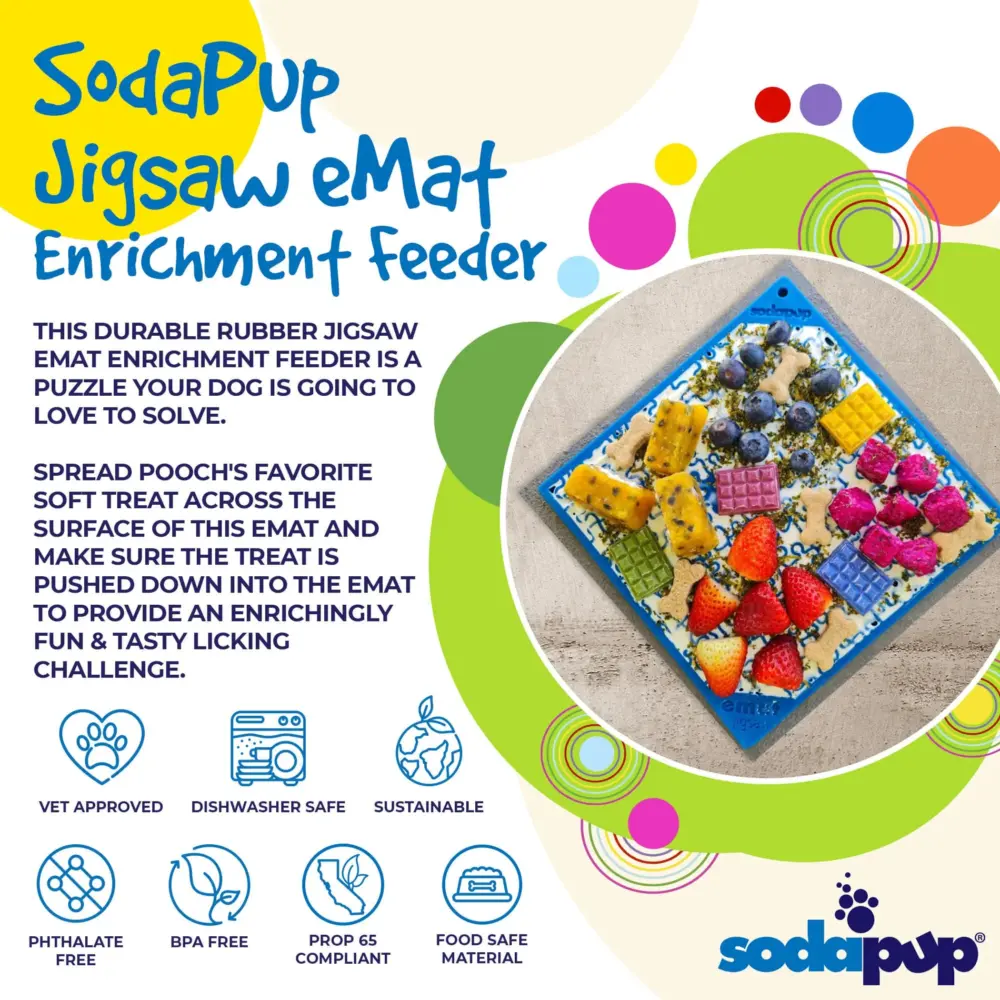
Jigsaw Enrichment Lick Mat for Dogs & Cats, Choose color
$25.95
Why it fits: A calm job for each dog on either side of a gate; press soft food into the jigsaw grooves, and get one mat per dog so neither has to share.
-
Realistic Plush Fox Dog Toy with Squeaker, View product
$30.95
Why it fits: A soft plush fox for carry and gentle tug games in your older dog's one-to-one time; it squeaks, so put it away before the puppy is back.


Mistakes that make the first month harder
- Meeting at the front door as the puppy arrives, with your older dog on its own doorstep.
- Letting them work it out. A puppy that learns pestering pays off is hard to undo, and so is an older dog that learns no one will step in.
- Too much together time, too soon. Short visits that end calmly build tolerance; long ones wear your older dog down.
- Expecting a babysitter. Your older dog isn’t there to tire the puppy out. Play and train with the puppy yourself.
- All the attention on the puppy. Greet your older dog first when you come home.
- Leaving them alone together early. Use the pen or separate rooms until you’ve seen weeks of calm.
Troubleshooting the first few weeks
The puppy won’t leave your older dog alone
Shorten visits and keep the puppy on a leash you are holding, so you can guide it away without grabbing. Give it more play and training on its own beforehand, and a nap afterward. Reward the moments it settles near your older dog without touching.
Your older dog hides or stops eating
Go back to the gate-only stage for a few days and make the retreat its own again. If your older dog skips meals, or seems stiff, sore or unusually withdrawn, call your veterinarian rather than waiting for it to adjust.
Your older dog snaps more than it used to
Pain can lower anyone’s patience. VCA’s guide to telling if a dog is in pain lists growling when other pets in the household approach among the behavior changes to watch for, and notes that dogs tend to hide pain. Book a checkup, especially for an older dog with stiff joints.
When to separate them and call for help
Safety note
If a scuffle turns into a fight, keep your hands away from both dogs’ heads and don’t grab collars. The AKC’s guide to breaking up a dogfight suggests a loud noise, or a board, chair or baby gate pushed between the dogs. Then put them in separate rooms and call your veterinarian about any bite, even a small one.
The AKC’s advice is to get professional training help if the relationship is consistently rocky. Watch for:
- A fight, or any injury to either dog.
- Your older dog avoiding rooms, hiding for much of the day or refusing food with the puppy around.
- Growling or snapping that gets more frequent week by week instead of settling.
- Guarding of food, toys, beds or people that keeps happening.
- A puppy you can’t interrupt, or corrections that keep getting harder.
Start with your veterinarian for any sudden change in your older dog, then find a certified trainer who uses reward-based methods, and ask your veterinarian about a veterinary behaviorist if either dog has bitten. While you wait for help, keep the dogs apart whenever you can’t watch them, so the puppy can’t rehearse pestering and your older dog never feels cornered.
Related guides
-
Guide
Puppy Enrichment Ideas: Sniffing, Licking, Chewing and Brain Games
Short, puppy-sized jobs for the nose, mouth and brain: which food puzzles suit a young puppy, sniffing games for small spaces, chewing and carrying, new surfaces to explore, a setup for work hours and a sample day built around naps.
-
How-to
Back-to-School Routine for Dogs: Helping Your Dog Adjust
A two-week plan for families whose dog got used to company all summer: move wake-up, walks and meals early, give a real morning walk and a breakfast that takes time, cover the empty midday, keep departures calm, and know the signs that call for a veterinarian or trainer.
-
Buying guide
What to Get Your Dog for Christmas: Gifts for Tuggers to Nappers
Choose your dog's Christmas gift by what they already do: a stuffing-free fire hose toy for tuggers and shredders, a plush fox for gentle carriers, a lick mat or slow feeder for lickers and fast eaters, and a cuddler bed or coat for small dogs, plus safety checks, unwrapping and gifts to skip.