Enrichment for Senior Dogs: Gentle Brain Games, Sniffing and Easier Food Puzzles
Good enrichment for senior dogs looks a lot like the games your dog has always enjoyed, made shorter, slower and more about the nose. Trade long fetch sessions for unhurried sniff walks and scent games, make food puzzles easy to win, and keep each session to a few minutes on non-slip footing. An older dog still needs a daily job for its brain; it just needs one its body can manage.
Short answer: shorter, gentler and led by the nose
A simple daily menu for an older dog:
- Sniff: one slow walk where your dog sets the pace and stops to smell.
- Search: a two-minute find-it game on a rug at home.
- Lick or forage: part of a meal on a lick mat or in an easy puzzle.
- Learn: a quick refresher of an old cue, or one low-impact new trick.
- Rest: a warm, padded spot to settle in afterward.
You do not need all five daily: two or three short sessions, spread through the day, suit many older dogs. Watch your dog, not the clock.
Enrichment for senior dogs: what changes, and what doesn’t
What stays the same is the wanting. Older dogs still like to sniff, search, lick, carry a toy and spend time with you. What changes is the body: stamina drops, joints stiffen, eyesight and hearing may fade, and recovery takes longer. Large and giant breeds tend to reach their senior years sooner than small dogs, and your veterinarian can tell you when yours counts as a senior.
So change the intensity, not the idea: fewer repetitions, lower heights, softer surfaces, easier puzzles and more breaks. If your dog is stiff or sore the next morning, it did too much. Scale back, and ask your veterinarian if the stiffness keeps returning.
If eyesight or hearing is fading
Lean on smell: use stronger-smelling treats, keep furniture, water and the bed where they have always been, and approach so your dog can see you coming. Pair spoken cues with a hand signal now, so the signal still works if hearing fades.
Sniff walks: slower routes with more stops
A sniff walk is measured in smells, not miles. Reading the ground is mental work with very little running or jumping.
- Pick a flat, quiet route, such as a grassy park edge or a quiet block, without steep hills, long stairs or hot pavement.
- Loosen the leash and wait while your dog sniffs; lingering is the point.
- Count the walk in minutes; two short outings may suit your dog better than one long one.
- Turn back before your dog tires, because the way home is just as far.
Change the route now and then: a new street, or your usual loop walked in reverse, brings fresh smells without adding distance. Older dogs may cope less well with heat and cold, so walk in the cool of a summer day and keep winter outings short.
On days when a walk is too much, sit with your dog on the porch or a park bench and let it watch and smell the world go by. VCA Animal Hospitals includes short sniffing walks, puzzle toys and refresher training in its mental stimulation tips for senior dogs.
Scent games on the living-room floor
Searching takes concentration but little movement. If your dog already knows “find it,” keep the game and change the setup:
- Start beside the bed. Toss a strong-smelling treat a step away and say “Find it,” so a dog that is slow to get up can still play.
- Keep hides low: beside a chair leg, under the edge of a towel, behind a door. Nothing on furniture, and nothing near the stairs.
- Search one room, not the house, and use the same room each time if eyesight is fading.
- Let it search lying down: fold a few pieces of kibble loosely into a towel beside the bed, and put the towel away if your dog chews fabric.
- Stop after five or six finds, while your dog still wants more.
For variety, try the cup game: three upturned plastic cups, a treat under one, and your dog nudges until it finds the right cup. The American Kennel Club’s guide to toys and games for senior dogs rates hide-and-seek among the best games for older dogs and notes that fetch or chase may no longer suit them. To teach nose games from scratch, see our indoor games for cold, dark or rainy days, and leave out its hallway fetch.
Licking and easy food puzzles
Licking is a settled, low-effort activity a dog can do lying down. Spread a thin layer of your dog’s usual wet food on a lick mat, set it beside the bed, and your dog has a quiet job for a few minutes. For spreads and freezing times, see what to put on a lick mat.
With puzzles and slow feeders, make the first sessions very easy: lay food on top of the ridges rather than packing it in, and start a lick mat unfrozen, since freezing makes it last longer but also harder. If your dog walks away, the puzzle is too hard. Our guide to food enrichment for dogs has more mealtime ideas you can make easier.
Use part of the daily ration rather than extra food, and ask your veterinarian about amounts if your dog needs to manage its weight or eats a special diet.
If you want a purpose-made mat
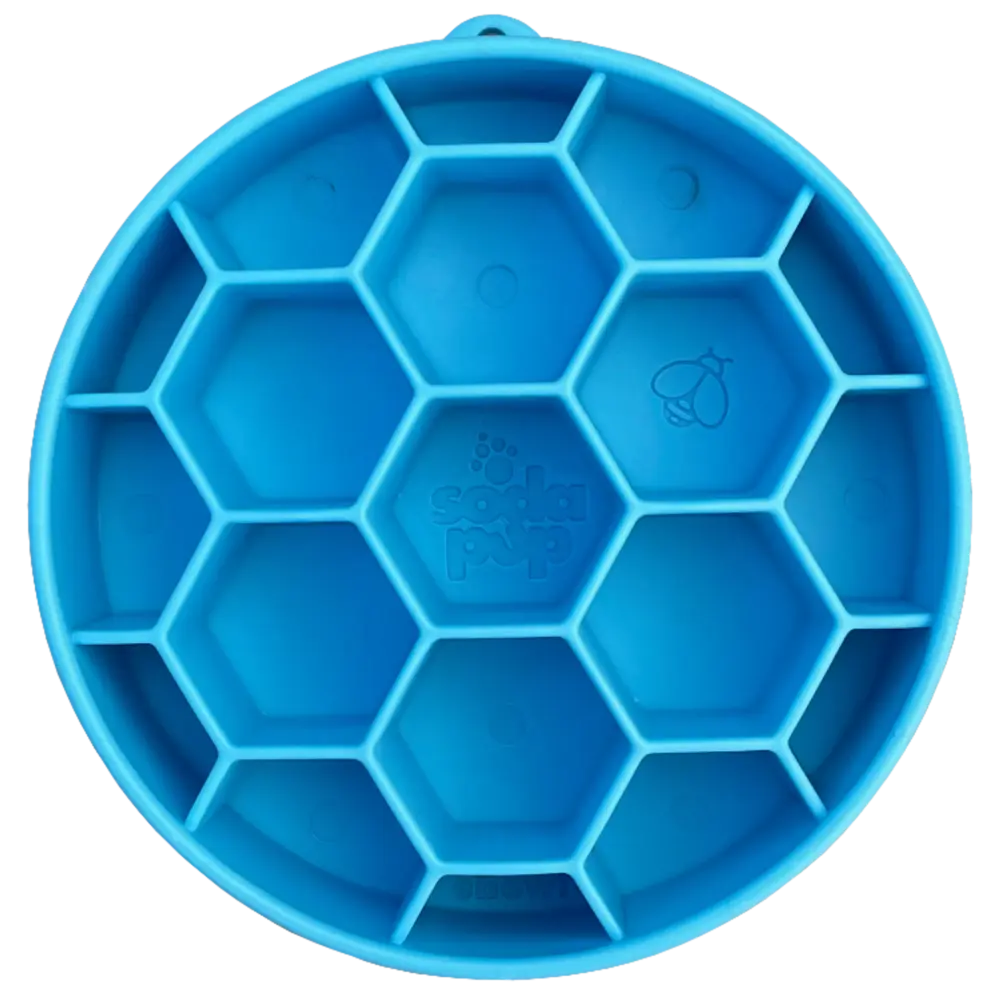
- SodaPup Jigsaw Enrichment Lick Mat: a jigsaw texture that holds soft food and slows licking. Made in the USA by SodaPup, dishwasher safe, suits dogs of all sizes, in Green or Pink.
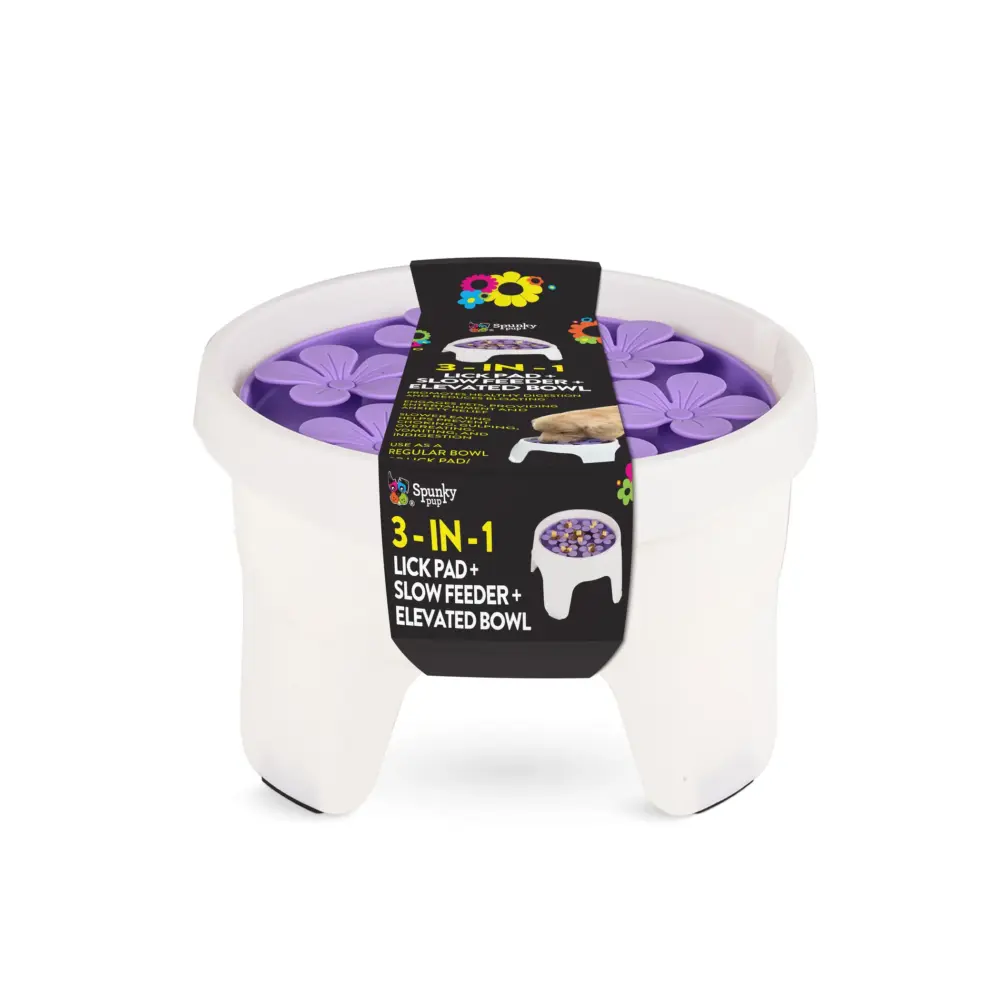
- Spunky Pup 3-in-1 Lick Pad, Slow Feeder & Elevated Bowl: one piece of food-grade silicone with a lick pad and a slow-feeder side, and it can be set up as an elevated bowl; ask your veterinarian whether a raised bowl suits your dog before using it that way. Dishwasher safe.
Stay nearby during each session, and pick the mat up if your dog starts chewing it. Both are in our lick mats and slow feeder bowls range.
-
Spunky Pup
3-in-1 Lick Pad, Slow Feeder & Elevated Bowl
$34.95
-
SodaPup
Jigsaw Enrichment Lick Mat for Dogs & Cats
$25.95

Short training refreshers and gentle play
Learning is enrichment too. Keep it to three to five repetitions, a minute or two at a time, with small, soft treats. Good low-impact choices:
- Hand target: your dog touches its nose to your open palm.
- Chin rest: your dog rests its chin on your hand or knee, which also helps with handling and grooming.
- Name a toy: say the toy’s name each time your dog picks it up, then ask for it by name.
Skip tricks that ask for jumping, standing on the hind legs, fast spinning or rolling over on a hard floor.
For play, choose soft, light toys. Roll a toy along the floor rather than throwing it, keep tug low and gentle, and let your dog win often. Swap a few toys in and out of a cupboard every week or so to keep old toys feeling new. If your dog never cared for toys, our guide for dogs who don’t play with toys works at any age; some seniors simply prefer sniffing, and that is fine.
Setting up for comfort: footing, rests and timing
- Footing: put a rug, runner or yoga mat down on smooth floors before any game, and play on carpet or grass when you can.
- Timing: play when your dog is rested, not straight after a long walk.
- Length: a few minutes per game and about ten at most before a break. End while your dog is still keen.
- Other pets: if a younger dog crowds in or steals the food, give your senior its own sessions in another room.
- Rest: a padded bed nearby, away from drafts. Many older dogs feel cold floors more; see how to keep a dog warm at night indoors for bed and blanket ideas.
When to check in with your veterinarian
Enrichment keeps an older dog busy and content, but it is not a treatment for anything. Call your veterinarian if you notice:
- Changes in appetite, thirst or weight.
- Dropping food, chewing on one side or pawing at the mouth.
- Limping, stiffness, trouble getting up or with stairs, or soreness after gentle activity.
- A sudden loss of interest in walks, food or games your dog used to enjoy.
- Confusion, getting stuck in corners, pacing at night or new accidents in the house.
- Bumping into things, or not responding when called.
- Heavy panting, coughing, weakness or collapse during or after activity; seek care right away.
If your dog has a joint, heart or other ongoing condition, ask your veterinarian what activity suits it before starting anything new. More ideas are in our feeding and enrichment guides.
Senior dog enrichment FAQ
How much mental stimulation does an older dog need?
There is no set amount. A sniff walk, a find-it game and a lick mat spread through the day suit many older dogs. If your dog is restless, add a session; if it seems tired or sore, do less.
Do senior dogs get bored?
They can. An older dog with fewer walks may pace, whine or follow you around looking for something to do, and a sniff walk or find-it game often settles it. If your dog sleeps far more, loses interest in things it loved or is restless at night, see your veterinarian, because those changes are not always boredom.
Are lick mats good for senior dogs?
For many older dogs, yes: licking is calm and can be done lying down. Keep the layer thin and supervise, and ask your veterinarian first if your dog has mouth pain or a special diet.
What toys are good for senior dogs?
Soft, light toys that are easy to carry, simple food puzzles and a lick mat suit most older dogs. Skip hard chews and toys that mean long chases.
Can senior dogs still learn new tricks?
Yes. Older dogs can learn new cues, and refreshing old ones is brain work too. Keep sessions to a minute or two and pick low-impact tricks such as a nose touch or a chin rest. If your dog suddenly forgets cues it knew well, tell your veterinarian.
Related guides
-
Comparison
Slow Feeder vs Lick Mat: Which One Does Your Dog Need?
A slow feeder stretches out a meal; a lick mat fills time and settles a dog. Buying the wrong one for the problem is the usual mistake. This comparison covers both, including the dogs who defeat them.
-
How-to
How to Teach a Dog to Wait for Their Food Bowl, Step by Step
Lower the bowl only while your dog stays sitting, then release them to eat. This step-by-step plan uses your dog’s own meals and covers longer waits, distractions, jumping, barking and lunging, multi-dog kitchens, and what to do if your dog guards the bowl.
-
How-to
How to Stop a Dog Begging at the Table: A Mealtime Plan That Holds Up
Make the table stop paying: a no-scraps rule everyone keeps, your dog’s own dinner served as you sit down, a go-to-your-bed cue with a lick mat as the job, and a gate or tether while the habit forms.