Feeding & Enrichment Comparison
Slow Feeder vs Lick Mat: Which One Does Your Dog Need?
Short answer
A slow feeder is a bowl with ridges that makes a dog work through a normal meal, usually dry food. A lick mat is a flat textured surface for soft food that gives a dog a slow, settling activity. Gulping needs a slow feeder; boredom or winding down needs a lick mat.

They solve different problems
Both get recommended for the same complaints, which is why people end up with one that does not help. The question to start with is what you are actually trying to fix.
- Dog inhales dinner in thirty seconds: slow feeder.
- Dog is restless in the afternoon: lick mat.
- Dog needs something to do while you work: lick mat, frozen.
- Dog is on a reduced portion and acts starving: both, spreading the ration.
- Dog gulps air and burps after meals: slow feeder.
- Dog is wound up after a stressful walk: lick mat.
What a slow feeder does
A slow feeder bowl has ridges, channels or a maze moulded into it. The dog has to work food out of the gaps a few pieces at a time, which turns a thirty-second meal into several minutes. That reduces gulping and the air swallowed with it, and it adds a small amount of problem solving to an otherwise automatic part of the day.
It uses the food you already feed, which is its main practical advantage. Nothing extra goes into the dog, which matters if weight is a concern.
What a lick mat does
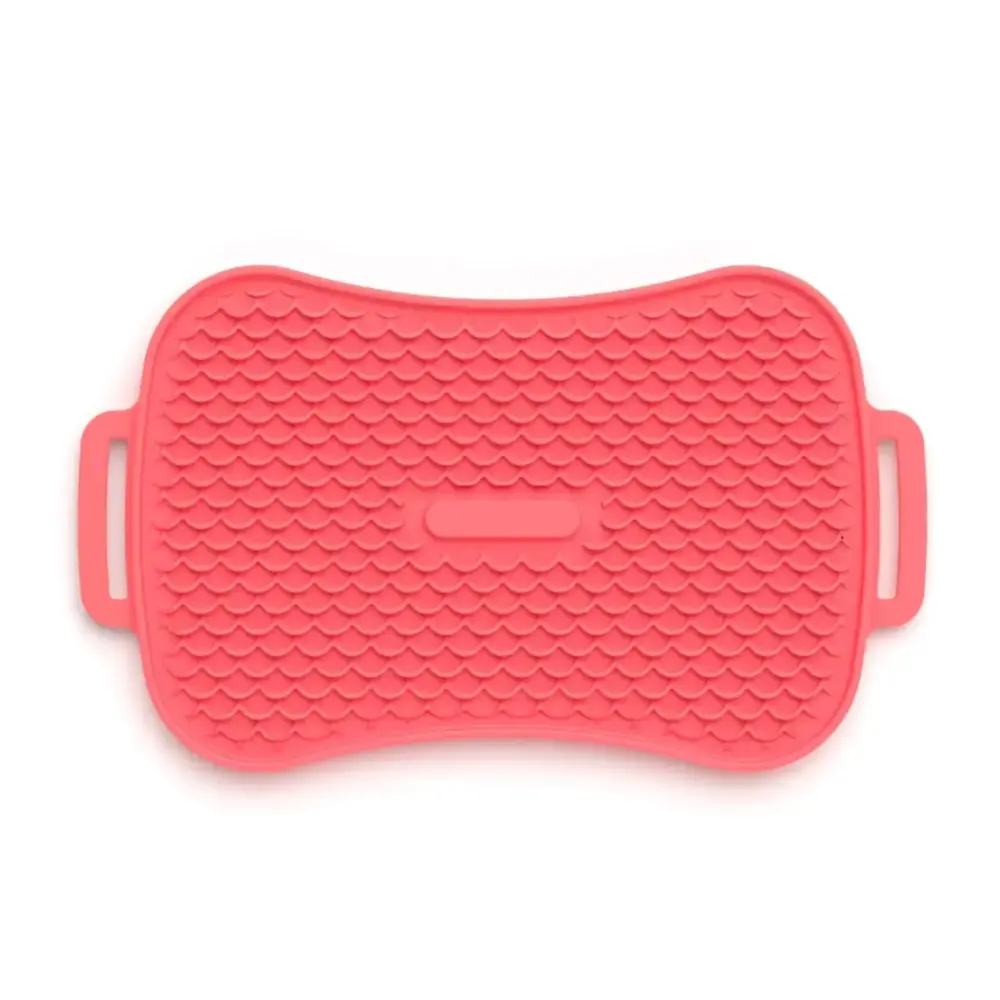
A lick mat is a flat silicone sheet with a textured surface. Soft food pressed into the texture has to be licked out, and licking is a slow, repetitive, self-soothing activity that most dogs settle into.
The value is in the time and the state it produces rather than the food itself. A thin smear of wet food can occupy a dog for fifteen minutes, and frozen it lasts considerably longer.
Side by side
| Slow feeder | Lick mat | |
|---|---|---|
| Food type | Dry, or wet in some designs | Soft, spreadable |
| Main benefit | Slows eating | Fills time, settles |
| Uses the normal meal | Yes | Partly |
| Typical duration | Three to ten minutes | Ten to thirty, longer frozen |
| Cleaning | Dishwasher, fiddly ridges | Dishwasher, easy |
| Best for | Gulpers | Boredom and wind-down |
Dry food, wet food and freezing
Match the food to the tool. Dry kibble in a slow feeder works perfectly; dry kibble on a lick mat does nothing because there is nothing to lick. Soft food in a slow feeder is messy and finished quickly.
- Slow feeder: dry food, or a mix of dry with a little wet to bind it.
- Lick mat: wet food, plain unsweetened yoghurt, plain pumpkin, mashed banana, softened kibble.
- Freeze a loaded mat for two to three times the duration.
- Count it as part of the daily food, not as an extra.
- Check ingredients. Avoid anything containing xylitol, which is toxic to dogs, and go easy on anything rich.
What to put on a lick mat has a longer list, including what to avoid.
Cleaning, honestly
Lick mats are easier. A flat silicone sheet goes in the dishwasher or washes in seconds by hand. Slow feeders with deep narrow channels trap food in corners a brush cannot reach, and a bowl that is washed badly builds a film that smells.
Whichever you buy, wash it daily rather than rinsing. How often to wash dog bowls covers why this matters more than most people assume.
Dogs who defeat both
Some dogs flip a slow feeder over and eat the pile off the floor, and some scrape a lick mat clean in two minutes. Both are solvable.
- Choose a heavier bowl, or one with a suction base
- Put the bowl inside a larger shallow tray so a flipped bowl is contained
- Use a mat with a suction base, or hold it against a wall or the side of a crate
- Freeze the loaded mat so it cannot be cleared quickly
- Increase the difficulty gradually rather than starting hard
- Spread less food more thinly rather than piling it in one place
-
SodaPup
Honeycomb Slow Feeder Dog Bowl, View product
$30.95
Why it fits: A deep honeycomb slow feeder that handles dry, wet or frozen food without tipping easily.
-
Super Feedy
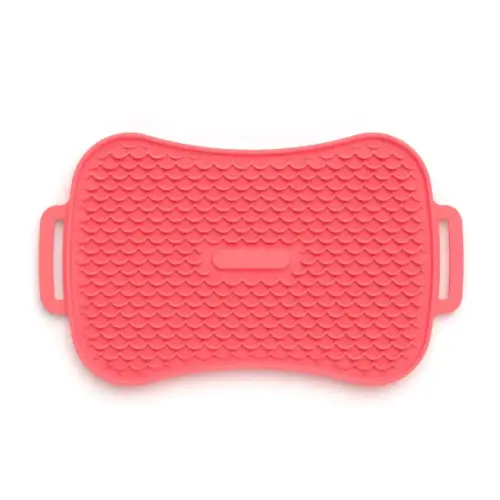
Reversible Dog Lick Mat, Choose color
$37.95
Why it fits: A thick reversible lick mat with two different patterns, so the difficulty can be changed.
-
Super Feedy
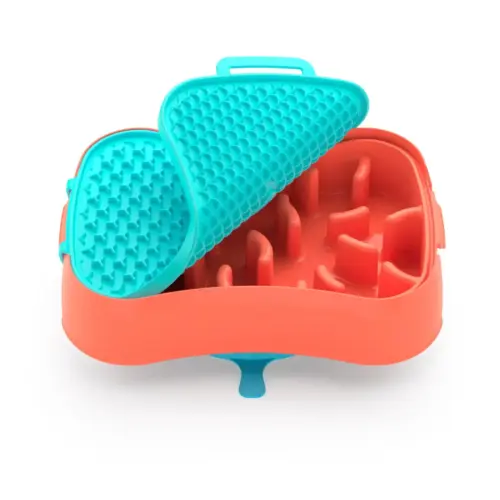
4-in-1 Slow Feeding System, Choose color
$58.95
Why it fits: A slow feeder bowl, a lick mat and a sealing lid in one system, on a suction base.
-
SodaPup
Jigsaw Enrichment Lick Mat for Dogs & Cats, Choose color
$25.95
Why it fits: A jigsaw-pattern lick mat for dogs who clear simpler textures too quickly.
-
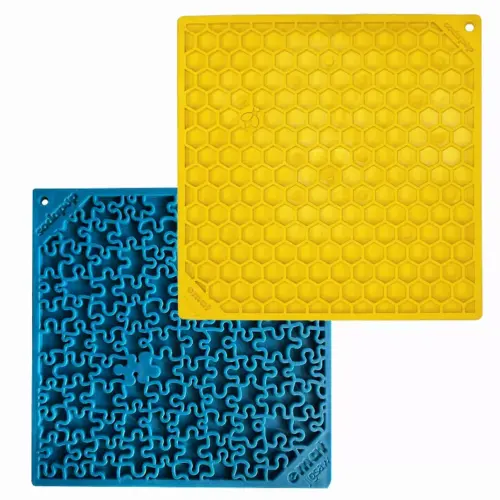
eMat Lick Mat Bundle, View product
$35.95
Why it fits: Two large mats at different difficulties, which is the cheapest way to rotate them.
-
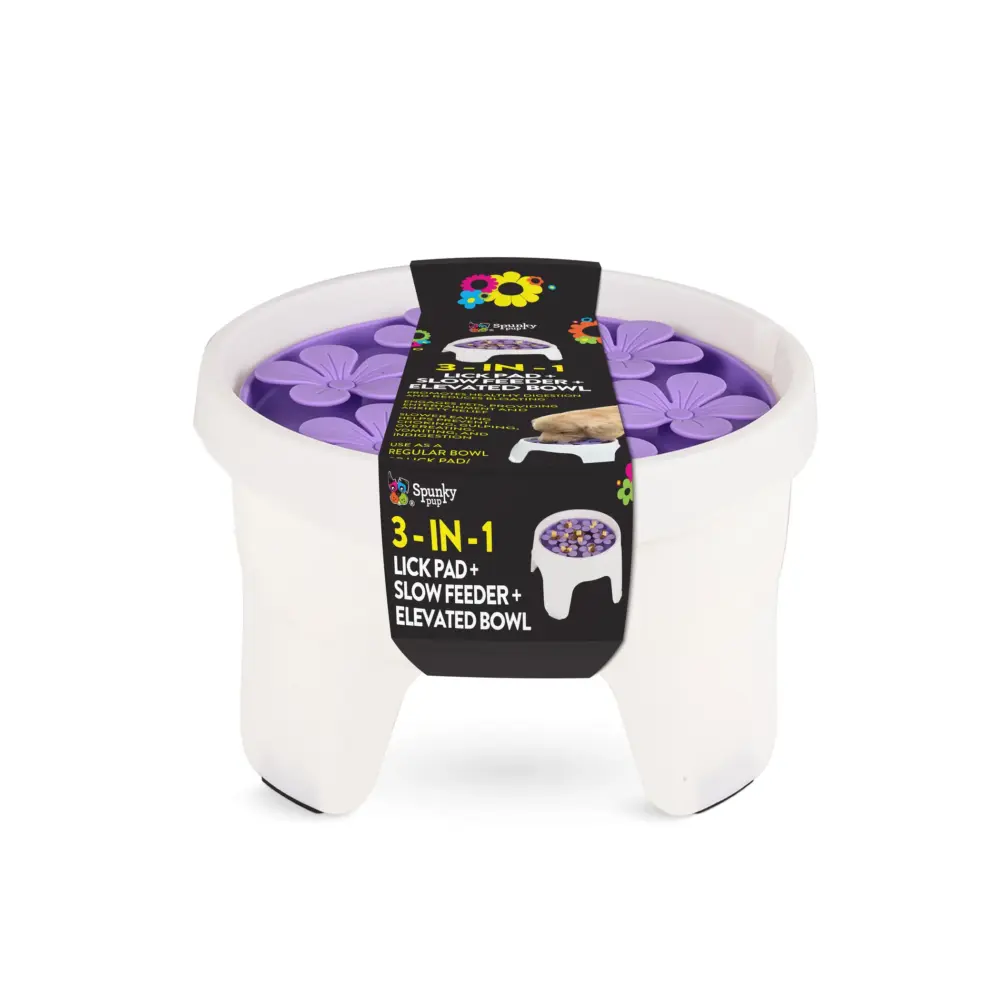
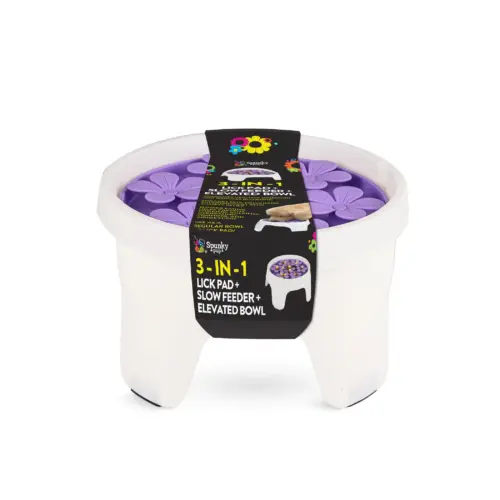
Spunky Pup
3-in-1 Lick Pad, Slow Feeder & Elevated Bowl, View product
$34.95
Why it fits: Lick pad, slow feeder and raised bowl in one silicone piece, for households short on storage.


Which to buy first
If your dog eats too fast, start with a slow feeder, because it fixes the actual problem using food you already buy. If your dog eats at a reasonable pace but struggles to settle, start with a lick mat.
Households that end up using both usually do so for different times of day: the slow feeder at meals, the mat in the afternoon or evening. That is a reasonable place to end up, and it does not need to be the starting point.
What neither one solves
Neither addresses why a dog eats like that. Competition with another animal, meals too far apart, or a history of not having enough are all worth considering alongside the equipment. Slowing down a dog that eats too fast covers the causes.
Safety note
Fast eating with a bloated or hard abdomen, retching or distress after a meal is a veterinary emergency in deep-chested breeds. See when to call the vet about a dog.
Other ways to slow a meal
Neither product is the only option, and several free alternatives work as well or better for some dogs.
- Scatter the meal across a lawn or a rug
- Put the food in a muffin tin with balls on top
- Roll kibble into a towel and let the dog unroll it
- Use a few small bowls in different rooms
- Feed by hand during a short training session
- Put a large safe object in an ordinary bowl to eat around
- Split one meal into three or four smaller ones
Scatter feeding is the one worth trying first. It costs nothing, it adds sniffing to the meal, and for many dogs it slows eating more effectively than a bowl does.
Hygiene, which matters more than it seems
Both products hold food residue in textures that are awkward to clean, and both are commonly used with wet food, yoghurt and other things that spoil. A mat left under the sofa and reused two days later is a genuine hygiene problem rather than a fussy one.
Wash after every use, by hand or in the dishwasher, and let both dry fully before storing. Replace a silicone mat that has torn or developed a rough patch, since those are impossible to clean properly. How often to wash dog bowls covers the wider point.
Common questions
Do slow feeders actually work?
For most dogs, yes, measurably. They extend a meal from under a minute to several. A determined dog will still beat a shallow design, which is why depth and ridge spacing matter.
Can cats use either?
Yes, with smaller, shallower designs. Cats give up faster than dogs if the first attempt fails, so start very easy. Slowing down a cat that eats too fast covers it.
Is a lick mat good for anxiety?
Licking is a settling behaviour and many dogs relax with one, which makes it a useful part of a wind-down routine. It is not a treatment for anxiety, and a genuinely anxious dog needs the wider approach in signs your dog is stressed.
How often can I use a lick mat?
Daily is fine as long as what you put on it comes out of the daily ration. The common mistake is treating it as an extra, which adds up quickly.
Will either help a dog lose weight?
Indirectly. They make a smaller portion last longer, which makes a reduced ration far more bearable. How to check your dog is a healthy weight covers the assessment first.
For boredom specifically, see signs your dog is bored, and for the wider routine, food enrichment for dogs.
Related guides
-
How-to
How to Clean a Lick Mat Properly, Including the Grooves
A lick mat is a textured surface designed to hold food, which is exactly what makes it hard to clean. This covers rinsing before it sets, the soak that does most of the work, when the dishwasher is fine, and what frozen toppings leave behind in the pattern.
-
How-to
How to Check Your Dog Is a Healthy Weight at Home
Scales alone will not tell you whether your dog is a healthy weight. This guide covers the three-part hands-on check vets use, what each result feels like, and the changes that work when the answer is not what you hoped.
-
Comparison
Raised vs Floor Dog Bowls: Which Is Better for Your Dog?
A bowl on the floor suits most dogs. See why owners buy elevated feeders, what the AKC and Merck say about raised bowls and bloat, which dogs a veterinarian may still suggest one for, how to check height and stability, and the bloat signs that need a vet now.