
How to Slow Down a Dog That Eats Too Fast: Bowls, Spreading Tricks and Mealtime Changes
To slow down a dog that eats too fast, make each mouthful take a little effort and take away any reason to race. A ridged slow feeder, a muffin tin or kibble spread on a baking sheet lets your dog reach only a few pieces at a time, and smaller meals in a quiet spot away from other pets remove the pressure to finish first. If fast eating comes with vomiting, coughing or a sudden change in appetite, see your veterinarian.
Short answer: make each mouthful take a little work, and take away the competition
Most fast eaters slow down with two or three of these changes together:
- Spread the food out in ridges, muffin cups or on a flat tray, so it can’t be scooped up in big mouthfuls.
- Split the daily amount into two or three smaller meals, without adding food.
- Feed dogs apart, so nobody eats with one eye on the next bowl.
- Match the depth to the dog: deep ridges for a determined kibble eater, a shallow pattern for wet food and flat-faced dogs.
Why some dogs eat so fast
Fast eating is usually a habit with a reason behind it, and the reason tells you which fix to try first.
- Competition. Another dog, a cat or a toddler near the bowl tells your dog that food left behind may vanish, and dogs who once competed with littermates or in a shelter may keep the habit. Try first: feed dogs apart.
- Hunger. A dog fed once a day may arrive at the bowl very hungry. Try first: split the same daily amount into more meals.
- Easy food. Kibble in a smooth, open bowl can be swept up in big mouthfuls. Try first: spread it out.
- Enthusiasm. Some dogs, and many puppies, simply treat every meal like a race. Try first: a ridged feeder, or hand-feeding part of the meal.
A sudden change in eating speed or appetite is different: see when to call your veterinarian, below.
Slow feeder bowls: how they work, and when a dog needs a harder pattern
A slow feeder spreads the meal across ridges, mazes or bumps, so your dog has to nose, lick and pick food out of the gaps a few pieces at a time. The pattern decides how well it works. Shallow grooves suit soft food and small muzzles but are quick to clear; tall ridges with narrow gaps slow a determined kibble eater, though a small or flat-faced dog may struggle to reach the bottom.
Shallow, deep or both in one piece
- Shallow: a lick mat. The SodaPup Jigsaw Enrichment Lick Mat has a jigsaw texture that holds soft food, so it suits wet food pressed into the grooves rather than loose kibble. It is made in the USA, dishwasher safe and suits dogs of all sizes and cats.
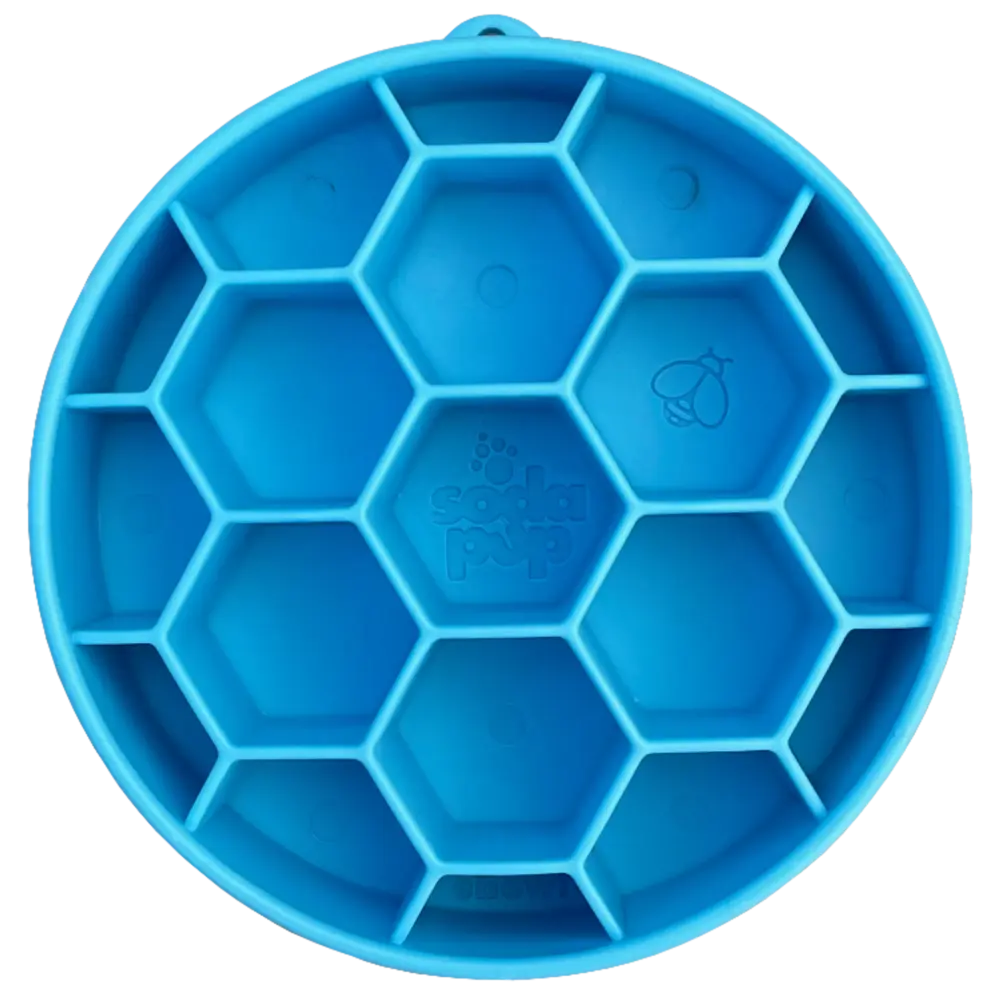
- Deep: a honeycomb bowl. The SodaPup Honeycomb eBowl is a deep bowl with honeycomb ridges for kibble, wet food or a frozen mix. It is made in the USA, suits most dogs and is dishwasher safe.
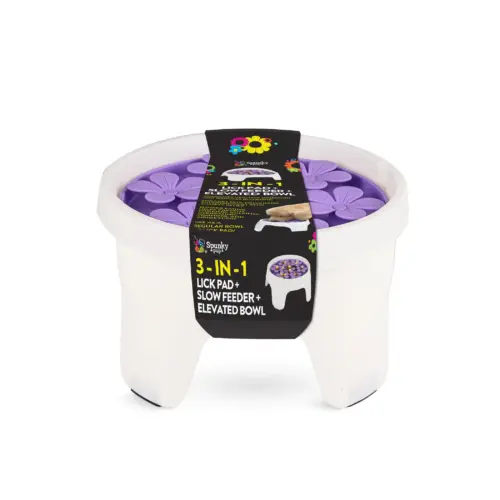
- Both in one: a 3-in-1 pad and feeder. The Spunky Pup 3-in-1 Lick Pad, Slow Feeder & Elevated Bowl is one dishwasher-safe piece of food-grade silicone: a lick pad, a slow-feeder side that spreads a meal out, and a raised bowl. Ask your veterinarian whether a raised bowl suits your dog before using it that way, especially if your dog is large and deep-chested.
Getting the most from any slow feeder
- Set it on a rubber mat or against a wall if your dog pushes it around.
- Stay nearby for the first few meals, and pick it up if your dog starts chewing it.
- Wash it after every meal so food doesn’t dry into the ridges; see how often to wash dog bowls, slow feeders and lick mats.
Choosing a lick mat or slow feeder for everyday enrichment rather than speed is covered on our lick mats and slow feeder bowls page.
-
SodaPup
Honeycomb Slow Feeder Dog Bowl
$30.95
-
Spunky Pup
3-in-1 Lick Pad, Slow Feeder & Elevated Bowl
$34.95
-
SodaPup
Jigsaw Enrichment Lick Mat for Dogs & Cats
$25.95


How to slow down a dog that eats too fast without a special bowl
You don’t need to buy anything to start. These options use your dog’s usual food and portion; the American Kennel Club’s advice on helping your dog eat more slowly describes several.
- Muffin tin. Put a little food in every cup of a sturdy metal tin. For a harder version, turn it upside down and scatter kibble between the cups.
- Two bowls. Set your dog’s usual bowl upside down inside a bigger one and pour the food into the ring between them. A heavy inner bowl stays put better.
- Baking sheet. Spread kibble in a single layer on a rimmed sheet, so your dog picks up a piece or two at a time.
- Scatter feeding. Toss part of the meal across a clean floor or lawn and let your dog sniff it out. Our guide to food enrichment for dogs has more ideas, from towel snuffles to find-it games.
- Hand feeding. Use a handful of the meal as rewards in a five-minute training session before dinner.
- Smaller meals. Serve the same daily amount as two or three meals instead of one.
Supervise homemade setups, put away anything your dog chews or flips, and wash it after each meal. For more ideas, browse our feeding and enrichment guides.
Feeding two or more dogs apart
When dogs eat side by side, the fastest one finishes and heads for the next bowl, and the slower one learns to hurry. Feeding multiple dogs separately takes the race out of mealtime and shows you how much each dog really eats.
- Give each dog its own spot out of sight of the others: a room with the door closed, a crate or the far side of a baby gate.
- Put the bowls down at the same time, in the same places and order every day.
- Stay nearby in case one dog finishes early and goes looking for another bowl.
- Pick up each bowl as soon as that dog is done, leftovers included.
- Let the dogs back together once every bowl is up.
If one dog stiffens, growls or snaps when another comes near the food, keep them apart at every meal and ask your veterinarian or a qualified trainer for help.
Cat food is a target too. Feed your cat on a raised surface or in a room your dog can’t reach, and if your cat bolts its food as well, see how to slow down a cat that eats too fast.
Troubleshooting: when your dog beats the slow feeder, or won’t eat from it
Your dog eats too fast even with a slow feeder
- The pattern is too shallow. If kibble sits on top of the ridges, your dog can sweep it up. Keep the lick mat for soft food and serve kibble in a deep bowl like the eBowl.
- The food is in a heap. Spread it through the whole pattern so every piece sits in its own gap.
- Your dog has learned the puzzle. Press your dog’s usual wet food, or a mix of wet food and kibble, into the honeycomb and freeze it. Our guide on what to put on a lick mat explains freezing.
- One feeder isn’t enough. Split the meal between the feeder and a muffin tin.
Your dog won’t eat from the slow feeder
A dog who walks away or paws at the bowl is usually frustrated, not stubborn. Make it easy first, then harder over a week or two.
- For the first few meals, put most of the food in the usual bowl and some in the feeder, with a few pieces resting on top of the ridges.
- Start with wet food spread thin on a shallow pattern before a deep bowl. Small and flat-faced dogs may do best with a shallow pattern for good.
- If your dog gets upset, take the feeder away and finish the meal another way.
If your dog refuses food from every bowl, not just the new one, call your veterinarian.
When fast eating is a reason to call your veterinarian
A slow feeder changes how quickly food goes in. It does not treat a medical problem, so book a check-up for any of these:
- Vomiting or bringing food back up after meals, or coughing, gagging or choking while eating.
- A sudden change, such as eating much faster than before, seeming hungry all the time, or losing weight. VCA’s advice on puppies who eat too fast notes that excessive hunger can sometimes signal an underlying illness.
- Weight gain, or any question about how much your dog should eat each day.
Call your veterinarian or an emergency clinic right away if your dog retches without bringing anything up, drools heavily, has a swollen or tight belly, or is restless and can’t settle after a meal. These can be signs of bloat (GDV), which is an emergency.
Fast eater FAQ
Is it bad for a dog to eat too fast?
It can be. A dog that gulps may cough, gag or bring food back up, and the AKC and VCA advice linked above both list bloat among the risks. If your dog vomits, chokes or seems uncomfortable after eating, see your veterinarian.
Do slow feeder bowls work?
For many fast eaters, yes: a meal takes longer when your dog has to pick food out of ridges instead of scooping it up. They work best when the pattern suits your dog’s muzzle and food, and when no other dog is nearby to race.
How long should it take a dog to finish a meal?
There is no set time, because meal size, food type and dogs all differ. Watch how your dog eats instead: working steadily through the food is fine, while emptying the bowl in a few big mouthfuls is a sign to slow things down.
Should I split my dog’s food into more meals?
Often, yes. Two or three smaller meals instead of one big one mean less food in the bowl and a less hungry dog each time. Don’t add food when you add meals, and agree the daily amount and schedule with your veterinarian, especially for puppies, seniors and dogs on a special diet.
Related guides
-
Comparison
Slow Feeder vs Lick Mat: Which One Does Your Dog Need?
A slow feeder stretches out a meal; a lick mat fills time and settles a dog. Buying the wrong one for the problem is the usual mistake. This comparison covers both, including the dogs who defeat them.
-
How-to
How to Teach a Dog to Wait for Their Food Bowl, Step by Step
Lower the bowl only while your dog stays sitting, then release them to eat. This step-by-step plan uses your dog’s own meals and covers longer waits, distractions, jumping, barking and lunging, multi-dog kitchens, and what to do if your dog guards the bowl.
-
How-to
How to Stop a Dog Begging at the Table: A Mealtime Plan That Holds Up
Make the table stop paying: a no-scraps rule everyone keeps, your dog’s own dinner served as you sit down, a go-to-your-bed cue with a lick mat as the job, and a gate or tether while the habit forms.
