How Often Should You Wash Dog Bowls? Food, Water, Slow Feeders and Lick Mats
How often to wash dog bowls depends on what goes in them: wash the water bowl and the dry-food bowl every day, and wash any bowl that held wet food after every meal. Slow feeders and lick mats need a wash after every use, because food dries into their ridges, and cat bowls follow the same rules. Hot soapy water and a brush do the job, or the dishwasher for anything labeled dishwasher safe. If a water bowl feels slippery when you run a finger around the inside, it is overdue.
How often to wash dog bowls, bowl by bowl
The CDC’s advice on cleaning pet supplies is to clean bowls after every use for wet food and every day for dry food and water. Here is how that applies to each item:
- Water bowl: empty, wash and refill it once a day, and refresh it sooner if food, hair or drool ends up in it.
- Pet water fountain: clean it and change the filter as often as the maker’s instructions say, pump included, since slime collects inside it too.
- Dry-food bowl: wash it daily, even when it looks clean. Every meal leaves crumbs, oil and saliva behind.
- Wet food, toppers and home-cooked meals: wash after every meal, and throw out what your dog leaves instead of saving it.
- Slow feeders and lick mats: wash after every use. Food pressed into ridges and grooves dries quickly and is the hardest part to get out later.
- Scoops and measuring cups: wash them with the bowl, and use a scoop rather than the bowl itself to dip into the food bag.
When to disinfect as well as wash
If you feed a raw diet, wash the bowl after every meal and then disinfect it, along with any counter, scoop or utensil the raw food touched. The CDC also advises cleaning and disinfecting pet items more often if your pet is sick or someone at home is more likely to get very sick from germs, such as children under 5, adults 65 and older, pregnant people or anyone with a weakened immune system. Its method for a bowl you have already washed:
- Mix 2 oz (1/4 cup) of household bleach into 1 gallon of water. Never mix bleach with other cleaners.
- Soak the bowl for at least 10 minutes.
- Rinse off all of the bleach solution with clean water.
- Let the bowl dry completely before your pet uses it.
Check the bowl’s care label before you use bleach; for a dishwasher-safe bowl, the sanitizing cycle is simpler.
What that slimy film is, and how to scrub it off
The slippery coating inside a water bowl is biofilm: bacteria and other microbes that settle on a wet surface and hold on with a slimy layer of their own making. The AKC’s guide to washing dog bowls recommends washing food and water bowls daily so food residue and biofilm don’t build up.
A rinse or a top-up leaves it in place. Removing it takes soap, hot water and friction:
- Empty the bowl and wipe out any food with a paper towel.
- Fill it with hot water and a squirt of dish soap. If the film is thick, let it soak for a few minutes.
- Scrub every surface with a sponge or brush, including the rim, the underside and the seam where the wall meets the base, where slime collects first.
- Rinse until the bowl no longer feels slippery or smells of soap.
- Dry it with a clean towel, or leave it upside down on a rack until dry, then refill.
If the slime comes back between daily washes, move an outdoor bowl into the shade, wash it twice a day and check for scratches that give the film somewhere to cling.
Dishwasher or sink: how to wash each kind of bowl
In the dishwasher
Put a bowl in the dishwasher only if it is labeled dishwasher safe. The CDC says it is fine to run pet bowls with your own dishes, and choosing the high-temperature or sanitizing setting with heat dry adds a disinfecting step. Scrape food out first so it does not bake onto ridges or the rim.
By hand
Hot soapy water works for every bowl. Keep a sponge or brush just for pet bowls, and wash them after your own dishes rather than alongside them. Then clean the sink and the counter around it, and wash your hands.
Stainless steel, ceramic, plastic and silicone
- Stainless steel: smooth and nonporous, so it is the easiest to clean, and most stainless bowls are dishwasher safe.
- Ceramic: a glazed bowl washes well, but a chip or crack in the glaze traps residue, so replace a damaged one. Not every ceramic bowl is dishwasher safe, so check the label.
- Plastic: scratches and chew marks hold food and film where a sponge can’t reach. Replace the bowl once the surface looks scuffed or still smells after a wash.
- Silicone: flexible and easy to scrub. Oily spreads such as peanut butter can leave a greasy layer, which a hot wash with dish soap removes.
Ridged slow feeders and grooved lick mats: getting into the corners
Slow feeders and lick mats work by trapping food between ridges, which is what makes them harder to clean than a plain bowl. A sponge glides over the ridges and leaves residue in every valley, so clean them before the food dries:
- Rinse it as soon as your dog walks away, while the food is still soft.
- If food has dried on, soak it in warm, soapy water for 10 to 15 minutes. Let a frozen mat or bowl thaw first.
- Scrub along each ridge and groove with a bottle brush or a soft toothbrush kept only for pet gear. Work in two directions so the bristles reach both sides of every ridge.
- Hold it up to the light and check the corners and the rim for leftover food.
- Rinse, then let it dry completely before you stack it or load it again.
Lick mats after a frozen or sticky spread
Sticky spreads such as peanut butter and yogurt cling to the grooves, and a frozen layer has to soften before it will scrub out. Soak the mat in warm water first, then brush. For spreads, freezing times and a quick cleaning routine, see what to put on a lick mat.
Feeders that can go in the dishwasher
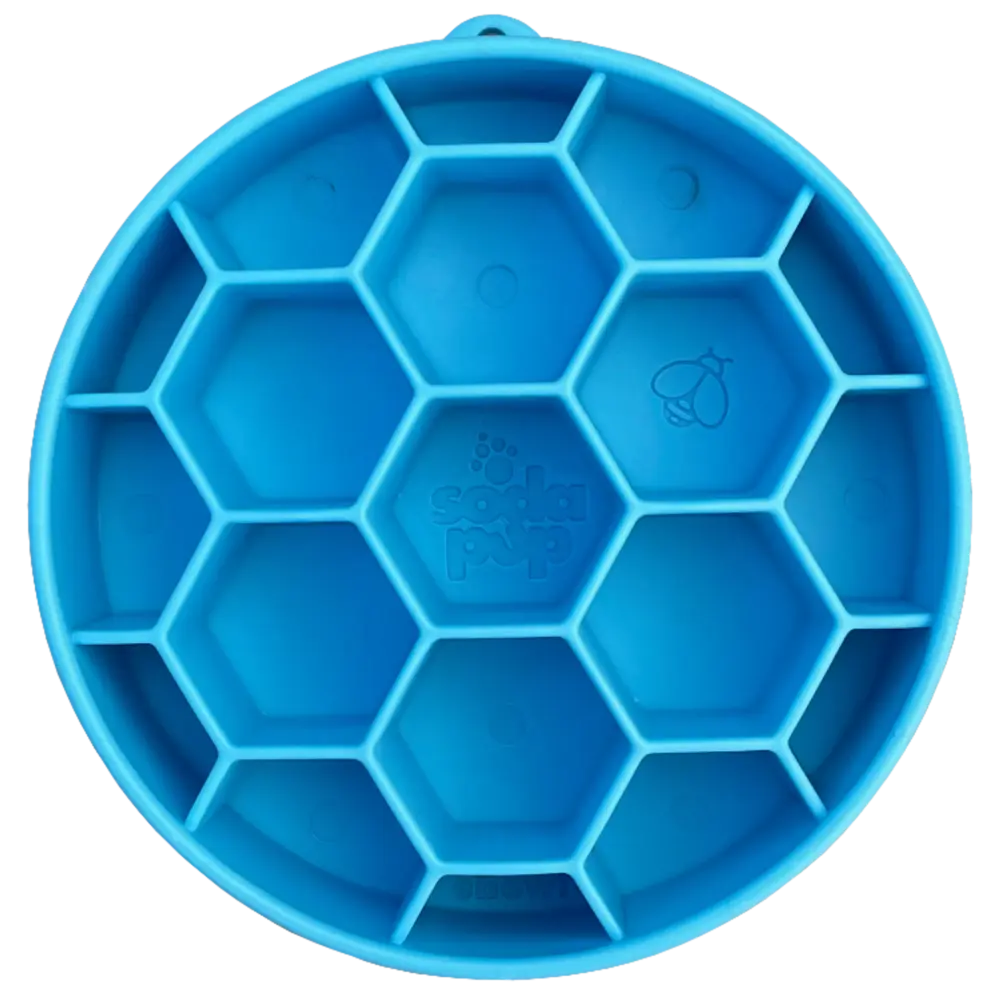
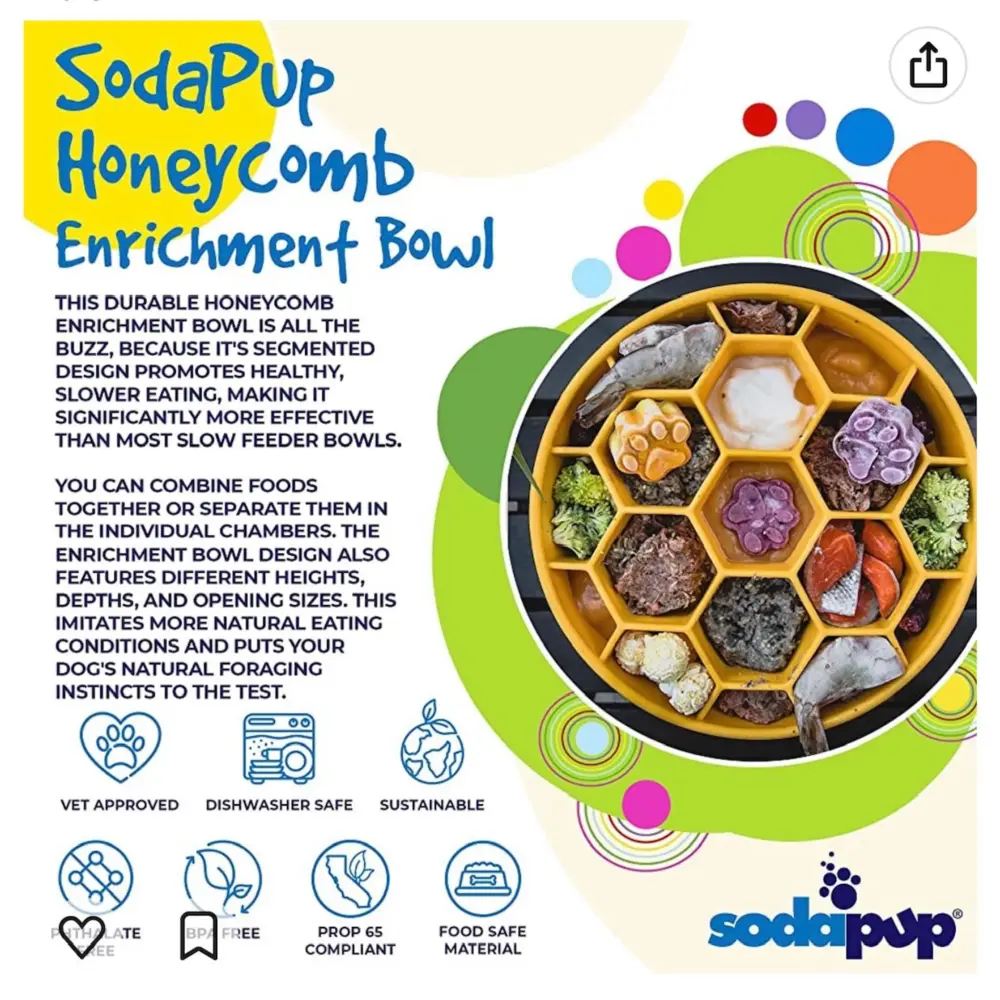
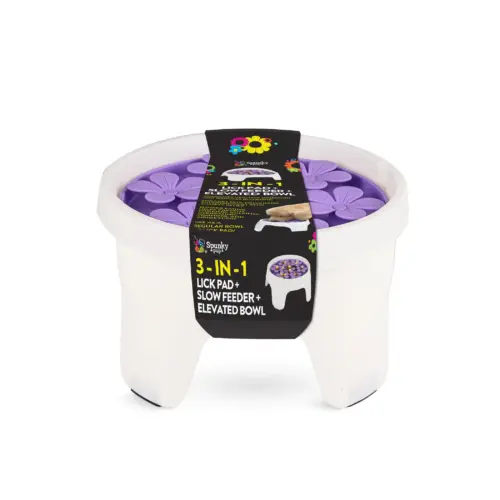
A dishwasher does most of the scrubbing for you, which is worth weighing when you choose a feeder. The SodaPup Honeycomb Slow Feeder Dog Bowl is a deep bowl with honeycomb ridges, made in the USA and dishwasher safe. The Spunky Pup 3-in-1 Lick Pad, Slow Feeder & Elevated Bowl is one piece of food-grade silicone that also goes in the dishwasher, as does the SodaPup Jigsaw Enrichment Lick Mat, which suits dogs and cats.
If you are choosing a feeder for a dog who bolts meals, our guide on how to slow down a dog that eats too fast compares ridged bowls with other tricks, and these food enrichment ideas for dogs show more ways to use them. All three pieces are in our feeding and enrichment collection.
-
SodaPup
Honeycomb Slow Feeder Dog Bowl
$30.95
-
Spunky Pup
3-in-1 Lick Pad, Slow Feeder & Elevated Bowl
$34.95
-
SodaPup
Jigsaw Enrichment Lick Mat for Dogs & Cats
$25.95


Water bottles and travel bowls
A bottle that rides around with a little water left in it stays warm, damp and closed, which is how it starts to smell musty, so empty it when you get home.
The Flipo Fold-A-Bowl Dog Water Bottle is a hand-wash bottle. After each walk, empty it, wash the bottle and the fold-out bowl in warm soapy water, and use a bottle brush inside. Rinse well and leave it open to air dry before you close it up. Collapsible travel bowls and any bowl that lives in the car need the same treatment.
For the rest of your walk kit, see our checklist of dog walking essentials.
A bowl-washing routine for busy weeks
Daily washing takes a couple of minutes once you tie it to things you already do.
- Two sets of bowls. Swap in a clean set at each wash, so one can dry while the other is in use.
- After breakfast. Wash the food bowl once your own dishes are done, or load it into the dishwasher.
- Every evening. Empty, wash and refill the water bowl, so fresh water sits out overnight.
- Once a week. Wash the mat or tray under the bowls, wipe the floor and wall behind them, and check every bowl for scratches, chips and cracks.
- Between bags of food. Wash and dry the storage container and the scoop before you refill.
A clean feeding corner keeps a stale smell out of the kitchen; for beds, the couch and carpet, see our guide to getting rid of dog smell in the house, or browse more feeding and enrichment guides.
Dog bowl FAQ
Is it OK to wash dog bowls with your own dishes?
In the dishwasher, yes: the CDC says pet bowls can go in with your dishes, ideally on a hot or sanitizing cycle. By hand, wash them after your own dishes with a sponge kept for pet bowls, then clean the sink.
How often should I change my dog’s water?
At least once a day, with a wash rather than a top-up. Change it sooner if food, hair or drool gets in, and check outdoor bowls more often in hot weather. If your dog suddenly drinks much more or much less than usual, ask your veterinarian.
Can you use regular dish soap on dog bowls?
Yes. Ordinary dish soap and hot water are all an everyday wash needs. Rinse until no suds or scent remain, since a soapy taste or smell can put some pets off their bowl. Save bleach for the diluted, rinsed-off disinfecting step above.
Should I wash my cat’s bowls the same way?
Yes: water and dry food daily, wet food after every meal, by hand in hot soapy water or in the dishwasher. Cats can be fussy about a bowl that smells of old food, so keep to the schedule. If your cat gulps meals, see how to slow down a cat that eats too fast.
Related guides
-
Comparison
Slow Feeder vs Lick Mat: Which One Does Your Dog Need?
A slow feeder stretches out a meal; a lick mat fills time and settles a dog. Buying the wrong one for the problem is the usual mistake. This comparison covers both, including the dogs who defeat them.
-
How-to
How to Teach a Dog to Wait for Their Food Bowl, Step by Step
Lower the bowl only while your dog stays sitting, then release them to eat. This step-by-step plan uses your dog’s own meals and covers longer waits, distractions, jumping, barking and lunging, multi-dog kitchens, and what to do if your dog guards the bowl.
-
How-to
How to Stop a Dog Begging at the Table: A Mealtime Plan That Holds Up
Make the table stop paying: a no-scraps rule everyone keeps, your dog’s own dinner served as you sit down, a go-to-your-bed cue with a lick mat as the job, and a gate or tether while the habit forms.