Feeding & Enrichment How-to
How to Stop a Dog Begging at the Table: A Mealtime Plan That Holds Up
Short answer
Begging fades once the table stops paying. Nobody feeds, talks to or looks at the dog during meals, even when they stare or paw. Instead, serve your dog’s own dinner as you sit down, then send them to their bed with a loaded lick mat, using a gate or tether while the habit forms.
Why dogs beg, and why the odd scrap keeps it going
Dogs repeat what pays, and a dinner table pays better than almost anything else in the house. The AKC’s guide to stopping a dog from begging at the table puts it plainly: giving in teaches your dog that asking for food gets food.
Attention counts as pay too. Eye contact, a laugh at the head tilt or a firm “no” all tell your dog that staring gets a reaction, which is why the AKC’s advice on begging at holiday meals is not to acknowledge your dog at the table in any way, positive or negative.
One scrap undoes a lot. A bite that turns up now and then, with no way of knowing when, tends to keep a dog trying longer than a reward that comes every time. A week of everyone ignoring the stare, then one sliver of steak from a soft-hearted relative, teaches your dog that patience works.
It often gets worse before it gets better. When begging stops working, many dogs try harder first, with a louder whine, a paw on your knee or a bark, as the AKC’s holiday article warns. Giving in at that peak teaches your dog that turning up the volume works, so use a gate or tether while you train.
Scraps cost your dog too: the AKC links them to tummy troubles and obesity, and some people foods are dangerous for dogs (listed further down).
Get the whole household on the same rules
The plan works only if the table never pays, whoever is sitting at it. Agree on these before the next meal, and share them with grandparents, roommates and sitters:
- No food from the table, a plate or a hand during meals. Not the last bite, not the crust, not the carrot that’s “healthy anyway.”
- No reaction to begging. No eye contact, no talking, no scolding and no pushing your dog away, even when they paw or whine.
- Rewards land on the dog’s bed, never under the table. When your dog lies calmly away from the table, someone gets up and gives them a treat there, as the AKC suggests.
- Dropped food gets picked up fast. A dog who snaps up crumbs under a toddler’s chair is being paid to wait there.
- No plates on the floor to lick. The AKC’s holiday advice rules this out too: a licked plate is still food from the table.
- Sharing happens at the bowl. Any plain, dog-safe extra goes in your dog’s bowl after the meal, away from the table, and counts toward the day’s food.
If one person keeps slipping, make them the one who walks over and drops rewards on the bed, so their soft spot works for the plan instead of against it.
Feed your dog’s own meal while you eat
A dog with an empty stomach and a full table has one thing on their mind. Serve your dog’s usual dinner in another room or behind a gate just before you sit down, as the AKC suggests. If your mealtimes don’t line up, shift your dog’s dinner gradually or save part of the day’s food for when you eat. If an evening walk falls around then, walk first and feed once your dog has settled; whether to feed a dog before or after a walk explains the timing.
A dog who empties a bowl in seconds is back at your elbow before you’ve picked up a fork. A slow feeder makes the same meal last longer; our guide on how to slow down a dog that eats too fast covers bowl patterns and free options such as a muffin tin. If your dog also jumps at you as the bowl goes down, teach them to wait for their food bowl as a separate lesson: that’s manners at their own meal, not yours.
Both picks below come from Nilosi’s feeding and enrichment range, so the choice is narrow; any slow feeder your dog uses happily does the same job.
-
SodaPup
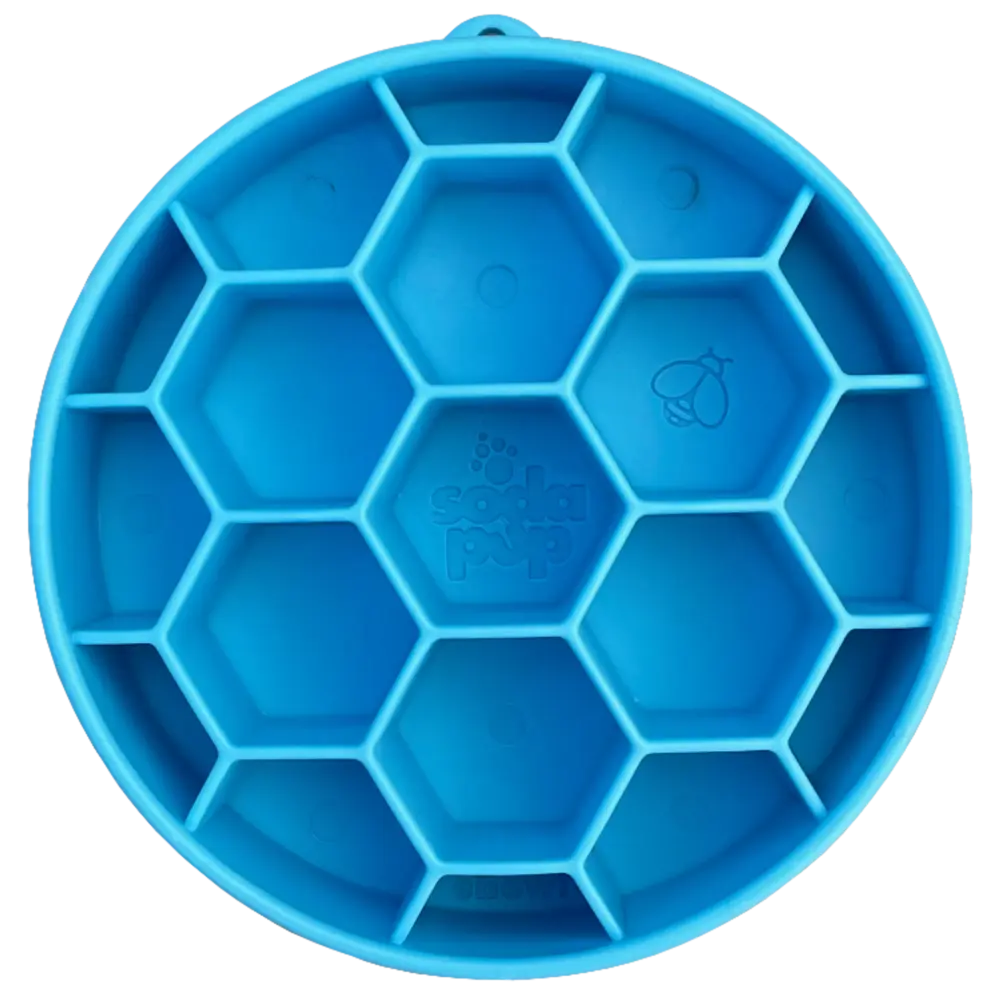
Honeycomb Slow Feeder Dog Bowl, View product
$30.95
Why it fits: A deep honeycomb bowl for dinner in another room as you sit down; its ridges make a fast eater work for each mouthful. Made in the USA.
-
Spunky Pup
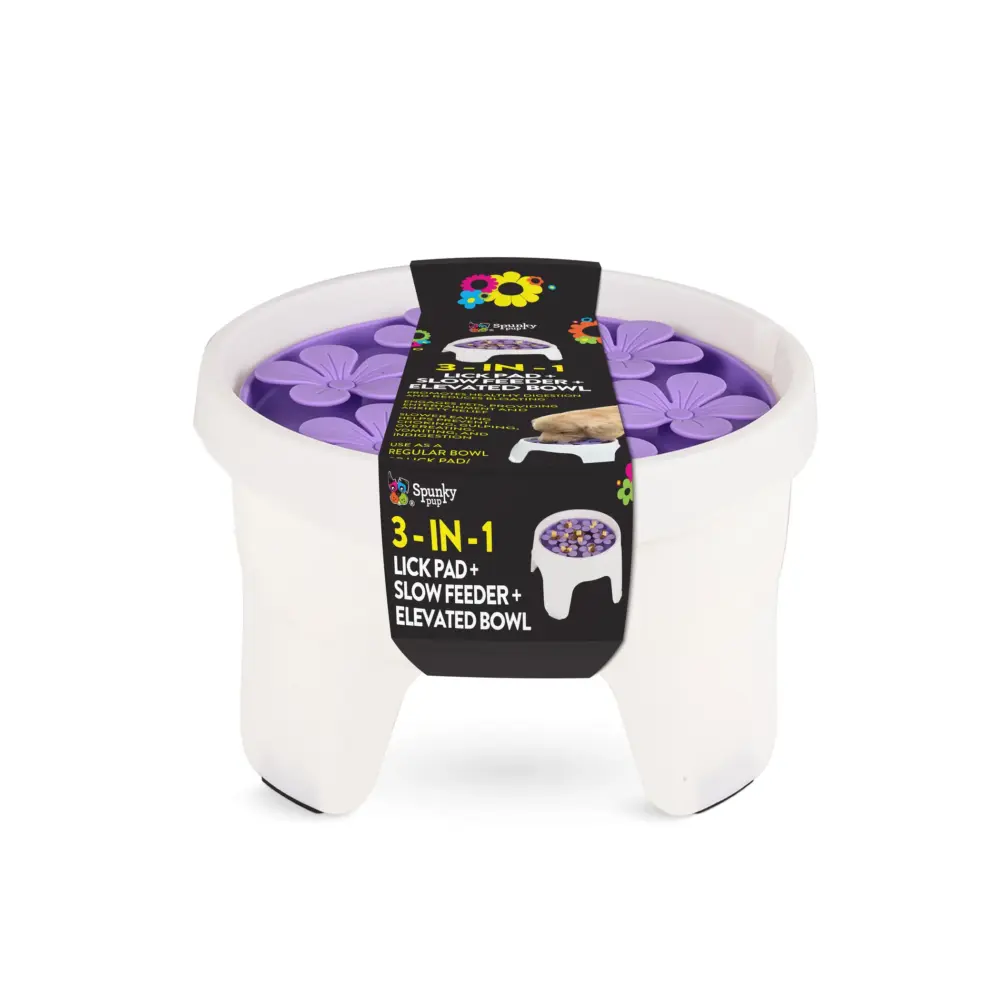
3-in-1 Lick Pad, Slow Feeder & Elevated Bowl, View product
$34.95
Why it fits: One silicone piece for a slow meal or a lick session; use the slow-feeder side for dinner or spread soft food on the pad. Dishwasher safe.

Teach a go-to-your-bed cue for mealtimes
Ignoring begging tells your dog what doesn’t work; a place cue tells them what does. The AKC suggests sending your dog to a bed, crate or mat away from the table with a cue such as “go to your spot,” once they know a solid stay. If your dog has never learned a bed cue, the full method is in how to get your dog to sleep in their own bed; the steps below take it to the dinner table.
Choose the spot. Put the bed out of the walkway, far enough away that your dog can’t reach a lap or a dropped napkin. Many dogs settle best where they can see you; if yours can’t take their eyes off the food, move the bed into the next room or behind a gate.
What you need
- A bed or mat your dog likes, one that won’t slide when they land on it.
- Small treats taken from the day’s food, or tiny soft ones counted toward it.
- A release word such as “free” or “break”; “okay” comes up in conversation too often.
- A leash or gate as backup for the first few weeks.
- Teach the word away from meals. Toss a treat onto the bed and say “bed” as your dog steps on. Reward a down there, then a few seconds of staying put, and end with your release word.
- Build time and distance. Add a few seconds at a time while you walk around, sit at the table and stand up again. Every reward goes on the bed, never from your chair.
- Stage a dull meal. Sit down with plain crackers or an empty plate and a fork. Send your dog to the bed, “eat,” and get up every minute or so to drop a treat on the bed.
- Practice with real food. Move to a real snack, then a quiet weeknight dinner with one adult in charge of rewards. Space rewards out as your dog settles, from every minute to every few minutes.
- Hand over the job. At family meals, send your dog to the bed and set down a loaded lick mat as everyone sits. Keep an occasional calm reward coming until the plates are cleared.
- Release away from the table. Clear the plates and crumbs first, then release your dog. A release as chairs scrape back turns the end of every meal into a crumb hunt.
If your dog gets up, say nothing, calmly walk them back or re-cue “bed,” and reward once they’re lying down. If it happens more than once or twice a meal, go back a step, or keep a leash on so returning them takes seconds.
Tip
Many dogs need weeks rather than days before the cue holds through a whole family dinner. Meals are built-in practice, though: two or three a day add up fast without any extra sessions.
Give your dog a job on the bed
A bed on its own is a waiting spot; something to work on makes it the best seat in the house. Licking a spread out of grooves is slow, quiet work done lying down, and a lick mat doesn’t squeak or roll under the table.
Load it ahead. Press part of your dog’s dinner into the grooves, such as wet food or soaked kibble, so the mat doesn’t add to the day’s food; plain pumpkin purée or a little xylitol-free peanut butter can be an occasional extra. Once your dog is used to the mat, freeze it for a couple of hours or overnight so it lasts past the main course. What to put on a lick mat has more spreads and freezing tips.
Set it down at the same moment every meal, as people sit or as your dog finishes their own dinner, so the mat becomes part of the cue. A lick mat isn’t a chew toy, so watch from the table and pick it up once it’s clean, or sooner if your dog starts chewing the edges.
For a small dog, a cuddler with a raised rim makes a spot worth staying on. The Armarkat cuddler below is for cats and small dogs only (the Small measures 22 × 22 × 8 in); a larger dog needs a bed or mat that fits and stays put. Set the lick mat on the floor beside a plush bed, not on it, so soft food stays off the cover.
-
SodaPup
Jigsaw Enrichment Lick Mat for Dogs & Cats, Choose color
$25.95
Why it fits: A mat to load and freeze ahead of dinner, giving your dog a slow job by the bed while you eat; made in the USA, for dogs of all sizes.
-
Armarkat
Ultra-Plush Cuddler Bed for Cats & Small Dogs, Choose size
Price range: $55.95 through $72.95
Why it fits: A mealtime bed for small dogs only; its skid-free base keeps it where you put it, and the raised rim gives them a headrest while they wait.


Gates, tethers and management while you train
Each meal where begging pays is practice for more begging, and a place cue takes weeks to hold. Until it does, set up the room so your dog can’t collect, even on nights when nobody has the energy to train:
- A baby gate across the dining room or kitchen doorway, with the bed on the far side, so your dog can see you without reaching the table. Choose one taller than your dog can jump; Nilosi doesn’t carry gates.
- A crate, if your dog already relaxes in one, with the lick mat inside where you can see it. Never use it as a punishment.
- An indoor tether: a leash looped around a heavy piece of furniture beside the bed, long enough for your dog to lie down comfortably, too short to reach the table.
- A closed door for big gatherings and buffets, when nobody can watch the dog and the food at once.
Safety note
Tether only while someone is in the room to watch, so your dog can’t tangle the leash or chew through it. Clip it to a well-fitted harness rather than a collar, never to a choke, slip or prong collar, and skip tethering for a dog who panics when held in place.
Phase management out one piece at a time. Once your dog stays on the bed through quiet weeknight dinners for a week or two, try one meal without the gate, and put it back for busy ones: guests, takeout on the sofa, the first warm evening eating outside.
Guests, kids and foods that are unsafe to share
Guests. Tell them before they sit down, not after the first scrap: the dog doesn’t eat from the table, and the kindest thing they can do is ignore the stare. A guest who wants to help can drop a piece of kibble on the bed while the dog lies calmly. Hosting a holiday meal? Thanksgiving dog safety covers the crowded kitchen, the front door and the leftovers.
Kids. Young children drop food constantly and love handing it down, which makes a high chair the best begging spot in the house. Gate your dog out during toddler meals and snacks, and sweep up before letting the dog back in. Older children can be the reward person, and an adult should supervise whenever a dog and young children are together around food.
Safety note
If your dog growls, stiffens, freezes or snaps over food, dropped crumbs or the lick mat, don’t punish it and don’t test it. Keep children and food away from your dog, and talk to your veterinarian or a qualified, reward-based trainer or behavior professional.
People foods dogs shouldn’t have
Even plain-looking scraps can hide something harmful. The ASPCA’s list of people foods to avoid feeding your pets includes:
- chocolate, coffee and anything with caffeine;
- grapes and raisins;
- onions, garlic and chives, which often hide in sauces, stuffing and gravy;
- xylitol, a sweetener in gum, candy, baked goods and toothpaste (check peanut butter labels too);
- macadamia and other nuts, alcohol and raw yeast dough;
- milk, cheese and other dairy, which can cause diarrhea or other digestive upset;
- raw or undercooked meat and eggs, and bones, which can injure or block the digestive tract;
- very salty foods.
If you think your dog has eaten something on the list, note roughly how much and call your veterinarian or the ASPCA Animal Poison Control Center at (888) 426-4435 promptly, even if your dog seems fine. The line answers 24 hours a day; a consultation fee may apply.
Mistakes and troubleshooting
Two habits quietly keep begging alive: different rules on different nights (takeout on the sofa and Sunday brunch count as meals too), and letting your dog “clean up” under the table after dinner, which pays them for hovering there. If it still isn’t working:
- Your dog leaves the bed as soon as food appears. Go back to dull meals, reward more often, and keep the leash or gate on for real meals for now.
- Your dog whines or barks from the bed. Don’t reward or release during the noise; wait for a moment of quiet and reward that. Move the bed farther away if it keeps building.
- The lick mat is finished in minutes. Freeze it longer, press the food deeper into the grooves, or serve dinner in a slow feeder first and bring out the mat as you sit down.
- Your dog seems hungry all the time. Ask your veterinarian whether the daily amount is right rather than topping up from your plate. A sudden jump in appetite, especially with weight change or more drinking, is worth a check-up.
Related guides
-
How-to
How to Teach a Dog to Wait for Their Food Bowl, Step by Step
Lower the bowl only while your dog stays sitting, then release them to eat. This step-by-step plan uses your dog’s own meals and covers longer waits, distractions, jumping, barking and lunging, multi-dog kitchens, and what to do if your dog guards the bowl.
-
Comparison
Slow Feeder vs Lick Mat: Which One Does Your Dog Need?
A slow feeder stretches out a meal; a lick mat fills time and settles a dog. Buying the wrong one for the problem is the usual mistake. This comparison covers both, including the dogs who defeat them.
-
Comparison
Raised vs Floor Dog Bowls: Which Is Better for Your Dog?
A bowl on the floor suits most dogs. See why owners buy elevated feeders, what the AKC and Merck say about raised bowls and bloat, which dogs a veterinarian may still suggest one for, how to check height and stability, and the bloat signs that need a vet now.