Feeding & Enrichment Comparison
Raised vs Floor Dog Bowls: Which Is Better for Your Dog?
Short answer
For most dogs, a bowl on the floor is the better default. Raised bowls can look more comfortable, but the AKC notes that some studies have linked elevated bowls to a higher risk of bloat, so ask your veterinarian before buying one, especially for a large, deep-chested dog or a senior with stiff joints.
Raised vs floor bowls at a glance
Bowl height changes your dog’s posture at the bowl. Whether it changes anything else, bloat risk above all, is where the sources differ. These are the three setups you’re likely to come across:
| Option | How your dog eats | Bloat advice | Watch for | Usually suits |
|---|---|---|---|---|
| Floor bowl | Head lowered to the floor | What Merck advises for at-risk breeds | Sliding on a smooth floor | Most healthy dogs of any size |
| Raised bowl | Less bending to reach the food | Some studies link it to more bloat | A stand that rocks or tips | Dogs a vet suggests it for |
| Upright feeder | Body held upright, 45 to 90 degrees | Part of a vet’s feeding plan | Staying upright after the meal | Dogs with diagnosed megaesophagus |
It also helps to know what height can’t do. Raising a bowl won’t slow a gulper down; speed comes from the bowl’s shape and how you feed. Sliding and clatter come down to weight, material and what the bowl sits on, which our guide to the best material for dog bowls compares.
Why owners choose elevated bowls
The appeal is easy to see: a tall dog folding down to a bowl on the floor looks awkward. The AKC’s guide to finding the right dog bowl says many large- and giant-breed owners buy one on the assumption that bending down to eat is uncomfortable for the dog. That’s the owner’s impression, though, not a finding, and the same guide’s advice is to speak with your veterinarian if you think a health condition would benefit from a raised bowl. The other usual reasons:
- Old bloat advice. Raised bowls used to be suggested as a way to prevent bloat. The AKC’s overview of bloat in dogs describes how that flipped: studies once suggested floor bowls caused more cases, that was later debunked, and raised bowls are now seen as just as much of a risk. If prevention is your reason, it no longer holds.
- An older dog who seems stiff. VCA’s advice on senior dog care includes raising food and water bowls to reduce stress on the joints. That is a real reason, and it needs weighing against bloat risk; more on that below.
- Tidiness. A stand holds the bowls in a frame, so they’re harder to push around. A heavy bowl or a rubber mat does the same job at floor level.
- Your own back. A taller stand means less bending at refill time. Fair enough, but your dog’s health should decide the height, not your convenience.
Raised bowls and bloat: what the evidence says
Bloat, or gastric dilatation-volvulus (GDV), is when the stomach fills with gas and can twist on itself. It is a life-threatening emergency, most common in large, deep-chested breeds, though VCA’s guide to bloat in dogs points out that any dog can bloat. On bowl height, the advice leans one way, but the sources don’t all say the same thing:
- AKC: its bowl guide notes that some studies have tied elevated bowls to a higher risk of bloat, while its bloat article calls the research conflicting and says a solid recommendation can’t be made either way.
- Merck Veterinary Manual: for owners of high-risk breeds, its chapter on gastric dilation and volvulus lists avoiding elevated feed bowls among its prevention advice, next to several small meals instead of one large one, limiting exercise before and after meals and reducing stress at mealtime.
- VCA: its bloat page doesn’t mention bowl height at all. The risk factors it lists include feeding one meal a day, a family history of bloat, eating fast, being thin or underweight, a fearful or anxious temperament and being middle-aged or older.
Two things follow. A raised bowl is not a way to prevent bloat, and with research this mixed, the cautious choice for a dog at higher risk is the floor, as Merck advises. Where the three sources overlap, the advice is about how a dog eats rather than how high: VCA and the AKC both flag eating fast and feeding one meal a day, and Merck recommends several small meals and calmer mealtimes. Our comparison of free feeding and scheduled meals covers meal frequency, and whether to feed a dog before or after a walk covers exercise around meals.
Dogs to be most careful with
VCA lists the Great Dane, Saint Bernard, Weimaraner, Irish and Gordon Setters, Standard Poodle, Basset Hound, Doberman Pinscher and Old English Sheepdog among the breeds predisposed to bloat, and Merck adds the German Shepherd Dog. A deep, narrow chest, a close relative who has bloated and older age all raise the stakes. For these dogs, keep the bowl on the floor unless your veterinarian advises otherwise, and ask whether a preventive gastropexy makes sense. The surgery attaches the stomach to the body wall: VCA calls it the most effective means of prevention, and Merck notes it should prevent the life-threatening twist, though not the bloating itself.
Dogs a veterinarian may suggest a raised bowl for
A higher bowl can still be the right call for some dogs. These are the situations worth talking through before you buy one.
Seniors with stiff or sore joints
VCA’s suggestion to raise bowls for older dogs is about joint comfort. The catch is that VCA and Merck both count older age as a bloat risk, and the breeds most prone to bloat are large and deep-chested. Your veterinarian can weigh the two for your dog: comfort at the bowl on one side, and breed, chest shape and family history on the other. For other changes around the house, from slick floors to water stations, see how to senior-proof your home for an older dog.
Dogs fed upright for megaesophagus
Megaesophagus is a disorder in which the esophagus widens and loses its ability to move food down to the stomach, and regurgitation is its most common sign. VCA’s page on megaesophagus describes feeding these pets upright, at about 45 to 90 degrees to the floor, and keeping them there for at least 10 to 15 minutes after the meal, sometimes in a specially designed Bailey chair. That is a feeding plan your veterinarian sets up for a diagnosed dog, not something a raised bowl from a pet store replaces.
Dogs who suddenly struggle at the bowl
If your dog starts hesitating before lowering its head, drops food, eats lying down when it used to stand or walks away partway through a meal, book a veterinary check before you change the bowl. A change like that has a cause worth finding, and a raised bowl could hide it rather than fix it.
If you use a raised bowl: height and stability
Once your veterinarian agrees a raised bowl suits your dog, a few checks get the setup right:
- Ask your veterinarian what height to aim for and where to measure from, and mention your dog’s breed, age, chest shape and any family history of bloat.
- Measure your dog standing squarely on a level floor, then compare that with the feeder’s listed height rather than trusting a “large dog” label.
- Choose a stand that doesn’t rock or tip, with a wide base and non-slip feet. A dog leaning into the bowl shouldn’t move it.
- Watch the first few meals. Your dog should reach the food without crouching, stretching up or lifting a front paw onto the stand.
- If the posture looks awkward or your dog avoids the stand, go back to the floor and tell your veterinarian.
- Keep the habits that matter for bloat: two or more smaller meals, a slow pace, a quiet spot and no hard exercise just before or after eating.
- Wash the bowls daily and wipe the stand, since food and drool collect where bowl meets frame. Our guide to how often to wash dog bowls has the routine.
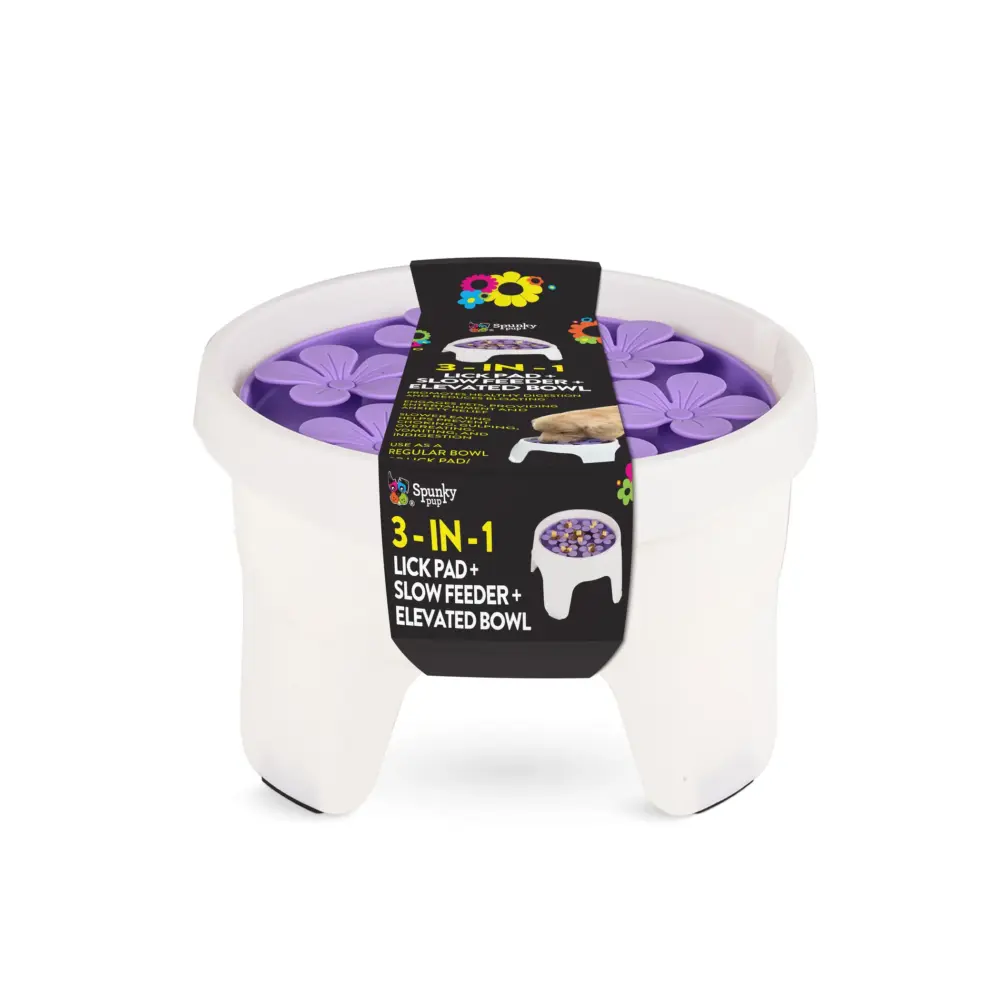
The Spunky Pup 3-in-1 Lick Pad, Slow Feeder & Elevated Bowl we carry flips into an elevated bowl, but our listing doesn’t give a height for that setup. If your veterinarian has okayed a raised bowl, check how high it sits against your dog before you rely on it; otherwise, use it flat, as a lick pad or slow feeder.
Floor-level options that slow fast eaters
For most dogs, the upgrade worth making happens at floor level: a bowl that stretches the meal out, on a surface where it stays put. No bowl prevents bloat on its own, but the AKC’s bloat article lists slow feeder bowls among the ways to slow a fast eater down. Nilosi’s feeding range is small and doesn’t include a dedicated raised feeder, so these picks are limited to our own catalog, and we suggest using each one flat on the floor.
-
SodaPup
Honeycomb Slow Feeder Dog Bowl, View product
$30.95
Why it fits: Keeps dinner at floor level and slows it down; deep honeycomb ridges make a fast eater work for each mouthful of kibble or wet food.
-
SodaPup
Jigsaw Enrichment Lick Mat for Dogs & Cats, Choose color
$25.95
Why it fits: Lies flat on the floor for the wet part of a meal; its jigsaw grooves slow licking, and it suits dogs of all sizes and is dishwasher safe.
-
Spunky Pup
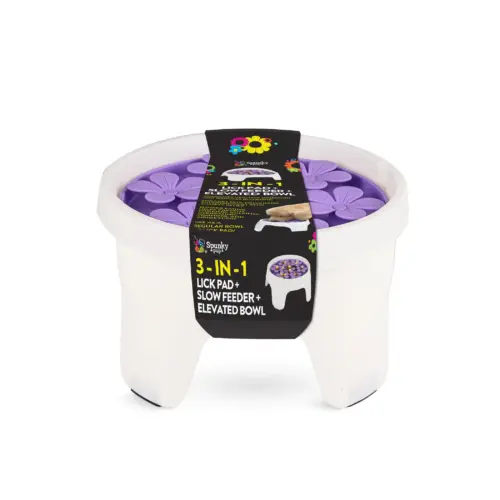
3-in-1 Lick Pad, Slow Feeder & Elevated Bowl, View product
$34.95
Why it fits: Use it flat as a lick pad or slow feeder; ask your veterinarian before trying its raised-bowl mode, as some studies link raised bowls to bloat.


A few floor-level habits help any bowl. Set it on a rubber mat or against a wall so it can’t skid, feed each dog in its own spot, and spread a gulper’s meal out. For more ways to slow a fast eater, including a muffin-tin trick from the kitchen cupboard, see how to slow down a dog that eats too fast, or browse our feeding and enrichment collection.
Bloat warning signs: call your vet now
Whatever height you choose, learn the signs. Between them, VCA and the AKC describe:
- A swollen or bloated belly, most obvious on the left side.
- Retching or trying to vomit without bringing anything up.
- Heavy drooling.
- Restlessness or obvious distress.
- Trouble breathing.
- Pain, or whining, when you press on the belly.
- Collapse, or being unable to stand.
Safety note
Bloat is an emergency. If you see these signs, call your veterinarian or an emergency vet immediately, as the AKC advises, and head straight in. Don’t wait to see whether the signs pass.
Verdict: who each bowl suits
- Floor bowl: most dogs, including large and giant breeds, deep-chested dogs and dogs with a family history of bloat, unless your veterinarian advises otherwise.
- Raised bowl: a dog whose veterinarian recommends one, often an older dog with stiff joints, at a height you’ve checked and on a stand that doesn’t move.
- Upright feeding: dogs diagnosed with megaesophagus, set up the way their veterinarian directs.
- Neither, yet: a dog who has suddenly started struggling at the bowl. See your veterinarian first, then decide on the height.
Height is the part of the bowl question where the sources disagree. Where they agree is everything around it: smaller meals, a slower pace, a calm spot at mealtime and an immediate call to the vet if bloat signs appear.
Related guides
-
Comparison
Slow Feeder vs Lick Mat: Which One Does Your Dog Need?
A slow feeder stretches out a meal; a lick mat fills time and settles a dog. Buying the wrong one for the problem is the usual mistake. This comparison covers both, including the dogs who defeat them.
-
Comparison
Free Feeding vs Scheduled Meals for Dogs and Cats, and How to Switch
Leaving food out all day is easy, but set meals show you who ate what and when appetite changes. Compare the two side by side, see how many meals dogs, cats, puppies and kittens usually get, and move a grazer to mealtimes one step at a time.
-
How-to
How to Teach a Dog to Wait for Their Food Bowl, Step by Step
Lower the bowl only while your dog stays sitting, then release them to eat. This step-by-step plan uses your dog’s own meals and covers longer waits, distractions, jumping, barking and lunging, multi-dog kitchens, and what to do if your dog guards the bowl.