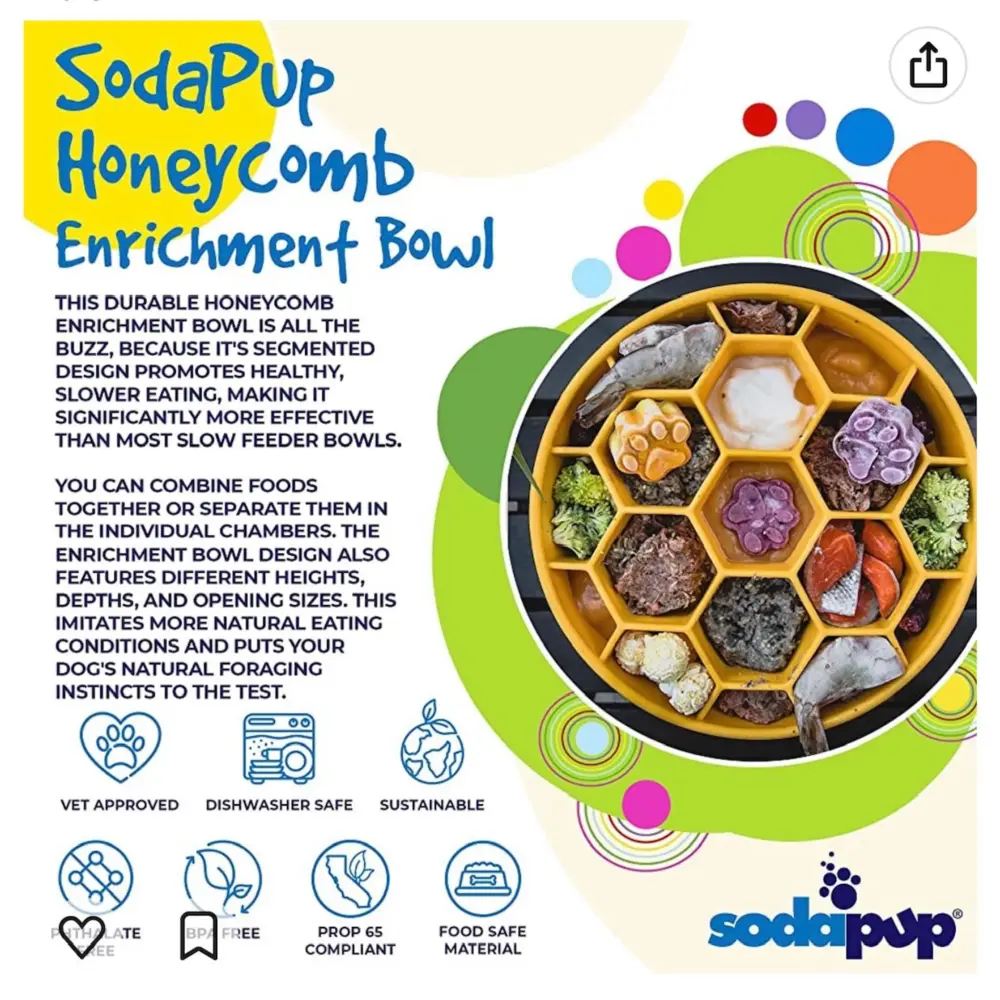
Feeding & Enrichment Comparison
Best Material for Dog Bowls: Steel, Ceramic, Silicone or Plastic?
Short answer
For most dogs, stainless steel is the best everyday bowl material: it’s the easiest to clean and the hardest to damage, though it’s light and can clatter. Choose heavy ceramic for bowl pushers and cats, silicone for travel and multi-use feeders, and plastic only as a food-safe spare you replace once it scratches.
Dog bowl materials side by side
Most food and water bowls are made of stainless steel, ceramic, silicone or plastic. They differ most in how they wash, how they wear and whether they stay put once your dog gets going:
| Material | Cleaning | Wear and chewing | Weight and sliding | Best for |
|---|---|---|---|---|
| Stainless | Easiest; usually dishwasher safe | Hard to break or chew up | Light; slides without a grippy base | Everyday food and water |
| Ceramic | Easy; not always dishwasher safe | Chips or breaks if dropped | Heavy; stays put | Bowl pushers, cats, water |
| Silicone | Easy; check the care label | Soft; can tear if chewed | Light; folding designs pack flat | Travel and multi-use feeders |
| Plastic | Easy until it scratches | Scratches and chew marks | Light; easy to push around | A food-safe spare |
Two things the table leaves out are noise and portability. Stainless steel is the noisiest: it rings when it skids across tile or when a collar tag taps the rim. Silicone is the quietest, and it’s the usual material for bowls that fold flat for a bag. For some dogs, shape matters more than any material: a fast eater needs ridges and a cat needs width, whatever the bowl is made of.
Stainless steel: the durable default
The American Kennel Club’s guide to finding the right dog bowl calls stainless steel the most durable option, and says stainless bowls are easy to clean, dishwasher safe, don’t leach chemicals and are difficult to break or damage. A hard, smooth surface gives a chewer little to sink its teeth into, and it stands up to the daily scrubbing a water bowl needs.
The drawbacks are weight and sound. The same AKC guide notes that stainless bowls are generally lightweight, so an active dog may knock one over and make a mess. An empty bowl scraping across the floor, or tags clinking against the rim, can also put a noise-sensitive dog off eating. When you shop, look for:
- A non-slip base. A rubber ring or pad underneath stops the skid and softens the clatter.
- Food-grade stainless steel, stated on the listing or packaging.
- A wider, heavier design for big dogs and enthusiastic eaters, so the bowl stays where you put it.
- The right size and shape. AKC suggests a bowl that holds the whole meal, or a full day’s water if you can’t refill it often, with an opening that suits your dog’s face: wide for a broad face, narrower for long-eared dogs such as hounds and spaniels, so their ears stay out of the bowl.
Choose it for the everyday food and water bowl, for chewers, and for any home that runs pet bowls through the dishwasher.
Ceramic: heavy and stable, until it chips
Weight is what ceramic does best. AKC describes ceramic bowls as heavy, which makes them a good choice for large dogs and for puppies who try to play with their bowls, and that weight helps keep food and water from spilling. A glazed bowl is smooth, quieter than steel and easy to keep looking clean. Glass behaves much the same way: heavy, smooth and breakable.
The weak spots are the glaze and the floor. AKC notes that ceramic bowls aren’t always dishwasher safe and will chip or break if dropped, and advises choosing food-grade ceramic. A chip leaves a sharp edge and a gap in the glaze where residue can settle. AKC’s advice for any bowl is to check it regularly for chips and replace it once it’s damaged, so retire a chipped ceramic bowl rather than keep using it.
Tip
Use a bowl sold for food, not a decorative piece of pottery. The FDA’s questions and answers on lead-glazed pottery explain that pieces made only for decoration may have a warning such as “Not for Food Use” stamped on the bottom, and that no amount of washing or boiling removes lead from pottery. The FDA wrote that for people’s dishes, but the same caution makes sense for handmade, antique or flea-market pottery you might be tempted to use as a pet bowl.
Choose it for dogs who nose or flip their bowls, puppies who treat a light bowl as a toy, cats, and a water bowl that stays in one quiet spot. Skip it for travel and for dogs who pick up and carry their bowls around.
Silicone: flexible, but easy to chew
Silicone is soft, light and flexible, which is why it turns up in collapsible travel bowls that fold flat for a pocket, and in lick pads and slow feeders. It’s quiet on any floor and easy to scrub, and many silicone pieces are dishwasher safe; check the care label on yours, and look for one described as food-grade silicone.
Softness is also the catch. A dog who chews can bite into silicone, so it suits supervised meals and enrichment sessions better than an all-day bowl left down with a chewer. A light, flexible bowl can also tip or fold when a large dog leans on it, which matters more for a full water bowl than for a pad holding a spread.
Choose it for walks and trips, small kitchens where bowls get put away between meals, and pieces that double as a lick pad or slow feeder. Skip it as the only water bowl for a dog who chews.
Plastic: cheap, but it scratches
AKC doesn’t rule plastic out. It notes that plastic bowls are inexpensive and often dishwasher safe, but light and easy for a dog to push around, and that dogs scratch them easily, so you may need to replace them more often. It also cautions that bowls made from plastic that isn’t food-safe could contain potentially harmful chemicals, so buy one labeled food-safe. Scratches and chew marks are the ongoing problem: they roughen the surface, give residue somewhere to settle and can leave sharp edges.
Those edges matter for the face. VCA’s page on acne in dogs lists eating from a plastic bowl that may have rough edges among the possible sources of trauma to the muzzle and chin, alongside rooting in the dirt and scratching. Cats tend to be pickier about plastic as well; more on that below.
Safety note
If you notice bumps, pimples or sores on your dog’s chin or muzzle, ask your veterinarian to take a look. Don’t squeeze them; VCA warns that can make the inflammation worse. A smoother bowl may be worth discussing with your veterinarian, but swapping the bowl isn’t a treatment on its own.
Choose it for a food-safe spare, a backup bowl at a sitter’s house or a dog who never chews. Replace it once the inside looks scuffed or the rim feels rough.
Which material suits your dog or cat
- Chewers: stainless steel, the hardest of the four to damage. Pick up silicone and plastic bowls once the meal is over, and call your veterinarian if your dog swallows a piece of any bowl.
- Bowl pushers and playful puppies: a heavy ceramic bowl, or stainless steel with a rubber base. A mat under the bowl adds grip and catches spills.
- Noise-sensitive dogs: ceramic or silicone, which are quieter on the floor, or stainless steel with a rubber base. If your dog backs away from a ringing metal water bowl, try a quieter one; our guide on how to get a dog to drink more water has more fixes for picky drinkers.
- Big, sloppy drinkers: a wide, heavy water bowl in ceramic or stainless steel that won’t skid, on a mat that catches the splashes.
- Fast eaters: the shape matters more than the material. Ridges or a lick pad slow a meal down; our guide to slowing down a dog that eats too fast compares the options.
- Tall or older dogs: bowl height is a separate question from material. AKC notes that some studies have linked elevated bowls to a higher risk of bloat, so read raised vs floor dog bowls and ask your veterinarian before buying a raised feeder.
- Cats: International Cat Care’s advice on encouraging a cat to drink says cats generally prefer glass and ceramic bowls to plastic, and most like a wide, shallow bowl filled to the brim, so their whiskers don’t touch the sides. For placement, fountains and wet food, see how to get a cat to drink more water.
- Walks and trips: silicone, or a bottle with a fold-out bowl, both of which pack small and won’t shatter in a bag. Water bottle vs collapsible bowl compares the two.
Where our silicone 3-in-1 and travel bowl fit
Nilosi has a small feeding range, so this section is limited to our own catalog. We don’t carry a plain stainless steel, ceramic or plastic everyday bowl, so choose your dog’s main food and water bowl by the comparison above, wherever you buy it. Two of our feeding pieces state their bowl material, and each does a specific job.
Silicone at home: the Spunky Pup 3-in-1
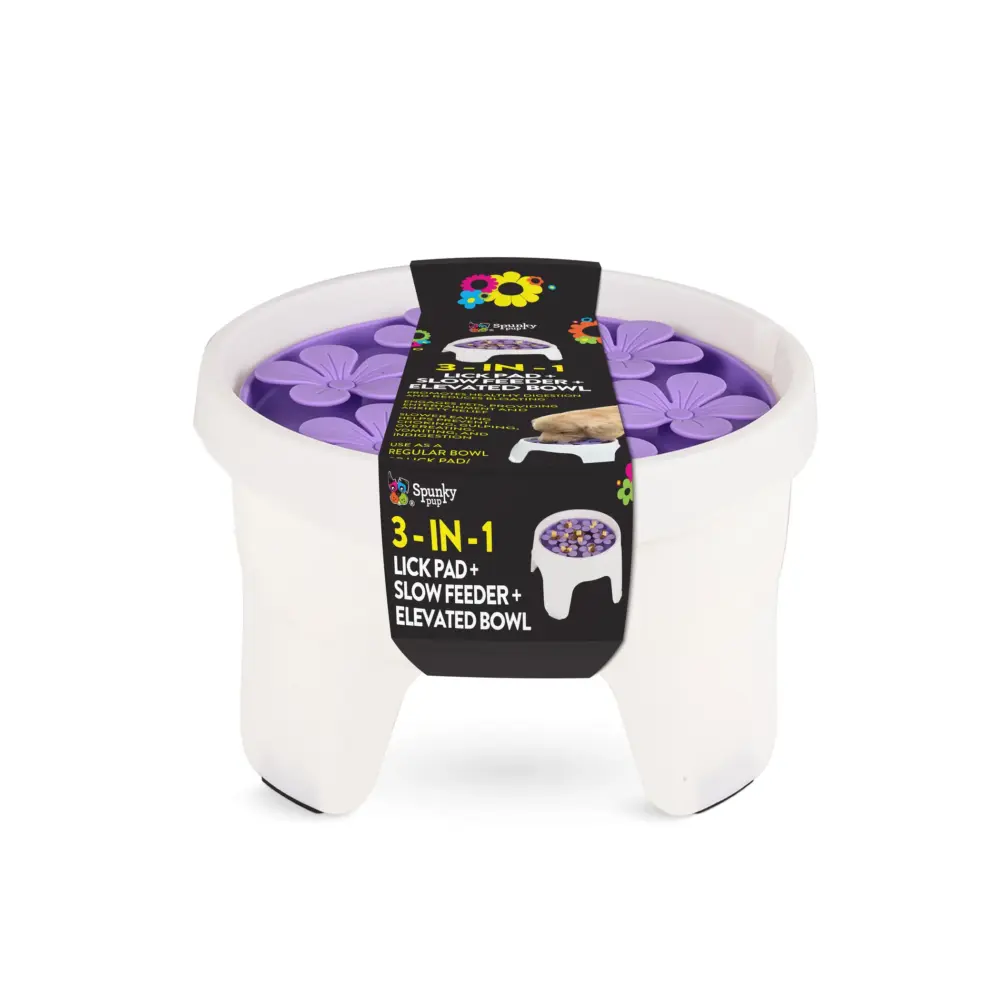
The Spunky Pup 3-in-1 Lick Pad, Slow Feeder & Elevated Bowl is one piece of food-grade silicone with three uses: a lick pad for wet food, yogurt or xylitol-free peanut butter, a slow-feeder side that spreads a meal out, and an elevated-bowl setup. It’s dishwasher safe and comes in purple. As with any silicone, put it down for a meal or a lick session and pick it up afterward, especially with a chewer. Ask your veterinarian before you use the raised setup, for the bloat reason above.
TPU on walks: the Flipo fold-out bowl
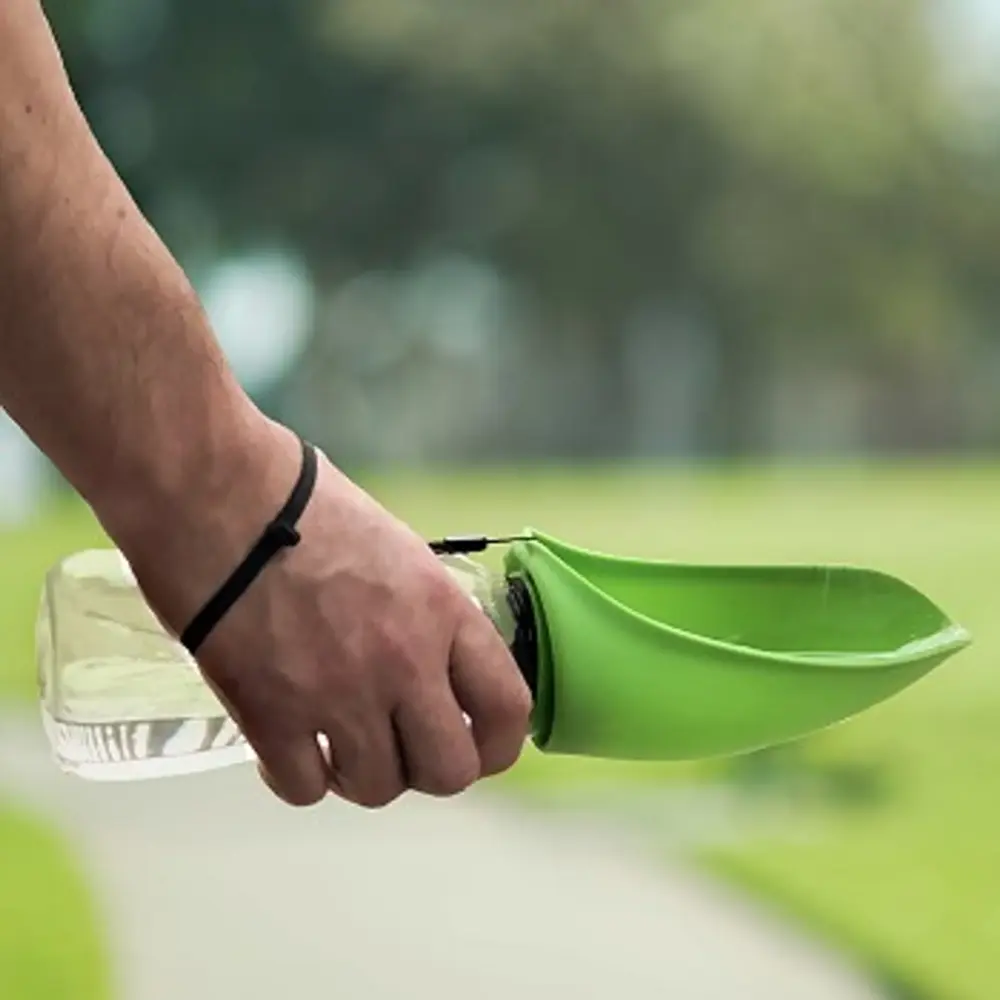
The Flipo Fold-A-Bowl Dog Water Bottle holds 26 ounces, and its cover folds out into a bowl made of food-grade TPU, a flexible plastic. A wrist strap leaves a hand free for the leash, and the push-button closure is designed not to leak in a bag. It’s hand wash only and comes in several colors. Treat it as the walking and road-trip bowl, not a stand-in for the bowl at home. Because it only comes out at water stops, it sees far less wear than a bowl used every day, but like any plastic it’s no chew toy, so pack it away once your dog has had a drink.
Both are in our feeding and enrichment collection.
-
Flipo
Fold-A-Bowl Dog Water Bottle with Fold-Out Bowl
$28.95
-
Spunky Pup
3-in-1 Lick Pad, Slow Feeder & Elevated Bowl
$34.95

Verdict: the right material for each job
- Everyday food and water: stainless steel with a non-slip base, for most dogs and chewers.
- Bowl pushers, playful puppies and cats: heavy, food-grade ceramic, or glass for cats, checked for chips after every drop.
- Travel, lick pads and slow feeders: silicone, or a fold-out TPU bowl on walks.
- Plastic: a food-safe spare at most, replaced once it scratches, and never the main bowl for a chewer.
Material decides how easy a bowl is to keep clean; daily washing does the rest. For how to wash each material, from steel to silicone ridges, see how often to wash dog bowls.
Related guides
-
Guide
How Often Should You Wash Dog Bowls? Food, Water, Slow Feeders and Lick Mats
Wash water and dry-food bowls daily and wet-food bowls after every meal. Here is how to scrub off the slimy film, when the dishwasher is enough and when to disinfect, how to reach into ridged slow feeders and lick mats, and how to care for travel bottles and cat bowls.
-
Comparison
Slow Feeder vs Lick Mat: Which One Does Your Dog Need?
A slow feeder stretches out a meal; a lick mat fills time and settles a dog. Buying the wrong one for the problem is the usual mistake. This comparison covers both, including the dogs who defeat them.
-
Buying guide
Pet Accessories Under $50: Useful Dog and Cat Picks, One per Job
Six useful dog and cat accessories under $50 from our catalog, one for each everyday job: water on walks, a reflective ID collar, a car seat belt tether, a de-shedding tool, a lick pad and slow feeder, and a cat harness, plus which ones need a measurement before you buy.