Feeding & Enrichment Guide
How to Get a Cat to Drink More Water, and When to Call the Vet
Short answer
Make water easy to like: wide, shallow glass or ceramic bowls filled to the brim, set away from food in several quiet spots, plus a fountain if your cat enjoys moving water. Wet food, thinned with a little water, adds moisture at every meal. If your cat suddenly drinks much more or less than usual, call your veterinarian.
Why many cats drink so little
A cat who rarely visits the bowl isn’t necessarily short of water, so look at the food first. The Cornell Feline Health Center’s feeding guide puts dry food at 6 to 10 percent water, semi-moist food at about 35 percent and canned food at 75 percent or more. A cat on wet food takes in much of the day’s water at mealtimes and may drink very little on top. A cat on kibble has to get most of it from the bowl.
| Food | Water content | What it means |
|---|---|---|
| Dry food | 6 to 10 percent | Most water comes from the bowl |
| Semi-moist | About 35 percent | Some water comes with meals |
| Canned food | 75 percent or more | Meals supply much of the water |
The setup comes next. International Cat Care’s advice on encouraging a cat to drink describes cats as particular about how and where they drink. Many dislike their whiskers touching the sides of a bowl, prefer not to drink next to their food, and can feel vulnerable with their head inside a deep bowl or their back to the room. A bowl that ignores those preferences may get a sniff and nothing more.
Some cats need extra water more than others. iCatCare names kidney disease, cystitis, urinary stones and diabetes among the conditions where more water helps, along with cats on certain medicines, such as non-steroidal anti-inflammatory drugs (NSAIDs). If your cat has one of these, ask your veterinarian which of the ideas below suit your cat, and whether the diet should change too.
Choose a bowl your cat wants to use
- Wide and shallow. A broad bowl lets your cat drink without pushing their face inside or brushing their whiskers against the rim.
- Glass or ceramic. iCatCare says cats prefer either to plastic. A heavy ceramic bowl also stays put when a paw bumps it.
- Filled to the brim. Cats like to drink from a full container, according to iCatCare, so top it right up rather than leaving an inch of water at the bottom.
- Raised for stiff joints. For an arthritic cat, or one who moves less easily, iCatCare suggests a bowl raised off the floor so drinking doesn’t mean a deep crouch.
- A glass, if that’s the draw. Some cats would rather drink from a glass or tumbler. If yours keeps raiding your nightstand, give them their own, and pick an unbreakable one for a raised surface.
Tip
Nilosi doesn’t sell cat water bowls or fountains, so these come from elsewhere, and you may already own the right bowl. A wide ceramic pasta bowl or a glass pie dish often does the job.
Whatever the bowl, empty it, wash it and refill it every day instead of topping up stale water. Cats notice a bowl that smells of old food or soap, and our guide on how often to wash pet bowls covers the routine for cat bowls too.
Where to put the water
Cats drink more readily when water is close by and the spot feels safe. In practice, that means three things:
- Away from food. iCatCare advises against double bowls that hold food and water side by side, and says cats drink more when the two are offered in separate places. Another room suits a cat who barely drinks.
- In several places. iCatCare suggests a bowl on each floor. Add more where your cat already spends time: a favorite window, the floor beside their bed, the landing at the top of the stairs.
- Quiet and open. Keep water away from busy doors and noisy machines such as the washer, and set the bowl out from the wall so your cat can watch the room while drinking.
For choosing the exact corner, and how far to keep bowls from the litter box, see where to put cat food and water bowls.
Fountains, faucets and other water to try
Water fountains
Some cats are drawn to moving water. iCatCare suggests trying a pet water fountain, and Cornell’s guidance on chronic kidney disease notes that many cats prefer to drink from one. Not every cat takes to a fountain, though, so treat it as an experiment. Set it up in a new spot and leave the usual bowl where it is until your cat is clearly using both. A fountain’s pump and filter collect hair and slime, so clean it and change the filter as often as its maker says.
A dripping faucet
If your cat already waits at the bathroom sink, a thin trickle while you’re in the room is a free way to find out whether moving water is the draw before you buy anything. A ping-pong ball floating in a large, full bowl is another cheap idea from iCatCare: it bobs and sets the water moving whenever your cat touches it.
Different water, or a little flavor
iCatCare also suggests experimenting with the water itself, such as filtered or still spring water in place of tap. For a reluctant drinker, it lists flavored options too: the water left from poaching a piece of chicken or fish with no stock or added salt, the liquid from a can of tuna in spring water, or that tuna frozen into ice cubes for the bowl. Cornell’s Feline Health Center also mentions a small amount of low-sodium chicken broth. A few rules keep this safe:
- Offer the new water or flavor in a second bowl, and keep a bowl of plain water out as well.
- Choose tuna in spring water, not brine, and skip salted stock and gravy.
- Read broth labels and avoid onion, garlic and chives. The ASPCA lists them among foods to keep from pets and says cats are more susceptible to them than dogs.
- Leave out milk, which iCatCare notes cats can’t fully digest.
- Swap a flavored bowl for fresh water within a few hours rather than leaving it out all day.
More moisture in meals
Food is the one route that doesn’t depend on your cat choosing to drink, and iCatCare recommends a wet diet of cans or pouches for cats who need more water.
Move toward wet food gradually
If your cat eats only kibble, replace part of it with wet food over a week or so, mixing the two at first. Adjust the portions so the day’s total calories stay about the same; the feeding guide on the label is a starting point, and your veterinarian can help you work out amounts. If your cat eats a prescription diet, ask before you change or add anything.
Thin wet food with water
iCatCare suggests adding water to wet food, noting that some cats happily eat food that resembles soup, and advises room-temperature water rather than cold. Build up slowly:
- Start small. Stir about a teaspoon of room-temperature water into a normal portion of wet food.
- Watch the meal. If your cat finishes it, keep to that amount for a few days.
- Add a little more. Increase a teaspoon at a time until the food is loose and gravy-like, or stop at the point where your cat stops finishing it.
- Lift the leftovers. Don’t leave thinned food out for hours. Pick up what’s left after the meal and wash the dish.
Serve it on a lick mat
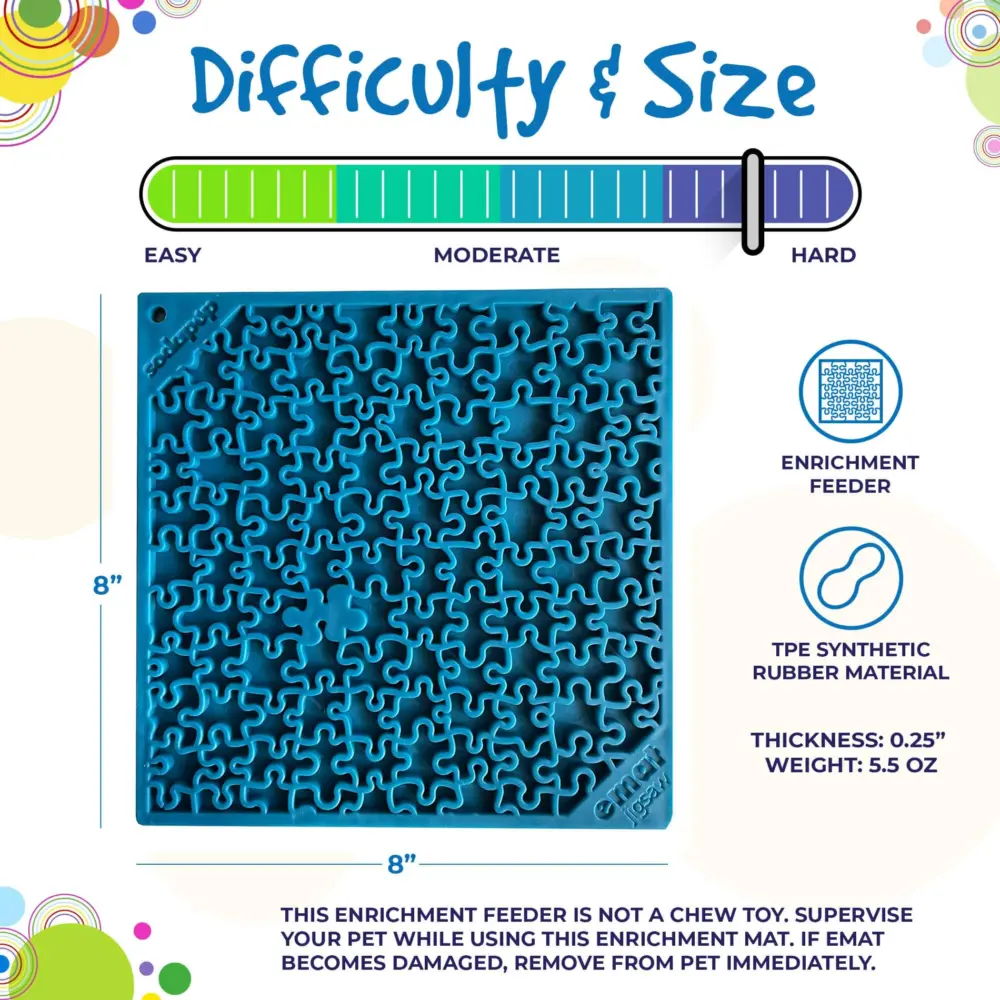
A lick mat is another way to serve a wetter meal. Spread a thin layer of wet food loosened with a spoonful of water into the grooves, and your cat works through it slowly, water and all, with no bowl sides to touch their whiskers. The SodaPup Jigsaw Enrichment Lick Mat suits cats as well as dogs, has a jigsaw texture that slows licking and is dishwasher safe. Serve it at room temperature and stay close; a cat who starts chewing the mat is done with it. Our guide to what to put on a lick mat has more fillings that suit cats, plus cleaning tips.
Homes with more than one cat
With several cats, the number of bowls matters as much as the style. iCatCare recommends at least one water bowl per cat, plus one extra. Spread them around the home rather than lining them up in a row. A cat who gets stared down or blocked at the only bowl may simply drink less, and a falling water level won’t show you which cat is missing out. Put one bowl in the room your quietest cat prefers, and watch who drinks where. For the full count of boxes, beds and bowls, see our multi-cat household setup.
If you share the home with a dog, keep at least one cat bowl somewhere the dog can’t reach, such as a surface your cat jumps to easily, so your cat can drink in peace and the bowl doesn’t get emptied. If the dog is the one who barely drinks, see how to get a dog to drink more water.
How to tell if your cat is drinking enough
The Cornell Feline Health Center’s hydration advice puts a cat’s daily need at about 4 ounces of water per 5 pounds of lean body weight, or roughly a cup a day for a 10-pound cat. Food counts toward that: Cornell notes that cats on wet food may drink less, while cats on dry food take more of their water from the bowl. So a wet-fed cat who rarely drinks may be getting enough.
Weather and activity shift the numbers too, so what helps you and your veterinarian most is knowing your cat’s normal. A few days of notes is enough:
- Measure the bowls. Fill each one to the same level with a measuring cup every morning and note how much you add back. A bowl in a sunny window loses some to evaporation.
- Watch the litter box. If you use clumping litter, note roughly how many urine clumps you scoop each day and how large they are.
- Count the extras. Drinks from the faucet, your glass or the shower count too, and they are easy to miss.
- Log the changes. Write down any new food, bowl or heat wave, so you can tell what moved the numbers.
Most cats need more water on hot days. Our guide to keeping a cat cool in summer covers extra bowls and cool places to rest.
When drinking changes, call your veterinarian
iCatCare advises contacting your veterinary team if you think your cat is drinking too much or too little. Only a veterinarian can find the cause, and the notes from the section above make that visit quicker and more useful.
Drinking more than usual
Cornell’s Feline Health Center notes that cats with chronic kidney disease may drink more and urinate more to compensate. It also names increased thirst and urination, along with weight loss despite a good appetite, as the most common signs of diabetes that owners notice at home. VCA lists increased thirst among the signs of hyperthyroidism in cats, which usually affects middle-aged and older cats. You may notice it first as a bowl that empties faster, bigger or more clumps in the litter, or a cat who starts drinking in new places.
Drinking less, or not at all
A cat who stops drinking, or drinks much less while also eating less, vomiting, hiding or seeming unusually tired, needs a prompt call. Don’t wait to see whether a new bowl helps.
Cornell lists lethargy, weakness, poor appetite and dry gums among the signs of dehydration, with eyes sunken into their sockets in more severe cases. VCA’s guide to signs of illness in cats describes a quick check: gently lift the skin near the shoulder blades and let go. It should snap back right away. Skin that stays tented up usually means dehydration, which needs prompt veterinary treatment.
Safety note
Straining in the litter box is an emergency. If your cat keeps trying to pee but passes little or nothing, cries while straining or pees outside the box, call a veterinarian or emergency clinic now. iCatCare’s guide to urethral obstruction says it occurs almost exclusively in male cats and can be fatal within two to three days without treatment, so don’t wait to see whether it passes.
Related guides
-
How-to
How to Clean a Lick Mat Properly, Including the Grooves
A lick mat is a textured surface designed to hold food, which is exactly what makes it hard to clean. This covers rinsing before it sets, the soak that does most of the work, when the dishwasher is fine, and what frozen toppings leave behind in the pattern.
-
Comparison
Slow Feeder vs Lick Mat: Which One Does Your Dog Need?
A slow feeder stretches out a meal; a lick mat fills time and settles a dog. Buying the wrong one for the problem is the usual mistake. This comparison covers both, including the dogs who defeat them.
-
How-to
Where to Put Cat Food and Water Bowls, and How Far From the Litter Box
Choosing the spot for your cat’s food and water: how far to keep them from the litter box, why water belongs away from the food, which rooms and corners to avoid, feeding several cats or a cat with a dog, and how to move the bowls without putting your cat off its meals.