Feeding & Enrichment How-to
Where to Put Cat Food and Water Bowls, and How Far From the Litter Box
Short answer
Feed your cat in a quiet spot in a room it already uses, away from doorways, walkways and noisy machines, and ideally in a different room from the litter box. There’s no official distance, but cats usually avoid toileting near their food. Set the water bowl a few steps from the food, and add a second one elsewhere.
Why placement matters to cats
A badly placed bowl rarely causes a scene. The signs are quieter: a cat that eats in a rush and leaves, drinks little, or starts avoiding a litter box that sits too close to its dinner. International Cat Care’s feeding advice asks for a quiet, calm part of the home where a cat can eat out of sight of other cats, away from litter trays, entry points to the home and busy areas.
The AAFP and ISFM feline environmental needs guidelines go further: the litter box, food and water, play, resting and scratching areas should each have their own location, and food and water should be kept apart from each other. They also say a cat should have a choice of each resource, for example at least two feeding areas, even in a one-cat home.
How far from the litter box should cat food be?
There is no official number of feet. The ASPCA’s advice on litter box problems is simply not to put the food bowl next to the box, because cats usually don’t like to eliminate close to their food. That cuts both ways: bowls beside the box can put a cat off the box, not only off its meal.
Use the space you have:
- House or larger apartment: food and litter in different rooms, such as meals in the kitchen or living area and the box in a bathroom, spare room or quiet end of a hallway.
- One-bedroom apartment: if the box lives in the bathroom, feed in the kitchen or living area, not on the bathroom floor beside it.
- Studio: opposite sides of the room, as far apart as the layout allows, with a piece of furniture between them if you can manage it.
They are still too close if you can smell the box from the bowls, or if litter grit turns up in the water. Grit can also ride in on paws from another room, which a trapping mat at the box exit helps with. If it is the box that needs a new home, see where to put a litter box in a small apartment.
Should cat food and water be separate?
Yes, wherever you can. International Cat Care’s advice on encouraging a cat to drink says cats prefer not to drink next to their food, and it advises against double bowls with food on one side and water on the other. The AAFP and ISFM guidelines agree: keep the two apart.
- Start with a few steps. Water on the far side of the kitchen already helps; a bowl in another room suits a cat that seldom drinks.
- Add a bowl on each floor. International Cat Care suggests water on every level of your home, so a drink never means a trip up or down the stairs.
- Fill it to the brim. Cats like a wide, shallow bowl filled right up, so they can drink without putting their head inside.
- Pull it out from the wall. Drinking with its back to the room can make a cat feel vulnerable, so leave space to reach the bowl from any side.
- Already own a double bowl? Fill both sides with water and serve food from a separate dish elsewhere.
If your cat still drinks very little, our guide on how to get a cat to drink more water covers bowl styles, fountains and wetter meals. A sudden change in how much your cat drinks, up or down, is worth a call to your veterinarian.
Good spots, and spots to avoid
Look for a place your cat already passes several times a day, where it can eat with a view of the room and an easy way out. Then rule out the spots that tend to cause trouble.
| Spot | Verdict | Why |
|---|---|---|
| Kitchen corner | Often good | Fine if it isn’t the main walkway |
| Living area | Often good | Close to where your cat spends the day |
| Spare room | Good if used | Quiet, if your cat goes there daily |
| Beside the box | Avoid | Cats avoid toileting near food |
| Laundry room | Avoid | Washer and dryer noise |
| Busy hallway | Avoid | Constant foot traffic |
| By the door | Avoid | A busy entry point to the home |
| Dog’s area | Avoid | The dog can reach the cat’s food |
| Heater or sun | Avoid | Warms the water and wet food |
A feeding spot that only works when the house is quiet isn’t a good one. Check it at your busiest time of day, when the dishwasher runs, children come home or the dog wants out.
How to set up a cat feeding station
What you need: a wide, shallow food dish or saucer, one or two wide water bowls, a washable placemat or tray if your cat scatters food, and a trapping mat at the litter box exit. Our bowls and slow feeders are made for dogs, and we don’t sell cat dishes, fountains or placemats, so those come from elsewhere. A ceramic saucer or a glass pie dish you already own often does the job.
- Watch where your cat spends the day. Choose a room it uses daily, so meals sit on its usual route rather than in a far corner it rarely visits.
- Keep the box well away. Use a different room if you can; in a studio, the opposite side, ideally with furniture between them.
- Pick a quiet side of the room, out of walkways and doorways, and away from machines, heaters and the dog’s bowl.
- Leave room to look around. Set the dishes a little out from the wall, so your cat can keep an eye on the room while it eats and drinks.
- Place water a few steps from the food, then add a second water bowl in another room or on another floor.
- Then leave it alone. Once your cat eats and drinks there happily, keep the setup as it is, even if another spot would look tidier.
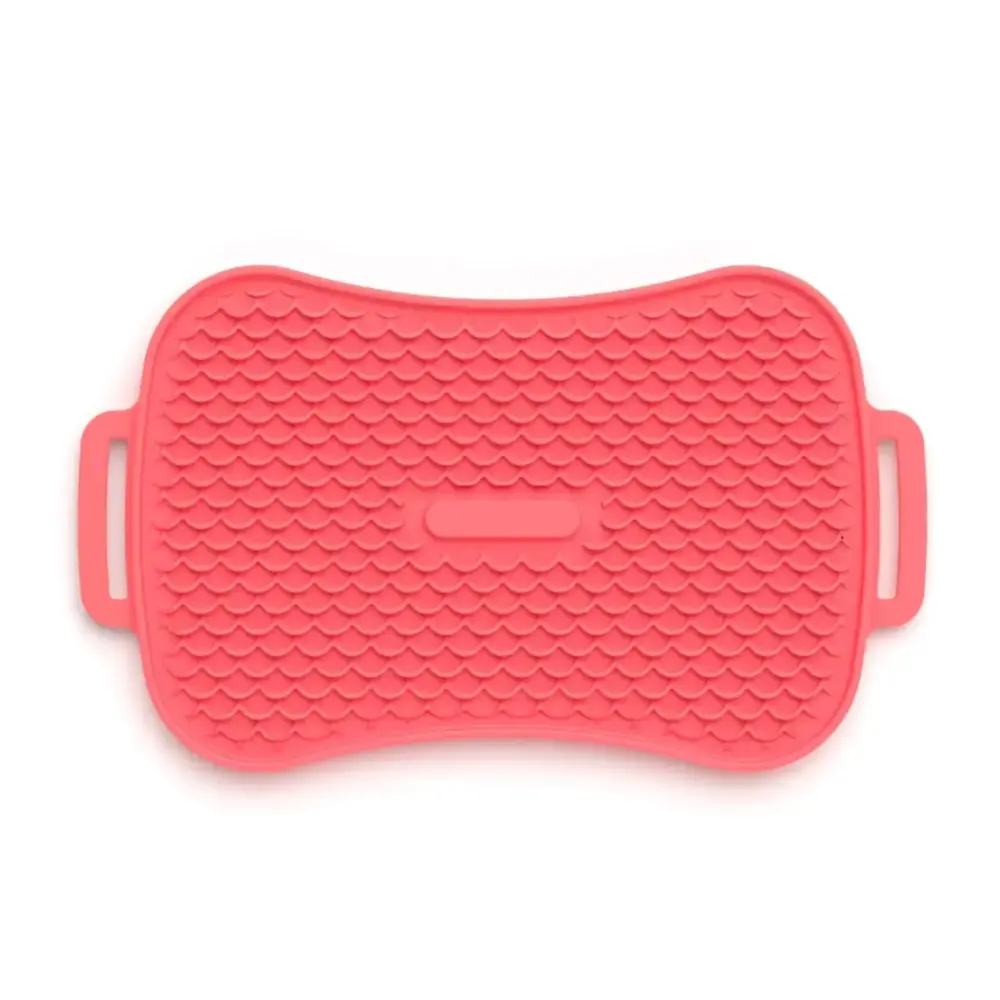
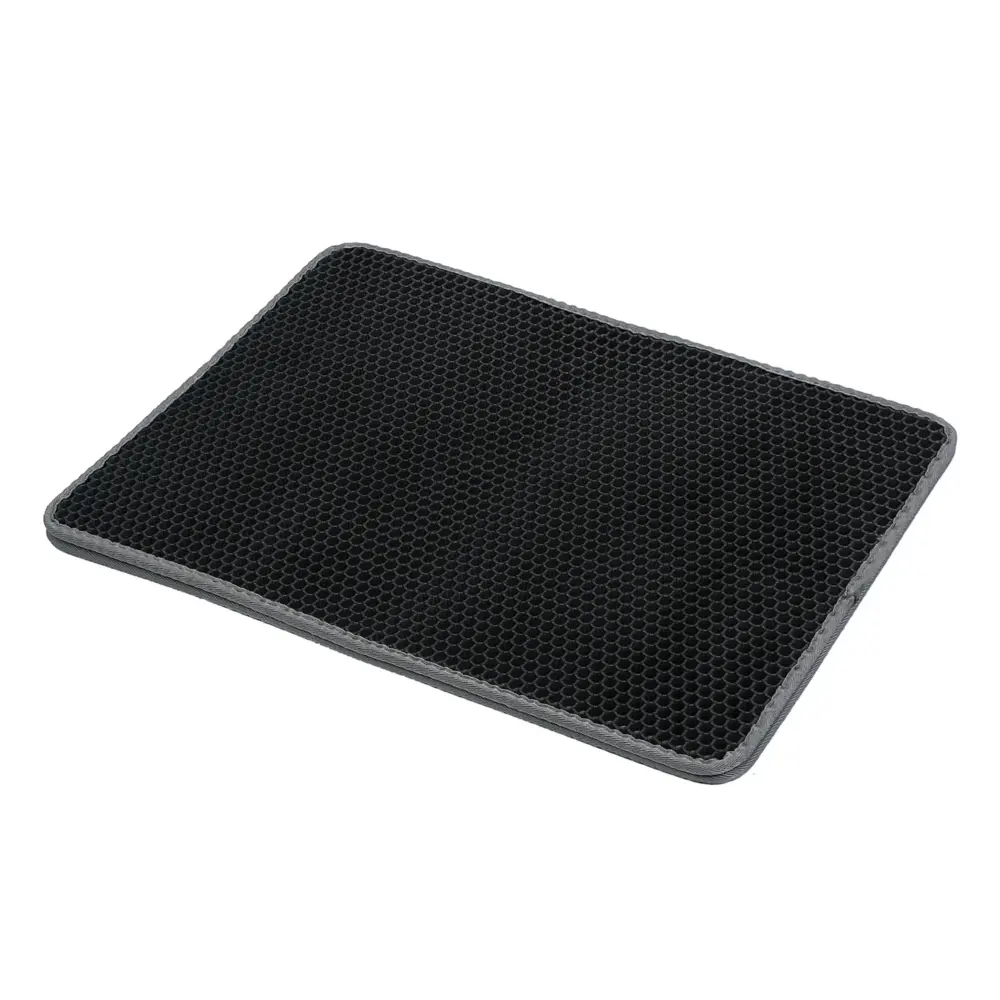
Our picks are limited to Nilosi’s own catalog, and only two items in it suit a cat’s feeding station: a lick mat for wet food, and a mat that keeps litter at the box instead of near the bowls.
-
SodaPup
Jigsaw Enrichment Lick Mat for Dogs & Cats, Choose color
$25.95
Why it fits: Wet food spreads across an open mat with no bowl sides to brush whiskers; the jigsaw texture slows licking, and it is dishwasher safe.
-
Double-Layer Honeycomb Cat Litter Trapping Mat, View product
$53.95
Why it fits: Catches litter from paws at the box exit before it drifts toward the bowls; it opens like an envelope to pour the litter back.

Multi-cat homes and homes with a dog
More than one cat
Give each cat its own feeding spot, out of sight of the others; the AAFP and ISFM guidelines note that individual eating locations spare cats the stress of competing at meals. Separate rooms work best, though cats that get along may manage in one room if their dishes sit well apart or at different heights. For how many bowls, boxes and beds two or more cats need, see our multi-cat household setup.
With a dog in the house
Plenty of dogs will eat cat food given the chance. The AKC’s article on dogs and cat food advises keeping it out of the dog’s reach, since a regular habit can lead to stomach upset, obesity or pancreatitis. Where you put the dish does most of the work:
- Up high: a counter, a sturdy shelf, a dresser top or a cat tree platform your cat already jumps to easily.
- Behind a barrier: a room behind a baby gate your cat can hop over or slip under, or a door held open just wide enough for the cat.
- Picked up after meals: a dish left down is one the dog will find, wet food above all. If your cat grazes, a high spot or a gated room matters even more.
For mealtime routines, special diets and what the two can safely share, see which bowls, beds and brushes dogs and cats can share.
Tip
A raised spot only suits a cat that jumps up without hesitating. For an older or stiff cat, keep food and water on the floor where it rests, and keep the dog out with a gate or a door instead. Our guide to making your home senior-cat friendly covers the rest of that setup.
Plates, wide bowls and lick mats for wet food
The dish is part of the placement. International Cat Care says cats prefer shallow bowls or saucers, so they can see around them while eating and their whiskers don’t brush the sides, and that glass or ceramic is better than plastic, which can pick up odors.
For wet food, a flat surface is the simplest answer: a saucer, a side plate or a lick mat. Our SodaPup Jigsaw Enrichment Lick Mat suits cats as well as dogs, is dishwasher safe and comes in Green or Pink if two cats need a mat each. Use it at the usual feeding spot, lift it once your cat walks away so wet food doesn’t sit out, and take it away if your cat starts chewing it.
Whatever the dish, wash wet-food dishes after each meal, and empty and refill the water bowls with fresh water every day rather than topping them up.
Moving the bowls without upsetting your cat
Cats like their routines, and a sudden switch on top of other changes can put a cat off a meal. Move the station in stages:
- Add water at the new spot first. An extra water bowl does no harm, and your cat finds the new place on its own.
- Move the food at the usual mealtime, setting the dish down while your cat watches. For a short move within a room, shift it a few feet a day instead.
- Change one thing at a time. Keep the same dish, food and mealtimes while the location changes.
- Keep the old water bowl for a week, then take it away, or leave it as a second bowl.
- Watch the first few meals. If your cat hesitates, sit nearby or move the dish halfway back, then try again more slowly.
Safety note
A cat that eats nothing, or much less than usual, for about a day needs a prompt call to your veterinarian, even if you are sure the move is the reason. Going without food can make a cat seriously ill.
Moving house? Set up the bowls, box and bed in one quiet base room before your cat comes out of the carrier, then open up the rest of the home as it settles. Our guide on how to help a cat adjust to a new home walks through it.
Common mistakes and quick fixes
- Litter in the water bowl: move the bowls farther from the box and put a trapping mat at its exit.
- Food hooked out onto the floor: the dish may be too deep or narrow; try a saucer or a flat plate.
- Your cat eats fast and leaves: look for what is pushing it, such as a busy doorway, another pet nearby or a noisy machine, and move the dish somewhere calmer.
- Bowls moved every few weeks: once a spot works, keep it. Rearranging for your convenience is one more change for your cat.
- One shared station for several cats: a row of bowls side by side is still one station, so give each cat its own spot.
Related guides
-
How-to
How to Introduce a New Cat to Your Cat: A Step-by-Step Plan
A staged plan for adding a cat to a home that already has one, from a transition room and scent swaps to sightings and short supervised meetings, with how long each stage takes, the body language to watch and what to do if it goes wrong.
-
How-to
How to Clean a Lick Mat Properly, Including the Grooves
A lick mat is a textured surface designed to hold food, which is exactly what makes it hard to clean. This covers rinsing before it sets, the soak that does most of the work, when the dishwasher is fine, and what frozen toppings leave behind in the pattern.
-
How-to
How to Teach a Dog to Wait for Their Food Bowl, Step by Step
Lower the bowl only while your dog stays sitting, then release them to eat. This step-by-step plan uses your dog’s own meals and covers longer waits, distractions, jumping, barking and lunging, multi-dog kitchens, and what to do if your dog guards the bowl.