Senior Pets How-to
How to Make Your Home Senior-Cat Friendly: Litter, Beds and Perches
Short answer
Bring everything your older cat needs down to the floor where they spend the day: a low-entry litter box, food and water with no climb, and a warm bed out of drafts. Then add sturdy steps to favorite perches, a floor scratcher and a night light, one change at a time.
Signs your cat is finding the house harder to use
Older cats rarely limp or cry over stiff joints. International Cat Care notes that arthritis is very common in older cats but may not be diagnosed, because cats quietly limit their own activity. Watch how your cat uses the house:
- Jumps get planned or skipped: a long stare before the sofa, a detour by way of a chair, a windowsill no longer visited.
- Stairs slow down, or the bed upstairs is abandoned.
- Near misses at the box. VCA Animal Hospitals notes that a cat with back or hip pain may go near the box rather than in it, and that stairs to a box on another floor can be too daunting.
- Lower sleeping spots: the floor or a low chair instead of the cat tree.
- Less scratching and grooming: an unused post, claws catching on carpet, greasy fur on the lower back.
- Startling easily. VCA notes that fading sight and hearing can leave older cats startled when someone approaches unexpectedly.
Any of these can be ordinary aging, or pain and illness your veterinarian can help with, so book a checkup alongside the changes below. A better layout makes each day easier, but it doesn’t treat the cause. Our guide to when a cat becomes a senior explains which aging changes need a vet.
Set up a one-level base, step by step
If stairs are getting harder and your cat spends more time on one level, International Cat Care suggests putting all their resources there: food and water, beds, litter trays and scratching posts. Build around the level your cat has already chosen, usually the floor where the family spends its evenings, not around where things have always been.
- Watch for a few days. Note where your cat sleeps, eats and drinks, and which jumps they skip. The room where they spend the most hours is your base.
- Bring the box to them. Add a low-entry litter box on that level, near where your cat rests but not beside the bowls. Leave the old box where it is for now.
- Move food and water to the same floor, at floor level, with a second water bowl near the bed.
- Set a warm bed low down in a quiet, draft-free corner, plus one where your cat can watch the room.
- Add steps to the perches that matter, usually the sofa, your bed and one window.
- Lay a floor scratcher beside the bed.
- Fix footing and light with rugs over slick floors and a night light between the bed, the box and the water.
- Change one or two things at a time. VCA notes that older cats don’t handle change well, so let each change settle for a few days and give your cat extra attention meanwhile.
What you’ll need
- A large litter box with one low side, or a storage tote with a low entry cut into one end.
- Wide, shallow food and water dishes, plus an extra water bowl.
- Pet steps, a ramp, or a sturdy footstool to use as a step.
- Washable rugs or runners with a non-slip backing.
- A plug-in night light or two.
- A warm, low bed, a floor scratcher and a mat for the box exit.
We don’t sell litter boxes, cat dishes, pet steps, ramps, rugs or night lights. Our picks are limited to Nilosi’s own catalog and cover the last line of that list:
-
GOOPAWS
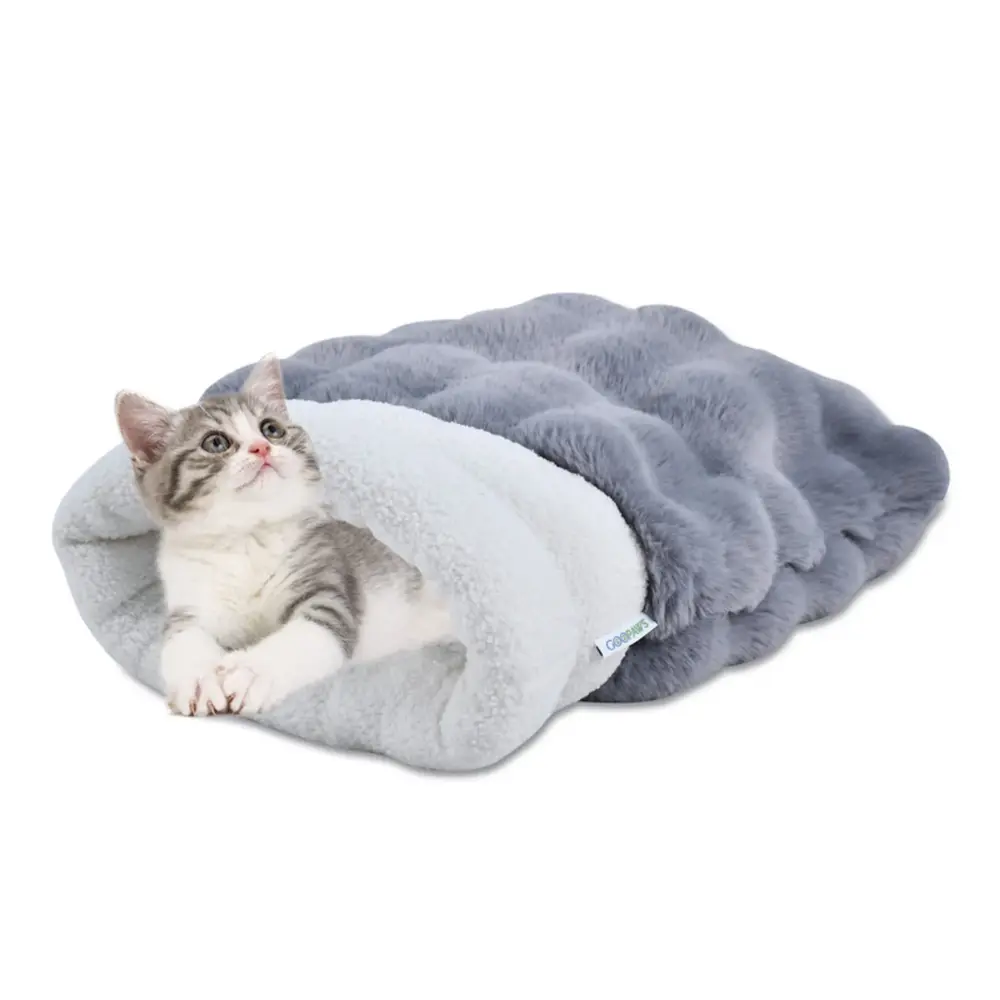
4-in-1 Self-Warming Cat Cave Bed, Choose color
$40.95
Why it fits: Laid flat as a mat it has no rim to step over, at 21 x 17 x 3 in; fold it into a cave and the self-warming design holds in body heat.
-
Armarkat
Ultra-Plush Cuddler Bed for Cats & Small Dogs, Choose size
Price range: $55.95 through $72.95
Why it fits: Suits a cat who rests their chin on an edge; the base is skid-free, and Small is 22 x 22 x 8 in, so check the rim is an easy step.
-
Cat Scratcher Guy
Wooden Cat Scratcher with Reversible Insert, View product
$32.95
Why it fits: Lets a stiff cat scratch at floor level with no stretch up a post; about 19.5 x 5.5 x 2 in, so it fits beside a bed or new steps.
-
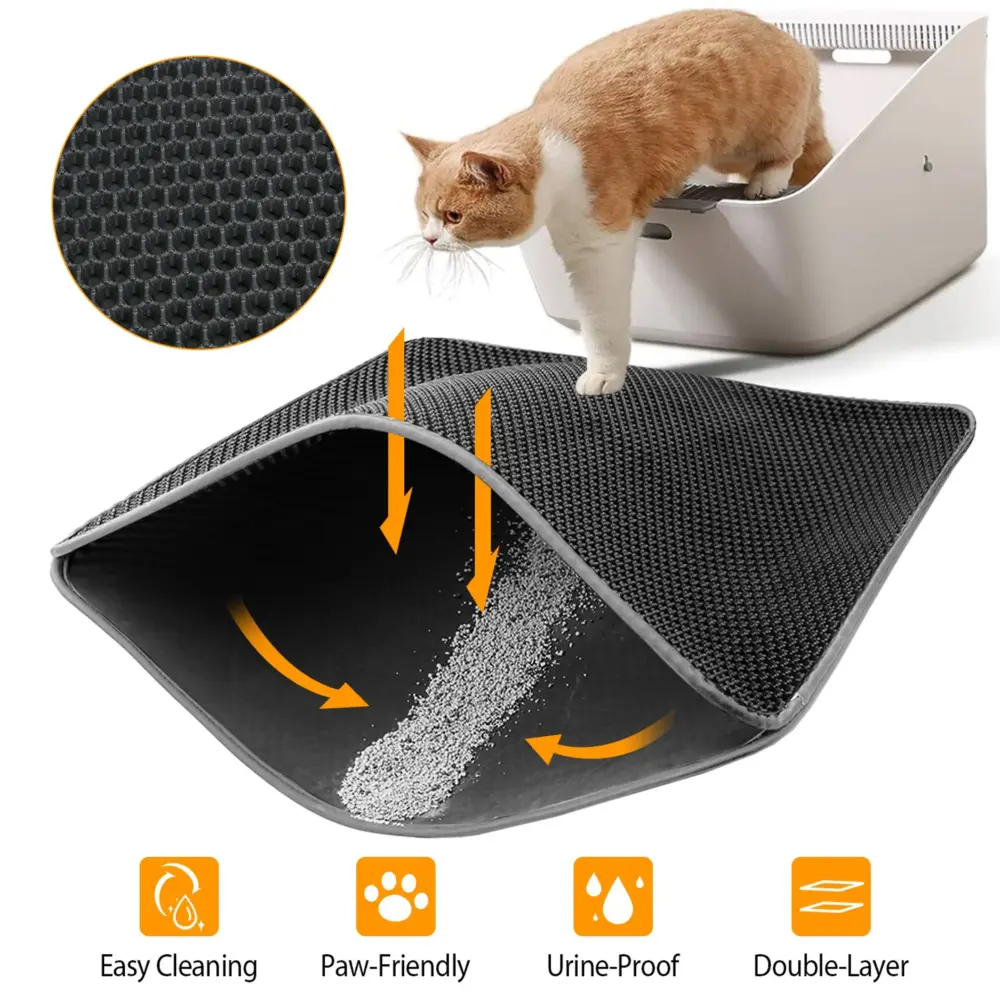
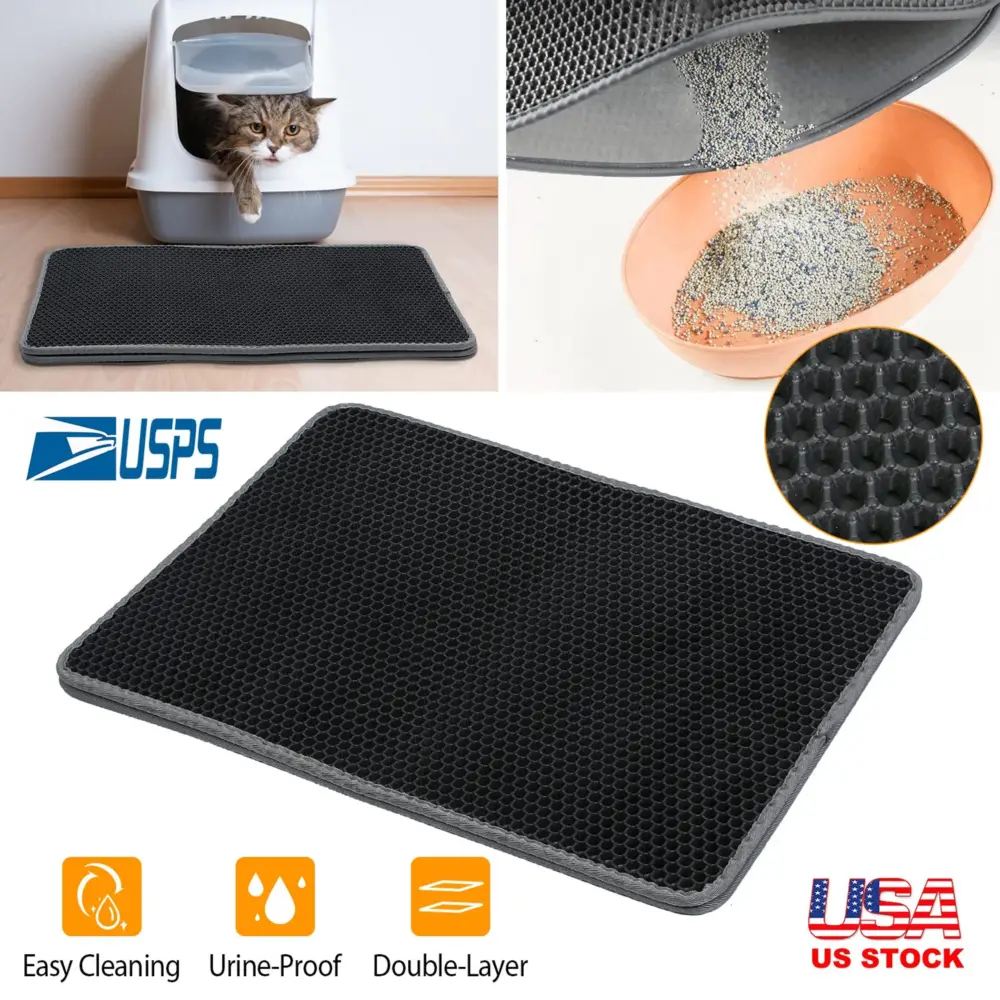
Double-Layer Honeycomb Cat Litter Trapping Mat, View product
$53.95
Why it fits: Catches litter from paws right at a low box entry, over a waterproof base; the listing gives no size, so ask us to confirm the fit.



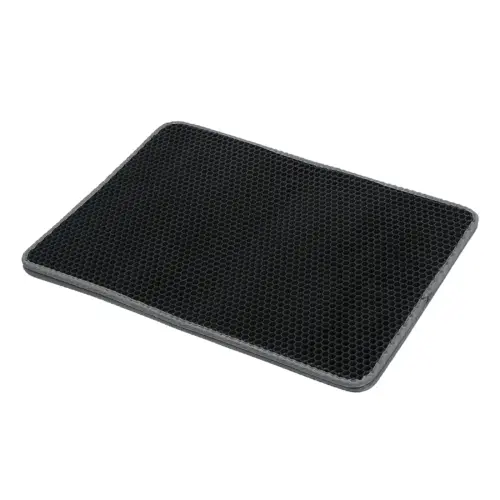
The litter box: a lower entry and a closer spot
After a vet check, look at the box itself. VCA recommends lower-sided boxes with the cover removed once pain is managed, partly because the top of a hood’s opening can rub the cat’s back on the way in.
- Entry: low enough to walk over, not hop. International Cat Care says cats with arthritis or reduced mobility benefit from trays with lower sides. A tote with a low cut-out entry and tall back walls also holds kicked litter; sand or tape the cut edge smooth.
- Size: room to turn around without standing on the rim. International Cat Care suggests a tray about one and a half times your cat’s length, nose to tail base.
- Style: skip hoods, top-entry boxes and cabinets, which ask for a crouch or a jump.
- Location: VCA suggests litter boxes on each floor of the house, near favorite sleeping and eating areas. Near the bowls is fine, right beside them isn’t, and keep the box out of any room whose door can swing shut.
- Litter: International Cat Care suggests soft, sandy litter that is comfortable to stand on. If your cat already uses one happily, keep it, and change the box before the litter.
Push a trapping mat tight against the exit, with no gap to step into, and check that it stays put under your cat’s feet; a mat that shifts under stiff legs is worse than none. For emptying the mat and choosing litter, see how to stop cat litter tracking.
Safety note
Accidents, straining or extra trips to the box call for a veterinarian, not just a new box. A cat who strains and passes little or no urine, especially a male, needs a veterinarian or emergency clinic straight away.
Food and water without the climb
Plenty of cats eat on a counter, out of the dog’s reach. For a cat who now hesitates at that jump, it can quietly mean smaller meals and fewer drinks. International Cat Care advises keeping food and water easy to reach, at floor level or with steps up.
- Bring the dish down to the base level. If the dog is the problem, feed your cat behind a pet gate with a small walk-through door.
- Add one easy step if the counter has to stay: a sturdy chair beside it turns one big jump into two small ones.
- Choose wide, shallow dishes, so your cat doesn’t have to push their face into a deep bowl.
- Spread the water: one bowl a few steps from the food, another near the bed.
- Watch the other pets. VCA advises making sure they aren’t keeping a senior cat from the food or water; give your senior a station of their own if a younger cat guards the bowls.
International Cat Care adds that an arthritic cat may benefit from raised bowls, so if bending to a floor dish looks awkward, ask your veterinarian whether a slightly raised one would help. A sudden change in how much your cat eats or drinks after the move is worth a call, too.
Beds: warm, low and out of drafts
Older cats sleep for longer stretches, and International Cat Care notes that an arthritic cat especially appreciates a bit of extra warmth. It suggests soft beds in easy-to-reach, quiet, draft-free places, and says igloo-style beds can help an older cat feel warm and secure.
- Low, but not on cold tile: a bed on a rug, a low footstool or an armchair seat your cat can step onto beats the top of the cat tree.
- Out of drafts: away from exterior doors and leaky windows. The draft checks and heating pad cautions in how to keep an indoor cat warm in winter matter most for older, arthritic cats.
- Two spots: a tucked-away bed for long sleeps and one in the room where the family sits.
- Easy edges: a rim your cat can step over without lifting a leg high, or no rim at all.
Opened out flat, our self-warming cave is a soft mat with nothing to climb; folded, it becomes the enclosed kind of bed International Cat Care describes. The cuddler suits a chin-on-the-edge sleeper, and its skid-free base keeps it in place; if your cat walks around the rim instead of over it, switch to the flat mat. For matching shape to sleeping style, see how to choose a cat bed your cat will actually use.
Steps up to perches and the windowsill
A sunny window or a spot beside you on the sofa may be the best part of your cat’s day, so rebuild the route rather than closing it off. International Cat Care suggests a series of shallow steps or a gently sloping ramp up to places such as the sofa or a windowsill, and VCA recommends a ramp or stairs for a senior cat who likes the couch or your bed.
- Steps, not jumps: rises your cat walks up rather than springs onto, such as one step to the sofa and perhaps two to a bed.
- Wide and solid: room for all four paws and no rocking. A footstool, storage ottoman or low bench works.
- Grip: carpeted steps or a rug with a non-slip backing; towels and bare wood slide.
- Ramps: a gentle slope with a textured surface, fixed so it can’t shift.
- The way down: put the steps where your cat already goes up, so they come back down the same way.
- Windows and cat trees: a sturdy chair under the sill, and the favorite bed moved to the cat tree’s lowest platform.
Teach new steps with a treat on each one rather than lifting your cat up. Once they’re up there, enrichment for senior cats has gentle ways to make window time worth the climb.
Scratching at floor level
Older cats still need to scratch: it stretches the legs and back and sheds worn layers from the claws. International Cat Care notes that horizontal scratchers are easier for older cats than tall, vertical posts, which can strain arthritic joints, and warns that a senior cat’s claws can overgrow, curl around and embed in the pads.
- Put a flat scratcher beside the main bed, since many cats scratch as soon as they wake.
- Add another where your cat now rakes the carpet.
- Keep the tall post if your cat still uses it.
- Set the scratcher on a level floor, with one end against a wall if it slides.
Our wooden scratcher has felt pads underneath and comes with catnip; sprinkle a little on the insert, or drag a toy slowly across it, to draw your cat over. Check claws weekly, trim them when needed, and ask your veterinarian about any that curl toward a pad.
Night lights, clear paths and better footing
VCA’s guide to cognitive dysfunction in senior pets notes that pets losing their sight benefit from extra lighting or scent cues, and that runners or floor coverings give traction on slippery floors. In practice:
- A night light on the route between the bed, the box and the water, with the cord tucked away.
- Mats where they count: at the foot of new steps, in front of the bowls and along the hall to the box.
- Furniture that stays put, since a cat with fading sight relies on memory. Keep walkways clear of bags and shoes.
- Doors wedged open to the litter box room, so they can’t drift shut overnight.
- A signal before a touch: speak, or tap the floor gently, before stroking a dozing cat, especially one who seems to hear less.
- A quiet base room in a busy home, with a box, water and a bed where your cat can rest undisturbed.
Troubleshooting and when to call your vet
Common mistakes
- Rearranging the whole house in one weekend.
- Taking away the old box before the new one has been used for several days running.
- Changing the box and the litter at the same time.
- Steps that wobble, or a ramp with a slick surface.
- Closing off a favorite perch instead of building an easier way up.
Your cat still goes beside the box
Check the entry height, whether your cat can turn around inside, and whether the box is on the floor they actually use. Back legs hanging over the edge suggest a bigger box. If accidents continue, your veterinarian should see your cat.
Your cat ignores the new steps
Make sure they don’t move, and set them exactly where your cat used to take off. A cat who won’t try any climbing at all may be sore, which is one for your veterinarian.
Changes to tell your veterinarian about
VCA recommends a veterinary exam at least twice a year for senior cats. Call sooner about:
- More drinking or peeing than usual, or accidents outside the box.
- Straining, or frequent trips with little result.
- Weight loss, or a clear change in appetite.
- Stiffness or reluctance to jump that keeps getting worse.
- Crying and wandering at night, or sleeping far more than usual.
Bringing home an older cat rather than adapting for one you’ve had for years? Our adopting a senior cat checklist covers shelter questions and the first vet visit. The cave bed, scratcher and litter mat above are in cat essentials.
Related guides
-
Checklist
Multi-Cat Household Setup: How Many Litter Boxes, Bowls and Beds
Two cats need three litter boxes, and the same one-per-cat-plus-one rule covers feeding stations, water bowls, scratchers and resting spots. See where each one goes, how to tell bonded cats from rivals, the quiet signs a home is too crowded, and a walk-through checklist.
-
Checklist
Adopting a Senior Cat Checklist: Shelter, Vet and First Two Weeks
A checklist for bringing home an older cat: questions for the shelter about history, health, food and litter habits, records and questions for the first vet visit, a short supplies list, the carrier ride home and what’s normal in the first two weeks.
-
How-to
Where to Put a Litter Box in a Small Apartment or Studio
The bathroom usually wins, with the door wedged open. See the next-best spots in a studio or one-bedroom, the places to skip (kitchen, bedside, laundry closet), how to make a screen or cabinet work for your cat, a studio layout, and how to move the box without accidents.