Senior Pets Guide
Enrichment for Senior Cats: Gentle Play and Easy Scent Games
Short answer
Keep the hunt and lower the jumps: drag toys slowly along the floor so your cat can stalk and bat them lying down, hide easy food finds by the bed, and add a flat scratcher and a warm lookout one step up. Playing less can signal pain, so mention it to your veterinarian.
What changes for older cats, and what stays the same
The wish to hunt rarely retires. A cat who sleeps through most of the afternoon will still track something that moves and pounce when prey comes close enough. What changes is the body around that instinct: joints stiffen, naps get longer and the senses may fade. VCA Animal Hospitals, in its guide to helping senior cats age gracefully, notes that cats with poorer sight or hearing may be startled when approached unexpectedly, and that a duller sense of taste and smell can make older cats pickier about food.
So keep the games your cat has always liked and change the setup: lower, slower, shorter and closer to where your cat already rests. International Cat Care’s advice on playing with your cat says senior cats enjoy playing too, and that a cat who lies down to play still benefits from one-to-one time with you. Not sure your cat qualifies yet? Here is when a cat counts as a senior.
Favorite games, senior versions
| Game | Senior version | Skip |
|---|---|---|
| Wand play | Slow drags along the floor | Toys dangled overhead for leaps |
| Food hunt | Easy finds a step from the bed | Hides on shelves or up the stairs |
| Puzzles | Food on top, easy to win | Puzzles that hold food back |
| Scratching | A flat scratcher beside the bed | Only a tall post to reach up |
| Lookouts | A low seat or a step to the sill | A sill that takes one big jump |
| Chase toys | A few supervised minutes | Fast chases on slick floors |
Gentle play: low, slow prey at floor level
Most of the excitement in a cat game is the stalk and the wait, not the leap. Keep those parts and take out the height and the speed.
- Play on a rug or carpet. Good footing lets a stiff cat push off and turn without skidding.
- Keep the toy on the ground. Drag a wand toy slowly across your cat’s line of sight, let it pause, then slip it behind a cushion. Waving it overhead asks for a standing leap and a twisting landing.
- Bring the game to your cat. Play a few feet from where your cat is lying, so a pounce takes a step or two, not a sprint.
- Let your cat win often. A catch every few pounces keeps an older cat in the game. For a cat who plays lying down, International Cat Care suggests a larger kick toy: kicking it with the back legs is good exercise for stiff hind legs.
- Stop sooner than you used to. A minute or two of interested batting is a good session for many seniors. Finish with a last catch and a small snack from the day’s food.
Session lengths and the hunt-catch-eat routine for every age are in how long to play with a cat.
Safety note
Stop the game if your cat breathes with its mouth open, limps or holds up a leg. VCA’s guide to emergencies in cats says a cat who is open-mouth breathing or panting needs a veterinarian immediately. Stiffness after a game means it was too much: make the next one gentler and tell your veterinarian, since stiffness in an older cat is often joint pain.
If sight or hearing is fading
For a cat who sees less well, use toys that rustle or crinkle, drag them across a sheet of paper so they make a sound, and move them closer and more slowly. For a cat who hears less, approach from the front and keep the toy where it can be seen. Either way, play in the same spot each time and keep beds and bowls where they have always been. A sudden change in sight or hearing needs your veterinarian.
Scent and foraging games with easy wins
Searching for food is the part of the hunt that asks the least of the joints, and VCA includes food-dispensing toys that mimic hunting in its advice for older cats. The rule for a senior is that every search ends in success: food that is easy to find, close to where your cat rests and never higher than the floor.
- A short treat trail. Set three or four pieces of kibble a step apart on a rug, starting right beside your cat’s bed.
- An open egg carton or muffin tin. Drop a piece of food into a few of the cups. No lids and nothing to dig out.
- A loose towel fold. Fold a few pieces of dry food loosely into a hand towel next to the bed, so your cat can nose them out without getting up. Put the towel away if your cat chews fabric.
- A new smell to read. A paper bag with the handles cut off, or a clean box on its side, gives a curious nose something to investigate. Catnip rubbed on a toy is worth a try, though not every cat reacts to it.
- A lick mat beside the bed. Spread a thin layer of the usual wet food on the SodaPup Jigsaw Enrichment Lick Mat and set it down where your cat lies. For cat-friendly spreads, see what to put on a lick mat.
Tip
Because taste and smell can dull with age, use the strongest-smelling food your cat already eats, such as a little of its usual wet food, and serve it at room temperature rather than straight from the fridge.
If your cat sniffs and walks off, the game is too hard: move the food closer, into plain view or on top. Take every piece from the day’s normal ration, and if your cat eats a prescription diet, use only that food. The trickier setups in our indoor cat enrichment ideas can wait, or be skipped.
Scratching without a stretch up a tall post
Scratching stretches the front legs and back, leaves a scent mark and sheds the worn outer layer of the claws, so older cats still need it. International Cat Care’s advice on caring for senior cats notes that horizontal scratchers are easier for older cats than tall posts, which can strain arthritic joints, and that seniors may struggle to retract their claws, so they catch in carpets and furniture.
A flat scratcher lets your cat scratch with a forward stretch instead of standing on its hind legs. Put it on the patch of carpet your cat already rakes, or beside its bed, since a stretch and a scratch often follow a nap.
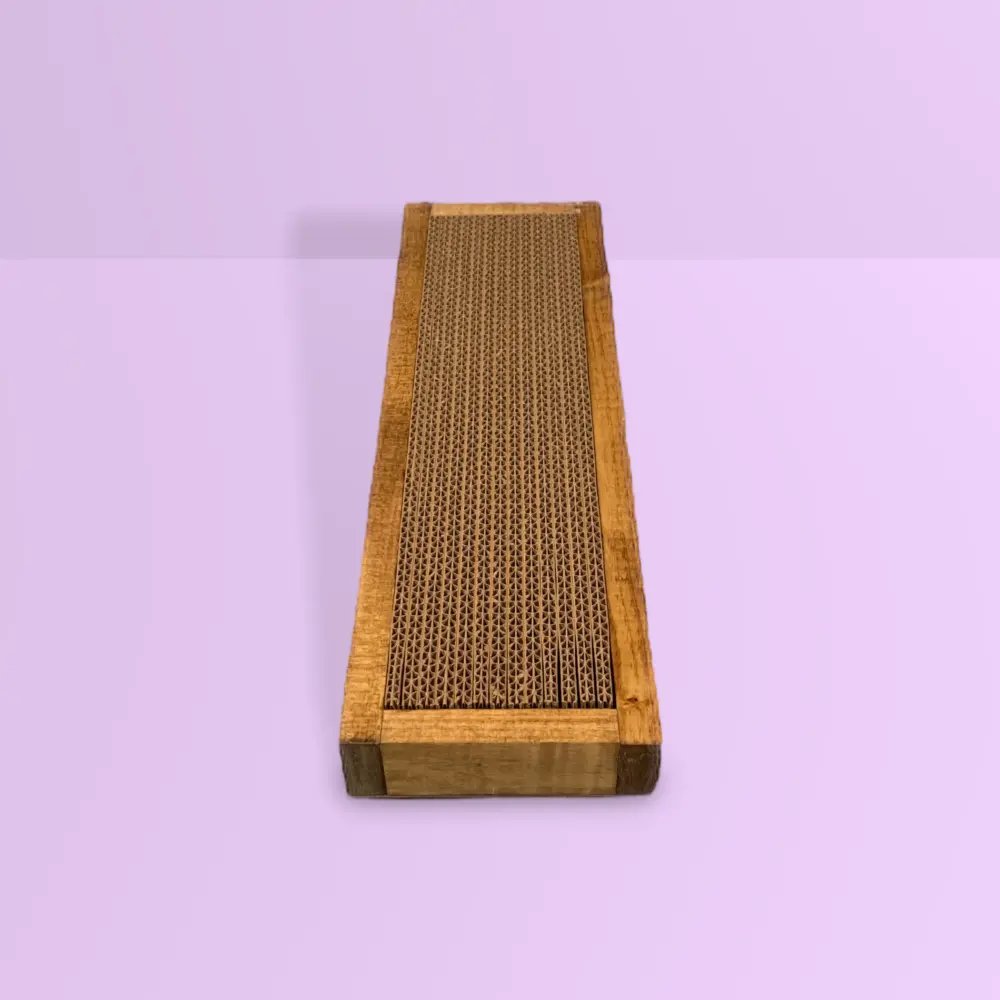
- Low and steady. The Cat Scratcher Guy Wooden Cat Scratcher is about 19.5 × 5.5 × 2 inches and lies flat, with felt pads underneath. If it shifts when your cat pulls, rest one end against a wall.
- Invite, never steer. Drag a wand toy slowly across the insert, or set a treat on it. Never hold your cat’s paws on the cardboard.
- Try the catnip. A pinch of the included catnip draws some cats in; for the rest, the toy and the treat do the job.
- Check claws weekly. VCA warns that older cats’ thick claws can grow into the paw pads, so see your veterinarian if one curls toward a pad.
If your senior still likes to scratch upright, keep its tall post and add the flat one by the bed. The full introduction plan is in how to get a cat to use a scratcher.
Warm lookouts and resting spots with a view
Watching costs a stiff cat almost nothing. Birds at a feeder, leaves in the wind and people on the sidewalk give an older cat something to follow from a warm spot. VCA recommends raised perches where senior cats can climb up and rest while they watch. The trick is a route up without a big jump.
- Make it one easy step. A sturdy chair or ottoman under the window usually does it. For steps or a ramp up to a high sill, see how to make your home senior-cat friendly, which also covers the litter box and bowls.
- Give it something to watch. Open the blinds fully. A bird feeder or a planter outside the glass adds movement to follow.
- Follow the sun. A warmth-seeking cat may want one window in the morning and another in the afternoon, so put a soft spot at each.
- Keep drafts out. Put a thick bed or folded blanket between your cat and a cold winter sill, and check screens are secure before you open a window.
- Add a spot near you. If your cat likes company, a bed in the room where you spend evenings gives it people to watch without the stairs.
From our cat essentials range, these two suit an older cat’s favorite corner, side by side:
-
Cat Scratcher Guy
Wooden Cat Scratcher with Reversible Insert, View product
$32.95
Why it fits: Lies flat so a stiff cat can scratch with a forward stretch; set it beside the bed and flip the reversible insert as it wears.
-
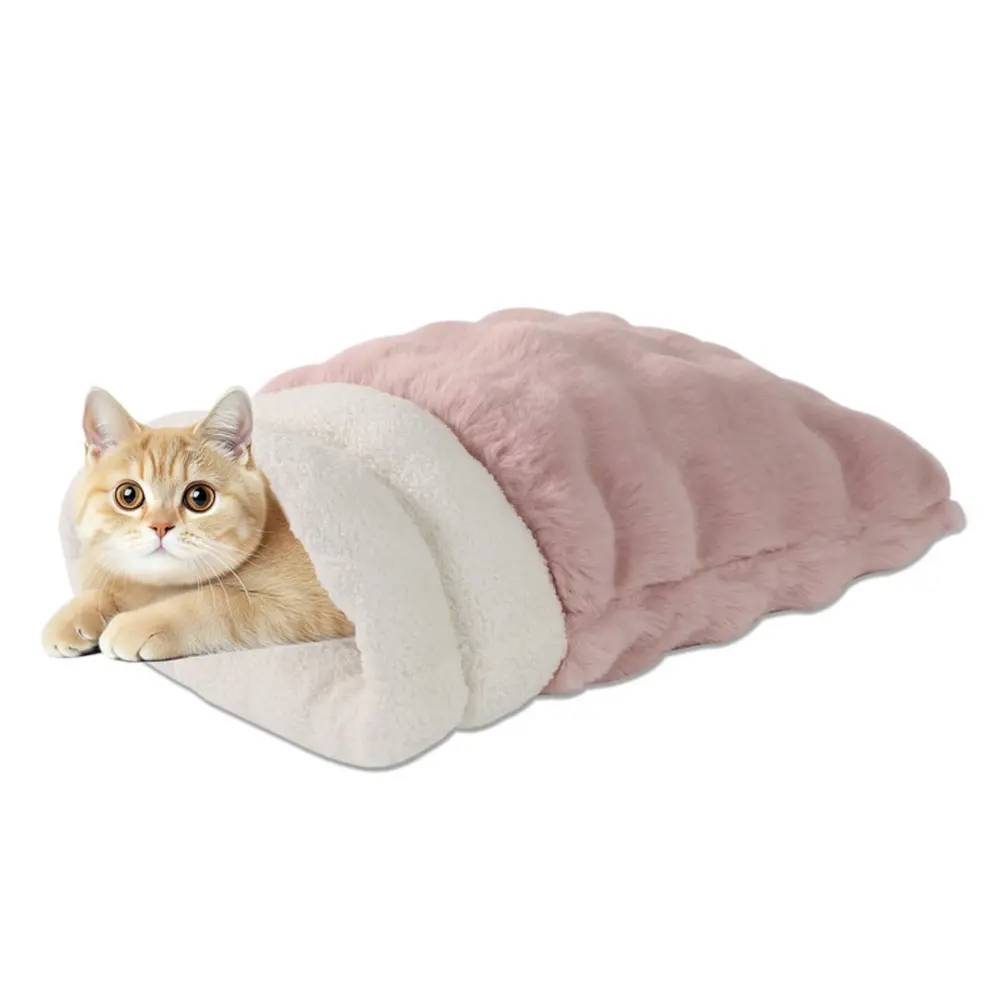
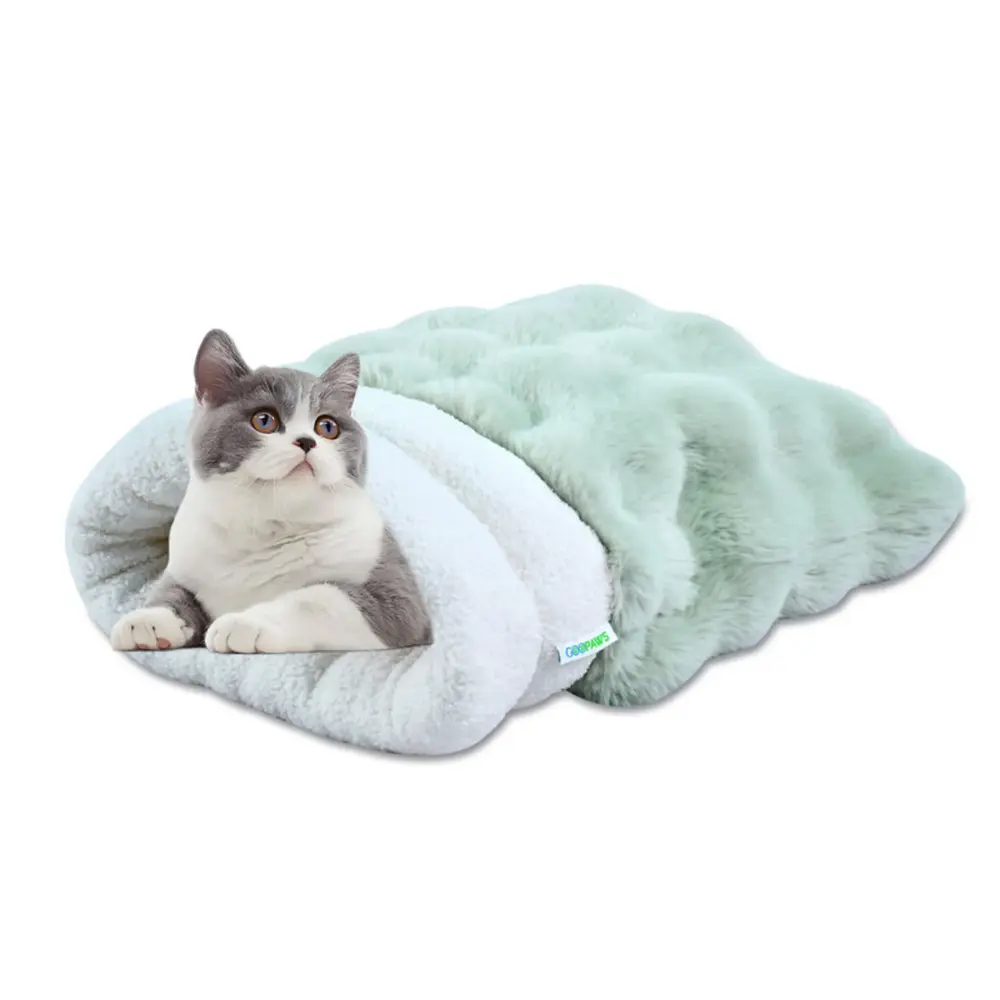
GOOPAWS
4-in-1 Self-Warming Cat Cave Bed, Choose color
$40.95
Why it fits: Works as a flat mat on a window chair or a cave for quiet naps; its self-warming design traps the body heat your cat gives off.


Automatic toys: when they help and when they don’t
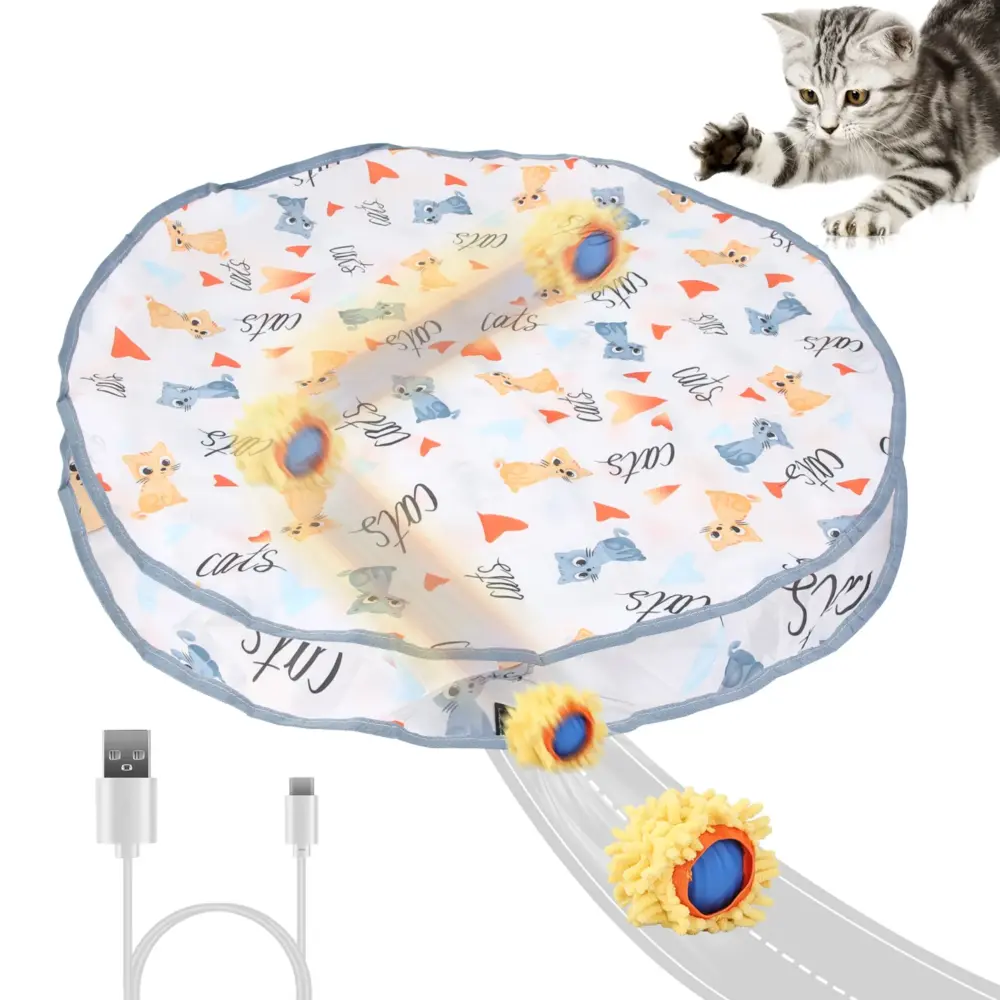
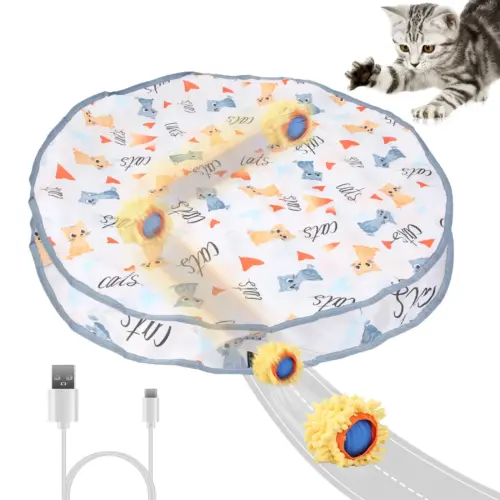
A self-moving toy can be a good extra for an older cat who plays lying down: it rolls past to be swatted, and because it waits for a touch, your cat can start the game when it feels like playing while you cook or work nearby. It cannot read your cat, though, and it does not slow down when your cat tires.
- Sudden dashes. They can tempt a stiff cat into twisting pounces, or startle one whose sight or hearing is fading.
- Floors matter. Hard floors are slippery for old joints, while deep carpet slows a rolling toy. A short-pile rug suits both.
- Stay in the room. It is not something to leave running while you are out.
The Motion-Activated Rolling Cat Toy Ball has two play modes, wakes when touched and sleeps again when the game ends; a USB charge gives about an hour of active play. For an older cat, keep it to a few minutes with you nearby, then switch to a fur mouse for the last catch and serve the snack. Afterward, check the cover for wear and put the ball away.
-
Motion-Activated Rolling Cat Toy Ball, View product
$42.95
Why it fits: A chase your cat starts with a touch: it wakes when batted, then darts and pauses on a short-pile rug; stay close and keep it brief.
-
SodaPup
Jigsaw Enrichment Lick Mat for Dogs & Cats, Choose color
$25.95
Why it fits: An easy win to end play: press a thin layer of the usual wet food into the jigsaw grooves and set it down right beside the bed.

When less play is a reason to see your veterinarian
Some slowing down comes with age, but a cat who stops playing may be uncomfortable rather than bored. VCA’s list of signs of pain in aging cats includes losing interest in toys, catnip or animals outside, alongside reluctance to jump onto furniture or windowsills and creeping down from a high surface instead of jumping. Call your veterinarian if you notice:
- Interest in play, toys or the window dropping off suddenly or over a few weeks.
- Hesitating before jumps, or giving up a favorite high spot.
- Lying in one spot for longer, or getting up slowly after a nap.
- Grumpiness when stroked or picked up, or more time spent alone.
- Nighttime yowling, getting stuck in corners, not answering to its name, or accidents outside the litter box.
- Bumping into things, or startling much more easily.
- Changes in appetite, thirst or weight.
VCA’s guide to cognitive dysfunction in senior pets lists being less playful among the signs of age-related brain changes in cats, and says enrichment helps keep the brain working. Each of those signs can also come from a physical illness, though, so the checkup comes first, and your veterinarian can then tell you which games suit your cat. VCA’s senior cat care advice is an exam at least twice a year.
Senior cat enrichment FAQ
My older cat never liked toys. Is it too late?
Not necessarily. Some cats prefer the search to the chase, so try a treat trail, a lick mat or a new box to sniff. Others want a different kind of prey: try something that scurries, flutters or crinkles before you decide. A cat who has always ignored toys is different from one who has just stopped; the second deserves a vet check.
Can an older cat use a puzzle feeder?
Yes, if it stays easy. International Cat Care says all cats can use puzzle feeders, senior and blind cats included, and its senior-cat advice is to make sure the puzzle isn’t too much effort. Start with a clear feeder with plenty of openings on its easiest setting, keep part of the meal in the usual bowl, and make it easier if your cat walks away. If your cat drops food or chews on one side, ask your veterinarian before relying on food toys.
Related guides
-
Guide
Should You Get a Second Cat? How to Tell if Yours Would Welcome One
A second cat can be good company or a daily source of stress. Learn what lonely behavior often means, what makes a cat likelier to accept a newcomer, which pairings tend to work, what one more cat takes in space, money and time, and what to try first.
-
How-to
Working From Home With a Cat: Fewer Paws on the Keyboard
A home-office plan for cat owners: a warm bed beside the desk instead of on it, cables and coffee out of reach, play before calls, midday puzzle and lick-mat jobs, a kind fix for keyboard walkers and a gentle switch back to office days.
-
Guide
When Is a Cat a Senior? Life Stages, Aging Changes and What to Adjust
Most cats count as senior from 10 or 11, about 56 to 60 in human years. Here are the cat life stages, which aging changes are normal, which ones need a veterinarian, how often a senior cat should be seen, and the small changes that help at home, in grooming and in play.