Indoor Cat Enrichment Ideas: Hunt, Scratch, Hide and Forage Every Day
The most useful indoor cat enrichment ideas are simple: give your cat a daily chance to do what it would do outdoors, which is chase, scratch, hide, watch and work for its food. One good option for each need, set up where your cat already spends its time, beats a basket of ignored toys, and most of the ideas below cost little or nothing.
Short answer: a daily chance to hunt, scratch, hide, watch and forage
- Hunt: two or three short chase games while you’re home.
- Scratch: a scratcher beside the spot your cat already scratches.
- Hide and rest: a covered bed low down and a cleared perch up high.
- Watch: a window seat with something moving outside.
- Forage: part of the day’s food hidden around the house or tucked into a simple puzzle.
Cats have individual tastes, so the simplest way to entertain an indoor cat is to add one idea at a time and keep what it actually uses. As the veterinary behaviorists behind VCA’s guide to enrichment for indoor cats put it, there is no one-size-fits-all plan.
Chase and pounce: a few short games a day
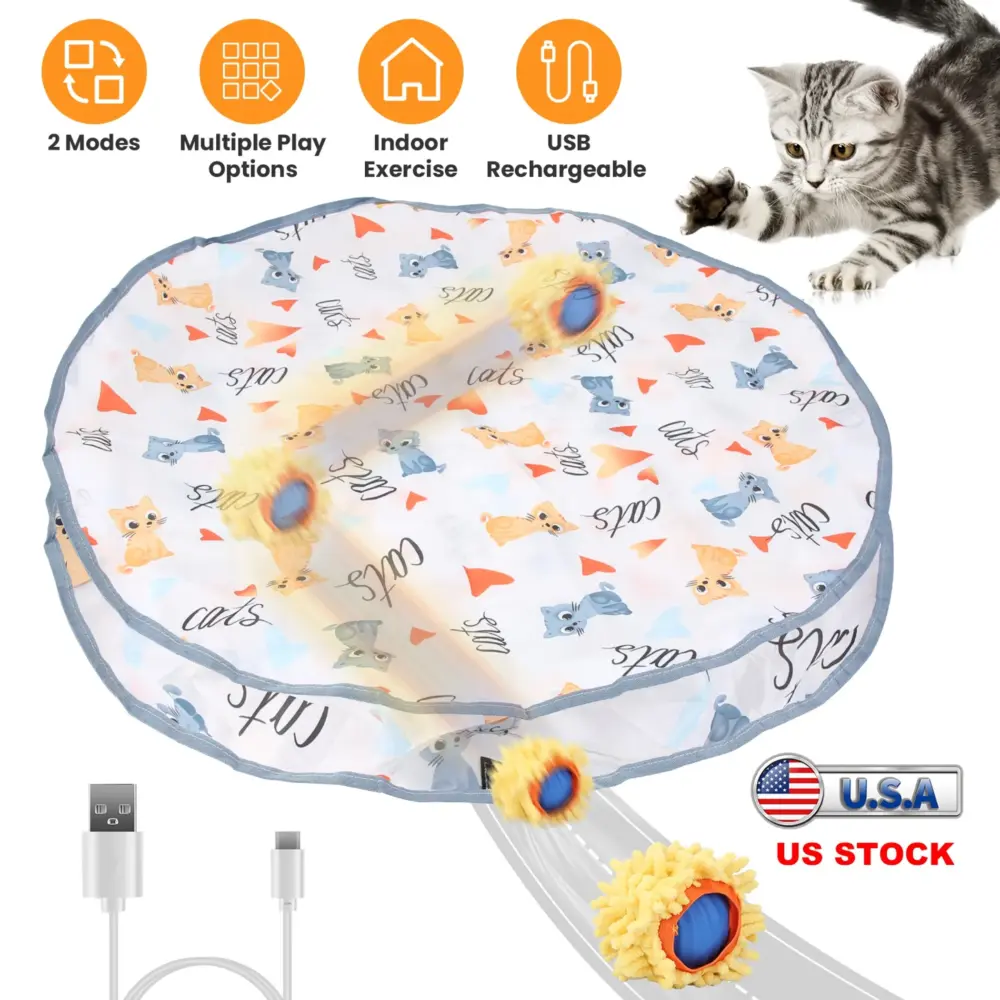
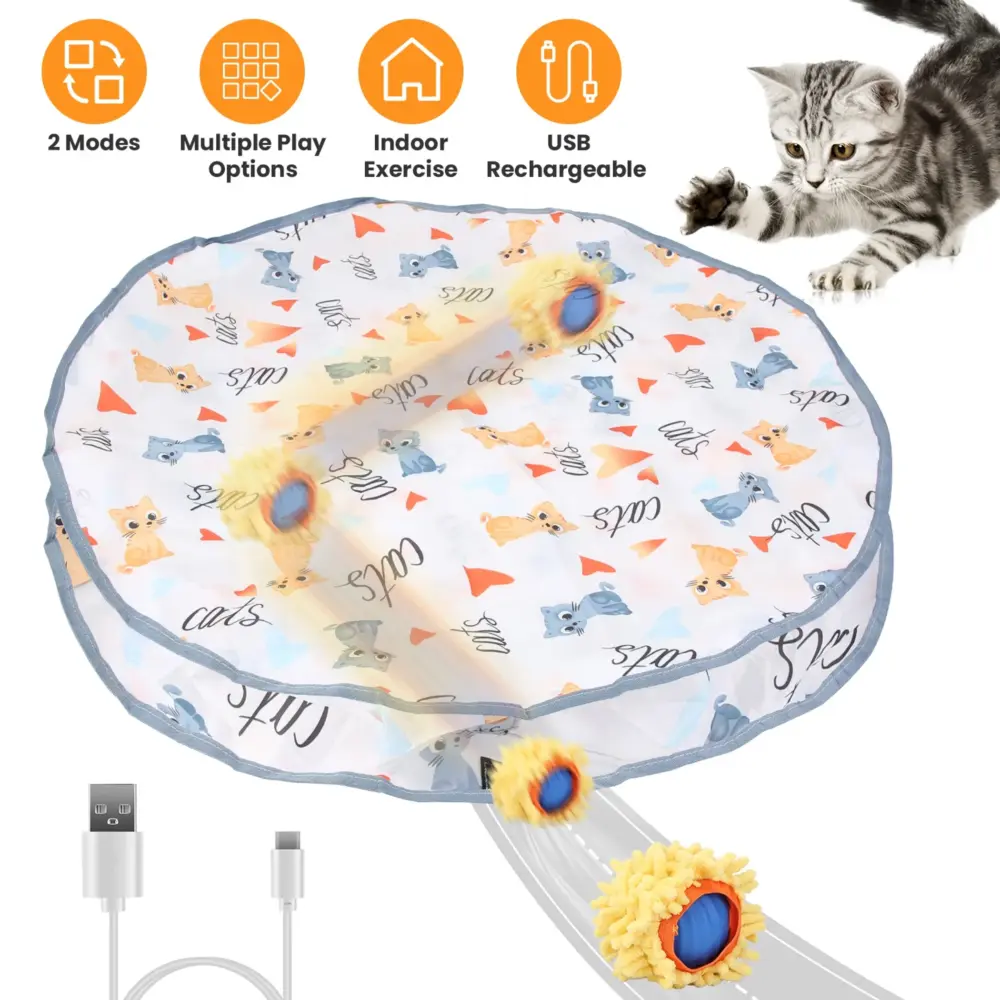
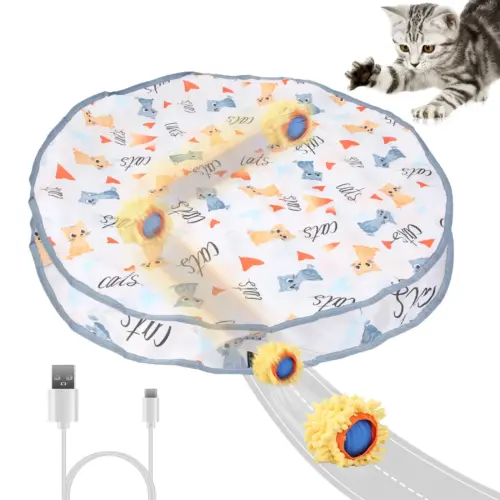
Two or three short games a day, with a wand toy you move like a mouse or the Motion-Activated Rolling Cat Toy Ball while you’re home to supervise, give your cat the stalk, chase and pounce that indoor life leaves out. Session length, how to end with a catch and a snack, and where automatic toys fit are all in our guide to how long to play with your cat.
Scratching spots in the right places
Scratching keeps claws in shape, stretches the whole body and leaves scent from the paws that helps a cat feel at home. Your cat will scratch somewhere every day, so make the right spot the easiest one: right next to the rug, carpet edge or sofa corner it already uses, and near its favorite sleeping spot, because many cats scratch as soon as they wake.
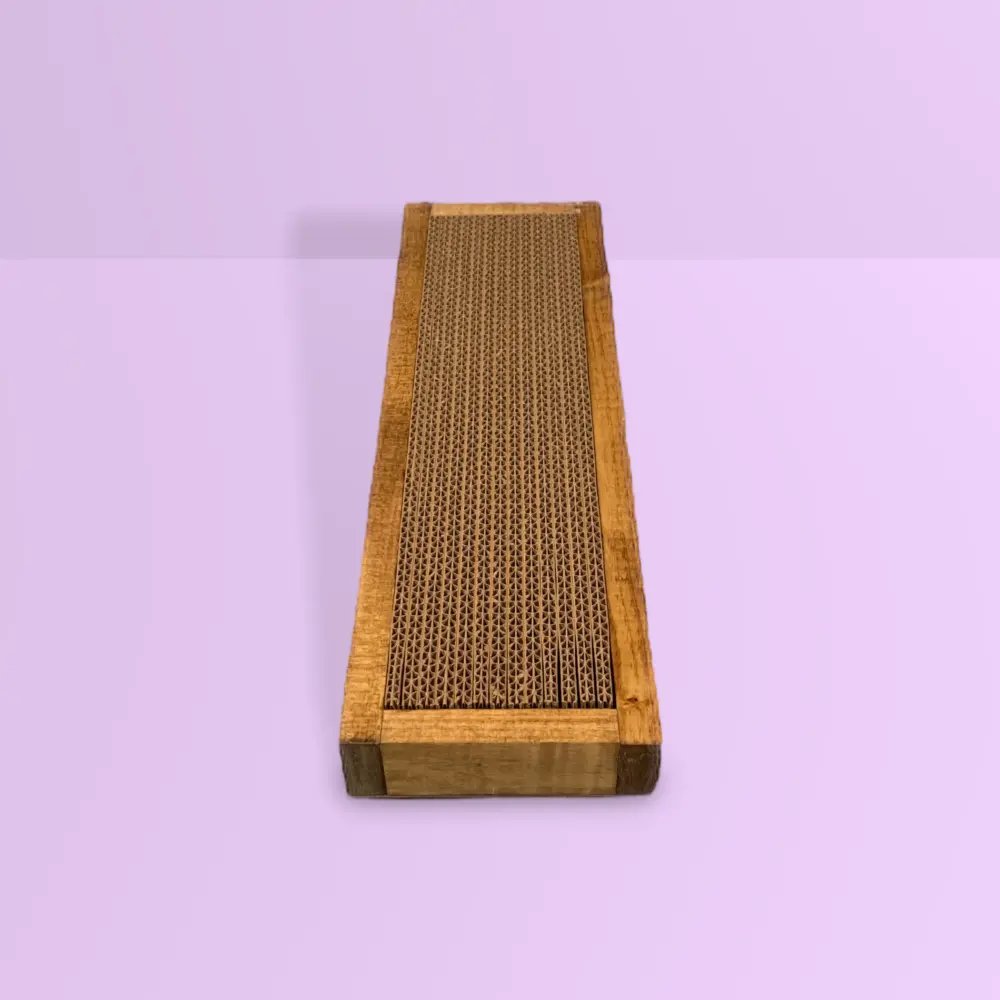
The Cat Scratcher Guy Wooden Cat Scratcher is a floor-level option, about 19.5 × 5.5 × 2 inches, with a handmade wooden frame around a reversible cardboard insert and felt pads underneath to help protect the floor. Sprinkle a little of the included catnip on the insert to introduce it; not every cat reacts to catnip, so if yours ignores it, drag a wand toy across the insert instead. Because it lies flat, it suits cats that scratch rugs and carpet; a cat that stretches up the sofa arm will also want a tall, sturdy post. For a step-by-step plan, see how to get a cat to use a scratcher.
Hiding and resting spots, high and low
Cats rest where they feel safe: up high, where they can keep an eye on the room, or tucked inside something enclosed. Offer both, in rooms where the family spends time.
- Up high: a cleared bookshelf, cabinet top or wide windowsill, or a cat tree, with a soft bed or folded blanket that will not slide. For an older or stiff cat, choose a lower perch or add a sturdy step.
- Low and covered: a cave bed, a box on its side or a blanket draped over a chair.
- More than one: in a multi-cat home, offer more resting spots than cats.
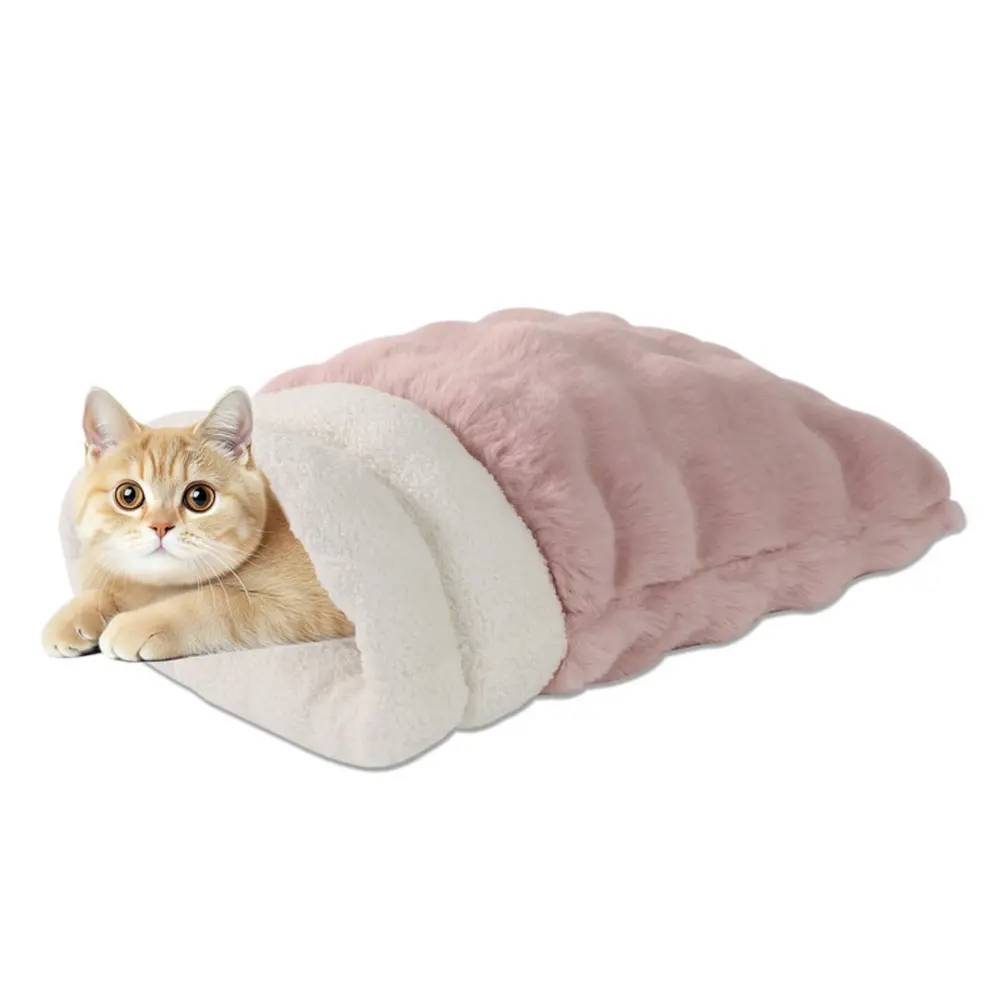
The GOOPAWS 4-in-1 Self-Warming Cat Cave Bed covers the low option. It works as a cave, a sack, an open bed or a flat mat, so offer it as a cave first and open it out if your cat would rather watch the room. Faux rabbit fur tops soft cotton filling, the self-warming design traps your cat’s own body heat, and it measures 21 × 17 × 3 inches.
To match a bed’s shape to the way your cat sleeps, see how to choose a cat bed your cat will actually use; for draft-free warm spots in colder months, see our guide to keeping an indoor cat warm in winter.
Napping out of sight is normal. A cat that suddenly hides most of the day, or stops coming out to eat, may be unwell or worried, so call your veterinarian.
-
Cat Scratcher Guy
Wooden Cat Scratcher with Reversible Insert
$32.95
-
GOOPAWS
4-in-1 Self-Warming Cat Cave Bed
$40.95
-
Motion-Activated Rolling Cat Toy Ball
$42.95


Free indoor cat enrichment ideas: windows, boxes and paper bags
Plenty of house cat enrichment ideas cost nothing:
- A window seat. Clear a sill or set a sturdy chair or shelf under a window and open the blinds; birds, leaves and passersby give your cat something to watch, and a bird feeder outside the glass adds more. Check that screens are secure before you open a window.
- A cardboard box. Set it on its side, cut a second doorway and remove any tape or staples.
- A paper bag. Cut off the handles, which can catch around a cat’s neck, and drop a toy or a few pieces of kibble inside. Never use plastic bags.
- Things to bat around. A crumpled paper ball on a hard floor, or a ping-pong ball in a dry, empty bathtub, where it can’t roll under the sofa.
If a cat outside the window leaves yours tense or agitated, cover the lower part of the glass with frosted film and offer a different view.
Foraging: food puzzles and hidden kibble
Outdoors, a cat finds and catches each small meal; a bowl in the same place every day takes that away. Ask your cat to work a little for part of its food, starting easy:
- Take the food from your cat’s normal daily amount, not on top of it.
- Put a few pieces of kibble in an open egg carton, or in small piles in a room your cat walks through.
- Once your cat finds them easily, hide portions in more places: on a shelf, beside the scratcher, inside a paper bag.
- Make it harder slowly, for example with a cardboard tube folded closed at both ends and holes cut in the sides.
- Check later that everything has been eaten, so your cat still gets its full ration.
International Cat Care’s advice on puzzle feeders for your cat recommends the same slow start: keep some food in the bowl at first, make the puzzle easy and add difficulty only while your cat stays relaxed. Wet food does not work in rolling puzzle balls, so try it in a silicone ice cube tray or spread thin on a lick mat (see what to put on a lick mat for spreads and cleaning).
Food puzzles for cats also help a cat that gulps its meals; see how to slow down a cat that eats too fast. If your cat is on a prescription diet or has a health condition, check with your veterinarian first, and see them promptly if your cat stops eating.
While you’re at work: what to leave out and what to put away
Many cats sleep through much of the day, so keeping a cat entertained while you’re at work means a few good things to find when it wakes, not constant activity.
Leave out:
- The scratcher, near a bed or by the door.
- The cave or another bed in a quiet spot, plus a perch up high.
- A window spot with the blinds open.
- A little hidden kibble from the day’s ration. Use dry food only, since wet food spoils if it sits out.
- Fresh water and a clean litter box.
Put away:
- The motion-activated ball. It is safer not to leave a cat alone with it, so check it for wear after play, store it and charge it for the evening game.
- Wand toys, string, ribbon, hair ties, rubber bands and small toys, which are dangerous if swallowed.
Before you leave, play for a few minutes, then serve breakfast or hide the kibble, so your cat can eat, groom and nap. Play again when you get home. A sudden change, such as missing the litter box or grooming a patch bare, is a reason to see your veterinarian, not to add toys.
Rotating it all so nothing gets stale
Cats notice what is new: a toy back after a week in a drawer can feel new again. Keep beds and the litter box where they are, since most cats like those to stay put, and rotate the rest:
- Every day: a few short games, and hidden kibble in different spots from yesterday.
- Every few days: swap the two or three toys that are out for others kept in a closed box.
- Every week or two: a fresh box or paper bag, and a new place for the food puzzle.
- When it wears: flip the scratcher insert, then replace it (replacement inserts are not included).
For more everyday care, browse our cat care guides or the cat essentials range.
Space is usually the limit rather than ideas. Cat furniture for small apartments covers fitting scratching, hiding and height into one room.
Indoor cat enrichment FAQ
How do I know if my indoor cat is bored?
Common signs include meowing for attention, following you from room to room, knocking things off shelves, ambushing ankles, scratching furniture and racing around at night. Add play and foraging for a couple of weeks and see what changes. Overgrooming, eating or sleeping much more than usual, or any sudden change can also mean stress or illness, so ask your veterinarian.
How can I keep my cat entertained while I’m at work?
Play before you leave, then leave out what your cat can safely use alone: a scratcher, a covered bed, a window spot with the blinds open and a little dry kibble from the day’s ration hidden in easy places. Put away the motion-activated ball, wand toys and anything stringy or small enough to swallow.
What can I make at home for cat enrichment?
Beyond the boxes, bags and egg cartons above, try a shallow box of crumpled paper with a few pieces of kibble buried in it, or a closed box with paw-sized holes cut in the top and a ping-pong ball inside to fish out. Throw cardboard out once it is chewed or soggy.
Do indoor cats get bored of the same toys?
Many do. A toy left on the floor for weeks soon becomes part of the furniture, so rotate a few at a time, and remember that any toy you move like prey beats one lying still.
Related guides
-
How-to
Working From Home With a Cat: Fewer Paws on the Keyboard
A home-office plan for cat owners: a warm bed beside the desk instead of on it, cables and coffee out of reach, play before calls, midday puzzle and lick-mat jobs, a kind fix for keyboard walkers and a gentle switch back to office days.
-
How-to
How to Stop Your Cat From Waking You Up at Night
Cats wake you before dawn because it is hunting time, the gap since dinner is long and waking you has paid off before. Here is a three-step plan: a bedtime hunt and meal, breakfast that doesn’t depend on you, and a firm no-response rule, plus a night setup, troubleshooting and signs to see your vet.
-
Guide
Should You Get a Second Cat? How to Tell if Yours Would Welcome One
A second cat can be good company or a daily source of stress. Learn what lonely behavior often means, what makes a cat likelier to accept a newcomer, which pairings tend to work, what one more cat takes in space, money and time, and what to try first.