Cat Care Buying guide
Cat Furniture for Small Apartments: Vertical Space Without the Clutter
Short answer
Use the walls and the windows before you use the floor. A cat needs somewhere to scratch, somewhere high to sit, somewhere enclosed to hide and somewhere to sleep, and in a small flat each of those should be an item that does two of those jobs, folds away, or mounts off the ground. Skip the large floor-standing cat tree; it is the worst value in square footage of anything you can buy.
Our picks at a glance
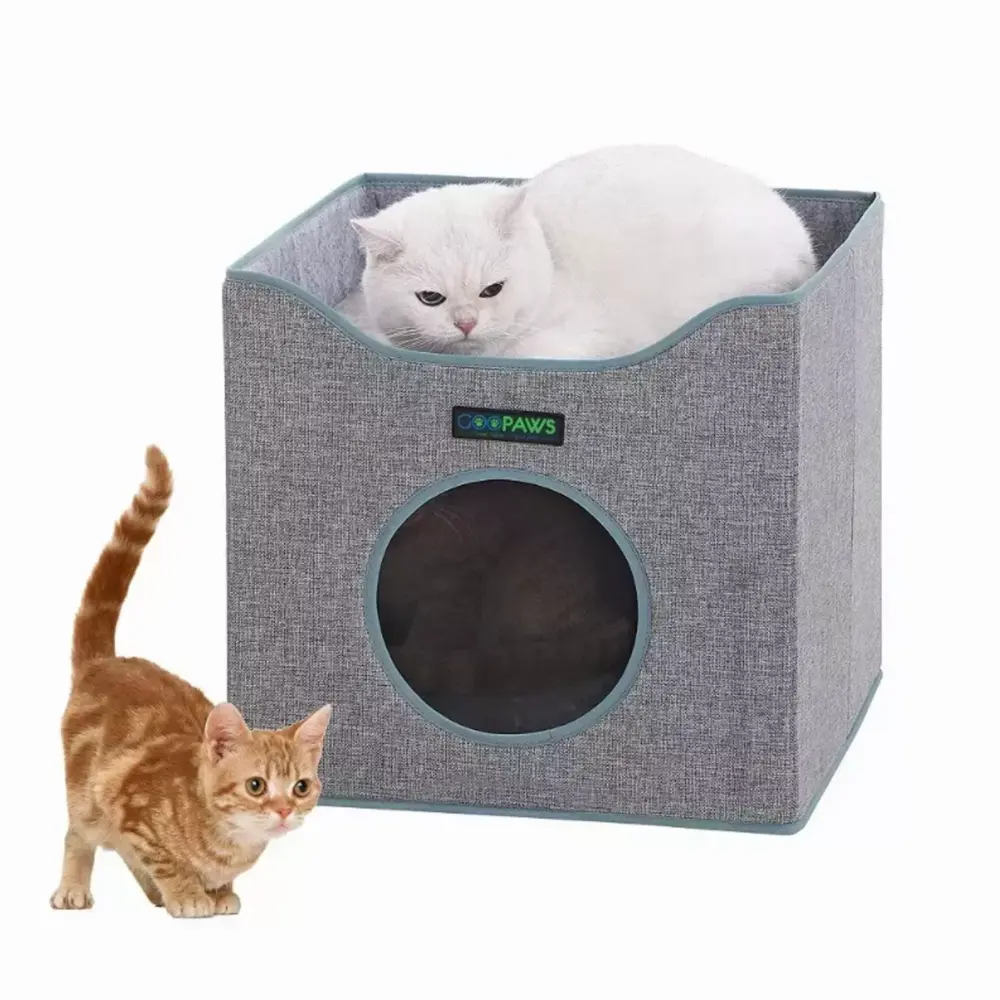
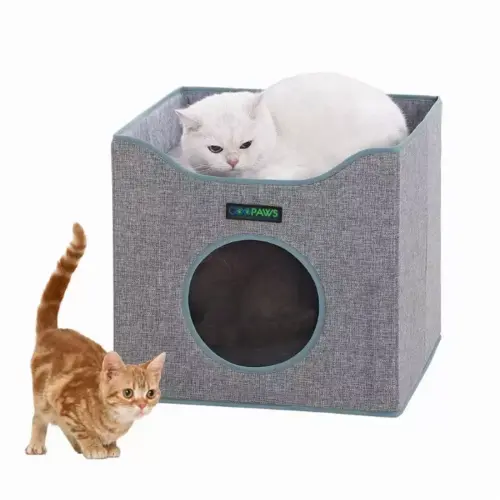
- Foldable Cat Cube House with Reversible CushionsA cube with a padded lying surface on top and an enclosed den underneath
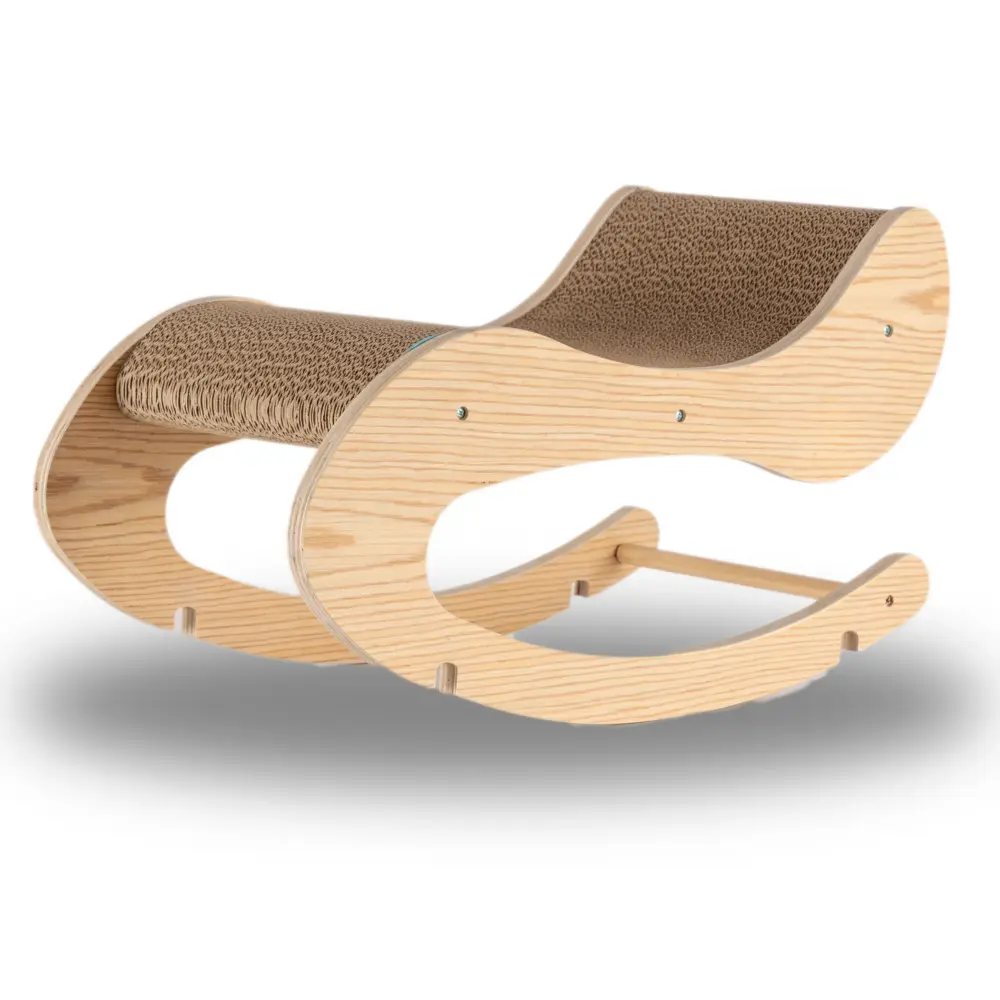
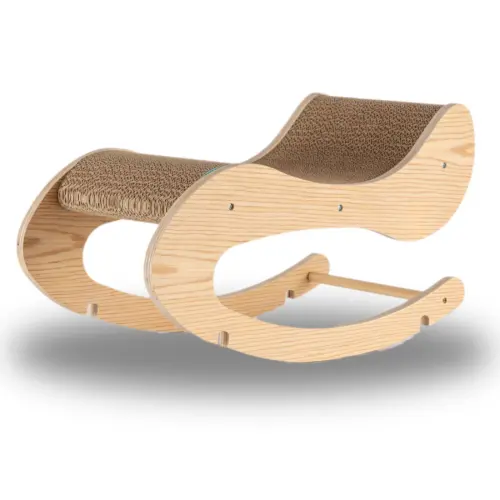
- Cat Rocking Chair BedA rocking seat that doubles as a scratching surface and lifts off its base
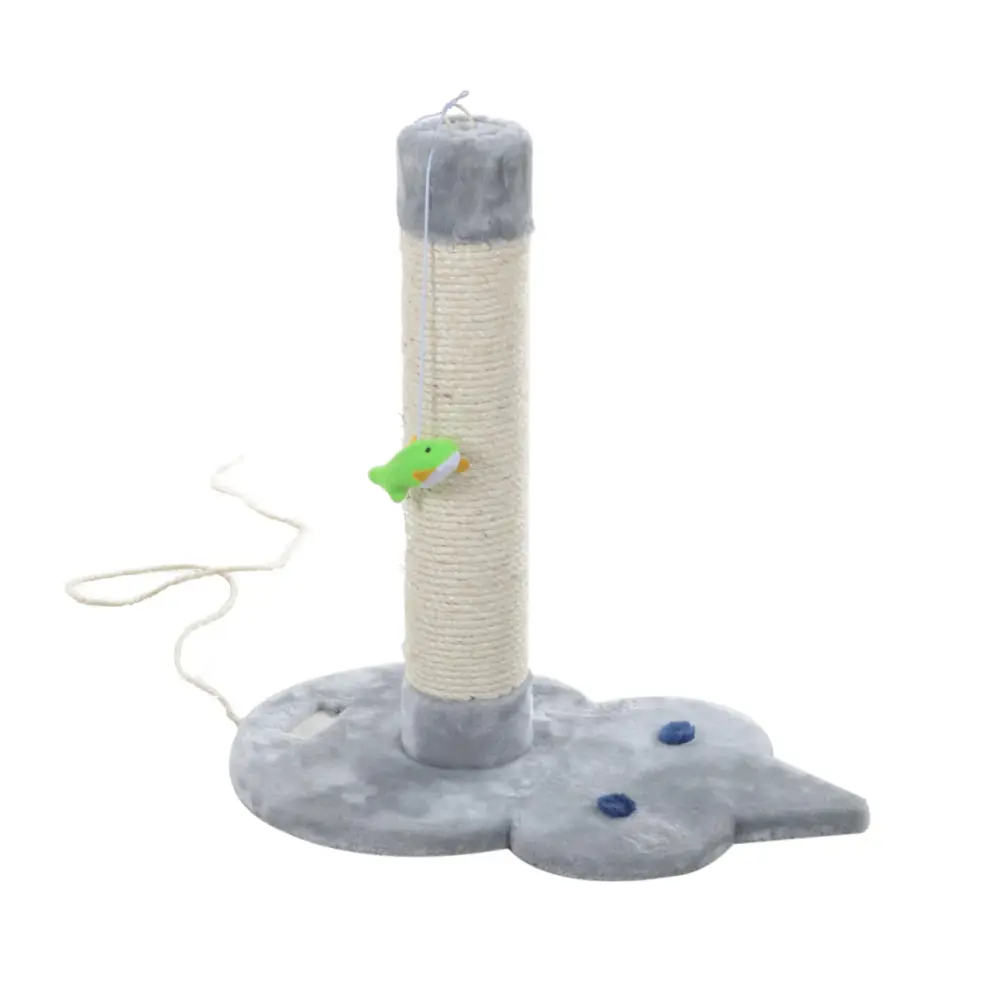
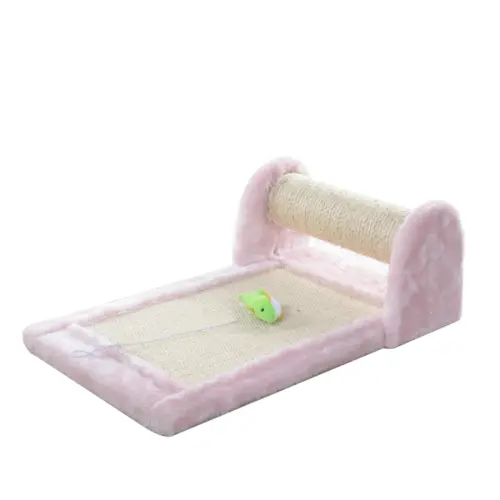
- Rolling Cat ScratcherA compact scratcher in sisal rope with a plush resting surface
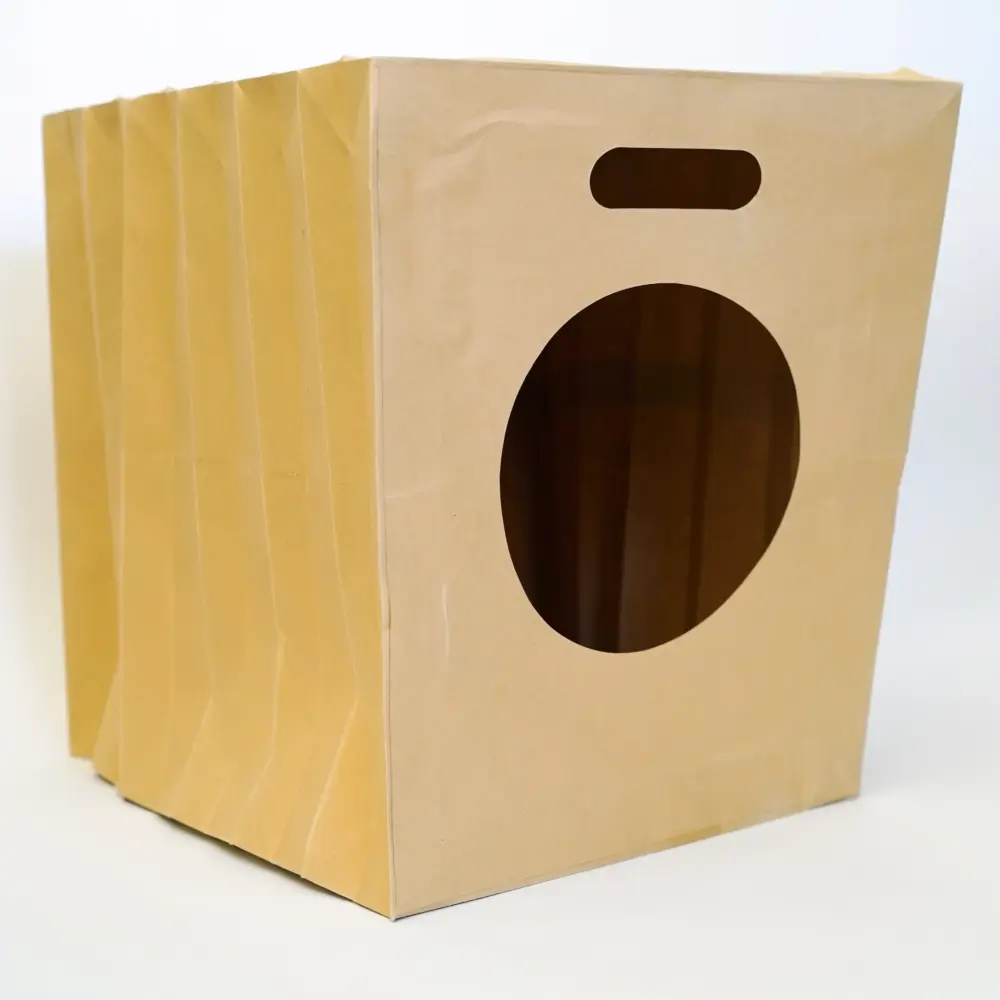
- Wooden Cat Scratcher with Reversible InsertA wooden scratcher about nineteen inches long with a reversible
The floor is not the only surface
The reason small flats feel cramped once a cat arrives is that every piece of cat furniture is sold as a floor-standing object. Cats, however, care about height far more than they care about floor area, and height is the one dimension a small flat usually has to spare.
A cat with access to a high shelf, a windowsill and the top of a wardrobe has a richer territory than a cat with a large cat tree in the middle of a room, and none of that costs floor space.
Start by looking at what you already have. The top of a bookcase cleared and given a non-slip mat is a perch. A wardrobe top with a cushion is a hiding place with a view. A route from a chair to a shelf to a cupboard is a climbing frame that you did not have to buy.
One item, two jobs
The guiding principle in a small space is that nothing earns its footprint by doing one thing. Every piece should combine at least two of the four needs.
| Item | Jobs it does | Footprint |
|---|---|---|
| Cube house with a padded top | Hiding place and perch | One square |
| Scratcher with a plush resting surface | Scratching and sleeping | Small |
| Covered cave bed | Sleeping and hiding | Small |
| Window perch | Height, lookout, sleeping | None on the floor |
| Rocking or swing seat | Sleeping and scratching | Small |
| Large cat tree | Several, but badly | Large |
Scratchers that take no floor space
Scratching is not optional and it is not a behaviour to discourage; it conditions the claws, stretches the body and marks territory. The question in a small flat is only where it happens.
- Vertical scratchers that lean against or mount on a wall take almost no floor area and let a cat stretch fully, which is what most cats want.
- Door-hanging scratchers use a surface that is otherwise dead space.
- Flat scratchers slide under a sofa or sit against a skirting board.
- Scratchers with a resting surface combine two jobs in one footprint.
- Sofa-arm protectors with a sisal surface redirect scratching at the exact place it is already happening.
Placement decides whether any of them get used. Put a scratcher where your cat already scratches rather than where it looks tidy, and near where they sleep, since cats scratch on waking. A little catnip rubbed into the surface helps for the first week, though not every cat responds to it. Types of cat scratchers covers the materials and angles.
Beds that fold or collapse
A bed that folds flat is worth a premium in a small flat, because it lets you reclaim the space when you have guests or when the season changes.
Convertible beds that change shape are the other useful category: a bed that is an enclosed cave in winter and opens out flat in summer is two beds in one footprint, and cats genuinely change their preference with the temperature.
Avoid buying several small beds scattered around. One or two good ones in the right places beat five in the wrong ones, and cats choose by location far more than by comfort.
Hiding places in a flat with no spare room
A cat without somewhere to hide is a stressed cat, and this is the need most often skipped in small spaces because it feels like the least important. It is not. Hiding is how cats manage anything unfamiliar, from a visitor to a vacuum.
A hiding place needs to be enclosed on at least three sides, have an escape route, and be somewhere the cat chooses rather than somewhere you install them. A covered bed, a cube, a cardboard box in a corner, or the space under a chair all qualify.
In a one-room flat, height doubles as hiding. A cat on top of a wardrobe is out of the way in the sense that matters to them even if they are perfectly visible to you. Why cats hide covers when hiding becomes a sign of something else.
Window space is free space
A window gives a cat the three things that are hardest to supply indoors: height, a changing view and sunlight. In a small flat it is the single highest-value spot, and it costs nothing.
A suction-mounted window shelf, a radiator hammock under a sill, or simply clearing the sill and adding a non-slip mat all work. Check that the window itself is secure: unscreened windows and balconies are a genuine danger, and tilt-and-turn windows in particular trap cats in the opening gap.
If you have a balcony, screening it properly turns it into usable cat territory. If you cannot screen it, keep it closed; a cat on an unscreened upper-floor balcony is a serious risk.
What to skip entirely
- The large floor-standing cat tree. It takes a square metre to deliver what a shelf and a scratcher do in a fraction of it.
- Multiple small beds. Cats pick two or three spots; the rest sit unused.
- Enclosed litter boxes in a tiny flat, unless ventilation is good; many cats refuse them and the smell concentrates.
- Novelty furniture that does one thing and takes floor space.
- Anything that cannot be cleaned. In a small space, smell matters more.
- Oversized items bought for a kitten to grow into. Buy for now; cats need the right scale today.
Our picks
-
JESPET
Foldable Cat Cube House with Reversible Cushions, Choose color
$52.95
Why it fits: A cube with a padded lying surface on top and an enclosed den underneath, built on wood panels so it stays square, and it folds flat when you need the space.
-
Armarkat
Cat Rocking Chair Bed, View product
$89.95
Why it fits: A rocking seat that doubles as a scratching surface and lifts off its base, so one small footprint covers napping and scratching.
-
Armarkat
Rolling Cat Scratcher, View product
$59.95
Why it fits: A compact scratcher in sisal rope with a plush resting surface, preassembled and sized for apartments and small cats.
-
Cat Scratcher Guy
Wooden Cat Scratcher with Reversible Insert, View product
$32.95
Why it fits: A wooden scratcher about nineteen inches long with a reversible, replaceable cardboard insert, so the frame stays and only the insert is renewed.

A layout that works in one room
If you have a single room to work with, think in terms of a circuit rather than a collection of objects. Cats use a space by moving through it, and a route matters more than any individual item.
- Put the food and water away from the litter box, at opposite ends if the room allows.
- Give the window the best perch you can manage; this is the anchor of the territory.
- Put a scratcher beside where the cat sleeps, and another near the sofa if that is the current target.
- Create one enclosed hiding place at ground level, in a corner, out of the main traffic.
- Clear one high surface and make it reachable in two steps rather than one jump.
- Leave a clear floor route between them, so the cat can move without being cornered.
With two cats, duplicate the resting and hiding places rather than the toys; the resources worth having two of are the ones a cat cannot share. Multi-cat household setup covers that, and how to set up a cat corner covers building one zone properly.
Where the litter box goes when there is nowhere
This is the hardest problem in a small flat and the one that causes the most house-soiling. The requirements are not negotiable from the cat’s point of view: away from food and water, away from noisy appliances, with a clear view of the approach and no door that can shut behind them.
In a studio, the bathroom is usually the best available answer, with the door wedged open or fitted with a cat flap so it is never accidentally closed. A hallway works if it is not a thoroughfare. The one place to avoid is beside a washing machine or boiler, where an unexpected noise during use can put a cat off the box permanently.
Covered boxes save visual space and many cats dislike them, because they concentrate smell and remove the sightlines a cat wants while vulnerable. If space forces one, choose the largest you can and keep it scrupulously clean. Where to put a litter box in a small apartment covers the full set of trade-offs.
Two cats in a small flat
Square footage matters less than resource placement when there are two cats. Conflict between cats in small spaces is usually about access rather than area: one cat controlling the route to the food, the box or the window is what creates the problem.
The fix is duplication in separate places rather than two of everything side by side. Two feeding stations at opposite ends, two litter boxes in different rooms if at all possible, and at least two elevated spots so neither cat can monopolise the high ground.
Vertical space does more here than anywhere else, because height lets cats share a room while keeping distance from each other. Multi-cat household setup covers the full arrangement.
Common questions
Is a small flat fair on a cat?
Yes, provided the space is used well. Cats manage in small territories as long as they have height, somewhere to hide, somewhere to scratch and enough to do. Enrichment matters far more than square footage: see indoor cat enrichment ideas.
Where should the litter box go in one room?
As far from the food and from the sleeping area as the room allows, somewhere the cat can get in and out without being surprised, and never in a cupboard with a door that can swing shut.
Can I use shelves meant for people?
Yes, if they are fixed into the wall properly and you add a non-slip surface. Check the fixings are rated well above the cat’s weight, because a cat lands on a shelf rather than stepping onto it.
Related guides
-
Buying guide
Types of Cat Scratchers: Posts, Pads, Angles and Furniture
Cats scratch in a particular direction, on a particular texture, in a particular place. Watching yours for a week tells you which scratcher to buy. This guide covers the types, the materials and why stability decides everything.
-
Comparison
Disposable vs Reusable Litter Boxes: When Each Makes Sense
Disposable trays solve problems a permanent box cannot, and cost more over a year. This comparison covers both honestly, including the cases where a disposable tray is the obvious answer and where it is an expensive habit.
-
How-to
How to Set Up a Cat Corner in a Small Home
A cat does not need a whole room, but they do need four things in one place: somewhere to hide, somewhere high, somewhere to scratch and somewhere warm. This guide builds that corner in a small home.