Cat Care How-to
How to Set Up a Cat Corner in a Small Home
Short answer
Pick a quiet corner of a room the household uses, with a wall on at least one side. Put a covered bed at floor level, something to climb to above it, and a scratcher beside it. Keep the litter box and food in different parts of the home.
What a cat corner needs to do
Cats cope with a shared home by having options: a place to hide, a place to observe from, a place to scratch and a warm place to sleep. In a house those get spread around naturally. In a flat they have to be designed, and the efficient way to do that is to stack them in one corner.
The aim is not to give the cat somewhere to be sent. It is to make one area so obviously suitable that they choose it over the back of a wardrobe you need access to.
Picking the spot
- In a room the household actually uses, not a spare room
- Out of the main walking line
- Against a wall, ideally in a corner with two walls
- Away from the washing machine, boiler and front door
- Away from the litter box and the food bowls
- Near a window if possible, but out of a draught
- Somewhere warm, or at least not on cold tile
The near-but-not-in rule is the key. Cats want to be with their people and out of the traffic at the same time, which is why the corner of the living room works far better than the quiet spare bedroom nobody enters.
Layer one: somewhere to hide
Start at floor level with an enclosed bed, a cube or a covered cave. This is the layer that does the most for a nervous cat, and it is the one people most often skip in favour of something tall.
An enclosed bed also holds warmth, which matters for thin-coated, young, old or unwell cats. Position it with the opening facing into the room so the cat can watch rather than facing a wall.
Layer two: somewhere high
Height is how a cat gets distance from a dog, a toddler or another cat without leaving the room. It does not have to be a cat tree: a cleared shelf, the top of a sideboard, or a cube with a padded top all work.
Make sure there is a route up that an older or heavier cat can manage, ideally in two steps rather than one leap. If your cat has stopped using a height they used to reach, treat it as a mobility signal rather than a change of preference: signs a cat is in pain covers it.
Layer three: somewhere to scratch
Cats scratch when they wake, so a scratcher beside the sleeping spot gets used far more than one across the room. Match the orientation to your cat: a post if they stretch upward, a flat pad if they scratch the rug.
Stability matters more than size. Our guide on types of cat scratchers covers choosing between posts, pads and angled shapes.
-
JESPET
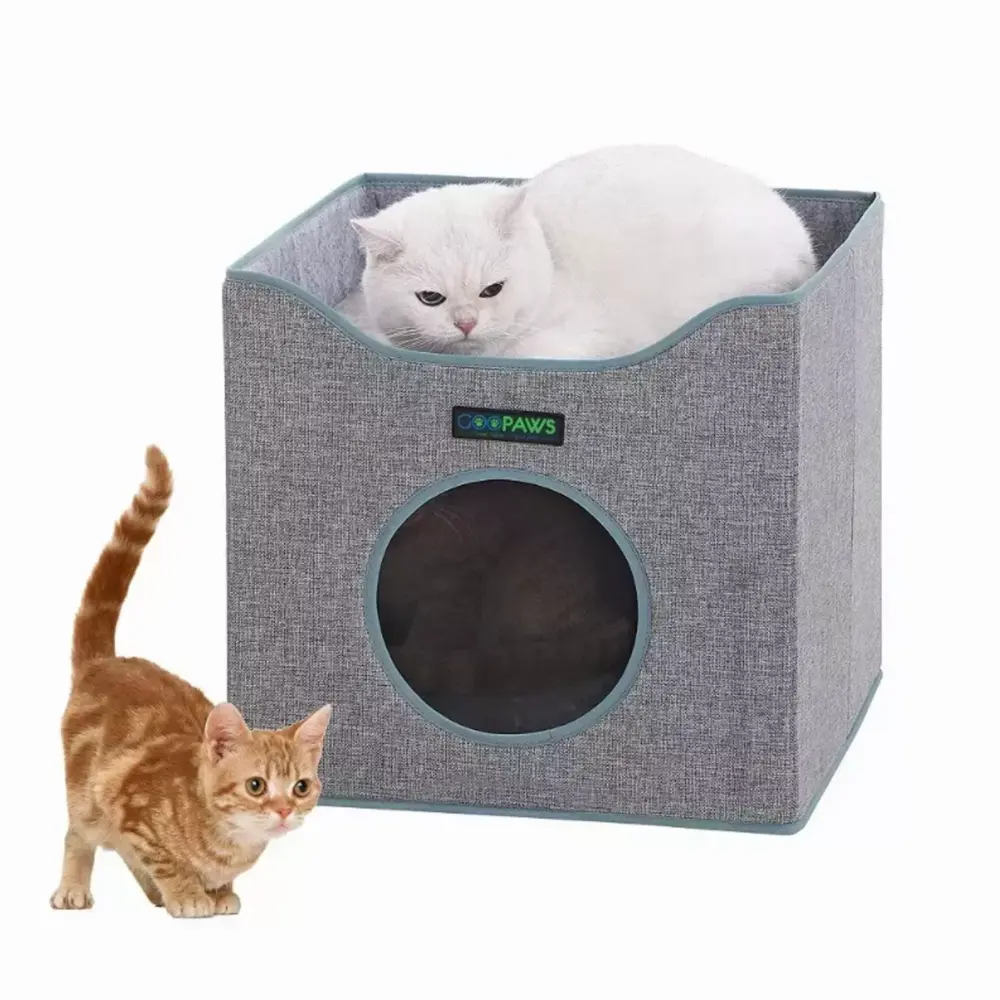
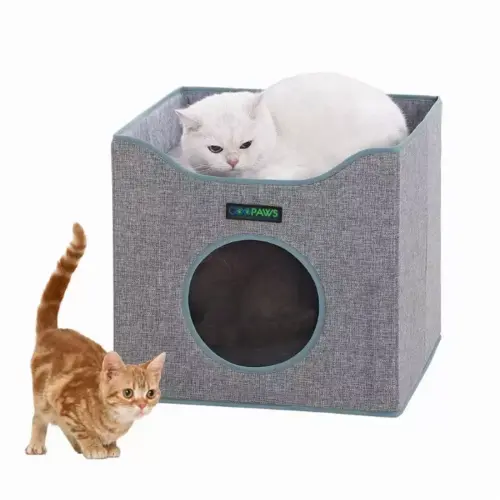
Foldable Cat Cube House with Reversible Cushions, Choose color
$52.95
Why it fits: A cube with a den below and a padded perch on top, which covers hiding and height in one footprint.
-
GOOPAWS
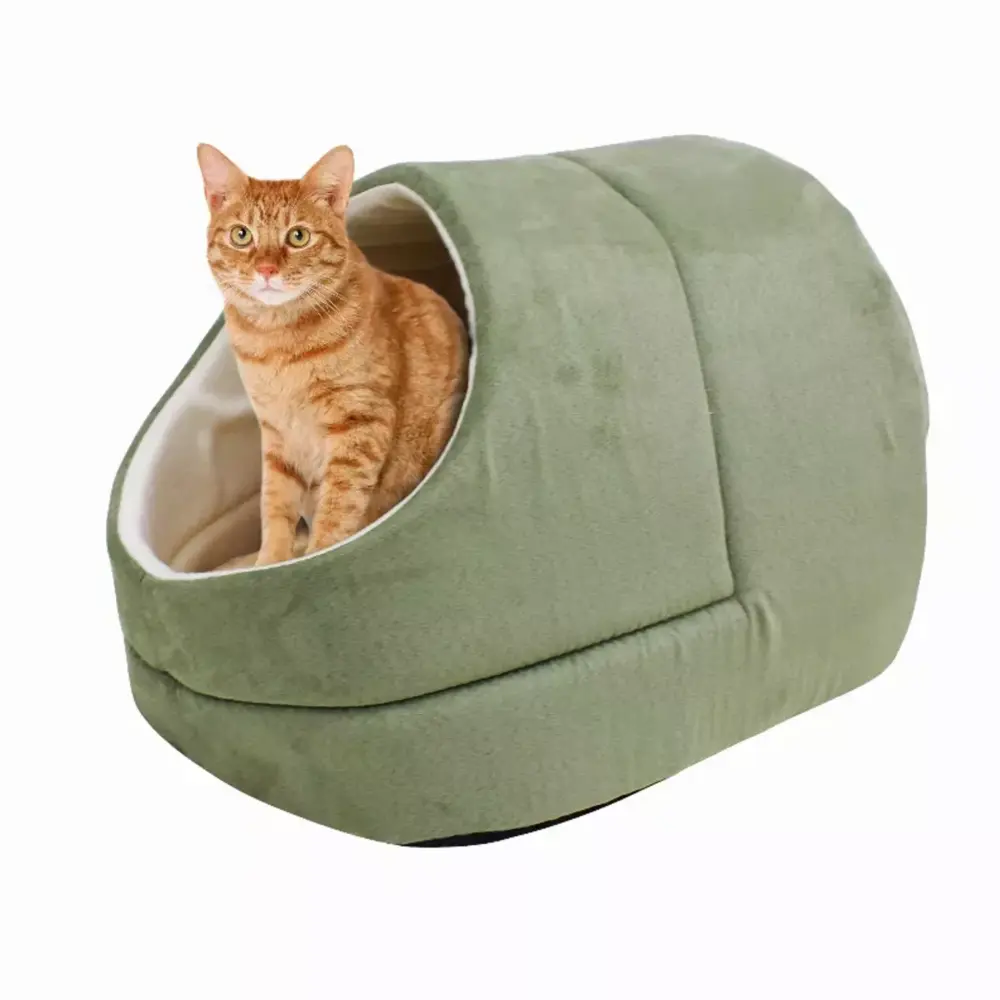
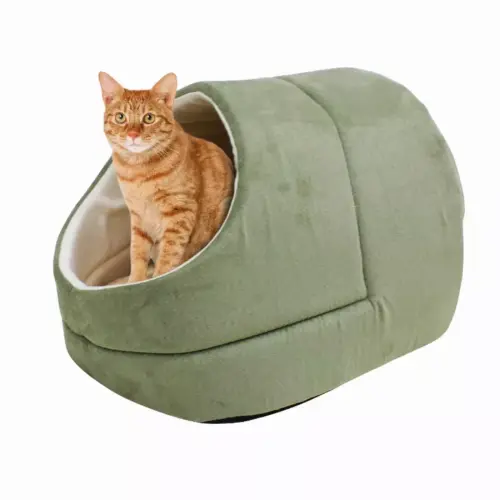
Covered Cat Cave Bed, Choose color
$45.95
Why it fits: A covered cave bed for the floor layer, which is the piece that does most for a nervous cat.
-
Armarkat
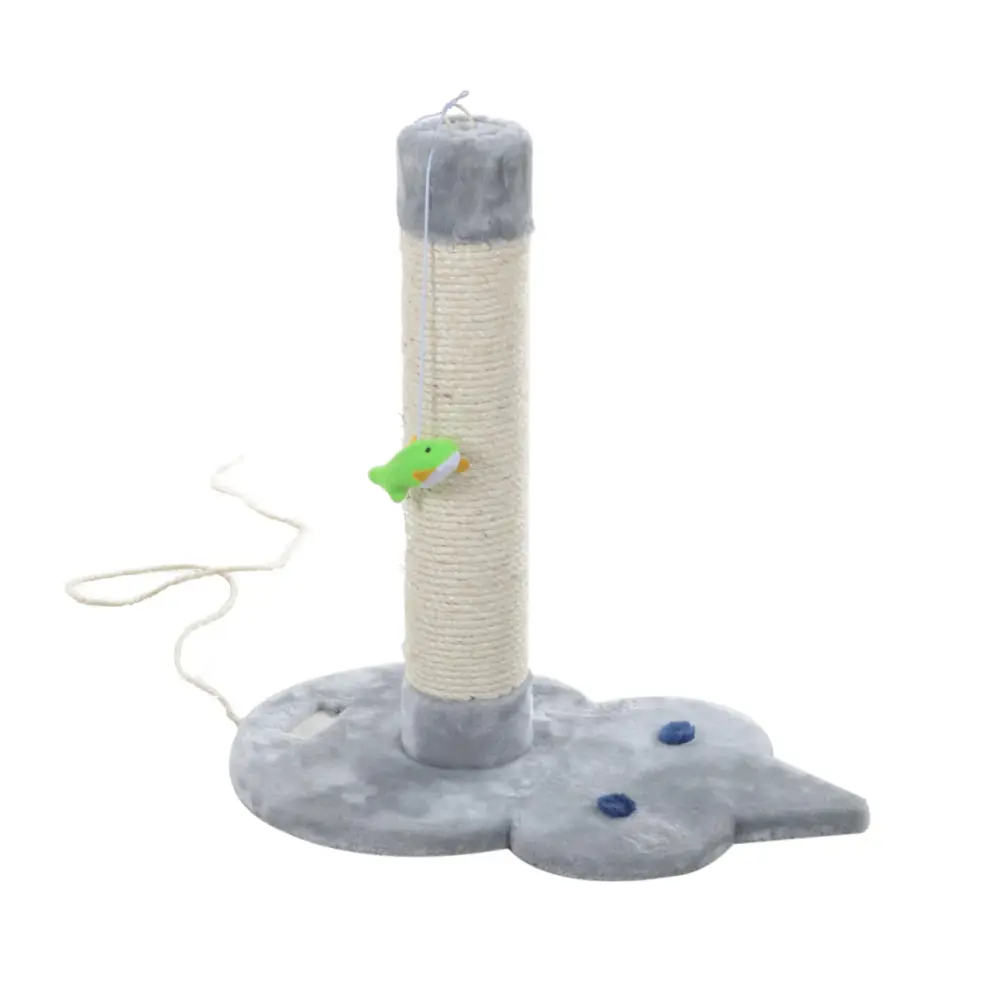
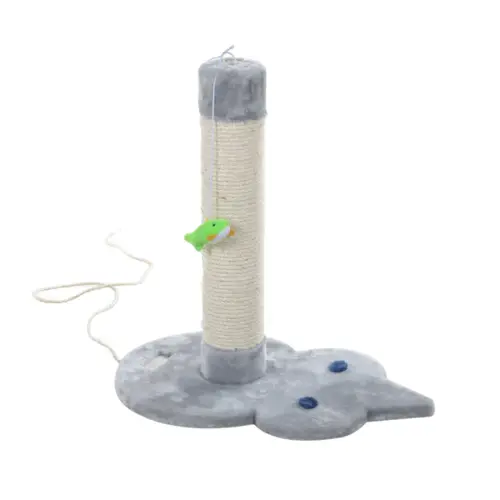
Mouse-Shape Cat Scratcher Post with Rope Toys, View product
$69.95
Why it fits: A stable sisal post beside the bed, where cats naturally scratch on waking.
-
Armarkat
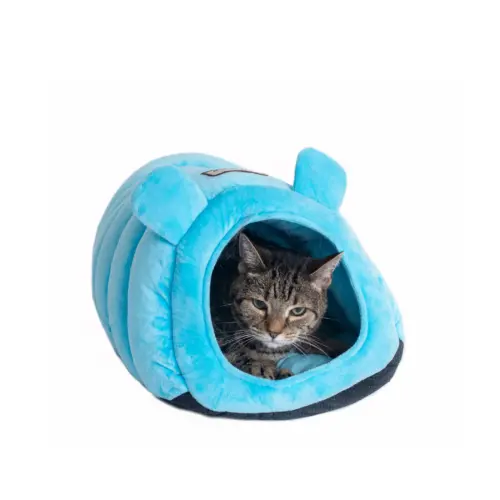
Tube Cat Bed, View product
$69.95
Why it fits: A covered tube bed with a washable mat, small enough to fit an awkward corner.
-
Armarkat
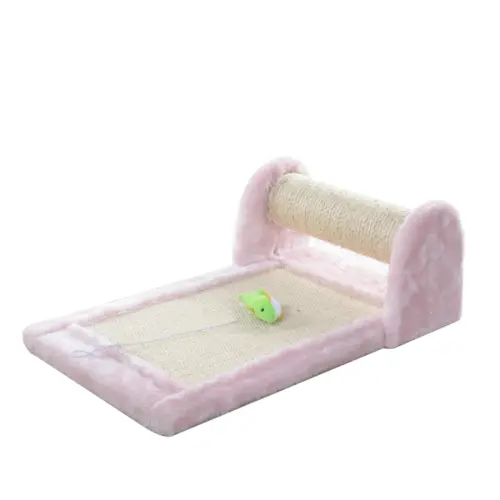
Rolling Cat Scratcher, View product
$59.95
Why it fits: A compact rolling scratcher with a plush surface, which doubles as a resting spot.
-
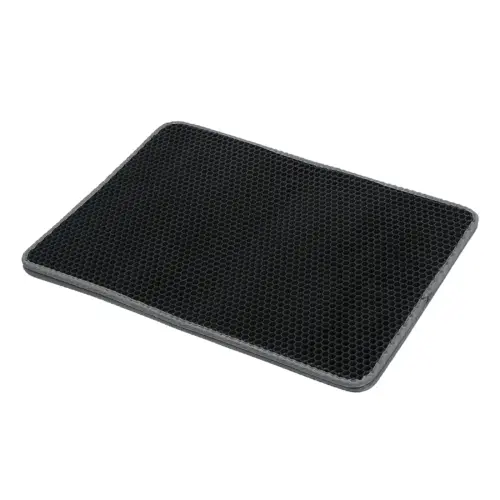
Double-Layer Honeycomb Cat Litter Trapping Mat, View product
$53.95
Why it fits: A trapping mat for the litter area, which belongs in a different part of the home entirely.
What must not go in the corner
- The litter box. Cats do not eat, sleep and toilet in the same place, and putting the box here will cost you the whole corner.
- Food and water. Same reason, and water should be separate from food as well.
- The dog bed. A shared corner is not a cat corner.
- Anything noisy. Appliances, speakers, a printer.
- Storage you need access to. A cat corner you keep reaching into stops being one.
Adding a window to the corner
If the corner can reach a window, it becomes considerably more valuable. Watching the street, birds and weather is one of the few genuinely engaging things available to an indoor cat, and a perch at window height is used for hours a day where a perch in the middle of a room is used for minutes.
There is one caveat. If visiting cats come into the garden, a ground-floor window can turn from entertainment into a stressor, and that is a common cause of indoor spraying and of fights between cats who normally get along. If that applies, frost the lower part of the glass and put the perch at a window facing somewhere quieter.
Tip
Check the window itself. Tilt-and-turn windows left ajar are a genuine hazard for cats, who can become trapped in the gap. If you ventilate that way, fit a guard.
Multi-cat homes
Two cats need two corners, in different rooms or at least at opposite ends of the same room. One corner shared by two cats is a resource to be contested, and the quieter cat will lose.
Vertical space helps more than floor space here, because two cats can share a room comfortably if they can occupy different levels. Multi-cat household setup covers the full distribution.
Giving it two weeks
- Set the corner up all at once, then leave it alone.
- Do not carry your cat over to show them; they will investigate when you are not watching.
- Put a worn item of your clothing in the covered bed for the first few days.
- Play near the corner, ending the session there.
- Feed a treat on the perch, not the bed, so the two layers get used differently.
- Give it two weeks before concluding it has not worked.
- If it is ignored, move it closer to where your cat already sleeps rather than replacing anything.
Tip
If your cat keeps choosing a different spot, that spot is the answer. Move the corner to where the cat has already decided, rather than trying to persuade them your choice was better.
What it costs, realistically
A corner does not require buying everything at once, and the cheapest elements are often the most used. Building it in stages also lets you see what your cat actually chooses before spending on the next piece.
| Element | Cheapest version |
|---|---|
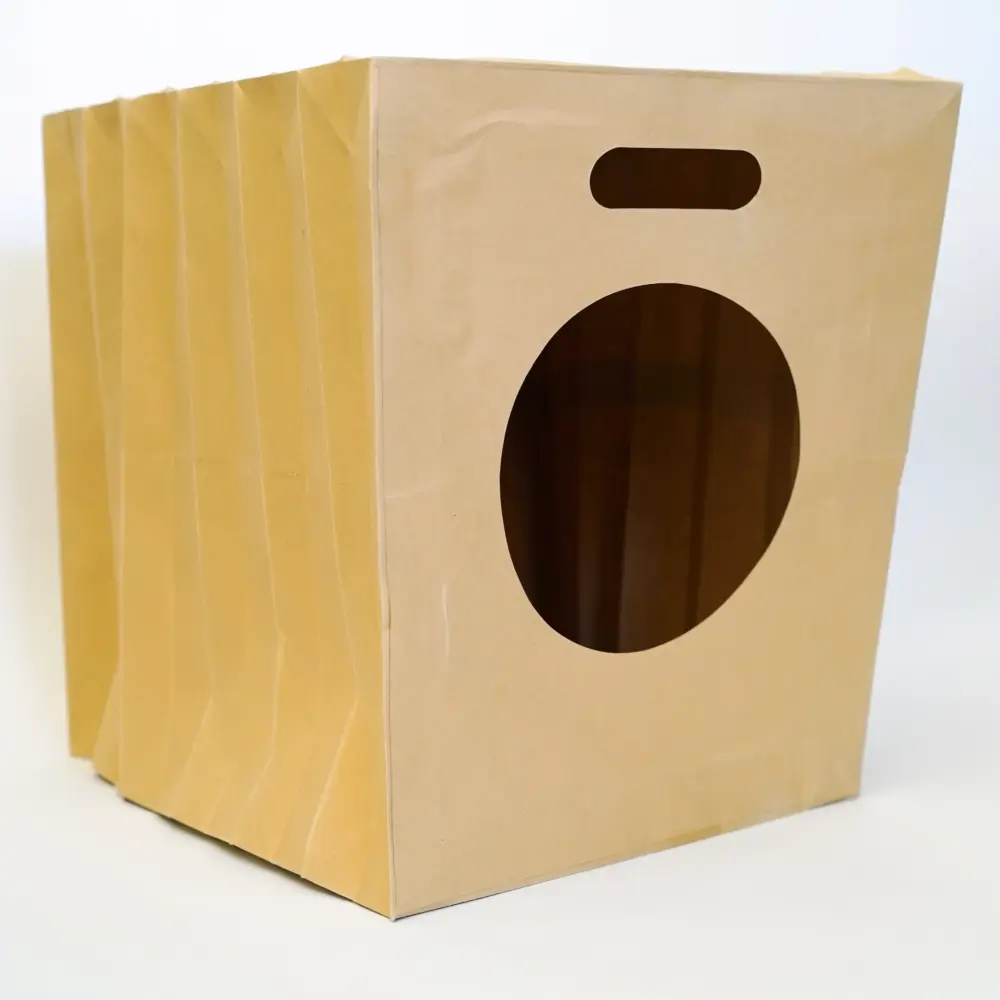
| Hiding place | A cardboard box on its side |
| Height | A cleared shelf or sideboard |
| Warmth | A folded blanket out of the draught |
| Scratching | A flat cardboard pad |
| Vantage point | Moving a chair to a window |
Start there for a fortnight and watch what gets used. If your cat ignores the box and sleeps on the shelf, buy a proper perch rather than a covered bed; if the opposite, buy the bed. That is a far better guide than any product description.
Keeping it working
- Wash bedding regularly, but not all of it at once
- Leave one unwashed item so the corner keeps its scent
- Replace a worn scratcher before it goes smooth
- Keep the area free of clutter that creeps in over months
- Check the perch is still easy for an ageing cat to reach
- Rotate a toy in and out rather than leaving them all there
- Keep it off limits to the dog, the children and the vacuum cleaner
The scent point is the one people get wrong. Washing every soft item in the corner on the same day removes the familiar smell that makes it feel safe, and some cats stop using it for a week afterwards.
Before you buy the box for the corner, read our comparison of disposable and reusable litter boxes.
Common questions
How much space does this actually need?
Less than a square metre of floor plus a shelf above it is enough for one cat. The layers matter more than the area.
My flat is tiny. Is a cat tree worth it?
Only if it is stable and tall enough to be worth climbing. In small spaces, a cleared shelf and a cube usually deliver more usable height per square metre than a narrow tree.
Can the corner be in the bedroom?
Yes, if that is where your cat spends time and the door stays open. The risk is a cat who wakes you at five; keeping play and the main meal in the evening helps. Stopping a cat waking you at night covers it.
Where should the litter box go instead?
Somewhere quiet, with two ways out, away from food and away from this corner. Where to put a litter box in a small apartment covers the constraints.
Will this help a cat who hides all the time?
Usually yes, because it gives them a hiding place in a social room rather than only in an isolated one. Why cats hide covers when hiding is worth a vet visit instead.
For what the corner is providing, see what cats actually enjoy, and for the daily routine around it, a realistic daily cat care routine.
Related guides
-
Comparison
Disposable vs Reusable Litter Boxes: When Each Makes Sense
Disposable trays solve problems a permanent box cannot, and cost more over a year. This comparison covers both honestly, including the cases where a disposable tray is the obvious answer and where it is an expensive habit.
-
Buying guide
Types of Cat Scratchers: Posts, Pads, Angles and Furniture
Cats scratch in a particular direction, on a particular texture, in a particular place. Watching yours for a week tells you which scratcher to buy. This guide covers the types, the materials and why stability decides everything.
-
Guide
Why Cats Hide, and When Hiding Means Something Is Wrong
Hiding is normal cat behaviour and also one of the clearest signs that something is wrong. This guide explains the difference, the timeline worth acting on, and why taking hiding places away makes everything worse.