Cat Care How-to
How to Stop Your Cat From Waking You Up at Night
Short answer
Move your cat’s busiest hour to bedtime: play hard, end with a catch, then serve the day’s last meal. Make breakfast arrive at a set time or from a timed feeder, never because you got up, and stop answering the 4 a.m. pawing altogether. If the waking is new or your cat is older, see your veterinarian first.
Why cats wake you at night
Most cats that wake their people before dawn are doing three ordinary cat things at once:
- Dawn is hunting time. VCA’s advice on nocturnal activity in cats describes them as naturally most active at dusk and dawn. A cat that dozed through the day while you were out, or beside you while you worked, reaches 4 a.m. rested and ready to go.
- A long gap between meals. Cats are built to eat little and often. International Cat Care’s article on how cats hunt suggests small, frequent meals through the day and night to match that pattern, which a 6 p.m. dinner and a 7 a.m. breakfast don’t.
- It worked before. The first time you got up and filled the bowl, or even mumbled and stroked your cat until it settled, the wake-up paid off. Cats repeat what pays, and attention counts as much as food.
Kittens, cats in heat, recent upheavals and health problems are covered further down. For the everyday version, the three steps below tackle all three causes at once; give them a couple of weeks of consistency before you judge.
What you need before you start
- A wand toy or whatever your cat chases hardest, put away after every game.
- Your cat’s usual daily food, with a portion held back for bedtime.
- A way to slow the bedtime meal: a lick mat for wet food or a puzzle feeder for dry.
- A timed feeder, optional, for cats that wake you for breakfast. We don’t sell these.
- A warm bed and a scratcher where your cat will spend the night; both are among our cat essentials.
- Earplugs or a fan for you. The first nights of ignoring a wake-up are rarely quiet.
Step 1: A bedtime hunt, catch and meal
The goal is a cat that has hunted, eaten and groomed by the time you turn in. Our guide to how long to play with a cat covers how to move a toy like prey; this is how to time the evening so the last hunt lands right before lights-out.
- Shrink dinner. Serve the evening meal a little smaller and save a portion for bedtime. The day’s total stays the same.
- Warm up while you tidy. In the hour before bed, let your cat chase a self-moving toy while you wash up or get ready, staying in the same room.
- Play the real game last. About 10 to 15 minutes of wand play just before bed, with dashes, pauses and hiding spots, until your cat starts lying down between pounces.
- Let the toy get tired. Slow it down over the last minute or two and allow an easy final catch, so the hunt feels finished.
- Serve the bedtime meal. Put the saved portion on a lick mat or in a puzzle feeder, away from your bedroom door.
- Go to bed while your cat grooms. Dim the lights, keep the house quiet and don’t start a second game.
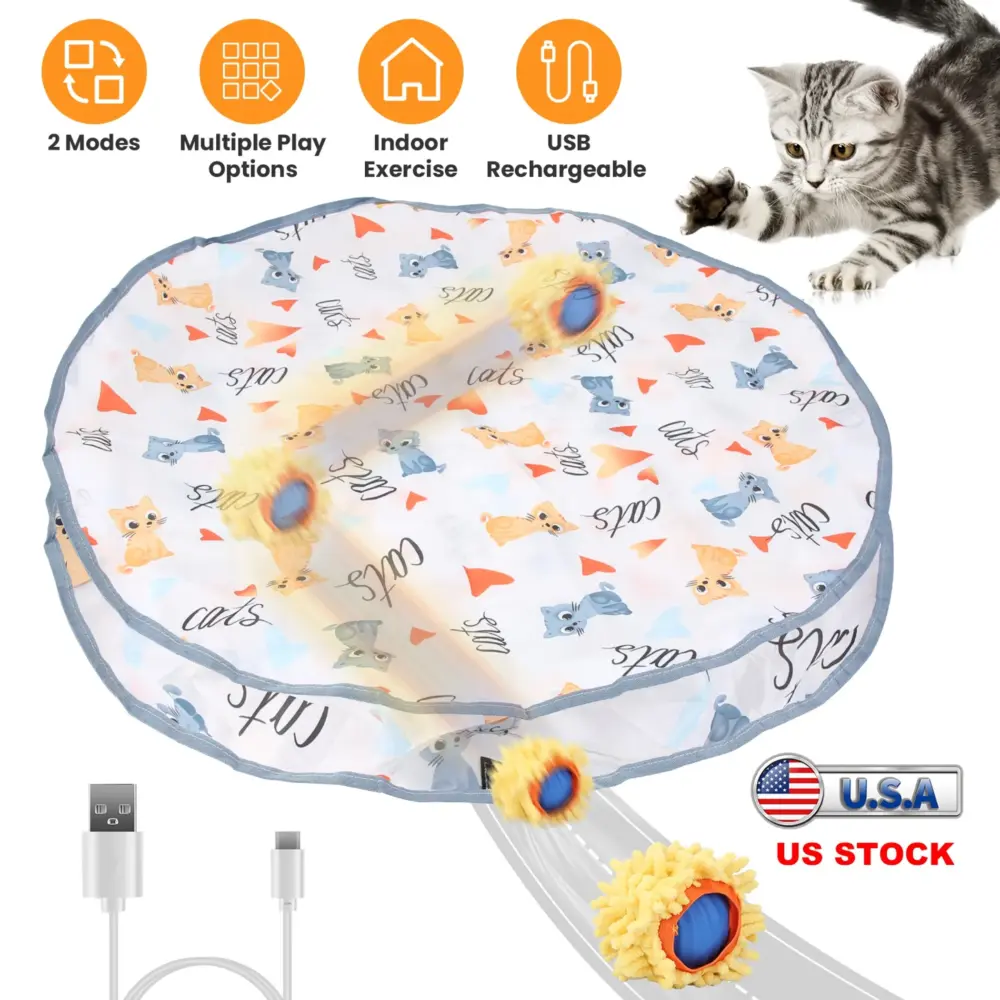
Two pieces from our own catalog fit this routine. For the warm-up, the Motion-Activated Rolling Cat Toy Ball wakes when touched and darts and pauses like prey, giving about an hour of play per USB charge; it works best on hard floors and short-pile rugs. It belongs to the evening, not the night shift, so put it away before bed. For the meal, the SodaPup Jigsaw Enrichment Lick Mat holds smooth wet food in its grooves, so a few spoonfuls take longer to finish. Pick it up once your cat walks away rather than leaving wet food out overnight.
-
Motion-Activated Rolling Cat Toy Ball, View product
$42.95
Why it fits: An evening chase while you get ready for bed: it wakes when touched and darts like prey, so run it with you in the room, then put it away.
-
SodaPup
Jigsaw Enrichment Lick Mat for Dogs & Cats, Choose color
$25.95
Why it fits: Turns the saved bedtime portion into a slower last meal, with a jigsaw texture that holds wet food; dishwasher safe for a quick wash.

Step 2: Break the link between you and breakfast
If getting up means food, your cat will work on getting you up. The ASPCA’s advice on meowing and yowling says it plainly: stop feeding a cat when it cries for food, and if that doesn’t work, use an automatic feeder set to open at specific times, so your cat watches the feeder instead of you.
- Feed by the clock, not by you. Pick a breakfast time and keep it seven days a week. Your cat doesn’t know it’s Saturday.
- Separate getting up from feeding. Once you’re up, shower or make coffee first, and serve breakfast only during a quiet moment, never mid-yowl.
- Let a timed feeder take the blame. Set it to open a little before your cat usually starts on you. Once the wake-ups stop, you can move the time later in small steps every few days.
- Leave a small night job. For a cat that seems truly hungry at 3 a.m., leave part of the dry ration in a puzzle feeder overnight. International Cat Care’s guide to puzzle feeders suggests starting with easy ones your cat can solve quickly, so introduce it in daytime first.
- Keep the total the same. Every bedtime, overnight and breakfast portion comes out of the daily amount, not on top of it. Tempted to leave a full bowl out all night instead? Our comparison of free feeding vs scheduled meals covers the tradeoffs.
Tip
A cat that begs constantly, even with regular meals, or is eating more but losing weight, should see a veterinarian before you change its feeding. Increased appetite can be a sign of illness, not just habit.
Step 3: Ignore the 4 a.m. wake-up, every time
This is the hard part, and it is what makes the other two steps stick. Any response can keep the habit alive: a word, a pat, a sigh, even a scolding. Rule out a real need first: the ASPCA advises ignoring meowing only when you know it is a bid for something your cat wants, so check that water is down and the litter box is clean and within reach. Then, when the paw comes at 4 a.m.:
- Stay still and silent. Eyes closed, no talking, no petting, no checking the time on your phone.
- Move your cat without a word if you must. If it is on your face or chest, lift it to the floor and lie back down.
- Get up at your usual time, not when your cat decides it is morning.
- Keep the morning low-key. Save the big greeting until you’re up and moving, so waking you never leads straight to fuss or food.
- Reward the quiet. Once you’re up, give attention when your cat is calm, lying quietly or waiting without crying, as the ASPCA recommends.
Expect it to get worse before it gets better. A cat whose wake-up call has always worked usually tries harder for a few nights once it stops working: louder meows, more pawing, things knocked off the nightstand. Giving in now teaches your cat that persistence pays. Hold out, and the protests fade.
Safety note
Don’t punish night waking. Scolding, squirting or shoving your cat away is still attention, and the ASPCA warns that scolding or hitting a cat for meowing can make it fearful of you. Never give a cat human sleep aids or calming supplements unless your veterinarian advises it; if nights are still hard after a few weeks, ask what else might help.
Give the night something to do
Whether your cat sleeps in your room or not, the rest of the house should offer a better option than you at 4 a.m. Start by choosing what happens to the bedroom door:
| Bedroom door | Works for | Set up |
|---|---|---|
| Open | Cats that settle once ignored | Bed in the room; litter, water nearby |
| Closed | Cats that pounce on feet or faces | Litter, water, bed and toys outside |
Pick one and stick with it. A cat that finds the door closed one night and open the next keeps testing it. If you close it, VCA’s advice is a comfortable sleeping area and a litter box on your cat’s side, as far out of earshot as you can manage. Expect scratching and yowling at the door for a while, and treat that like any other wake-up: no answer. Then make the night setup worth staying in:
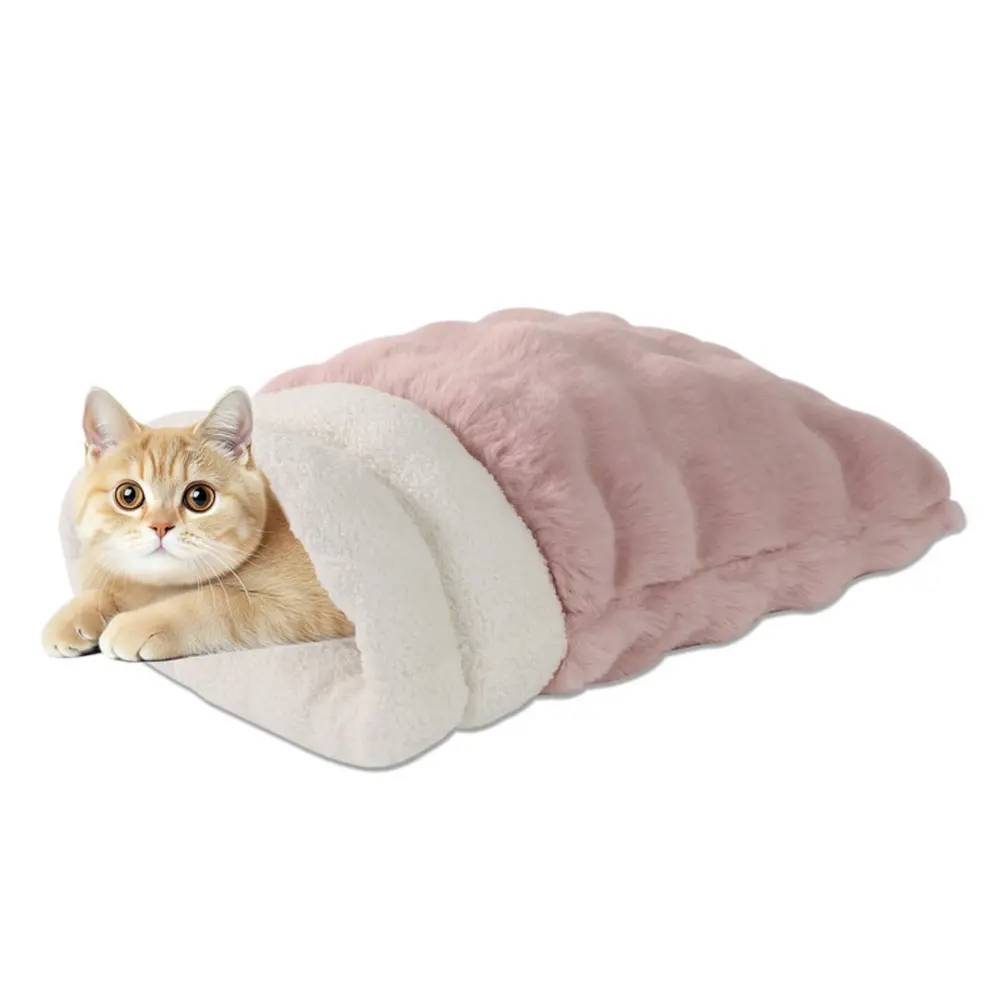
- A warm bed of its own. For some cats, a sleeping person is simply the warmest spot in the house. The GOOPAWS 4-in-1 Self-Warming Cat Cave Bed has a faux rabbit fur top and a self-warming design that traps your cat’s own body heat, and works as a cave, a mat or a sack. A T-shirt you’ve worn tucked inside adds a familiar smell. For other shapes, see how to choose a cat bed.
- A scratcher near the bed. VCA’s advice on scratching behavior includes placing one close to your cat’s sleeping quarters, which gives a cat that wakes up wanting to stretch a better target than the bedroom door frame.
- Quiet toys, rotated. Leave out a couple of soft toys, a cardboard box or a paper bag with the handles cut off, and swap them every few nights. Never leave string, ribbon or hair ties out. More ideas are in our indoor cat enrichment ideas.
- Less early light. If wake-ups creep earlier with spring sunrises, blackout curtains where your cat sleeps may help.
-
GOOPAWS
4-in-1 Self-Warming Cat Cave Bed, Choose color
$40.95
Why it fits: A warm bed for the night spot that traps your cat’s own body heat; use it as a cave, mat or sack in whichever room your cat sleeps.
-
Cat Scratcher Guy
Wooden Cat Scratcher with Reversible Insert, View product
$32.95
Why it fits: A scratching spot to set beside the night bed, with catnip included to introduce it and a reversible cardboard insert you flip when it wears.


Mistakes that keep the wake-ups coming
- Feeding to buy an hour’s sleep, “just this once.” It works tonight and all but books tomorrow’s wake-up, because an occasional win keeps a cat trying longer.
- Playing at 3 a.m. A game in the dark turns waking you into the most fun part of the night.
- All-day naps and no daytime play. A cat left to sleep from breakfast to dinner has energy to spare after dark. Add a short game in the morning and when you get home, or during breaks if you’re at home; see working from home with a cat.
- Different rules from different people. If one person gets up and feeds, the cat simply learns whose side of the bed to work on.
Troubleshooting when the plan stalls
Kittens and young cats
Young cats have more energy than one evening game can use. Spread two or three short play sessions through the evening and keep the bedtime meal. Kittens also need more frequent meals than adults, so ask your veterinarian how to split the day’s food. Many kittens settle into longer nights as they mature, but the no-response rule matters most now, before the habit sets.
Two or more cats
Play with each cat separately so the shyer one gets a real hunt, and give each its own bedtime portion and puzzle feeder. If one cat chases another at night, more daytime play and separate sleeping spots usually help more than anything you do in bed.
Yowling at a closed door
Wait it out without opening up; opening after ten minutes of yowling teaches your cat to yowl for ten minutes. If it is still going strong after a couple of weeks of consistent bedtime play and meals, try the open-door option with the same no-response rule instead.
After a change in routine
A move, a new pet, a return to the office or guests can unsettle a cat’s nights for a while. Keep meal and play times steady and add an extra game. If visitors are the trigger, our plan for keeping a cat calm with house guests starts with a quiet room of its own.
An unspayed or unneutered cat
Females in heat meow much more than usual, and the ASPCA notes that intact males can pace and meow relentlessly when a female nearby is in heat. No routine will fix hormones, so talk to your veterinarian about spaying or neutering.
When night waking needs your veterinarian
A cat that has slept through the night for years and suddenly starts yowling, pacing or waking you needs a checkup before a training plan, especially if it is middle-aged or older. Signs worth booking an appointment for:
- Loud night yowling with a bigger appetite or weight loss. VCA notes that cats with hyperthyroidism often vocalize more, particularly at night, and the average affected cat is around 12 years old.
- Drinking or peeing more. VCA lists increased thirst and urination among hyperthyroid signs, and the ASPCA notes that an overactive thyroid and kidney disease, both more likely as cats age, can each cause excessive meowing.
- Confusion or a flipped sleep pattern. In older cats, cognitive dysfunction can mean more sleep by day and pacing and yowling at night. VCA stresses that these signs often relate to physical illness, so your veterinarian needs to look first.
- Restlessness, hiding or reluctance to jump. Cats hide pain well. The ASPCA’s guide to behavior problems in older cats lists arthritis, dental disease and impaired sight or hearing among the medical problems that can cause restlessness.
Safety note
Crying and restlessness with straining in the litter box, frequent small trips or little to no urine can mean a urinary blockage, which the ASPCA calls a life-threatening emergency; male cats are especially at risk. Call your veterinarian or an emergency clinic right away; don’t wait for morning.
Related guides
-
How-to
Working From Home With a Cat: Fewer Paws on the Keyboard
A home-office plan for cat owners: a warm bed beside the desk instead of on it, cables and coffee out of reach, play before calls, midday puzzle and lick-mat jobs, a kind fix for keyboard walkers and a gentle switch back to office days.
-
How-to
How to Keep a Cat Calm With House Guests: A Retreat Room Plan
Guests bring noise, new smells and doors that keep opening. Here is a host’s plan for your cat: a retreat room set up a week ahead, play and a meal before the doorbell, what to tell visitors, overnight stays, suitcases and visiting dogs, and the stress signs that need a veterinarian.
-
Guide
Should You Get a Second Cat? How to Tell if Yours Would Welcome One
A second cat can be good company or a daily source of stress. Learn what lonely behavior often means, what makes a cat likelier to accept a newcomer, which pairings tend to work, what one more cat takes in space, money and time, and what to try first.