Cat Care How-to
Working From Home With a Cat: Fewer Paws on the Keyboard
Short answer
Give your cat a warm bed beside your desk so the keyboard stops being the best seat in the room, and keep meals and play at the times your cat already knows. Play briefly before calls, set down a puzzle or lick mat at midday, and save attention for quiet moments, not yowls or paws on the keys.
What to have ready
- A bed at desk height, on a spare chair, a side table or a wide sill beside you, not on the desk itself.
- A wand toy for two-minute play breaks, kept in a drawer between games.
- Part of the day’s food, measured out in the morning for a midday puzzle or lick mat, so the workday adds no extra calories.
- A scratcher for the floor near the bed or by the office door.
- A lidded mug and a few cable clips. Nilosi doesn’t stock either.
- Your lock-screen shortcut: Windows key + L on a PC, Control + Command + Q on a Mac.
Set up a cat-friendly office
Advice from International Cat Care (iCatCare) on how to work from home with a cat starts with location: if you can, put your workspace in a room your cat doesn’t usually use. If yours follows you anyway, or the only desk is the kitchen table, make the area safe and give your cat a better seat than your keyboard.
- A bed beside you, not in front of you. Many cats want to be near you while you work, ideally somewhere raised with a view. A soft bed on a chair, shelf or sill next to the desk gives yours that without the trackpad.
- Cables tucked away. Run chargers and headphone cords behind the desk or through a cable box. A dangling cord invites batting, and a chewed one is a shock risk.
- Hot drinks lidded and back from the edge. A cat strolling along the desk can tip a mug in a second, and the ASPCA lists coffee, caffeine and chocolate among the foods that are dangerous for pets, so keep drinks and desk snacks out of reach.
- Small supplies in a drawer. Rubber bands, hair ties, twist ties, string and paper clips are fun to bat off the desk and dangerous if swallowed.
- No lilies in the office. The FDA warns that every part of a true lily or daylily, including the pollen and the water in the vase, can cause fatal kidney failure in cats. If you like flowers on your desk, choose something else.
- Autosave on. As iCatCare points out, one innocent paw on the keyboard can wipe out hours of work.
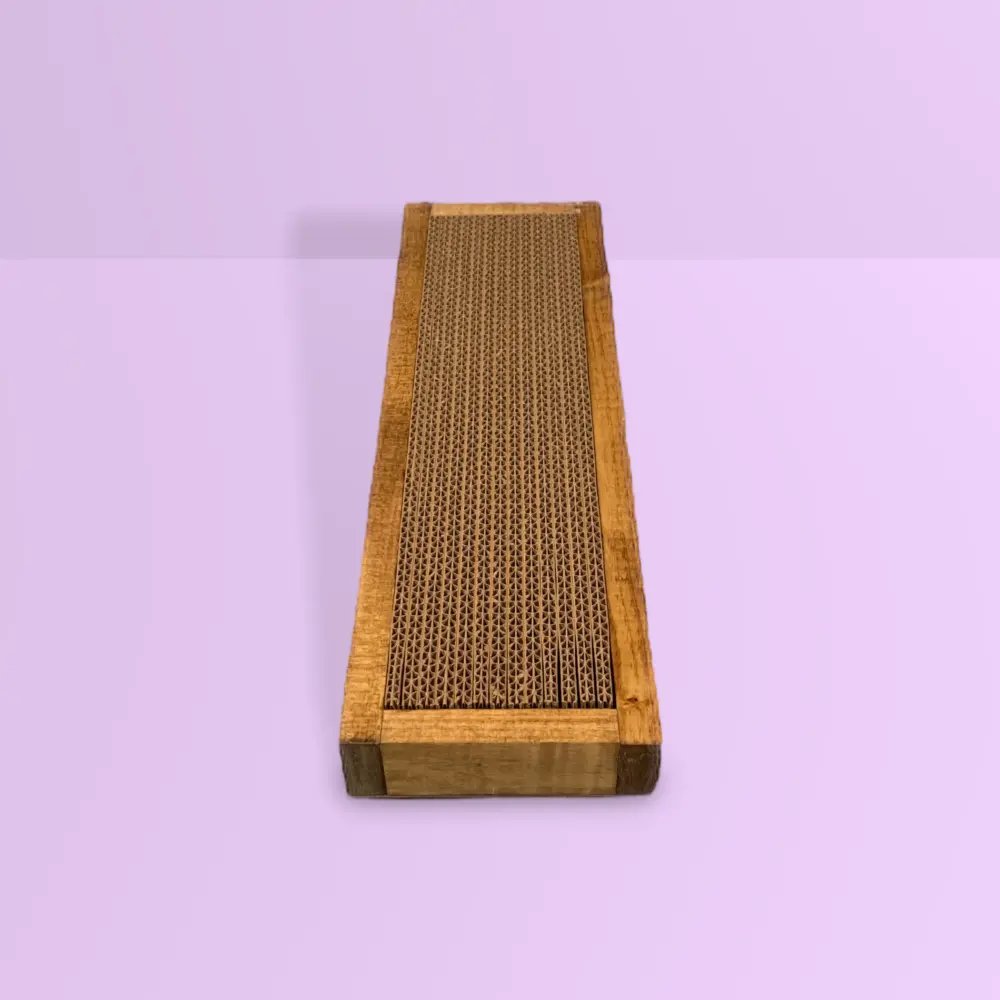
- A scratcher near the bed or the door. Many cats like a scratch after a nap, iCatCare notes, and a flat scratcher outside a door you close for calls beats the carpet in front of it.
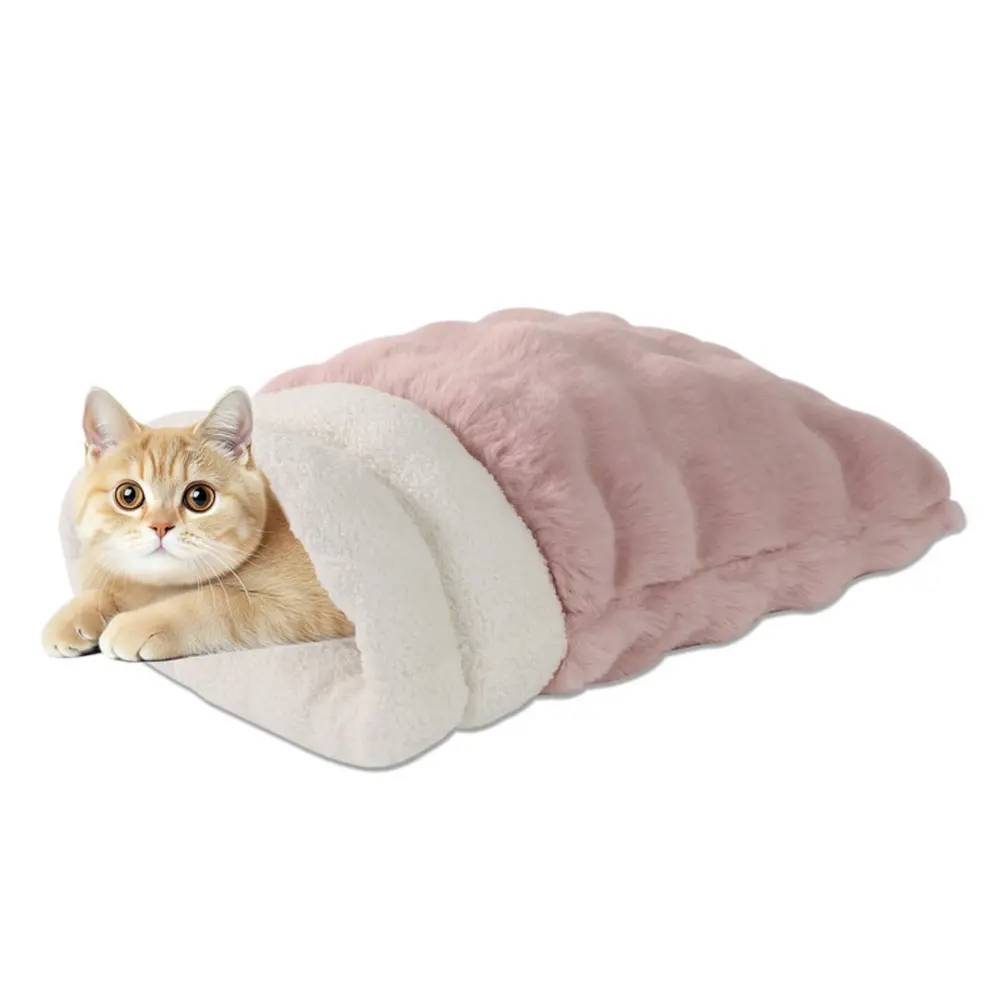
Match the bed to the way your cat naps: a burrower usually takes to a covered cave, a sprawler to an open mat, and how to choose a cat bed goes deeper on shapes and sizes. The GOOPAWS cave bed below, 21 × 17 × 3 inches, suits a spare chair or a side table better than a crowded desk. You can use it closed as a cave or sack, or opened out as a bed or mat, and its self-warming design traps your cat’s own body heat, a fair rival for a warm laptop. Like every pick in this guide, it comes from Nilosi’s own catalog; more beds, scratchers and toys are in our cat essentials range.
Tip
Watch where your cat jumps up. If a chair, a filing cabinet or the windowsill is its step to the desk, put the bed there, so the launch point becomes the landing spot.
-
GOOPAWS
4-in-1 Self-Warming Cat Cave Bed, Choose color
$40.95
Why it fits: A warm seat beside your keyboard instead of on it; the self-warming design traps body heat, and it opens from a cave to a flat mat.
-
Cat Scratcher Guy
Wooden Cat Scratcher with Reversible Insert, View product
$32.95
Why it fits: A flat scratching spot for the office doorway; set the wooden frame where your cat digs at the carpet by the shut door. Catnip included.


A workday schedule for you and your cat
iCatCare’s main advice is to keep your cat’s routine as it was: feeding, play and the morning and evening rituals stay the same. Many cats nap through much of the workday anyway, so line up the moments yours is awake and wanting something with the gaps in your calendar. A typical office-hours day might run like this:
- Before work: a five-minute wand game, then breakfast at the usual time. A cat that has chased, caught and eaten is more likely to groom and nap through your first meetings.
- As you sit down: greet your cat on its bed, not on the desk, and lift any keyboard walker back there without a word.
- Mid-morning: two or three minutes of play on the floor away from the desk, then a stretch for you and fresh water for your cat.
- Before the afternoon calls: a puzzle or lick mat loaded from the day’s ration, set down before your cat starts asking.
- Mid-afternoon: another short game between calls, or a few minutes with a rolling toy while you stand up and stretch.
- When you finish work: the longest play session of the day, then dinner at the usual time, so the evening is clearly your cat’s time.
Move the times around your own meetings, then hold them steady, weekends included. For how to run a game that ends with a catch and leaves your cat ready to rest, see how long to play with a cat. If a cat that dozes beside you all day starts waking you before dawn, the bedtime routine in stopping a cat from waking you at night fits around this schedule.
When your cat demands attention on calls
A cat that yowls through a meeting or parades across the laptop is asking for something, and it has often learned that asking this way works: you look, talk, laugh or pick it up, and all of that counts as attention. The ASPCA’s advice on meowing and yowling is to make sure your cat isn’t asking for something it needs first. If it simply wants attention, respond only when your cat is quiet: wait for a second or two of silence, then give it the attention it was after.
- Get ahead of it. Two minutes of play before a long call, then a food job set down away from the desk as you join. Handed over before your cat asks, it prevents the interruption instead of paying for it.
- Check the basics. Is the water bowl full, the litter box clean and the door to its usual room open? A cat yowling for a real need won’t stop because you ignore it.
- Camera off, eyes on the screen. If a tail fills the frame, switch the camera off for a moment and keep working rather than turning to talk to your cat. Mute too if the yowling carries.
- Decide about laps once. A lap is the easy answer on a casual call, but allowing it some days and not others tends to bring louder protests.
- Close the door for the big ones. For a presentation or an interview, settle your cat on the other side of the office door with its bed, water, litter box and a food job. If it yowls, wait for a quiet moment before you open up, never mid-yowl.
Midday jobs that keep your cat busy
iCatCare suggests puzzle feeders, toys and scratching posts around the office to keep a cat busy while you work, and warns against handing out treats all day: too many add weight and tend to make the demands grow. Use part of the day’s food instead, and bring these out at breaks or just before calls:
- A puzzle for dry food. Start with one your cat can solve in seconds, like kibble dropped into the cups of an egg carton with the lid torn off, and make it harder only once your cat finds it easy.
- A lick mat for wet food. Press a thin layer of your cat’s usual wet food, at room temperature, into the grooves and set the mat on the floor away from the desk. Stay in the room and wash it once your cat walks away, since wet food shouldn’t sit out. Our guide to lick mat fillings has a section just for cats.
- A cardboard box. Set on the floor by your chair, it costs nothing, and plenty of cats will choose it over the keyboard.
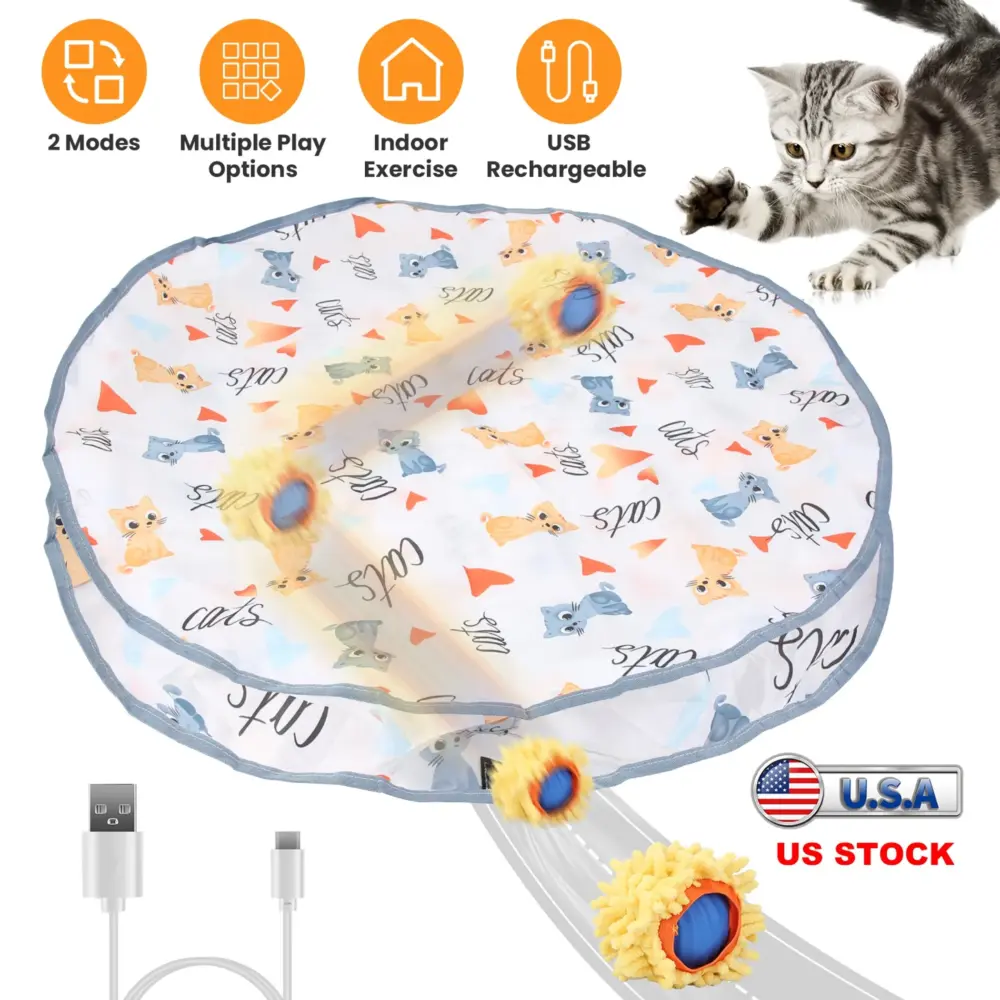
- A break-time chase. A self-moving toy can run while you stretch your legs, as long as you stay in the room. Put it away before the next call: it’s a break toy, not a babysitter.
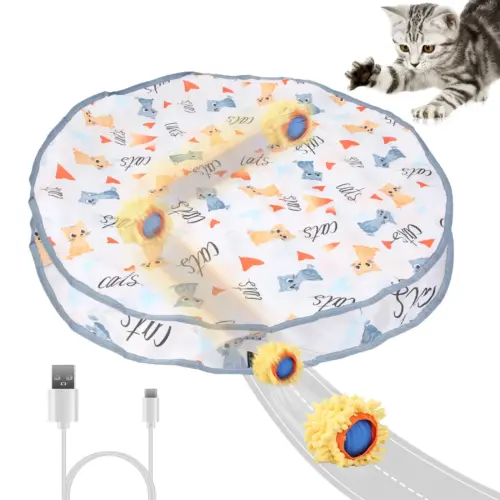
The rolling ball below does best on hard floors and short-pile rugs, so if your office has deep carpet, take the game to the hallway or kitchen. It has two play modes, and a full USB charge covers roughly an hour of chasing. Give it a quick check for wear after each session.
-
SodaPup
Jigsaw Enrichment Lick Mat for Dogs & Cats, Choose color
$25.95
Why it fits: A quiet job for a long call; smooth wet food pressed into the jigsaw grooves takes longer to lick up, and the mat is dishwasher safe.
-
Motion-Activated Rolling Cat Toy Ball, View product
$42.95
Why it fits: A chase for your breaks that needs no wand; it wakes when touched and darts like prey, so run it while you stretch, then put it away.

Keep paws off the keyboard, kindly
Cats land on keyboards because that’s where your hands, your attention and often a little warmth all are. Blocking the desk works in two halves: make the keyboard dull, and make the spot beside it better.
- Same response, every time. Each landing earns a calm lift to the bed and nothing more. Everyone in the house needs the same rule, or your cat simply learns whose desk to try.
- Reward the bed. Every so often, while your cat is lying on its bed, reach over for a slow stroke. Attention should come for lying beside the keyboard, never for standing on it.
- Leave nothing to walk on. When you get up, tuck the chair in, close the laptop or slide the keyboard back under the monitor, and lock the screen.
- Give the desk a cat zone, if there’s room. On a large desk, a folded blanket at the far end, which iCatCare also suggests, gives your cat a desk spot of its own that isn’t your keyboard.
Skip squirt bottles, shouting and shoving your cat off the desk. The ASPCA makes the point about meowing, and it holds here too: scolding might make a cat run off in the moment, but it rarely changes the habit and can make your cat afraid of you.
When you go back to the office
A cat that has had you home all day for months may notice when the house goes quiet again. VCA’s advice on preventing separation distress, written for cats as well as dogs, comes down to practice, a predictable routine and calm comings and goings, so start a few weeks before your first office day:
- Practice short absences. Start with a few minutes out of the house, for the mail or a walk around the block, and build up to an errand of an hour or two. Keep goodbyes and hellos low-key.
- Build in time apart at home. On some days, close the office door for an hour while your cat rests elsewhere with water, its litter box and a food job, so time on its own stays ordinary.
- Keep the anchors in place. Breakfast, the morning game and dinner stay at the same times on office days and home days.
- Move the midday jobs. Swap your break-time games for things your cat can use alone. Our indoor cat enrichment ideas cover what is safe to leave out while you’re away and what to put away, including the rolling ball.
- Play when you get home, before you start dinner or open your email.
- Watch for changes. VCA lists crying, destructive behavior and house soiling among the signs of separation distress. Those, or hiding, overgrooming or eating less after the switch, are reasons to call your veterinarian, who can check for a medical cause first.
Common mistakes and quick fixes
Mistakes that undo the routine
- Paying for quiet with treats. It works for a minute, then the asking gets louder, and the calories add up.
- Playing on the desk. A wand game across the keyboard teaches your cat that the desk is the playground. Play on the floor.
Your cat ignores the desk-side bed
Move it closer to your chair, into a patch of sun, or onto the seat your cat already uses. Try it open as a mat if your cat never goes inside, or closed as a cave if it keeps burrowing under your papers. Give it a week or so; plenty of cats inspect a new bed for days before they sleep in it.
Yowling at the closed office door
If your cat yowls through every call, the closed door may be the problem: for short calls, keep your cat in the room with its bed and a food job, and save the door for the meetings that really matter.
A dog shares the office too
Dogs need a different plan, built on walks before work and a settle cue on a bed; see keeping a dog busy while you work from home. Give your cat its midday job somewhere the dog can’t reach, so neither pet has to compete for it.
Suddenly clingy, loud or restless
New yowling, constant demands or pacing may not be boredom at all. The ASPCA advises having a cat that meows a lot checked by a veterinarian to rule out a medical cause, which matters most with an older cat, so book that visit before you treat it as a habit to train away.
Related guides
-
How-to
How to Stop Your Cat From Waking You Up at Night
Cats wake you before dawn because it is hunting time, the gap since dinner is long and waking you has paid off before. Here is a three-step plan: a bedtime hunt and meal, breakfast that doesn’t depend on you, and a firm no-response rule, plus a night setup, troubleshooting and signs to see your vet.
-
How-to
How to Keep a Cat Calm With House Guests: A Retreat Room Plan
Guests bring noise, new smells and doors that keep opening. Here is a host’s plan for your cat: a retreat room set up a week ahead, play and a meal before the doorbell, what to tell visitors, overnight stays, suitcases and visiting dogs, and the stress signs that need a veterinarian.
-
Guide
Should You Get a Second Cat? How to Tell if Yours Would Welcome One
A second cat can be good company or a daily source of stress. Learn what lonely behavior often means, what makes a cat likelier to accept a newcomer, which pairings tend to work, what one more cat takes in space, money and time, and what to try first.