Toys & Play How-to
How to Keep a Dog Busy While Working From Home: A Workday Plan
Short answer
Front-load the day with a real walk or play session before your first call, then give your dog a bed beside your desk and save part of the daily food for quiet jobs. Set a lick mat down just before each long call, take a short break every couple of hours, and reward stillness, never barking or pawing.
What you’ll need
- Today’s calendar, so walks land before calls and quiet jobs during them.
- A bed or mat beside your desk, clear of the chair’s path and the doorway.
- Part of the daily food ration, measured out in the morning for rewards and food jobs, so the workday adds no extra calories.
- A lick mat or slow-feeder bowl for meetings and the first call of the day.
- A leash by the door for break walks.
- A baby gate or a door you can close, for practicing time apart. Nilosi doesn’t stock gates.
A workday schedule that works for both of you
The trick is to meet your dog’s needs on your schedule, before your dog brings them to you mid-meeting: exercise before the first call, food jobs when you need quiet, breaks in the gaps. A nine-to-five day might run like this:
- Before you log on: a walk with time to sniff, not just a bathroom lap, or 15 minutes of play in the yard.
- As you sit down: breakfast in a slow-feeder bowl or on a lick mat, so the first job of the day is food work. Many dogs nap afterward.
- Mid-morning: a bathroom break and a five-minute game or sniff.
- Lunch: a longer walk, then straight back to the bed by your desk.
- The afternoon call block: a frozen lick mat set down just before the first call.
- Mid-afternoon: another bathroom break and two minutes of training at your desk.
- After you log off: a real walk or play session, so the evening is clearly your dog’s time.
Shift the times to fit your calendar, then keep them roughly the same each day; on a day packed with calls, walk earlier rather than skip it. Keep sessions shorter and gentler for a puppy, a senior or a flat-faced dog. Walking before breakfast also keeps hard exercise off a full stomach: VCA lists exercise after a large meal as a possible bloat risk, and large, deep-chested dogs are the most prone, so ask your veterinarian how long to leave between meals and hard exercise. If your veterinarian has restricted your dog’s activity, skip the walk-first plan and see enrichment for dogs on crate rest.
Set up a settle spot near your desk
Pick a spot where your dog can see you without being underfoot, then check it at dog height:
- Out of the chair’s path. Under the desk, tails and paws are in reach of rolling wheels and shifting feet; a few feet to the side is better.
- Away from the street window if your dog barks at passers-by and delivery trucks.
- Out of direct sun and away from heaters, so a cozy 9 a.m. spot isn’t too warm by mid-afternoon.
- Cords tucked away. Bundle chargers and cables out of reach, especially with a puppy who chews.
- Coffee and snacks up high. The ASPCA lists chocolate, caffeine and xylitol, a sweetener in some gum and candy, among the foods that are dangerous for pets.
- Water a few steps away, where nobody will kick the bowl.
Use whichever bed your dog already likes. A dog who sleeps curled tight usually likes a rim to lean on, and one who keeps leaving the bed for the bare floor may be running warm. The two picks below, from Nilosi’s own catalog, suit those two habits.
-
Armarkat
Ultra-Plush Cuddler Bed for Cats & Small Dogs, Choose size
Price range: $55.95 through $72.95
Why it fits: A desk-side bed for a small dog who curls up; the raised rim supports a resting head and the base is skid-free. Small is 22 x 22 x 8 in.
-
The Green Pet Shop
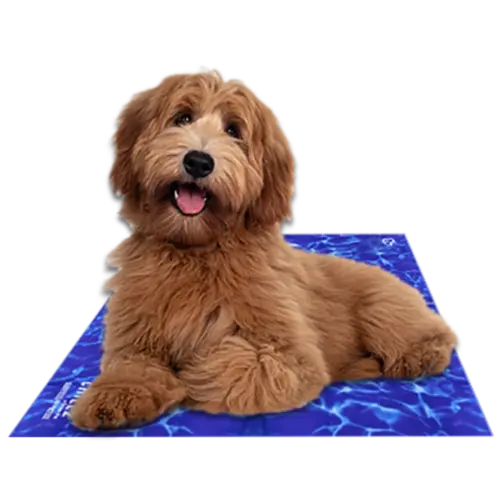
Chillz Cooling Gel Mat for Dogs & Cats, View product
$45.95
Why it fits: For a dog who leaves the bed for the cool floor; the pressure-activated gel cools with no water, ice or power. Size Medium; not for chewers.

Teach a settle cue on the bed
A settle is more than a trip to the bed: it means lying down and staying relaxed for minutes at a time while you ignore your dog. VCA’s guide to separation anxiety in dogs recommends teaching a dog to relax in its own quiet area and to accept long periods of inattention while you’re home, rewarding calm rather than attention-seeking. If your dog doesn’t yet go to the bed on cue, teach that first with the steps in getting a dog to sleep in their own bed.
- Start after the morning walk, when your dog is ready to rest. Sit at your desk with a small pot of kibble from the daily ration.
- Each time your dog lies down on the bed on their own, quietly set a piece between their paws. Skip praise and eye contact; you’re paying for stillness, not starting a game.
- Watch for signs of real relaxation, such as a hip rolled to one side, a chin resting on the rim or a long sigh, and reward those right away.
- Stretch the gaps: a piece every few seconds, then every 30 seconds, then every few minutes. If your dog gets up, wait until they lie back down.
- Once your dog is choosing the bed reliably, say a cue word such as “settle” just as they lie down.
- Add your work one piece at a time: typing, standing up, talking on the phone, a video playing with voices. Reward stillness through each.
- Hold a rehearsal before a real meeting: ask a friend to call you for ten minutes while you reward quietly.
- Fade the food: once the settle lasts 20 minutes or more, reward less often and end each stretch with a lick mat or a break outside.
Short sessions a few times a day work best, and with a young or excitable dog it can take weeks before the settle holds through a full meeting.
Quiet jobs for calls and meetings
Hand over a food job before your dog asks for anything, so it prevents the interruption instead of rewarding one. The AKC’s guide to attention-seeking behaviors in dogs suggests a food-stuffed chew toy before a phone call, or taking the call in another room. Licking is nearly silent, so a lick mat suits the hours your microphone is on; save anything that squeaks or rolls for breaks.
- A short call: an unfrozen mat with a thin layer of wet food, set down beside the bed just before you join.
- A long meeting or presentation: a mat loaded and frozen the night before, which takes longer to lick clean.
- The first call of the day: breakfast in the slow feeder as you log on, so the meal takes minutes instead of seconds and is finished before you join.
- Simple spreads: your dog’s usual wet food, plain yogurt or plain pumpkin purée, not pie filling. If you use peanut butter, check that it has no xylitol.
- Within sight: keep your dog in view while they lick, and pick the mat up once it’s clean or if your dog starts chewing it.
Rotating jobs through the week keeps them interesting; food enrichment for dogs has scatter feeding, towel snuffles and other ideas that cost nothing.
-
SodaPup
Jigsaw Enrichment Lick Mat for Dogs & Cats, Choose color
$25.95
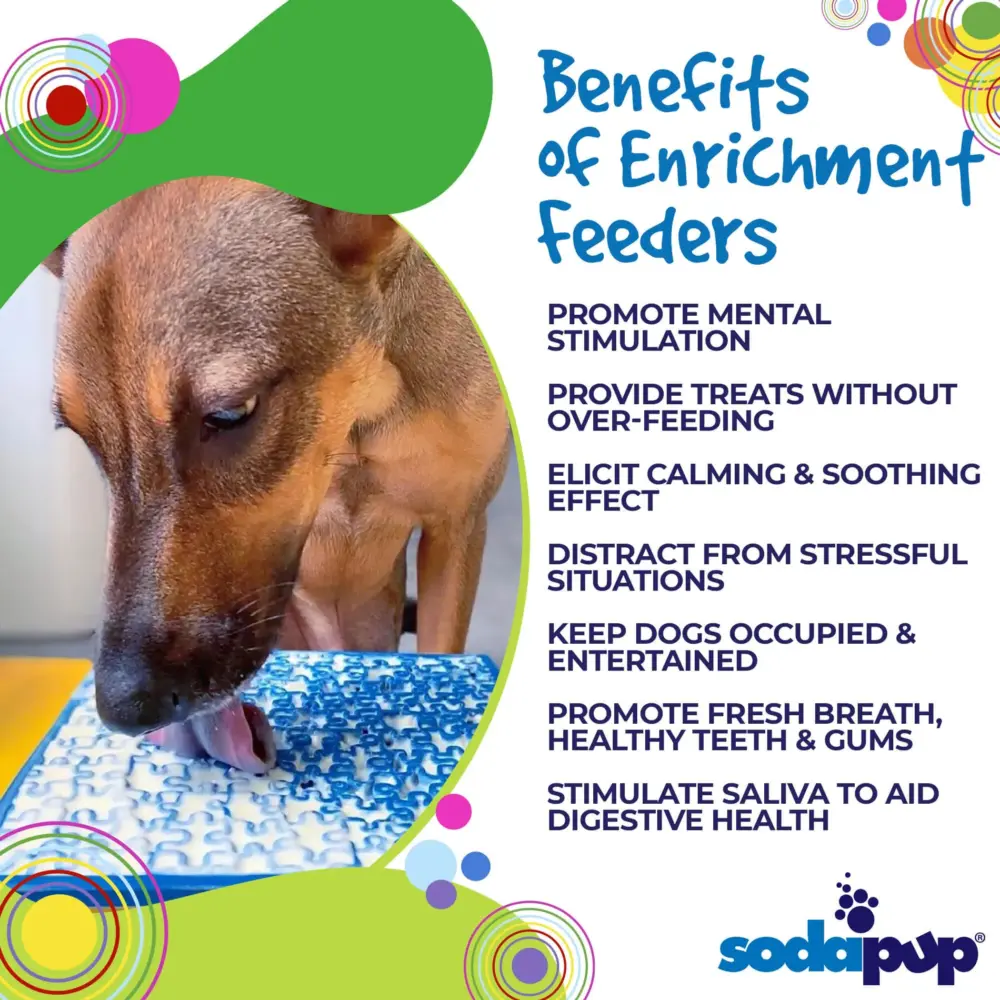
Why it fits: Set it down by the bed just before a long call; frozen overnight, the loaded jigsaw grooves take longer to lick clean. Suits all dog sizes.
-
SodaPup
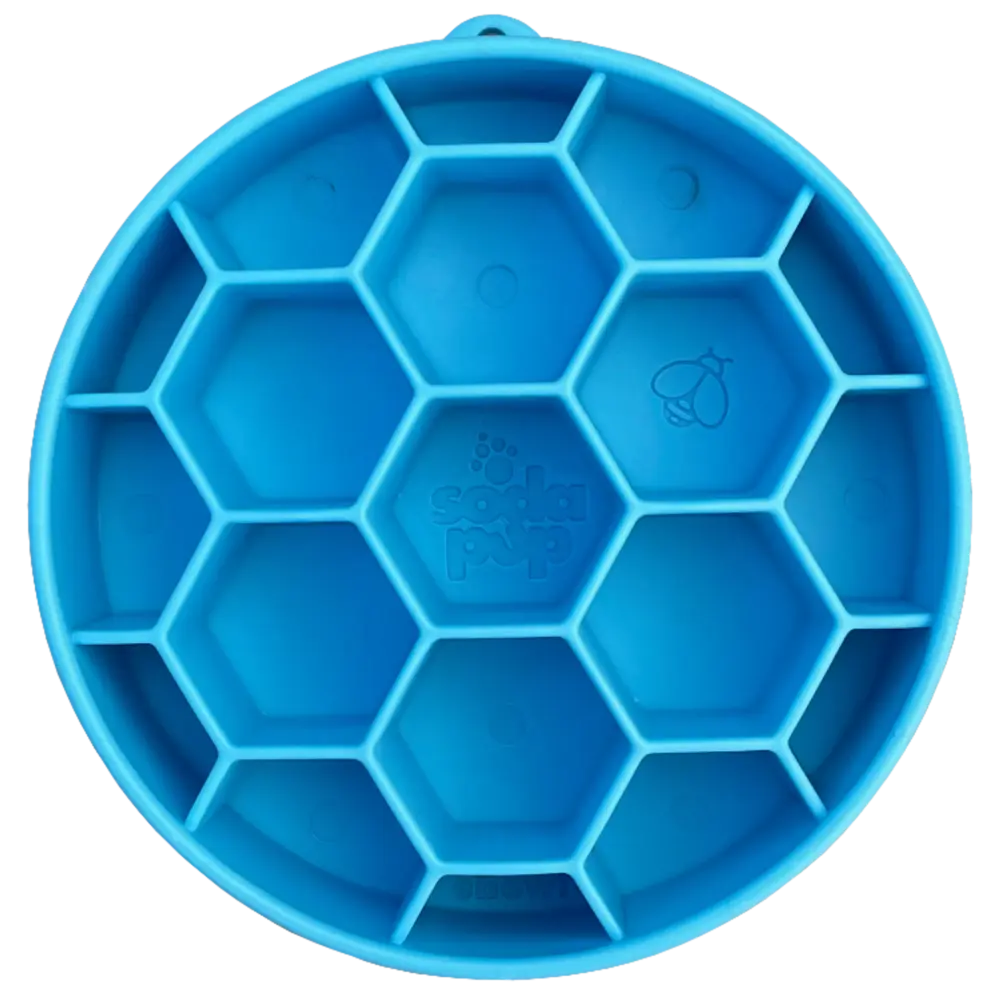
Honeycomb Slow Feeder Dog Bowl, View product
$30.95
Why it fits: Serve breakfast in it as you log on; the honeycomb ridges turn a gulped meal into minutes of work before the first call. Suits most dogs.


Short breaks: five-minute games and sniff walks
A break every couple of hours helps your dog and your back. Set a recurring reminder and pick one:
- A sniff walk. Once around the block at your dog’s pace, stopping wherever they want to sniff. Sniffing gives your dog’s nose and brain a job.
- Find-it. Scatter a small handful of kibble on the lawn or down the hallway, or hide a toy, and send your dog to search.
- Two minutes of tricks. A few sits, downs, hand targets or settle repeats, paid with kibble.
- A short tug game, ending with the toy put away and your dog back on the bed.
End every break the same way, with water, a quiet word and the bed, so your dog learns that a break ends in rest. Young puppies need bathroom trips far more often, including after naps, meals and play. For longer games off the clock, see indoor games for dogs; tug and squeaky toys from our toys and play range belong to breaks and evenings, not calls.
Demand barking and pawing: what to do
A dog who barks at you, paws your arm or drops a toy on your keyboard has learned that it works. Meet the need before your dog demands it, then stop paying for the demand.
First, rule out a real need
When was the last bathroom trip, is the water bowl full, and is it close to walk time? A dog asking to go out deserves a brief, dull trip on leash and straight back. The AKC article agrees: provide exercise, play and bathroom trips first, then ignore demands for short periods, such as 30 seconds, and build up.
Then stop paying for the demand
- Don’t answer it. The ASPCA’s advice on barking is that eye contact, touching, talking and even scolding all count as attention. Keep your eyes on the screen, mute the call and turn away from pawing.
- Reward the quiet. The ASPCA suggests that the instant your dog stops barking, you ask for a sit and then give them what they wanted, such as attention or a trip outside. A few seconds of quiet is enough at first.
- Teach a polite ask. The AKC suggests teaching a better way to ask and rewarding that; lying on the bed and looking at you can become the signal that earns a break.
- Expect it to get worse first. The AKC warns that when you stop responding, a dog’s behavior gets worse before it gets better. Giving in during the loud stretch teaches your dog to push longer.
- Skip punishment. Shouting or a squirt bottle can make your dog wary of you, and the AKC article calls avoiding punishment a must.
Barking at the window or the door
Barking at delivery trucks, the mail carrier or passing dogs is alarm barking, not a demand, and ignoring it won’t fix it. Block the view instead: move the bed away from a street-facing window, or cover the lower panes with removable plastic film, as the ASPCA suggests. A fan or white-noise machine can soften street sounds, and if deliveries come at a regular time, set a lick mat down just before.
Safety note
A sudden change in your dog’s behavior, such as new barking, whining or restlessness, can have a medical cause, including pain. Check with your veterinarian before treating it as a training problem.
Practice time apart, even when you’re home
A dog whose person works from home may go months without being alone, which makes office days, errands and trips harder. The ASPCA notes that an abrupt change in when or how long a dog is left alone can trigger separation anxiety, so build some time apart into ordinary days:
- Start with a gate, then a door. With a baby gate across the office doorway, your dog can watch you while they work on a lick mat on the other side; later, close the door for a few minutes while they rest. The ASPCA’s guide to separation anxiety also suggests out-of-sight sit- or down-stays at an inside door, such as the bathroom.
- Leave the house now and then, for the mail, a coffee or a short errand, without your dog and without a long goodbye.
- Keep comings and goings low-key: a quiet hello once your dog has settled, not a reunion.
- Keep routines steady on hybrid weeks, with walks and meals at the same times on home and office days. If your dog comes to the office too, the settle cue travels with you; see bringing your dog to work.
Persistent barking or howling when separated, pacing, chewing or scratching at doors, accidents in a house-trained dog and frantic escape attempts are signs your dog isn’t coping. The ASPCA stresses that these are distress, not disobedience or spite, so don’t scold; talk to your veterinarian, who can rule out medical causes and refer you to a qualified behavior professional.
Safety note
If your dog panics behind a closed door, gate or crate, drooling, scratching or trying to break out, stop the practice, stay with them and ask your veterinarian for help. Pushing on won’t teach a panicking dog to cope.
Mistakes and troubleshooting
Mistakes that undo the routine
- Skipping the morning walk because you’ll be home all day anyway.
- Handing over the lick mat in the middle of a barking fit, which pays for the bark. Set it down before the call.
- Petting every nudge in the morning, then expecting silence at 10 a.m.
- Using the closed door or the crate as a punishment, which makes the resting place a bad place to be.
Your dog won’t stay on the bed
Go back to shorter sessions with more frequent rewards, move the bed to where your dog can see you, and make sure the morning exercise happened. Some dogs prefer a cooler or firmer surface, so try a different bed or mat before deciding the cue isn’t working. If the restlessness peaks every afternoon, add a sniff break or save the frozen mat for the slump; a young puppy may need a nap in a quiet room more than another game.
A cat shares the office too
Cats need a different plan, built on a warm spot near the desk and short play sessions rather than walks; see working from home with a cat.
Related guides
-
How-to
How to Stop a Dog Begging at the Table: A Mealtime Plan That Holds Up
Make the table stop paying: a no-scraps rule everyone keeps, your dog’s own dinner served as you sit down, a go-to-your-bed cue with a lick mat as the job, and a gate or tether while the habit forms.
-
How-to
How to Keep a Dog Cool Without AC in a Heat Wave
Without air conditioning, a heat wave comes down to one well-chosen room: shaded windows, moving air, water in several places, frozen food for the hottest hours and a damp towel underneath. Here's how to set it up, when it stops being enough and which heat-stress signs need a vet.
-
How-to
How to Calm an Overtired Puppy: Signs, Naps and a Wind-Down Routine
Wild, nippy and deaf to cues by evening? That is often an overtired puppy, not an under-exercised one. Here is how to tell the difference, settle a wound-up puppy step by step, plan naps around meals and potty trips, and set up a nap spot they will use.