Puppies & Kittens How-to
How to Calm an Overtired Puppy: Signs, Naps and a Wind-Down Routine
Short answer
A puppy who turns wild, nippy and deaf to cues by evening has often been awake too long rather than exercised too little. To calm them, end the game, take a quiet potty trip, then settle them in a crate or pen with one slow licking or sniffing job. Regular daytime naps make the evening wild spell less likely.

Overtired or under-exercised? How to tell
Both look like a puppy bouncing off the walls, but one needs rest and the other needs something to do. Timing is the biggest clue, and a big day with visitors, a vet visit or a new place tires a puppy faster than a quiet one.
| Clue | Overtired | Needs more to do |
|---|---|---|
| Timing | After a long, busy awake stretch | After a long nap or a quiet day |
| Nipping | Frantic, harder, aimed at anything | Mouthy, but a toy redirects it |
| Toys | Grabs one, drops it, moves on | Settles into a chew or a toy |
| Cues | Can’t manage ones they know | Responds, then pesters for more |
| In a quiet pen | Fusses briefly, then falls asleep | Stays restless or keeps whining |
Other signs include zoomies that end in grabbing the leash or your sleeves, barking at you and yawning while still charging around. On walks, the AKC’s guide to puppy exercise suggests watching for fatigue such as sitting down or struggling to keep up; at home, tiredness often shows the opposite way, as louder, rougher play.
Why young puppies won’t nap on their own
Puppies usually sleep 18 to 20 hours a day, according to the AKC’s guide to puppy sleep, and that rest supports a growing brain, immune system and muscles. What many can’t do yet is put themselves to bed. Everything is new and interesting, people keep walking past, and a puppy who is getting tired often becomes more excited rather than less, so the wild spell feeds on itself until someone steps in. The same guide says to steer an overly tired puppy to their crate or sleeping place and encourage them to wind down.
That is why evenings are often the worst: a full day of small adventures, then family coming home, dinner and children who want to play, all at once. Many owners call it the witching hour. Treat it as a scheduling problem, not a training failure; the puppy who goes wild at six often needed a nap at five.
How to calm an overtired puppy, step by step
Once the wild spell has started, the aim is to lower the excitement and give your puppy an easy route to sleep. Have these ready first:
- A nap area your puppy already knows: a crate, playpen or gated corner. Our new puppy checklist covers setting one up.
- An old towel as bedding, or none at all while your puppy still soils or shreds fabric.
- A slow job, such as a lick mat or slow-feeder bowl, loaded with part of your puppy’s daily food.
- A leash for a calm potty trip.
- Stop the game. Put tug and squeaky toys away, stop moving your hands and feet, and lower your voice. If teeth land on you, go still and offer a soft toy instead, without scolding.
- Take a quiet potty trip. Walk or carry your puppy to the usual spot on leash, wait without chatting, praise softly when they go and head straight back inside.
- Go to the nap area. Lead your puppy in with a piece of kibble rather than pushing. Take off the leash, harness and collar, which can catch on crate bars, then dim the lights and turn the TV down.
- Offer one slow job. Set down a lick mat with a thin layer of their food, or scatter a few pieces of kibble in a folded towel.
- Sit nearby and stay dull. Read or scroll quietly beside the pen. Skip eye contact, chatter and petting that turns back into play.
- Let sleep happen. Lift the mat or bowl once it is empty. When your puppy lies down and their eyes close, stay a moment, then move away quietly. Don’t wake them for a cuddle or a photo.
- On waking, go straight outside. Then offer a meal if one is due, a short game or a training session before the next rest.
Tip
Nipping that gets harder as the day wears on often points to an overtired puppy. If your puppy bites just as much when rested, our guide to how to stop a puppy biting covers redirection to toys and calm time-outs.
Quiet wind-down jobs before a nap
A wind-down job is something your puppy can do lying down or nose to the floor, alone, with nothing to chase. It should be easy, repetitive and quiet, the opposite of fetch. Use part of the day’s food, so these sessions don’t add extra calories. These are the calmest of our puppy enrichment ideas; save the livelier games for just after a nap.
Sniffing
Scatter a small handful of kibble on a towel and loosely fold or roll it up, or toss a few pieces across a rug or a patch of grass after a potty trip. Hunting them out one by one keeps the nose busy and the body slow. Make it very easy at first so your puppy succeeds straight away.
Chewing
Chewing keeps many puppies busy and quiet, especially while teething. We don’t stock puppy chews, so ask your veterinarian which kinds and sizes suit your puppy, and supervise every session.
Licking
Spread a thin layer of your puppy’s wet food, or kibble soaked into a mash, into the grooves of a lick mat. Steady licking is a slow, absorbing job, and many puppies lie down to do it. Use food your puppy already eats and ask your veterinarian before adding anything new; what to put on a lick mat covers spreads, freezing and foods to leave off.
A slow meal
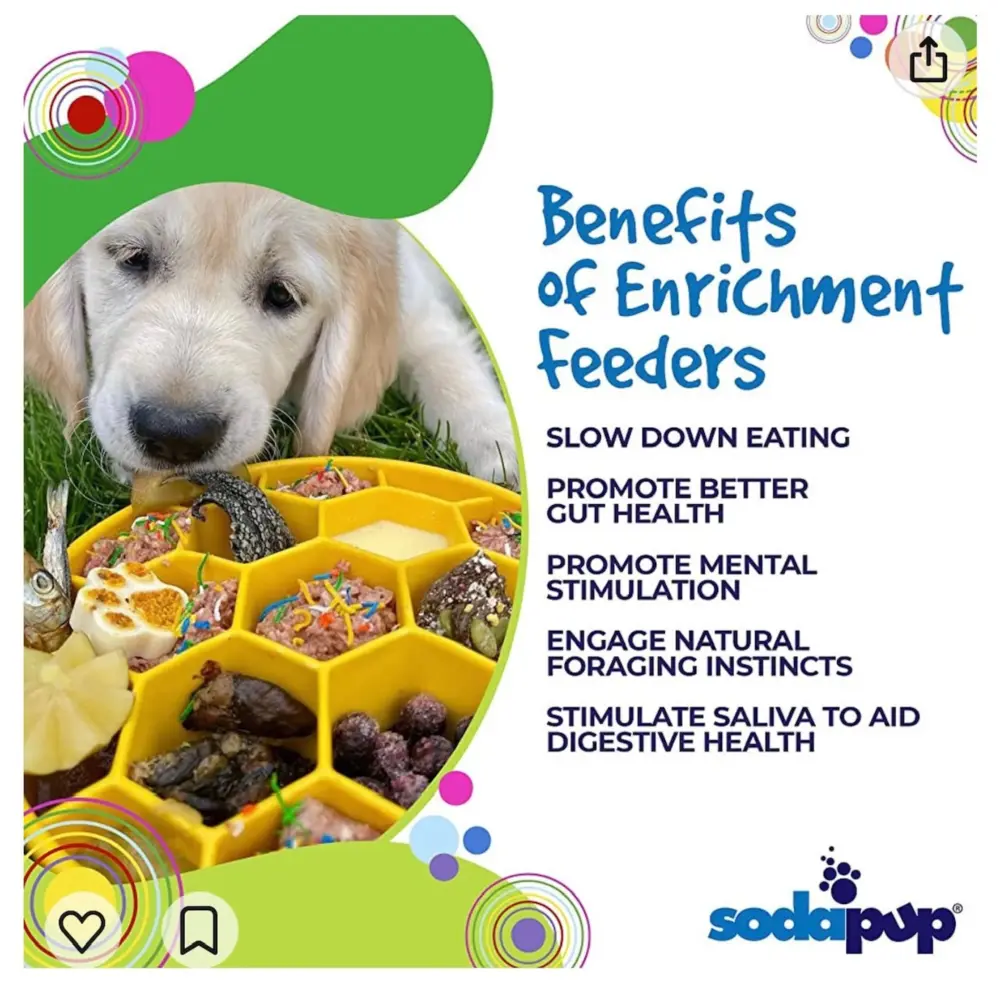
Serve dinner, or part of it, in a slow-feeder bowl in the nap area. Picking food out from between ridges takes longer than emptying a plain bowl, so the meal becomes a short, quiet job, followed by the potty trip and a nap. If your puppy gets frustrated and barks at the bowl or tries to flip it, serve part of the meal in a plain bowl for now.
-
SodaPup
Jigsaw Enrichment Lick Mat for Dogs & Cats, Choose color
$25.95
Why it fits: Turns part of the next meal into a slow licking job before a nap, as the jigsaw grooves hold soaked kibble or wet food. Dishwasher safe.
-
SodaPup
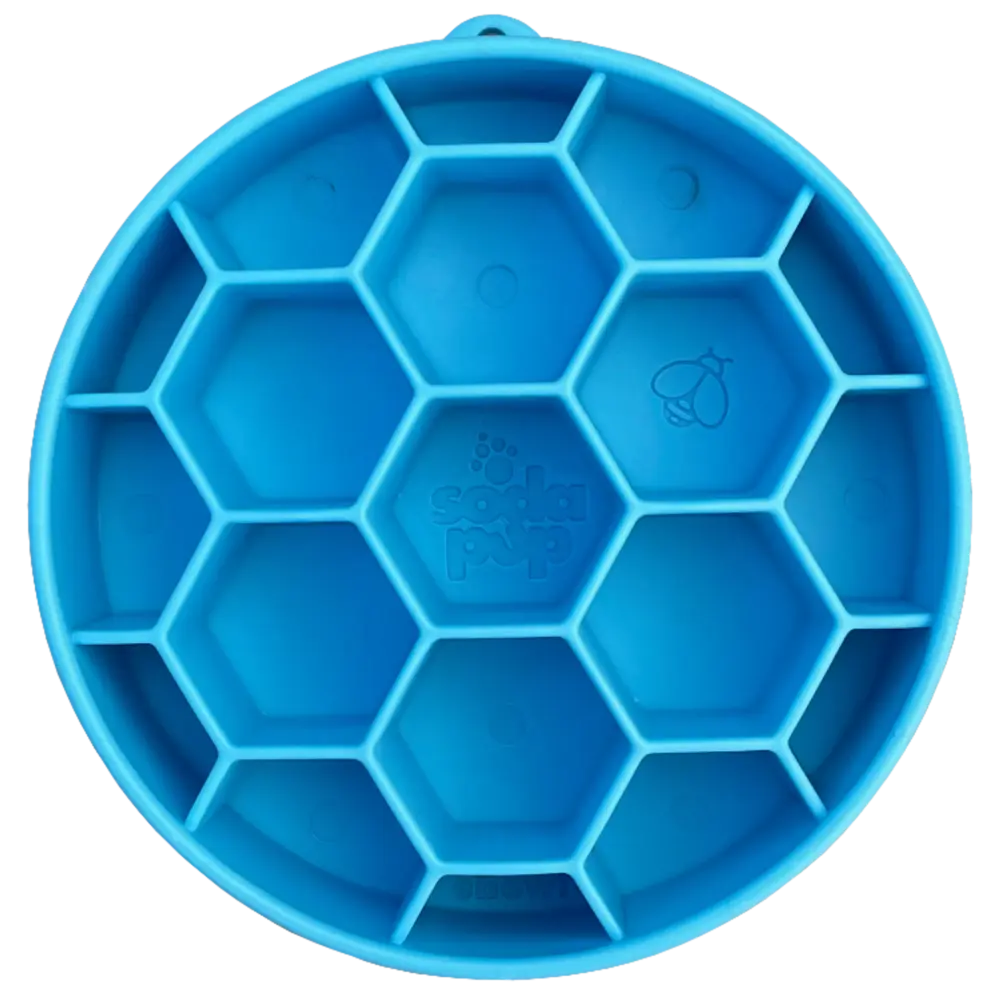
Honeycomb Slow Feeder Dog Bowl, View product
$30.95
Why it fits: Stretches dinner into a slow puzzle before the potty trip and nap, as honeycomb ridges spread the food out. Suits most dogs; dishwasher safe.


Keep both for wind-down time so they stay interesting, or browse more feeding and enrichment gear.
Safety note
Stay in the room during lick-mat and slow-feeder sessions, and pick them up as soon as your puppy stops eating. Puppies chew to explore, and a mat or bowl left down can become the next chew. Call your veterinarian if you think your puppy has swallowed a piece of anything.
A nap schedule around meals, potty trips and play
Rescuing a puppy from a wild spell works; preventing it works better. Build the day as a repeating loop around the potty points in VCA’s house-training guide: immediately after waking from a nap, after a meal or a big drink, every half hour during high-energy play and every one to two hours while awake. The loop itself is simple: wake and go out, eat if a meal is due and go out again, a short burst of play or training, a wind-down job, then a nap until your puppy wakes on their own.
Tip
For three days, jot down when your puppy wakes and when the nipping and zoomies begin. The gap is your puppy’s comfortable awake stretch. Start each wind-down a little before it runs out, and check again every week or two, because the stretch grows as your puppy does.
For a puppy whose notes show they come apart after about an hour awake, a day might look like this:
- 7:00 a.m. Wake, potty, breakfast in the slow feeder, potty again.
- 7:30 a.m. A short game and a minute of handling practice, then a sniffing job.
- 8:00 a.m. Nap in the pen. Repeat the loop through the day, with lunch at the usual time.
- 4:30 p.m. The late-afternoon nap. Protect it, since skipping it often sets up the evening wild spell.
- 6:00 p.m. Dinner, potty and a short, gentle game.
- 7:00 p.m. onward A licking job, quiet time in the pen and a calm last potty trip before bed.
Evenings deserve the most planning. Keep greetings at the door low-key, and finish the last game well before bedtime. For the night itself, our guide to getting a dog to sleep in their own bed covers a bedtime routine and where the bed should go.
Setting up a nap spot your puppy will use
- Quiet, not exiled. A corner of a room the family uses, away from the front door, the kitchen and the TV. Many puppies settle more easily within sight or earshot of someone.
- Small and enclosed. A crate or pen marks the place for sleep and stops a half-asleep puppy from wandering off to chew a cable.
- Out of drafts and heat. Away from floor vents, heaters and sunny windows.
- A partial cover. A light sheet over part of a crate cuts the view of a busy room. Leave the front open so air keeps moving.
- A no-wake rule. Children and visitors leave a sleeping puppy alone, in the pen or out of it. Every interrupted nap comes out of the evening.
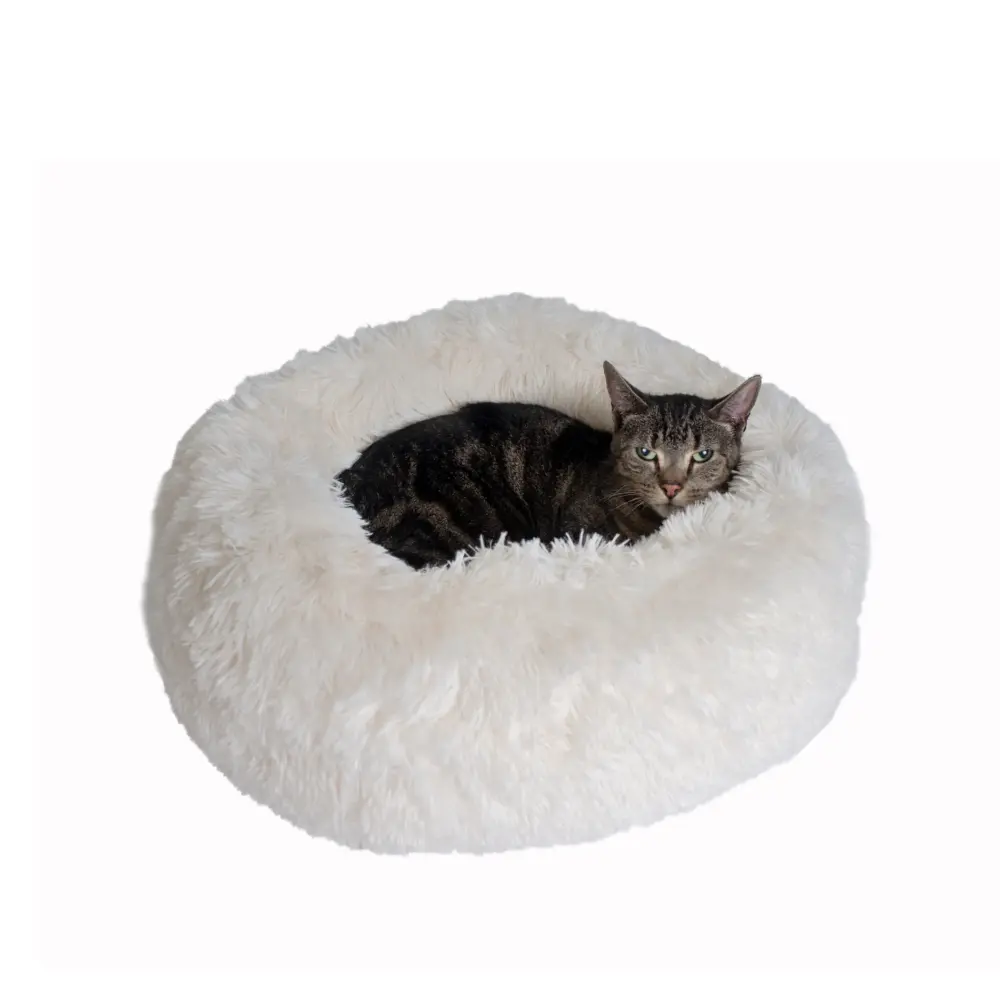
Water, toys and what to take out before the door closes are covered in what to put in a dog crate. Bedding for a growing puppy is mostly a question of chewing and accidents: plush tempts a teething puppy, and many puppies prefer to potty on soft surfaces, so start with a towel. For a small-breed puppy who sleeps curled up and has shown they leave bedding alone, the Armarkat Ultra-Plush Cuddler Bed has a raised rim to rest a head on and a water-resistant, skid-free base. It comes in Small (22 × 22 × 8 in) and Medium, is made for cats and small dogs only, and is machine washable on a gentle cycle. A larger-breed puppy will soon outgrow it, so stick with a towel in a crate sized for the adult dog, using a divider panel while they are small.
Habits that wind a puppy up even more
- Trying to wear them out. An extra round of fetch or a longer walk for a puppy who is already frantic tends to make things worse. Rest is what they need, and the AKC’s rule of thumb for walks is only about five minutes per month of age, once or twice a day.
- Long play with no breaks. End games while your puppy is still having fun, before they tip into grabbing and barking.
- Hands as toys. Wrestling and finger games teach a puppy that people are for biting, and a tired puppy finds that game hardest to stop.
- Passing the puppy around. Visitors and children who all want a turn can keep a puppy awake for hours. Let guests say hello, then give the puppy a nap.
- Using the pen as punishment. Scolding a puppy and then shutting them in teaches them to dislike the place they need for rest. Lead them in calmly with a piece of kibble.
Troubleshooting: when your puppy still won’t settle
- Cries as soon as you step away. Check for a potty need, water and a spot that isn’t too warm or drafty. Then sit beside the pen until your puppy settles, moving a little farther away over the next few days.
- Ignores the lick mat. Use a tastier part of the meal and leave a little extra on top at first, so your puppy works out what the mat is for.
- Chews the mat or the bedding instead. Pick it up, swap plush bedding for a towel or a bare tray, and offer a chew your veterinarian has suggested.
- Will only sleep on your lap. That’s fine some of the time, but practice pen naps too: move the pen next to your chair and lower your puppy in once they are drowsy.
- Wakes after a few minutes, wild again. Take them out for a quiet potty break, then straight back for more sleep, and cut the noise around the nap spot.
- Still restless after a long nap. This may be a puppy who needs more to do, not less. Try a short, sniffy walk or a training game before the next nap.
Crying that sounds frantic, with drooling, chewing at the bars or trying to escape, is more than a tired puppy protesting. Don’t punish it; ask your veterinarian or a qualified, reward-based trainer for help.
When restlessness is a reason to call your veterinarian
Most overtired puppies are healthy puppies with too much going on. But young puppies can get sick quickly, and restlessness or a change in sleep is sometimes the first thing you notice. Call your veterinarian if your puppy:
- can’t seem to get comfortable, cries when picked up or touched in one area, or limps
- pants or paces while resting in a cool room
- scratches, chews at their skin or shakes their head often enough to keep waking up
- has vomiting, diarrhea, coughing or a runny nose
- suddenly needs to pee far more often than usual
- seems frightened or frantic rather than playful, or bites hard enough to hurt despite a few weeks of consistent practice
Safety note
A puppy who is weak, floppy, very hard to wake or refusing food needs a veterinarian the same day. Don’t wait to see whether it passes.
Your veterinarian can rule out pain or illness and, if the cause is behavioral, refer you to a qualified trainer or a veterinary behaviorist.
Related guides
-
Guide
Bringing Home a Rescue Dog: Decompression and the First Weeks
Just adopted a dog who hides, skips meals or paces at night? Learn what decompression means and how long it can take, how to set up a quiet retreat and a predictable day, which stress signs to watch and when to call a trainer or veterinarian.
-
How-to
How to Stop a Dog Begging at the Table: A Mealtime Plan That Holds Up
Make the table stop paying: a no-scraps rule everyone keeps, your dog’s own dinner served as you sit down, a go-to-your-bed cue with a lick mat as the job, and a gate or tether while the habit forms.
-
How-to
How to Keep a Dog Busy While Working From Home: A Workday Plan
A workday plan for dogs whose people work from home: exercise before the first call, a bed beside the desk, a settle cue, quiet lick-mat jobs for meetings, short breaks, a calm fix for demand barking and practice at time apart.