Puppies & Kittens Guide
Puppy Enrichment Ideas: Sniffing, Licking, Chewing and Brain Games
Short answer
Give your puppy several short jobs a day, a few minutes each: sniffing out kibble, licking part of a meal off a mat, carrying a soft toy, exploring something new. End while they still want more, then let them nap. The best first food puzzles are kibble spread on a plate or soaked kibble on an unfrozen lick mat.
How much enrichment a puppy needs
Enrichment means giving your puppy something to do with their senses: finding food by scent, working it out of a groove, chewing, carrying and investigating. A young puppy needs those jobs in small doses, because rest takes up most of the day. The AKC’s guide to how much puppies sleep says they usually sleep 18 to 20 hours a day, and it suggests planning the day so active time is followed by quiet time for sleep.
So think in minutes, not hours. Several short jobs spread through the day suit a puppy better than one long session, and ending while your puppy still wants more makes the next round easy to start. A frozen lick mat may run longer, which is fine if your puppy is lying down to it. Short training counts too: a minute of sits, paid in kibble, is real brain work for a ten-week-old.
Watch your puppy rather than the clock:
- Too hard: barking at the puzzle, pawing at it, then walking away. Make the next round easier and let your puppy win.
- Too much: zoomies, harder nipping, grabbing sleeves or the leash, and no sign of settling. That puppy needs a nap, not another game; our guide on how to calm an overtired puppy covers the wind-down.
- About right: your puppy works at the job, finishes it and settles afterward.
Enrichment sits alongside walks, play with you and training; it doesn’t replace them.
Which food puzzles suit a puppy?
Meals are the easiest enrichment you have, since the food is already part of the day. Measure out the day’s food first and take puzzle portions from it, so nothing is extra; your veterinarian sets how much and how often your puppy eats. VCA’s advice on slowing down a puppy who eats too fast lists puzzle feeders, muffin tins, cookie sheets, slow-feeder bowls and handing out kibble during training, and warns that fast eating can cause stomach upset or more serious problems, such as inhaling food or bloat.
The right puzzle is one your puppy can win straight away. Work up in roughly this order, moving on only when the current step is easy:
- A flat plate or cookie sheet: kibble spread in one layer, so it can’t be gulped.
- A lick mat, unfrozen: soaked kibble or the usual wet food pressed into the grooves.
- A scatter on a rug: a small handful tossed across a low-pile rug or a clean floor.
- A slow-feeder bowl: ridges that make each mouthful take a little work.
- A frozen mat or bowl: the same food, frozen, once your puppy knows the tool.
- A muffin tin: kibble in a few cups, covered with toys too big to swallow.
Keep the menu simple. Sudden changes in diet can upset a young puppy’s stomach, so use food your puppy already eats and ask your veterinarian before adding spreads or treats. If you ever use peanut butter, check the label for xylitol, which is toxic to dogs. Our guide to what to put on a lick mat covers spreads, freezing times and cleaning, and food enrichment for dogs has more mealtime games for when your puppy outgrows these.
Chewing and carrying for a growing mouth
Puppies explore the world with their mouths, and the ASPCA’s advice on destructive chewing notes that teething brings an intense chewing phase that usually ends by about six months. Our puppy teething timeline sorts safe chews from risky ones. The short version, from VCA’s guide to teething and chewing: anything your puppy chews should bend, a rule VCA credits to veterinary dentists, so skip bones, antlers and hard nylon. Pick toys too big to swallow, size up as your puppy grows, and supervise even with recommended toys, since no toy is without risk.
We don’t sell puppy chews, so ask your veterinarian which kinds and sizes suit your puppy. Keep a few toys out and rotate them every couple of days, as the ASPCA also suggests; a toy that has been away for a while feels new again.
Carrying and gentle tug
Many puppies love to carry things, and a soft toy gives that urge somewhere to go. Praise your puppy for picking up their own toy, and trade a piece of kibble for anything they shouldn’t have instead of chasing them, which only turns it into a game. Tug is fine if you keep it gentle: hold the toy low, move it along the floor, let your puppy win often and stop the moment teeth touch skin. Baby teeth start falling out at about 12 to 16 weeks, so skip hard pulls while they’re loose.
The picks below come only from Nilosi’s own catalog, so they aren’t a survey of every puppy product out there. Three are food tools for the puzzle steps above and one is a soft toy for carrying. None of them is made for unsupervised chewing, so stay with your puppy and lift each one when the job is done. More options are in our feeding and enrichment range.
-
SodaPup
Jigsaw Enrichment Lick Mat for Dogs & Cats, Choose color
$25.95
Why it fits: An easy first food puzzle for a young puppy, since soaked kibble or wet food pressed into the jigsaw grooves gets licked out slowly.
-
Spunky Pup
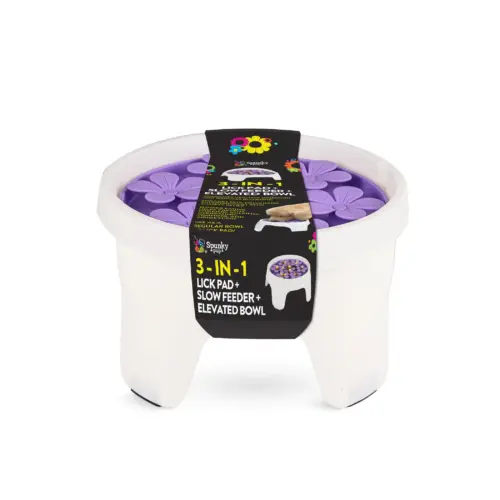
3-in-1 Lick Pad, Slow Feeder & Elevated Bowl, View product
$34.95
Why it fits: Two puzzle steps in one silicone piece: lick soft food off the pad, or use the slow-feeder side to stretch out part of a meal.
-
SodaPup
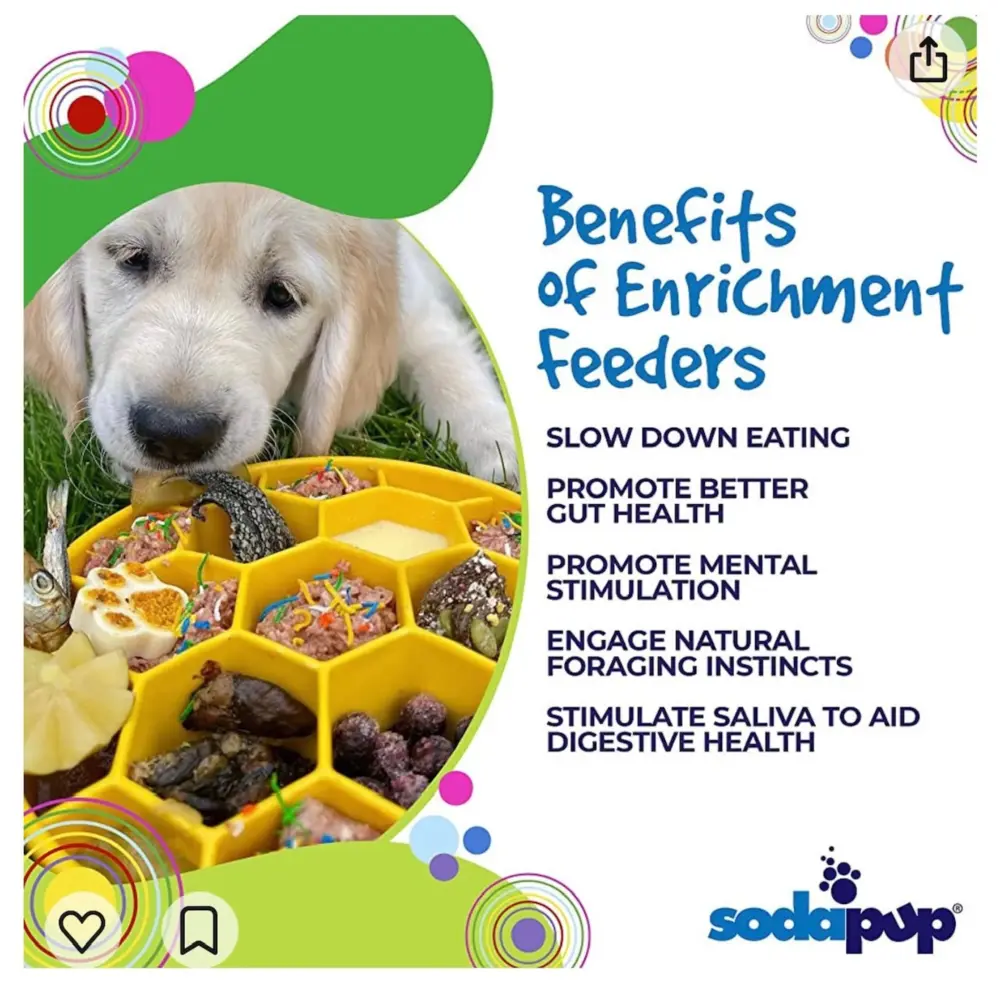
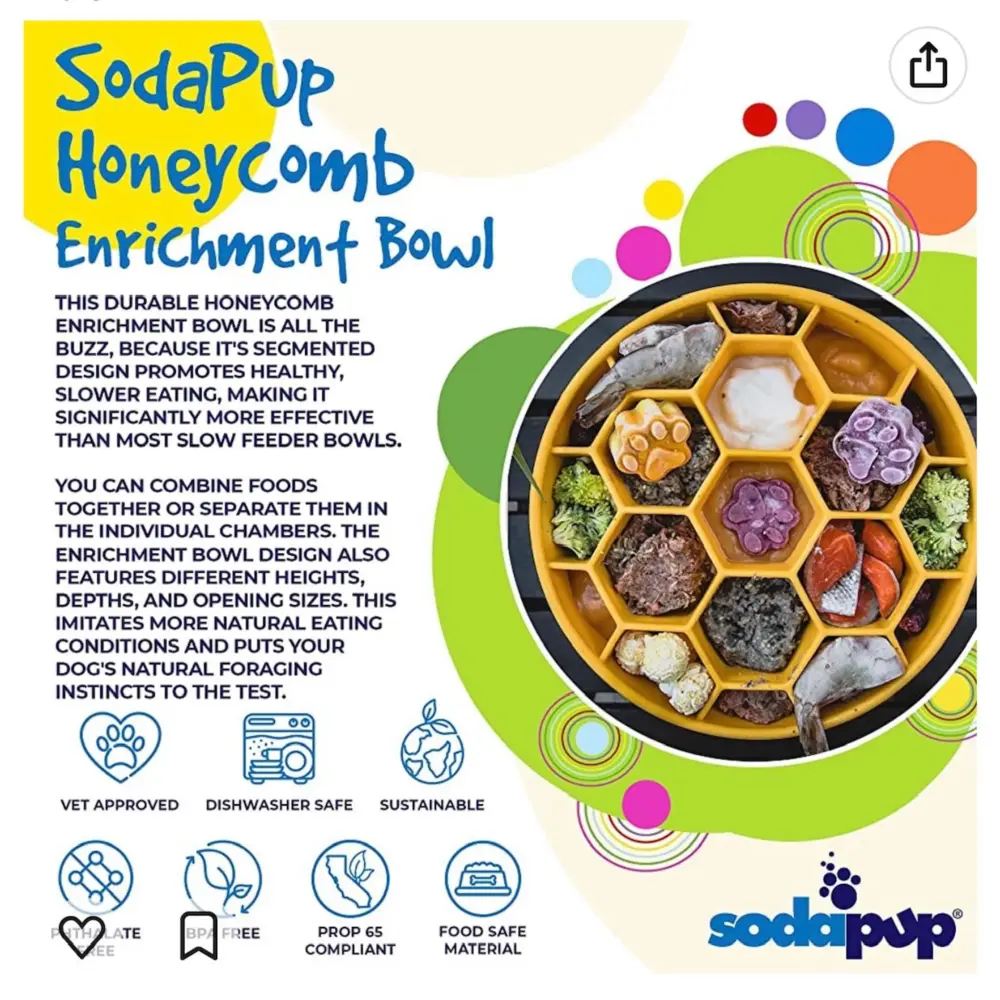
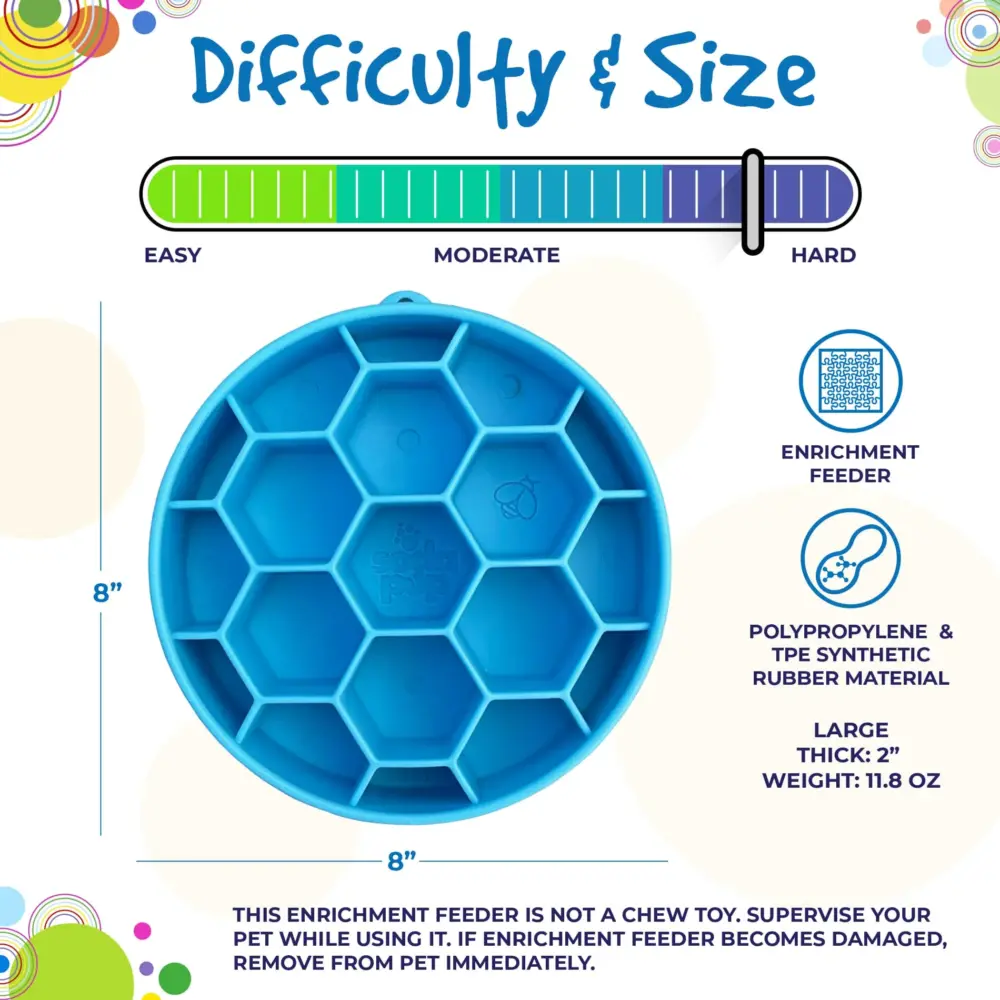
Honeycomb Slow Feeder Dog Bowl, View product
$30.95
Why it fits: A step up once the lick mat is easy, as the honeycomb ridges spread a soaked or frozen meal so it takes minutes, not seconds.
-
Realistic Plush Fox Dog Toy with Squeaker, View product
$30.95
Why it fits: A soft fox to carry and gently tug by its 6 in tail; best for gentle to moderate chewers, so supervise and remove it if damaged.



Sniffing games for small spaces
Sniffing gives a puppy real work in very little room, so these games suit an apartment kitchen or hallway as well as a yard.
- Find it. Say “find it” and set a piece of kibble by your puppy’s front paws, then a little farther away each time. Outdoors, a trainer quoted in the AKC’s guide to mental and physical exercise for puppies suggests a “sniffari”: kibble tossed in the yard for your puppy to hunt out.
- Scavenger box. The same trainer suggests hiding food in an egg carton, a rolled-up dish towel or crumpled paper. Skip paper, cardboard and towels if your puppy eats them rather than tearing them.
- Hide-and-seek. One person gently holds the puppy while the other steps just around a doorway and calls once. Reward the find with a piece of kibble, and keep early hiding places easy.
- Hallway trail. While your puppy waits behind a gate, lay three or four pieces along the floor, then let them follow it. Add pieces or a turn as they get faster.
Tip
The first round of any new game should be almost too easy. Let your puppy watch you place the first piece, then change one thing at a time: farther away, out of sight, then around a corner.
New surfaces and objects to explore
Something new to investigate is enrichment too, and in the early months it doubles as socialization. The veterinary behaviorists who wrote VCA’s guide to socialization and fear prevention put the sensitive period for socialization at about 3 to 16 weeks. They advise starting at a comfortable distance from anything that might frighten your puppy and letting them set the pace. Turned into short games, that looks like this:
- A texture trail. Lay a bath mat, a folded towel, a flattened box and an upturned baking sheet in a row and scatter kibble along it. Mix in whatever floors you have: carpet, tile, wood.
- Object of the day. Set one new, harmless thing on the floor, such as a laundry basket on its side or a closed umbrella, with a piece of kibble beside it. Let your puppy approach on their own.
- Handling for kibble. Touch a paw or an ear for a second, then give a piece of kibble. A few repetitions are plenty.
Keep everything flat or low. The AKC advises restricting repeated jumping while a puppy’s bones and ligaments are still maturing, so this is a walk-across trail, not an agility course.
If your puppy trembles, refuses treats or tries to pull away, VCA advises taking them somewhere they feel safe rather than pushing on, and asking a professional for guidance. Try again another day from farther away, or with a smaller version of the same thing. For people, sounds and carried outings while vaccinations are under way, follow our checklist on how to socialize a puppy before vaccinations.
Keeping a puppy busy while you work
A young puppy can’t entertain themselves through a workday, but a simple setup lets you work in short blocks while they nap and do quiet jobs nearby. Our guide to keeping a dog busy while working from home covers the daily schedule, a settle cue and jobs for meetings. For a puppy, add these:
- A puppy area in view of your desk: a pen, a gated corner or a crate your puppy already likes, with a bed and water.
- A puppy-proofed floor. The ASPCA suggests keeping shoes and clothing in a closed closet, laundry in a hamper and books on shelves. Tuck cords out of reach too.
- A job set down before the call, such as a lick mat or a slow-fed portion of the next meal. Handing it over once the whining starts teaches your puppy that whining works.
- Breaks between blocks: a potty trip, a two-minute sniffing game, then back to the pen for a nap.
- A cleared pen when you leave the room. Lift food tools and any toy your puppy could chew apart, and leave the bed and water.
Most of a young puppy’s workday is sleep, so book focused calls for nap times and save enrichment for the awake gaps.
Puppy enrichment safety rules
- Supervise every session. Take a mat or bowl away if your puppy gnaws the edge, and throw out anything cracked, torn or missing pieces.
- Take portions from the daily food, and ask your veterinarian before adding anything new.
- Retire outgrown or damaged toys. A toy that was too big to swallow at ten weeks may not be at five months.
- Wash food tools after every use. Food dries in the grooves of mats and ridged bowls; all three food tools above are dishwasher safe.
Safety note
If you think your puppy has swallowed part of a toy, a mat, fabric or cardboard, call your veterinarian right away, even if they seem fine. The same goes for vomiting, retching, a lost appetite or a tender belly after a chewing session.
A sample enrichment day for a young puppy
Here is one way to spread the jobs across a day for a puppy of about ten to sixteen weeks. Each job lasts a few minutes, and a potty trip and a nap follow almost every one.
| When | Enrichment job | What it works |
|---|---|---|
| Morning | Part of breakfast on the lick mat | Licking, lying down |
| Late morning | Find it on a rug | Nose |
| Midday | Texture trail baited with kibble | Paws and confidence |
| Afternoon | Carrying the soft toy, gentle tug | Mouth |
| Late afternoon | A minute of sits for kibble | Brain |
| Dinner | Spread on a plate or in the slow feeder | Nose and patience |
| Evening | Paw and ear touches, then bed | Calm handling |
Swap jobs freely and drop any your puppy doesn’t enjoy. What matters is the variety, nose one time and mouth the next, with plenty of sleep in between. As your puppy grows, the awake stretches get longer and the puzzles can get harder: a frozen mat, a wider scatter, a trail around two corners.
Related guides
-
Guide
Enrichment for Dogs on Crate Rest: Quiet Jobs Within the Vet’s Rules
Strict rest after surgery or an injury is hard on an active dog. Here are quiet jobs that fit the usual vet rules, from lick mats and slow meals to scent games within reach of the bed, lying-down tricks and gentle toy time if allowed, plus the signs that mean it's time to call the vet.
-
How-to
How to Introduce a Puppy to an Older Dog: First Meeting to First Month
A leashed first meeting on neutral ground, then gates, pens and short visits at home. How to keep meals, toys and rest separate, what normal growling from an older dog looks like, and when to separate the dogs and call for help.
-
Comparison
Slow Feeder vs Lick Mat: Which One Does Your Dog Need?
A slow feeder stretches out a meal; a lick mat fills time and settles a dog. Buying the wrong one for the problem is the usual mistake. This comparison covers both, including the dogs who defeat them.