Toys & Play Guide
Enrichment for Dogs on Crate Rest: Quiet Jobs Within the Vet’s Rules
Short answer
Give your dog jobs for the nose and mouth that can be done lying down: a lick mat or a slow-feeder meal, a few treats hidden within reach of the bed, and short lying-down tricks. Keep potty trips brief and on leash, skip fetch, tug and stairs, and check each new activity with your veterinarian first.
What exercise restriction usually means
Veterinarians restrict exercise to protect a surgical incision, let a bone heal, settle an inflamed back, or lower the risks during treatment for conditions such as heartworm disease. The details depend on the reason, but VCA Animal Hospitals’ guide to exercise restriction in dogs sets out the usual basics:
- Leash only. Every trip outside is on a leash, including into your own yard, so you can stop a sprint or a jump before it starts.
- Several short walks, not long ones. On strict rest, that may mean just long enough to go potty.
- No fetch, tug or roughhousing. That includes rough play with other pets, so you may need to keep them apart for now.
- One floor, no jumping. No stairs, and no hopping on or off the sofa, the bed or the car seat.
- A crate or small room, if prescribed. Confinement keeps activity down between outings.
Your veterinarian’s instructions always come first: strict crate rest after spinal or orthopedic surgery can be far tighter than this list, and other cases only call for a quieter routine. If your dog slips the leash or leaps off the bed anyway, VCA says to call your veterinarian, who may suggest watching at home or a recheck exam.
Tip
Ask before you leave the clinic, or on the follow-up call: how long the rest lasts, how long each potty trip can be, whether your dog may sit, stand or walk around the room, whether the cone can come off for meals, and whether there are any food, treat or chew limits. Post the answers on the fridge so everyone in the house follows the same rules.
Swap busy games for quiet ones
On rest, boredom itself is rarely the real risk; what boredom turns into is. A restless dog spins in the crate, bounces at the door when you come home and launches off the bed at the doorbell. Aim for a busy brain in a still body: jobs that use the nose, the mouth and your dog’s attention while the legs stay folded.
| Usual fun | Rest-time swap | Ask your vet about |
|---|---|---|
| Walks | Brief leash potty trips, slow sniffs | How long and how often |
| Fetch | Which-hand game from the bed | Whether sitting up is allowed |
| Tug | A lick mat, licked lying down | Licking after mouth surgery |
| Treat balls | Treats placed within reach | Treat amounts and diet |
| Couch time | A floor bed beside the sofa | Lifting your dog up or down |
| Visitors | Crate time with a quiet job | When greetings can resume |
Put rolling treat toys and puzzles that need pawing away for now; they get a dog up and chasing. Spread three or four short jobs through the day instead of one long one, timed for the hardest moments, such as after a potty trip or when the house is busiest. A dog who dozes off afterward has had a good session.
Food jobs: lick mats and slow meals
Licking and eating are the easiest jobs to fit inside a crate: neither needs your dog to walk anywhere, and both can take minutes instead of seconds. Use the food your dog already eats, and take every lick-mat spread and training treat out of the day’s portion.
Lick mats
Press a thin layer of wet food, soaked kibble or plain pumpkin purée into the grooves and set the mat where your dog can reach it without getting up. Stay close while your dog works on it, and pick it up once it’s licked clean or as soon as your dog starts chewing it. A mat frozen overnight lasts longer, so save one for the hardest stretch of the day, often the busy evening. Our guide to what to put on a lick mat has spreads, amounts and freezing times. A mat won’t stop a dog from licking the incision, so keep the cone on as directed.
Slow meals
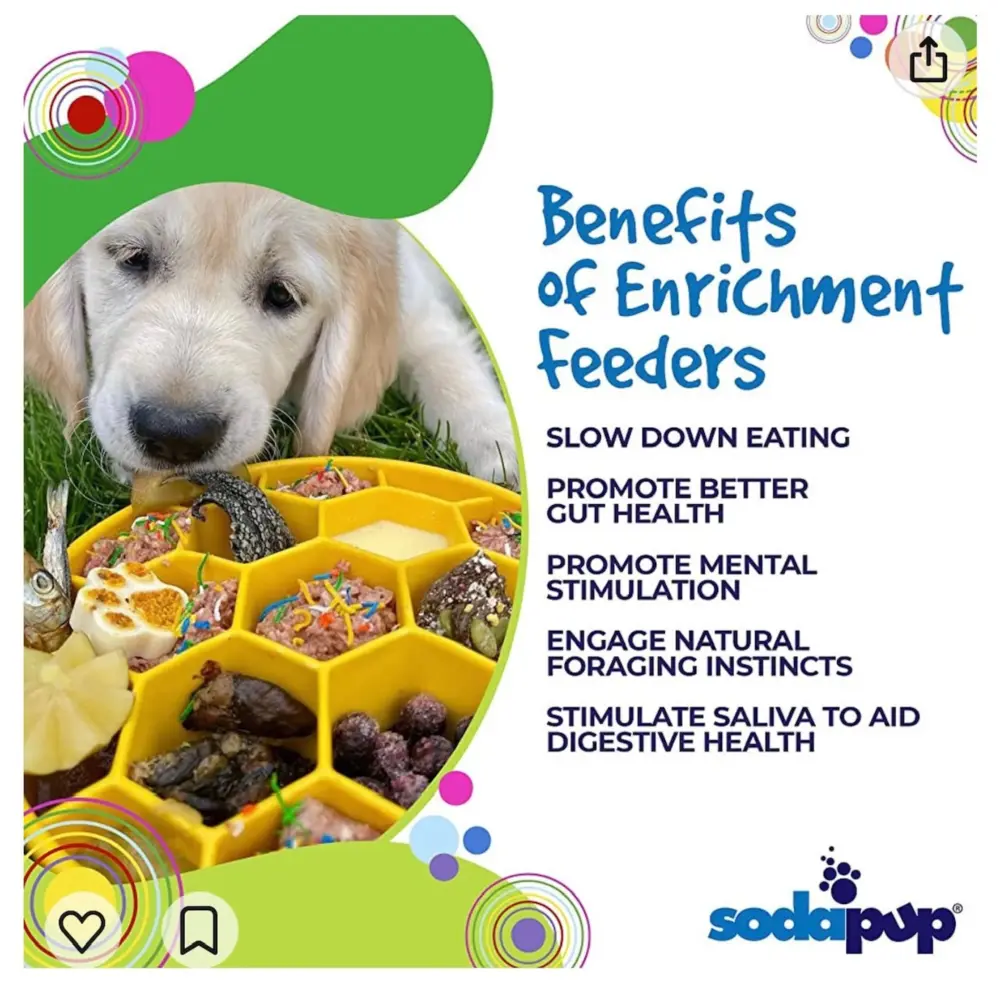
A slow-feeder bowl spreads a meal across ridges, so dinner becomes several minutes of nose-down work instead of a few gulps. Load it loosely the first time, so the early bites come easily and your dog doesn’t paw at the bowl. Once your dog is allowed to move around again, food enrichment for dogs has more ways to turn meals into jobs.
Two feeding tools that suit crate-side jobs, picked from Nilosi’s catalog only:
-
SodaPup
Jigsaw Enrichment Lick Mat for Dogs & Cats, Choose color
$25.95
Why it fits: A job your dog can do lying flat in the crate; the jigsaw grooves hold a thin layer of the usual wet food, and it is dishwasher safe.
-
SodaPup
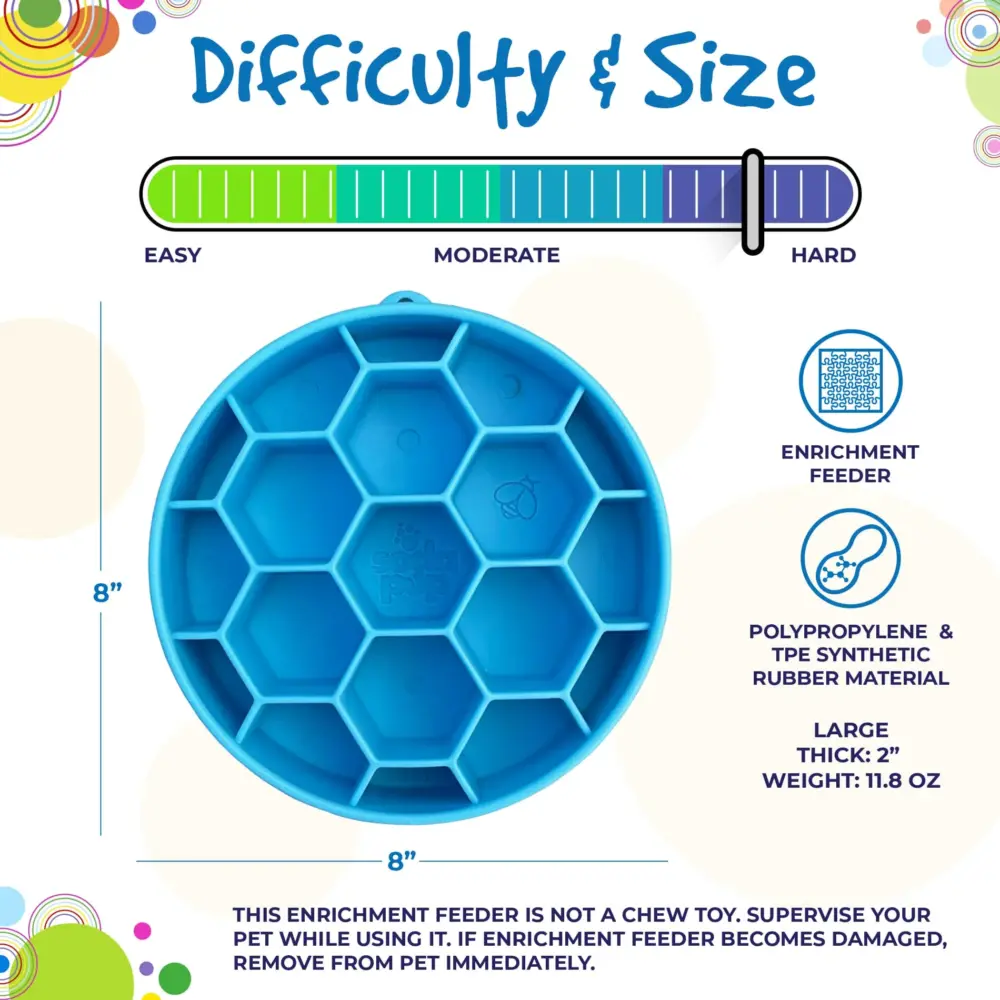
Honeycomb Slow Feeder Dog Bowl, View product
$30.95
Why it fits: Stretches dinner into minutes of quiet work without leaving the crate; the deep honeycomb ridges take kibble, wet food or a frozen mix.


Portions and recovery diets
A dog who is moving much less may need less food, and some dogs come home on a bland or prescription diet. Ask your veterinarian how much to feed while activity is limited, use any prescribed food on the mat and in the bowl, and check before offering anything frozen or textured after dental or mouth surgery.
Eating with a cone on
VCA’s guide to Elizabethan collars in dogs says a properly sized and fitted cone lets a dog eat and drink normally. If a deep bowl is a struggle, try a shallow dish or plate; VCA adds that raising the food or water helps some dogs. A flat lick mat works much like that plate, and if the cone’s rim still catches, hold the mat steady at nose height. The Spunky Pup 3-in-1 Lick Pad works as a lick pad or a slow feeder and flips into an elevated bowl; ask your veterinarian whether a raised bowl suits your dog.
Take the cone off for a meal only if your veterinarian says it’s fine. VCA advises supervising your dog the whole time and putting the cone back on as soon as the meal is finished.
Nose work from the bed or crate
Sniffing is real mental work that needs almost no movement, which makes it a good fit for strict rest. The trick is to bring the search to your dog instead of sending your dog on the search. Use small, soft treats from the daily ration, and put every one where your dog can reach it with a stretch of the neck, never a scramble.
- Which hand? Close a treat in one fist, hold both fists at your dog’s nose and open the one your dog nudges. After a wrong guess, make the next round easier.
- A trail at the crate door. Sit by the open door and lay three or four treats in a short line on a towel, close enough to follow by nose without standing.
- A folded towel. Fold a few pieces of kibble into a small towel by your dog’s front paws to nose open. Skip it if your dog chews fabric.
- New smells, brought in. Let your dog sniff a jacket you wore to the park, a paper grocery bag or an unopened delivery box, then take it away before it gets chewed.
- A view, if allowed. With your veterinarian’s okay, a leashed rest on a mat by a screen door lets your dog watch and smell the world. Skip it if passersby set off barking or lunging.
Stop after a handful of finds, while your dog still wants more. If your dog keeps trying to stand or lunges for treats, make the next game slower and closer, or save nose work for after a potty trip, when your dog is more settled.
Calm handling and lying-down tricks
Short training sessions count as mental work too, as long as your dog stays lying down for them. Keep each session to a minute or two, use a quiet voice, and stop before your dog gets excited.
- Look at me. Reward a second of eye contact, then two, then five.
- Chin down. Lure your dog’s chin to the floor between the front paws and reward the moment it rests there. In time it can become a cue to settle in the crate.
- Reward relaxation. Quietly drop a treat between the paws whenever your dog sighs, rolls onto one hip or rests their head without being asked. It teaches that calm pays.
- Practice recovery handling. Touch the collar and the cone’s edge, touch around the mouth as you would to give a pill, and reward each calm second, so medicine time and cone checks get easier. Leave the incision and any sore area alone.
Skip anything that needs standing, repeated sits, spinning, rolling over, sitting up to beg or offering the operated leg for a paw shake. If your veterinarian or a rehabilitation therapist prescribes home exercises, do those exactly as shown, and don’t add your own variations.
Many dogs also enjoy slow, gentle strokes along the back and chest while they lie quietly. Keep away from the incision and any sore spots, and stop if your dog tenses, moves away or turns to look at your hand. For an older dog, many of these lying-down games carry on long after recovery; enrichment for senior dogs has more.
Soft toys and gentle play, if allowed
Some dogs on rest are allowed a toy and some are not, so ask first. When a toy is allowed, choose a soft one that’s easy to hold, and let your dog mouth and carry it while lying down. The usual rules still apply: no tossing, no chasing and no tug, not even gentle tug.
Our Realistic Plush Fox Dog Toy is soft enough to hold and mouth; its long tail is made for tug, so save that game until your dog is cleared. Its squeaker winds some dogs up, so if yours gets excited by squeaks, offer it only at quiet times or choose a toy without one. It’s meant for gentle to moderate chewers: supervise, and take it away if it’s damaged.
Two or three toys rotated through the week hold more interest than a pile in the crate. Ask your veterinarian before offering long-lasting chews, especially after dental, mouth or stomach surgery.
A rest spot near the family
Many dogs settle better where they can see and hear their people. Put the crate or pen on the main floor, in a room the family uses, but away from the front door and any window that sets off barking.
- Room to turn. Your dog should be able to turn around and lie down with the cone on; VCA notes that cones make tight spaces hard for many dogs at first. If the rim catches, ask your veterinarian about a bigger crate or a pen.
- Washable bedding, plus a spare for laundry day. Our checklist of what to put in a dog crate covers bedding, cool layers and what to leave out.
- Non-slip floors. Lay rugs or runners from the crate to the door, so potty trips don’t involve skidding on tile or wood.
- Leash on before the door opens. Clip it on while your dog is still in the crate and unclip it once they’re back inside; the moment the door opens is when a dog is most tempted to leap.
- Quiet comings and goings. Greet your dog once they’re settled, ask visitors to do the same, and keep other pets and children from winding your dog up at the crate door.
- Gated stairs. Block them, and ask your veterinarian how to manage any steps between the door and the potty spot.
Working from home? Set the crate where your dog can see your desk. Keeping a dog busy while you work from home has a timetable of quiet jobs for meetings, but skip its walk-first plan until your veterinarian lifts the restriction.
Boredom or pain? When to call the vet
Whining, pacing and restlessness can be boredom, but they can also be pain, and a recovering dog can’t tell you which. VCA’s page on how to tell if your dog is in pain lists signs that include:
- Pacing or restlessness, as if your dog can’t get comfortable
- Whining or whimpering while trying to settle
- Heavy panting while resting
- Licking or chewing obsessively at one area
- Eating or drinking less, trembling legs, or reluctance to get up
If quiet jobs don’t settle your dog, or any of these signs appear, call your veterinarian rather than adding more games. Call too if your dog gets loose and runs or jumps, or if keeping your dog still is proving impossible. A slightly pink incision is normal for the first few days, but VCA’s guide to caring for surgical incisions says to call right away about swelling, more than mild redness, discharge, a bad smell or missing stitches. Your veterinarian can review pain relief and talk through other options, which may include medication to help a dog rest.
Safety note
Enrichment fills the hours; it doesn’t speed healing or replace the treatment plan. Follow the rest schedule to the end, even if your dog seems recovered sooner, and let your veterinarian decide when activity can go back up.
Related guides
-
Guide
Puppy Enrichment Ideas: Sniffing, Licking, Chewing and Brain Games
Short, puppy-sized jobs for the nose, mouth and brain: which food puzzles suit a young puppy, sniffing games for small spaces, chewing and carrying, new surfaces to explore, a setup for work hours and a sample day built around naps.
-
Guide
Toys for Dogs Who Destroy Toys: Choosing by Chewing Style
Shredder, tugger, carrier or steady chewer? Match toys to your dog's play style, see where fire hose and plush fit, play tug with rules and know when to retire a worn toy.
-
Comparison
Slow Feeder vs Lick Mat: Which One Does Your Dog Need?
A slow feeder stretches out a meal; a lick mat fills time and settles a dog. Buying the wrong one for the problem is the usual mistake. This comparison covers both, including the dogs who defeat them.