Food Enrichment for Dogs: 8 Ways to Turn Mealtime Into Brain Work
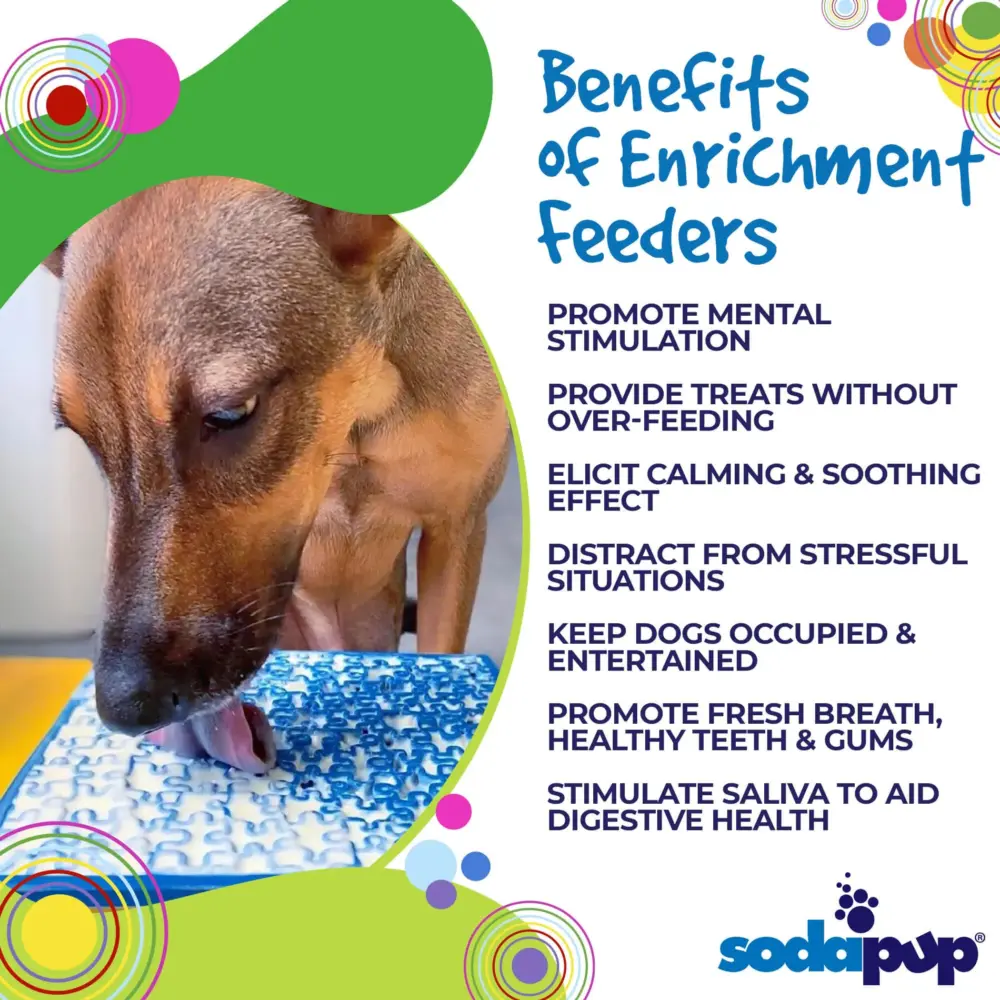
Food enrichment for dogs means letting your dog sniff out, unroll, lick or puzzle out part of the food it already eats each day, instead of finishing it from a bowl in a few gulps. The easiest versions cost nothing: scatter kibble across a clean floor or lawn, roll it into an old towel, or hide it for a find-it game. A lick mat or a ridged bowl adds variety once your dog has the idea.
Short answer: feed part of the daily ration through a job instead of a bowl
- Use the food your dog already eats. Measure the day’s portion, then set some aside, so nothing is extra.
- Start easy. Your dog should win the first game in seconds.
- One enrichment meal a day is a realistic routine. The other can go in a normal bowl.
- Stay nearby, and put towels, boxes and mats away once the food is gone.
Why food enrichment works for dogs
Dogs are built to find food with their noses and work a little to get it. A bowl removes that job, and dinner can be gone in seconds. Moving part of the meal into a search, a lick or a simple puzzle gives your dog a few minutes of focused work with food it was going to eat anyway.
Veterinary nutrition professionals writing for VCA describe the same idea in their article on enriching a pet’s environment with its food, from scattering kibble to filling a muffin tin. It fills a few quiet minutes on busy mornings and short-walk days, but it adds to walks and play rather than replacing them; on stuck-inside days, pair it with our indoor games for dogs on cold, dark or rainy days.
Food enrichment for dogs: eight ideas, easiest first
Each of these food enrichment ideas for dogs uses part of a normal meal. Try them roughly in order, since the early ones teach your dog that searching pays off.
- Scatter feeding: toss kibble across a clean floor, rug or lawn.
- Find it: toss single pieces on a cue, then hide a few out of sight.
- Rolled-towel snuffle: roll kibble into a towel for your dog to unroll.
- Muffin tin puzzle: cover kibble-filled cups with toys too big to swallow.
- Cardboard puzzle: fold kibble into a small box or a paper towel tube.
- Earn it: pay one piece of dinner kibble for each sit, down or touch your dog already knows.
- Lick mat: press the wet-food part of a meal into the grooves.
- Slow-feeder or frozen bowl: spread a meal across ridges, or freeze a wet mix.
Adjust the order to suit your dog:
- Eats wet food only: start with the lick mat or a slow-feeder bowl, since scattering, towels and find-it games need dry kibble.
- Chews or swallows fabric or cardboard: skip towels and boxes, and stick to floor games and purpose-made tools.
- Puppy: easiest versions only, a few minutes at a time, with you right beside it.
Scatter feeding: pros, cons and where to do it
Scatter feeding is the simplest way of feeding your dog without a bowl: throw dry food in a wide arc and let your dog’s nose do the rest. It costs nothing and turns a two-gulp meal into slow, nose-down searching. Start on a kitchen floor, where pieces are easy to spot, then move to a rug or grass to make it harder.
What to watch for:
- It works only with dry food; wet food belongs on a mat or in a bowl.
- Outdoors, pick a patch free of lawn treatments, droppings, mushrooms and litter, and skip it if your dog eats grass, stones or soil.
- Check the area afterward, since missed pieces attract ants and wildlife.
- With two or more dogs, scatter in separate rooms, and skip it if either dog guards food.
Indoors, a washable bath mat or a low-pile rug hides each piece a little and shakes out afterward.
Towel snuffles and find-it games: free ideas from the kitchen drawer
The rolled-towel snuffle
- Lay an old towel flat and sprinkle a small handful of kibble across it.
- Roll it loosely from one short end, or just fold it in thirds the first time.
- Let your dog nose and paw it open. If your dog stalls, flick back a corner.
- Make it harder over time: roll more tightly, tie the roll in a loose knot, or tuck it into a box.
Skip towel games if your dog chews or swallows fabric.
Find-it games
Say “find it” and toss one piece of kibble where your dog can see it land. After a few repeats, toss pieces behind a chair leg or around a doorway. Once your dog searches eagerly, have it wait in another room while you lay a short trail at nose height or lower, then give the cue. Keep hiding spots low, and away from stairs, breakables and gaps under heavy furniture.
Muffin tins and cardboard
Put kibble in some cups of a muffin tin and cover them with toys or balls too large to swallow, so your dog has to lift each one off. The ASPCA’s DIY enrichment projects for dogs include this one, plus nested boxes and folded paper rolls, and stress close supervision. Use cardboard only if your dog tears it without eating it, clear the scraps away afterward, and stop if your dog swallows any.
When a tool helps: lick mats, slow feeders and frozen meals
Free ideas handle dry food well. For wet food, or a dog who has beaten every towel, a purpose-made tool earns its place. Each of the three below is dishwasher safe, and you’ll find them in our feeding and enrichment collection.
- SodaPup Jigsaw Enrichment Lick Mat: a jigsaw texture that holds soft food and slows licking, which suits the wet-food part of a meal. Made in the USA by SodaPup; suits dogs of all sizes and cats.
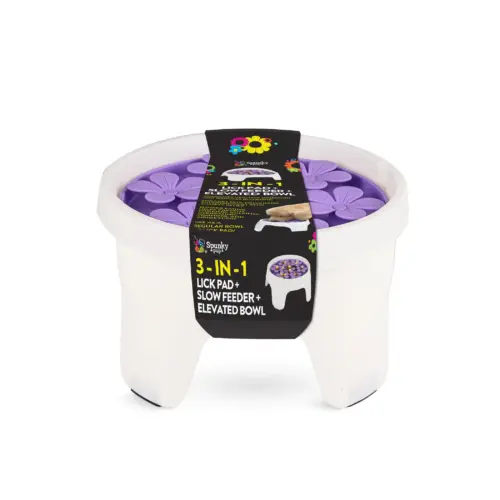
- Spunky Pup 3-in-1 Lick Pad, Slow Feeder & Elevated Bowl: one piece of food-grade silicone that works as a lick pad, a slow feeder or an elevated bowl. Ask your veterinarian whether a raised bowl suits your dog.
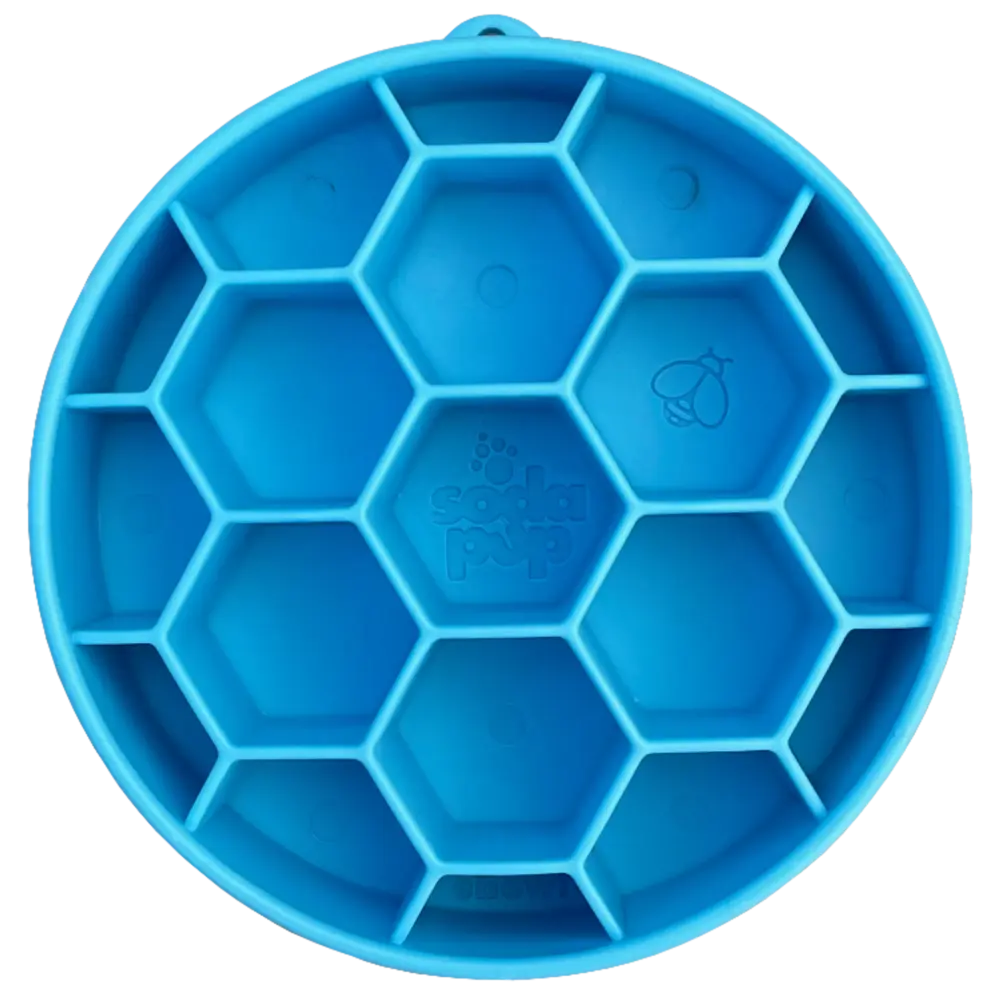
- SodaPup Honeycomb Slow Feeder Dog Bowl: a deep bowl whose honeycomb ridges spread a meal out, with room for kibble, wet food or a frozen mix. Made in the USA by SodaPup; suits most dogs.
Frozen meals usually last longest: press soaked kibble or wet food into a mat or the eBowl and freeze it. Freezing times and foods to leave off are in our guide to what to put on a lick mat, and how long to freeze it. Use each tool unfrozen at first so your dog learns how it works.
-
SodaPup
Honeycomb Slow Feeder Dog Bowl
$30.95
-
Spunky Pup
3-in-1 Lick Pad, Slow Feeder & Elevated Bowl
$34.95
-
SodaPup
Jigsaw Enrichment Lick Mat for Dogs & Cats
$25.95


If the real problem is a dog that inhales every meal, see how to slow down a dog that eats too fast, or browse all our feeding and enrichment guides.
A weekly rotation that keeps it interesting
A puzzle your dog solves on autopilot stops being much of a puzzle, so rotate mealtime enrichment through the week. Turn one meal a day into a job and serve the other as normal.
- Monday: scatter breakfast on the lawn or a rug.
- Tuesday: a towel snuffle with part of dinner.
- Wednesday: a lick mat with the wet-food portion.
- Thursday: a find-it trail through two rooms.
- Friday: dinner in a slow-feeder bowl.
- Saturday: a muffin tin or cardboard puzzle.
- Sunday: a frozen mat or bowl, loaded the night before.
Swap days freely and drop anything your dog doesn’t enjoy. Add difficulty one step at a time: a wider scatter, a tighter roll, more covered cups. Older dogs often do better with low, slow options; our guide to enrichment for senior dogs has gentler versions.
Safety: supervision, portions and cleaning
Supervision
Stay in the room for any game with a towel, cardboard, a mat or a puzzle, and put it away once the food is gone. Lick mats and bowls are for licking and eating, not chewing: take a mat away if your dog gnaws the edge, and throw out any mat or bowl that is cracked, torn or missing pieces. Call your veterinarian if a piece goes missing and you think it was swallowed.
If your dog barks at a puzzle, gives up or digs at the floor, make it easier and end on a quick win.
Portions
Measure the whole day’s food first and take enrichment portions out of it. Spreads such as xylitol-free peanut butter or plain yogurt add calories, so keep them thin or trim the next meal. Ask your veterinarian to set the daily amount, especially for puppies, seniors and dogs on a weight-loss or prescription diet.
Cleaning
Wash mats and ridged bowls after every use, before food dries in the grooves, and launder snuffle towels often; our guide on how often to wash dog bowls, slow feeders and lick mats covers the corners. If your dog suddenly loses interest in food, vomits or seems unwell, stop the games and call your veterinarian.
For a toy that combines three of these jobs, how to use a dog enrichment tube walks through the first session and how to raise the difficulty without losing the dog.
Food enrichment FAQ
Can I use my dog’s regular kibble for enrichment?
Yes, and it’s the best place to start: kibble suits scattering, towels, find-it games and muffin tins, and wet food suits a lick mat or frozen bowl. Using the usual food keeps the diet unchanged.
Is scatter feeding good for dogs?
For most dogs it’s a simple, free way to slow a meal down and give the nose a job. Choose a clean spot, check for leftovers, and feed dogs apart if any of them guards food.
How often should I do food enrichment?
Daily is fine, and one enrichment meal a day is realistic for most households. Rotate a few ideas so no game becomes automatic, and use a normal bowl on busy days.
How much of my dog’s daily food can go into enrichment?
There’s no set share. Start with a handful and work up to a whole meal if your dog enjoys it; VCA’s veterinary nutrition writers say some or all of the daily food can be used. It should come out of the daily amount, not on top of it, so ask your veterinarian how much your dog should eat in total.
Related guides
-
Comparison
Slow Feeder vs Lick Mat: Which One Does Your Dog Need?
A slow feeder stretches out a meal; a lick mat fills time and settles a dog. Buying the wrong one for the problem is the usual mistake. This comparison covers both, including the dogs who defeat them.
-
How-to
How to Teach a Dog to Wait for Their Food Bowl, Step by Step
Lower the bowl only while your dog stays sitting, then release them to eat. This step-by-step plan uses your dog’s own meals and covers longer waits, distractions, jumping, barking and lunging, multi-dog kitchens, and what to do if your dog guards the bowl.
-
How-to
How to Stop a Dog Begging at the Table: A Mealtime Plan That Holds Up
Make the table stop paying: a no-scraps rule everyone keeps, your dog’s own dinner served as you sit down, a go-to-your-bed cue with a lick mat as the job, and a gate or tether while the habit forms.