Indoor Games for Dogs: Ways to Burn Energy on Cold, Dark or Rainy Days
The most useful indoor games for dogs are tug, soft-toy fetch down a hallway, hide-and-seek, find-the-toy and five-minute trick sessions. On a cold, dark or rainy day, combine one active game, one nose game and a few tricks, then finish with something calm. Keep each part short and play on a surface with grip, and you can tire out many dogs without leaving the house.
Short answer: one active game, one nose game and a calm finish
- Move. Five to ten minutes of tug or soft-toy fetch down a hallway, with pauses.
- Sniff. Hide-and-seek or find-the-toy, even in one room.
- Think. A five-minute trick session with small, soft treats.
- Settle. A lick mat or a rest on their bed.
- Stay safe. Grip underfoot, no games on the stairs, and stop before your dog gets frantic.
Before you play: floors, space and session length
Start with the floor. Hardwood, tile and laminate give paws little grip, so a dog who sprints, skids or turns sharply can slip and twist. Play on carpet or a rug, or lay a non-slip runner down the hallway you use for fetch. Long nails and long fur between the paw pads make slipping worse, so keep both trimmed.
Then clear a space. Move breakables off low tables, pick up shoes, cords and children’s small toys, and keep chasing games away from the stairs.
Keep sessions short: five to ten minutes of active play at a time, with breaks, rather than one long, frantic session. Puppies do best with short bursts, and senior dogs and flat-faced breeds tire or overheat faster, so keep their games shorter and gentler, and leave water out. Avoid boisterous play straight after a big meal: large, deep-chested dogs are the most prone to bloat, so ask your veterinarian how long to wait. Check with them, too, before adding active games if your dog is stiff, limping or reluctant to jump.
Tug and hallway fetch with a soft toy
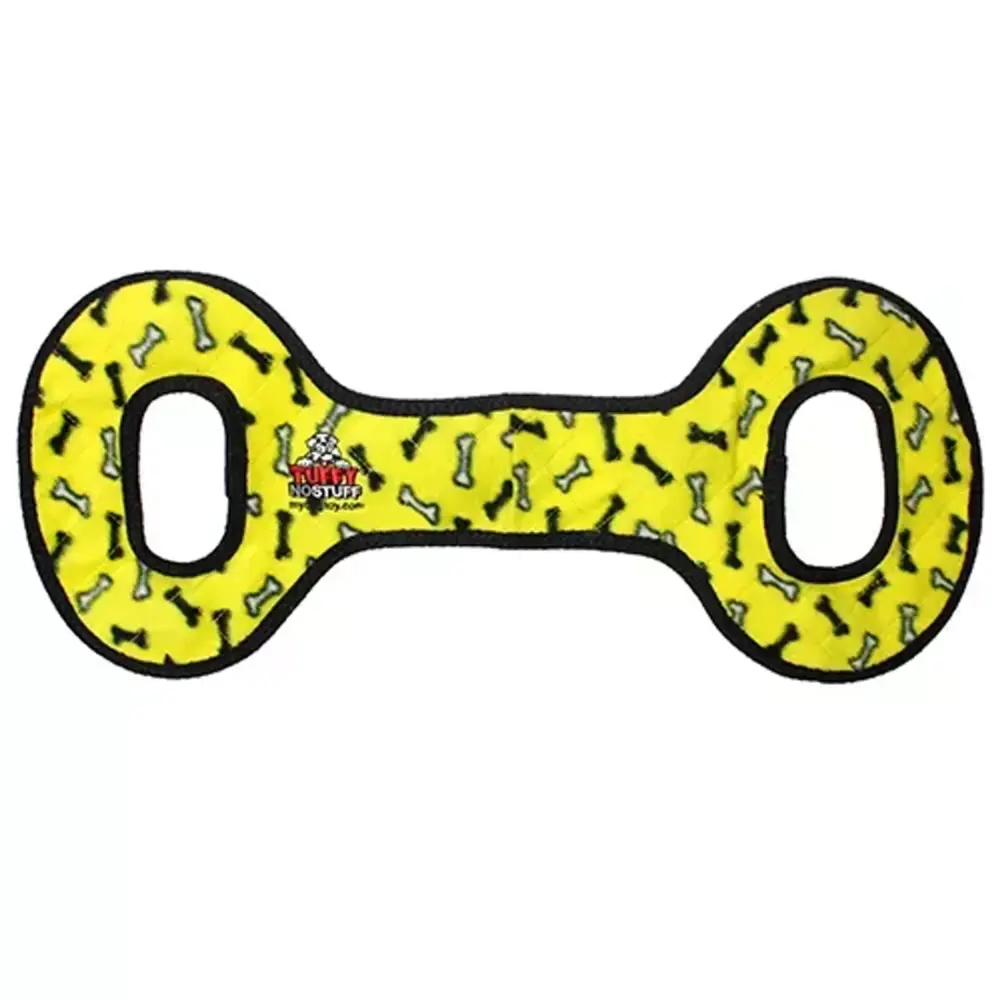
Tug is one of the easiest ways to burn energy in a small room, because your dog works hard without needing space to run. Play it with rules: you start and end the game, pull side to side at your dog’s height, and pause the moment teeth touch skin. Our guide to toys for dogs who destroy toys covers tug house rules and teaching a drop cue step by step.
A long toy keeps your hands farther from your dog’s mouth. The Fire Hose Crocodile Tough Dog Toy is about 26 inches long, made from real fire-hose material and stuffing-free, so nothing scatters across the floor, and its squeakers keep squeaking even after a puncture.
Hallway fetch on carpet or a runner
Fetch works indoors if you keep it low and short. Use a soft toy rather than a ball, which bounces and rolls under furniture.
- Pick a hallway or a long room with carpet or a runner, and stand at one end.
- Ask for a sit, then roll or toss the toy low along the floor, a few yards at most. High throws invite leaping and awkward landings.
- When your dog brings it back, trade it for a treat or a second toy rather than pulling it from their mouth.
- Stop after eight to ten throws, or sooner if your dog starts skidding on turns.
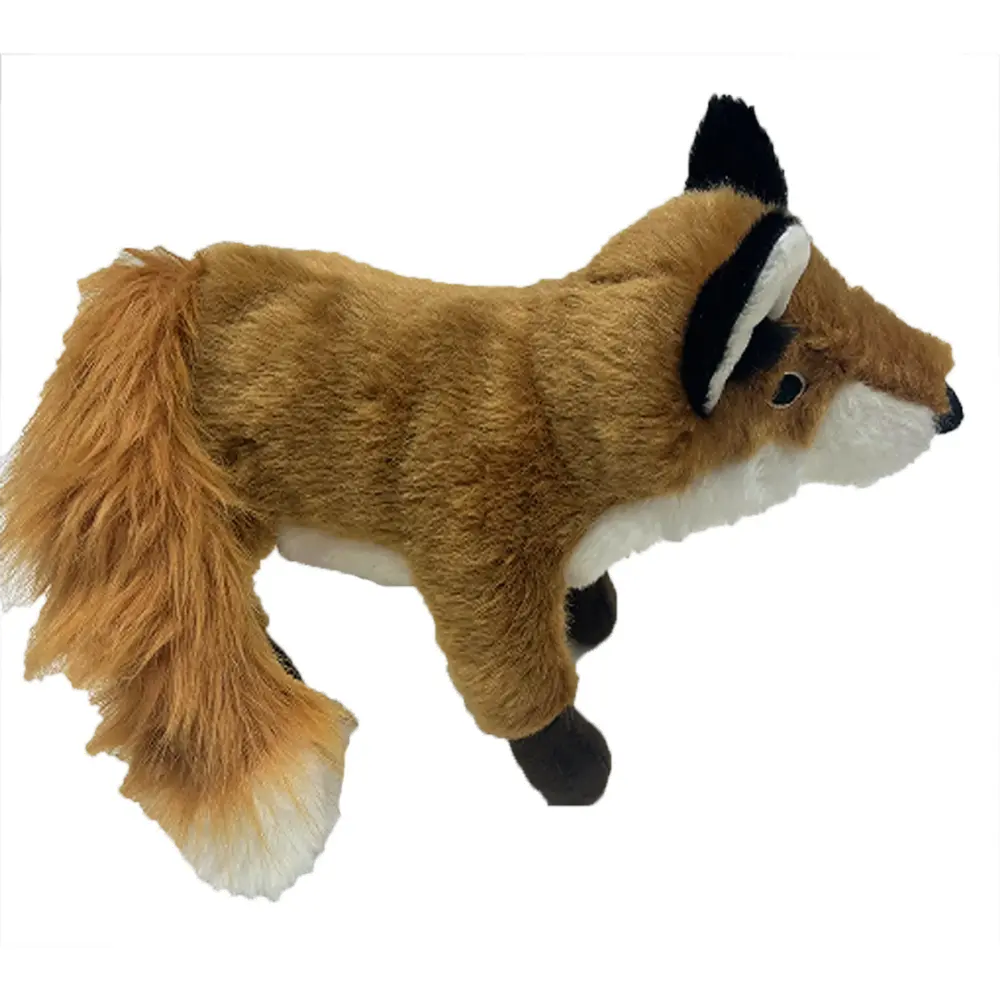
The Realistic Plush Fox Dog Toy with Squeaker is a good size for this: soft, about 10 inches from head to rear plus a 6-inch tail, with a squeaker in the body. It suits gentle to moderate chewers and dogs who like to carry toys; a dog who shreds plush is better off fetching the crocodile. No toy is indestructible, so supervise play with either one, put it away once the game ends and retire it if it is damaged. Both sit in our range of squeaky tug toys for dogs.


Hide-and-seek and find-the-toy: nose games for small spaces
Nose games are among the best rainy day activities for dogs, because searching takes concentration but very little room. They also tend to settle a dog rather than wind them up.
Hide-and-seek
- Ask your dog to sit and stay, or have a helper hold them gently by the harness.
- Step just around a corner, still close by, and call your dog’s name once in a happy voice.
- When your dog finds you, reward with a treat, praise or a quick game.
- Hide a little farther each round: behind a door, in the shower, in another room.
- Keep the hiding places easy enough that your dog succeeds almost every time.
Every find is also practice at coming when called.
Find-the-toy
- Show your dog a favorite toy, put it on the floor a few feet away in plain sight, say “find it” and celebrate when they pick it up.
- Next, place it half-hidden, behind a chair leg or under the edge of a towel.
- Once your dog has the idea, hide it while they wait in another room, then send them to search.
- Work up to hiding spots across two or three rooms, and help with a hint if they get stuck.
You can play the same game with a few pieces of kibble, one of the simplest kinds of food enrichment for dogs. Count any food used in games as part of the daily amount. On Halloween night, a find-it game in a back room keeps your dog busy away from the doorbell; see our Halloween safety tips for dogs.
Five-minute trick sessions
Learning something new is real work for a dog, and it needs no more space than a rug. Keep each session to about five minutes, use small, soft treats or pieces of kibble, and end on a success.
A hand target, where your dog touches their nose to your palm, is an easy first trick:
- Hold your flat hand a few inches from your dog’s nose.
- The moment their nose touches it, say “yes” and give a treat.
- Repeat five to ten times, then add the word “touch” just before you offer your hand.
- Move your hand a little higher, lower or to the side, so your dog has to walk to reach it.
Once that is reliable, try a spin in each direction, a paw or “go to your bed.” If your dog gets frustrated, go back to a step they know and finish there.
Winding down after play
Many dogs stay excited after a game, so end play on purpose instead of letting it fizzle. Heavy panting, slowing down, lying down mid-game or getting frantic and mouthy all mean it is time to stop. If your dog keeps panting hard long after a short game, wobbles or seems unwell, call your veterinarian.
- Put the toys away so the game has a clear end.
- Offer water and lower your voice.
- Ask for an easy cue, such as a down on their bed.
- Give your dog something slow to do while you sit nearby.
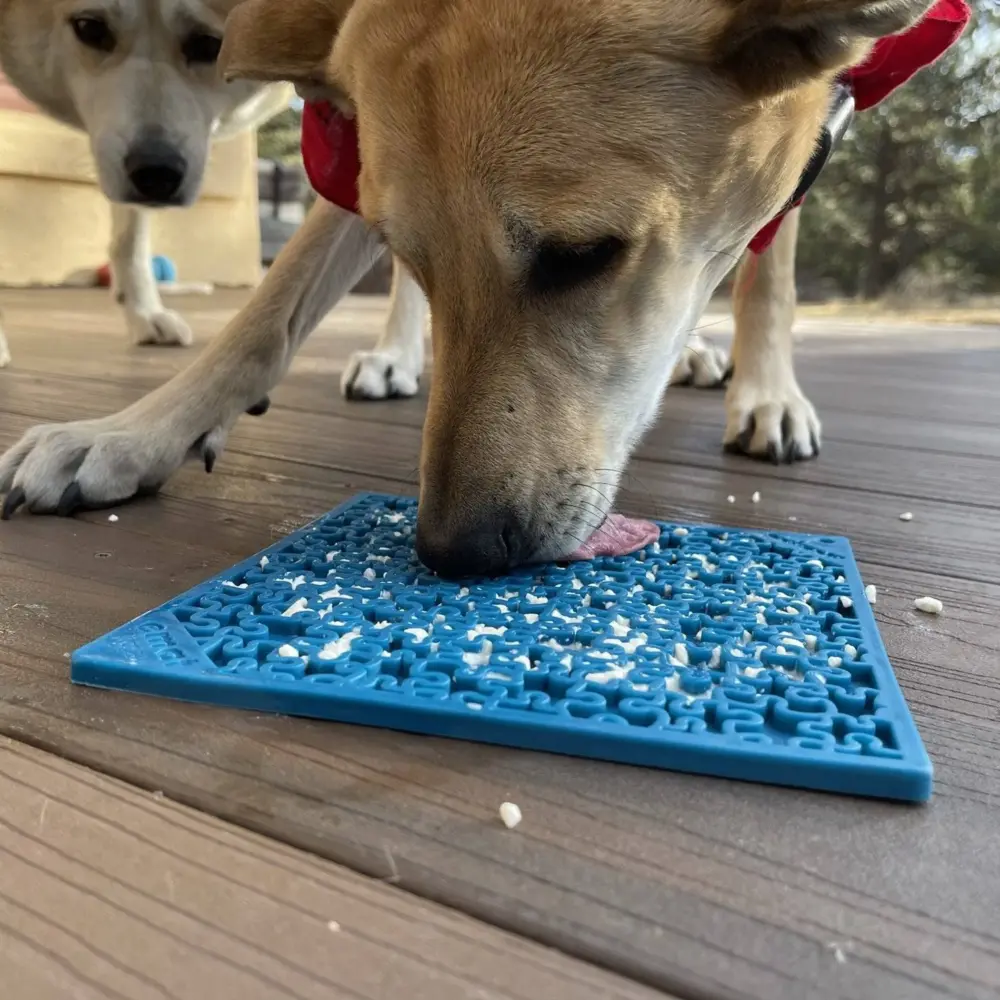
A lick mat spread with something soft gives many dogs a slow, quiet job at the end of play; our guide to what to put on a lick mat has spread ideas and tips on freezing and cleaning.
Indoor games for dogs: a 30-minute rainy-day plan
This plan strings the games together, so you are not improvising every time you need to keep your dog busy on a rainy day. It is also a simple way to exercise a dog indoors in winter, after the clocks go back in early November and dark evenings or icy sidewalks cut walks short.
- Warm-up, about 5 minutes. A slow lap of the house and a few easy cues your dog already knows, such as sit and down, for treats.
- One active game, 5 to 8 minutes. Tug or hallway fetch, with a pause every minute or so for a sit or a drop.
- One nose game, about 8 minutes. Hide-and-seek or find-the-toy.
- A trick round, about 5 minutes. One new trick, or polish an old one.
- The calm finish, 5 minutes or more. A lick mat or a rest on their bed while you sit nearby.
Split it into a morning and an evening block if that suits your day, and adjust the times to your dog’s age and energy.
If a short wet walk is still possible, go first and play after. When walking a dog in the rain, keep to a short route and leave a towel by the door. For freezing days, see how cold is too cold to walk a dog. You can find more ideas among our toy and play guides.
Indoor play FAQ
How do I tire out my dog indoors?
Combine a short active game with work for the brain: five to ten minutes of tug or hallway fetch, then a nose game and a few minutes of trick training. Finish with something slow so your dog can settle.
Is it OK to skip a walk and play indoors instead?
On the odd bad-weather day, yes: indoor games can make up for a short or missed walk. For most dogs they are not a full replacement, because walks bring bathroom breaks and new places to sniff, and the American Kennel Club’s guide to how much exercise a dog needs treats mental stimulation as a complement to physical exercise, not a substitute. If age or a health problem keeps your dog from walking, ask your veterinarian what activity suits them.
Does mental stimulation tire a dog out?
It often does. Searching for a hidden toy or working out a new cue takes concentration, and many dogs are ready to rest after a few minutes of it. Keep brain games short and use them alongside physical activity, not instead of it.
What can I do with a high-energy dog in an apartment?
Lean on games that need little space: nose games, trick training and short tug sessions on a rug, which also muffles thumps for the neighbors below. Add short outings whenever the weather allows. If your dog stays restless or becomes destructive despite daily play, ask your veterinarian or a certified trainer for help.
Related guides
-
Comparison
Stuffed vs Stuffing-Free Dog Toys: Which Lasts, Which Is Safer
Both are plush toys, and they fail in completely different ways. This comparison covers why dogs gut a stuffed toy, what stuffing-free versions gain and lose, how layer counts change durability, and which one suits the way your own dog plays.
-
Guide
Why Does My Dog Bring Me Toys? What It Means and How to Respond
A toy at the door is usually a greeting, an invitation to play or both. Learn to tell which, when to play, say hello or trade, and what to do when it turns into demand play or keep-away.
-
Guide
Why Do Dogs Like Squeaky Toys? And How to Keep Squeaker Play Safe
A squeak sounds like small prey and goes off the instant your dog bites, so every chomp pays off. Why some dogs squeak for hours or whine with a toy, what to do about a dog who digs out the squeaker, how to choose a squeaky toy and how to live with the noise.