Walking a Dog in the Rain: Gear, Short Routes and Drying Off at the Door
Walking a dog in the rain is fine for most healthy dogs: keep the walk shorter, pick a route with some cover, make sure drivers can see you both, and dry your dog off at the door before they reach the sofa. During thunder and lightning, stay in and play instead.
Short answer: shorter walks, be seen, and dry off before your dog reaches the sofa
- Go, but go shorter. A brief loop to sniff and relieve themselves is enough; make up the rest indoors.
- Pick a sheltered route. Tree-lined streets and covered walkways, close to home.
- Be seen. Reflective gear on both of you, and a light in your hand.
- Keep a hand free. A zippered pouch on the leash holds the full bag until the bin.
- Dry off at the door. Paws, then legs and belly, then the coat.
- Skip the puddles. Standing water can carry bacteria, so offer fresh water at home.
- Wait out storms. Thunder or lightning means play inside, with only the quickest bathroom break by the door.
Should you walk your dog in the rain?
For most dogs, yes. Rain doesn’t change their need to relieve themselves, stretch and sniff, and a healthy dog copes well with ordinary rain. What changes is how long you stay out and how well you dry off.
Small dogs, dogs with short or thin coats, puppies and seniors get chilled faster once wet. Keep their outings brief, and head home if they shiver, slow down or keep turning back. Cold rain and ice are covered in our guide to how cold is too cold to walk a dog. If your dog has a health condition, ask your veterinarian.
Steer your dog away from puddles and standing water. Puddles collect runoff from roads and lawns, and still water can carry leptospira, bacteria shed in animal urine that spread more easily after heavy rain, as Cornell’s overview of canine leptospirosis explains. Offer fresh water at home, and ask your veterinarian whether the leptospirosis vaccine suits your dog.
When your dog won’t go out in the rain
Plenty of dogs stop dead at the door when they see rain: wet paws and water on the face are things a dog may simply dislike. Dragging them out tends to make the doorway something they dread, so build up in small, rewarding steps:
- Open the door while it rains and reward your dog for calmly looking out.
- Step out together under a porch or an umbrella held over your dog, and reward each step onto the doorstep.
- In light rain, scatter a few treats on the damp grass by the door and let your dog find them.
- Take a short trip to the usual bathroom spot, reward the moment your dog finishes and go straight back inside, so a quick trip out becomes the habit.
- On each wet day, add a little more distance as your dog relaxes.
The American Kennel Club’s advice on training a dog to walk in rain or snow follows the same pattern: short first outings, plenty of rewards and gear introduced gradually at home. If your dog trembles, hides or panics rather than just hesitating, ask your veterinarian or a certified trainer for help.
Walking a dog in the rain: routes, timing and covered spots
How to walk a dog in the rain comes down to three choices: when you go, where you go and what is underfoot.
Timing: lulls, daylight and split walks
Check the forecast or a radar app and aim for a lull between showers. Once the clocks go back in early November, many after-work walks happen in the dark, so use the last of the daylight when you can. Two short outings can replace one long one.
Routes and covered spots
Choose a short, familiar loop near home so you can turn back if the rain picks up. Tree-lined streets, covered walkways and building overhangs take the edge off a shower. Some owners use a dog-friendly store on a wet day; check its pet policy first.
Footing, sniffing and the leash
Wet leaves, painted road markings, metal grates and smooth paving get slippery; slow down and favor grass or rough paving. Near roads, use a fixed-length leash rather than a retractable one. On quiet stretches, let your dog sniff: a slow, sniffy loop often satisfies a dog more than a fast march.
Gear for wet, dark walks: visibility and a zippered bag pouch
Rain and darkness cut what drivers can see. Reflective material only shines back when headlights hit it, so carry a flashlight or headlamp and wear a light-colored or reflective layer yourself.
The Mr. Peanut’s PetTrek Padded Reflective Dog Harness & Leash Set has reflective stitching on both pieces, padded oxford nylon, quick-release buckles and adjustable straps, in sizes XS to Large. After a wet walk, hang both to air-dry at room temperature, away from a heater.
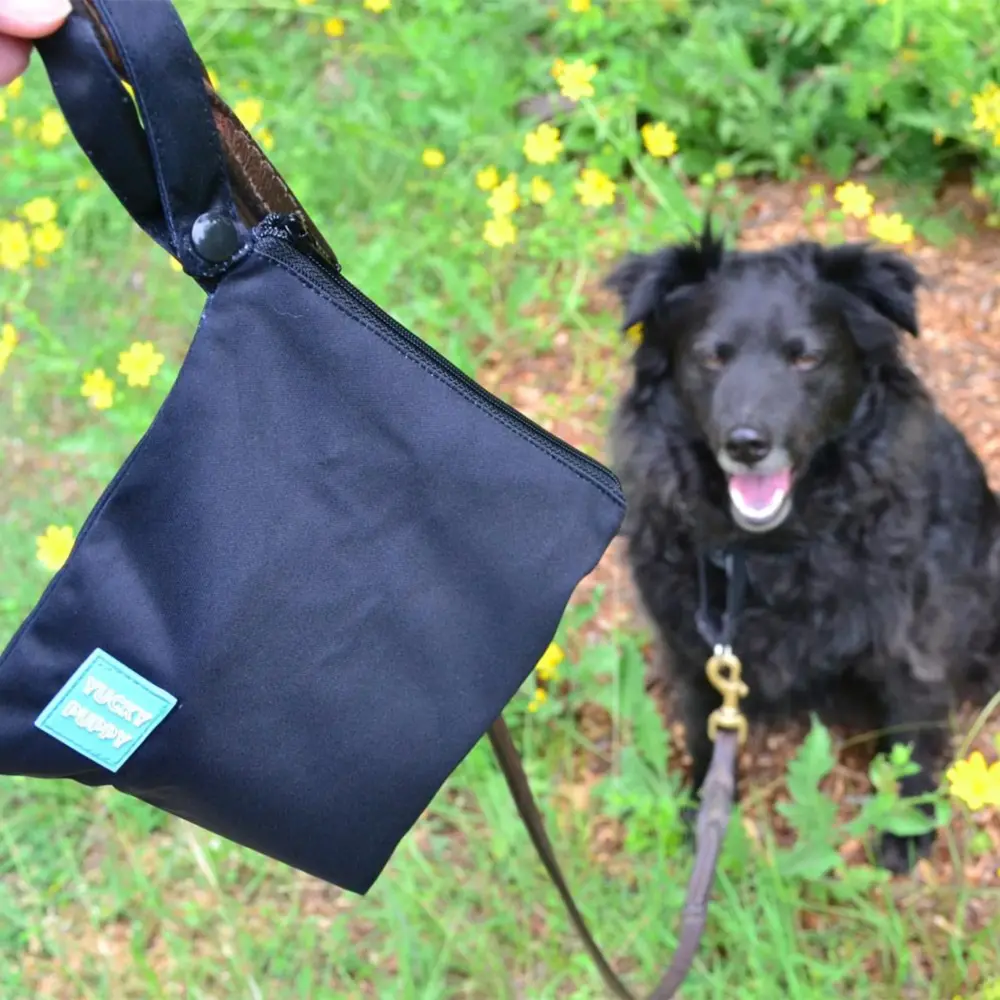
Your hands are the other problem: with the leash in one and a hood or umbrella to manage, a full poop bag has nowhere to go. The Yucky Puppy Waterproof Poop Bag Holder is a zippered pouch in waterproof PUL fabric with a snap loop for the leash, a belt or a stroller; it wipes clean and is machine washable. The extra-large size, about 6.75 × 9.25 in, comes as a set of two, so check the size option before ordering.
For the rest of your kit, see our dog walking essentials checklist, browse more walking and training gear, or read more walking guides.
-
Mr. Peanut’s
PetTrek Padded Harness and Leash Set
Price range: $24.95 through $26.95
-
Yucky Puppy
Waterproof Poop Bag Holder
Price range: $23.95 through $24.95


Drying off at the door: paws, belly, then coat
Here is how to dry a dog after a walk in the rain, in the order that keeps the most water off your floors. Before you leave, put two towels, a mat, large pet wipes and, for muddy days, a paw cleaner cup by the door.
- Stop on the mat with the leash on. Wet dogs usually shake once inside, so let them do it on the mat, or drape a towel over their back.
- Paws. Wipe each paw, or use the cup if mud is packed between the pads, then dry between the toes. Our guide to cleaning dog paws after a walk covers mud and road salt step by step.
- Legs, belly and chest. Blot rather than rub, including inside the legs and the armpits, where water and grit collect.
- Coat. Press the towel along the back and sides in the direction the hair grows, then switch to the dry towel; squeeze long or thick coats gently in sections.
- Ears and face. Dry the ear flaps and face with a clean corner of the towel, without pushing anything into the ear canal.
- Finish somewhere warm. Let your dog rest on a towel in a draft-free room until dry. If your dog accepts a hair dryer, keep it on the cool setting.
The Bark Fifth Avenue Fabulous Paws Dog Paw Cleaner Cup has soft silicone bristles that lift mud, sand and ice-melt salt from between the pads, and the water stays in the cup; check the size options before ordering. Mr. Peanut’s Naturals Pet Wipes are large 6 × 10 in wipes, 150 to a container, that the maker describes as thicker than standard pet wipes. Keep one container by the door and one in the car.
-
Bark Fifth Avenue
Fabulous Paws Dog Paw Cleaner Cup
$31.95
-
Mr. Peanut’s
Naturals Pet Wipes
$26.95


If a rainy week leaves your dog smelling of wet dog, see how to clean a dog without a bath. Driving to your walk? Towel your dog off before they get in, and see our guide to getting wet dog smell out of a car. Ask your veterinarian if the skin between the toes looks red or sore, or the ears smell.
Storms and downpours: when to stay in and play
Thunder and lightning are the signal to stay inside: no spot outdoors is safe in a thunderstorm, and if you can hear thunder, lightning is close enough to be a risk. Wait until the thunder has stopped for a while. If your dog truly can’t wait, make it the shortest possible trip on the leash to a spot by the door. Torrential rain, strong winds and flooding call for the same: wait for a lull.
A missed walk is easy to make up indoors with hide-and-seek, a find-it game or a short trick session; our guide to indoor games for dogs on cold, dark or rainy days has a full rainy-day plan.
If your dog trembles, pants, paces or hides during storms, let them settle somewhere they feel safe, and ask your veterinarian or a certified trainer for help if the fear is strong.
Rainy walk FAQ
Should I bathe my dog after walking in the rain?
Usually not. After ordinary rain, towel the coat and wipe the paws, legs and belly; save a bath for mud that won’t brush out once the coat is dry, or a smell that lingers. Rinse road salt or slush off the paws promptly.
Can dogs get sick from walking in the rain?
A short walk in ordinary rain is unlikely to harm a healthy dog. The bigger risks are getting chilled, staying damp for hours and drinking from puddles, so dry your dog well and call your veterinarian if they seem unwell afterward.
Do dogs need a raincoat?
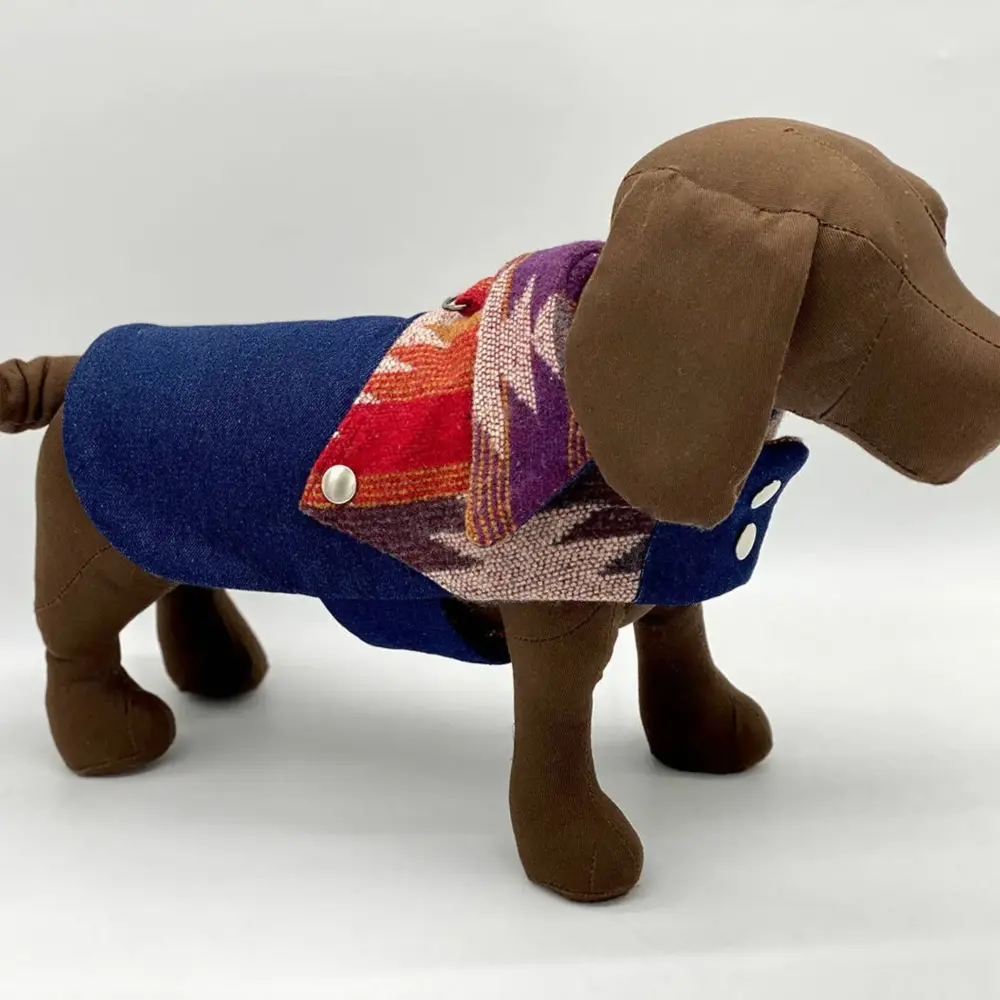
Not always. Dogs with thick double coats usually manage without one on short walks, as long as they are dried off afterward. A water-resistant coat can help a small or short-coated dog who chills easily; introduce it at home with treats and check that it doesn’t rub.
How long should a rainy-day walk be?
There is no set length: long enough to relieve themselves and sniff, short enough to get home before they are chilled. Head back if your dog shivers or slows down, and make up the rest with indoor games.
How do I get my dog to pee in the rain?
Teach a bathroom cue on dry days, then take your dog on the leash to a sheltered spot by the door, give the cue and reward the moment they finish before heading straight back in. Practice in light rain too. If your dog strains, goes much less often than usual or seems uncomfortable, ask your veterinarian.
Related guides
-
Checklist
What to Tell Your Dog Walker: A Handover Checklist
Everything a new dog walker needs on one page: where the gear lives and how it goes on, how your dog walks, leash and route rules, medications and treats, emergency contacts, the door routine, weather rules and a first walk together.
-
Guide
Walking a Dog in the City: Crowds, Crossings, Hazards and Potty Spots
Busy city sidewalks need their own habits. Learn how to keep your dog close in a crowd, teach a sit at every curb, pass doorways safely, spot glass, bones and rat bait before your dog does, and find a potty spot when grass is scarce.
-
How-to
Potty Training a Puppy in Winter: Cold Mornings, Snow and Dark Nights
Cold mornings, snow and early dark can stall a puppy’s housetraining. Here’s how to keep it on track: a cleared spot by the door, a trip routine that works in the cold, a winter schedule, salty paws, accidents, and what to do when your puppy refuses to go out.