Walking & Training Guide
Walking a Dog in the City: Crowds, Crossings, Hazards and Potty Spots
Short answer
Keep your dog beside you on a short, fixed-length leash, on the building side of the sidewalk, and ask for a sit at every curb. Scan the ground ahead and teach a solid “leave it” for scraps, glass and spills. Build up from quiet streets, and step away from noise that rattles your dog.
City walks in short: five habits for every block
- A fixed-length leash held short, with your dog walking beside your leg
- Your dog on the building side, with you between them and the street
- A sit at every curb, and a release word before you step off together
- Your eyes a few steps ahead on the sidewalk, not on your phone
- A potty stop planned before you reach the busiest part of the route
These match the skills the AKC highlights in its guide to navigating city life with your dog: a heel for crowded sidewalks, a “wait” before crossings and building entrances, and a reliable “leave it” for whatever is on the ground. Manners toward neighbors, such as greetings, lawns and shops that welcome dogs, are in our dog walking etiquette guide. This page is about getting your dog safely from one end of a busy block to the other.
Crowded sidewalks and small dogs underfoot
On a packed sidewalk the leash itself is the first hazard. A dog drifting at the end of six feet of leash stretches a line across the path of people carrying bags, pushing strollers or reading their phones. Hold the leash so your dog walks at your side with a little slack, and keep the rest gathered in your hand.
- Building side, not curb side. On a busy street, keep your dog on the inside, away from traffic, bike lanes and car doors that swing open at the curb.
- Step out of the flow to stop. If your dog needs a sniff or you need to fix a strap, move to a wide spot, never the middle of the sidewalk or the mouth of a doorway.
- Use a plain leash, not a retractable. Near curbs and in crowds you need a leash you can shorten in one move, not a thin cord that takes seconds to reel in.
- Listen behind you. Bikes, scooters and skateboards move faster than walkers and often come up from behind. When you hear one, bring your dog in close until it passes.
- Practice at quiet hours. Work on walking close on a side street or early in the morning, then try busier blocks once your dog can do it there.
Small dogs in a crowd
People in a hurry rarely look down. A small dog at the end of the leash, or weaving behind someone’s legs, is easy to step on and easy to trip over. Keep a small dog right beside your feet. When the sidewalk turns into a crush, such as rush hour at a station entrance, a street fair or a crowd leaving a game, step aside and let it thin out, or pick your dog up while the crowd is still coming rather than once you are in the middle of it.
Sirens, buses and a dog who startles
City noise arrives without warning: air brakes, sirens, a jackhammer, a delivery cart banging down a curb. A startled dog may freeze, spin or try to bolt, and a dog who backs out of a loose harness next to traffic is in real danger. Check the fit before city walks: snug enough that only two fingers fit under each strap. Keep a current ID tag on a flat collar, like Lupine Pet’s reflective collar, even if the leash clips to a harness.
When something frightens your dog, move away from the noise first and reward them once they settle. Dragging a scared dog past a construction site rarely helps. If your dog stays fearful on busy streets, talk to your veterinarian, who can check for pain or other medical causes and point you to a qualified behavior professional.
Crosswalks and curbs: a sit before every crossing
The curb is where a city walk can go wrong fastest. A dog who keeps going when you stop can be in the street before you have looked. The AKC suggests teaching a “wait” cue and an automatic sit whenever you stop. Ask for it at every curb, even on an empty street, so the habit holds on the day a bus swings around the corner.
- Start on a quiet side street. Walk to the curb, stop, ask for a sit and reward it while you are both still on the sidewalk.
- Choose a release word, such as “let’s go,” and step off only after you say it. Your dog leaves the curb on the word, not when the light changes.
- Repeat at every curb, alley and driveway on the route. With enough repetition, many dogs start sitting as you stop, before you ask.
- Move up to busier corners only once the sit holds on quiet ones, and keep rewarding it there.
- Before you release, look for turning cars, bikes in the bike lane and scooters, even when you have the walk signal.
Drivers turning through a crosswalk may not notice a dog sitting low at the corner, so keep your dog back from the edge until you step off together. Cross at a steady pace with the leash short. If your dog balks at a metal plate or grate in the crosswalk, steer around it rather than stopping in the street to coax them, and choose a route that avoids it next time.
Shop doorways, building entrances and blind corners
Walking on the building side keeps your dog away from traffic, but it puts them next to every door on the block. Doorways are where people appear without looking: someone stepping out with a coffee, a delivery worker backing out with a hand truck, a stroller swinging around.
- Give entrances and corners room. Shorten up as you pass a doorway or turn a building corner, so your dog is not right where someone steps out.
- Watch for open sidewalk hatches. In some older cities, metal cellar doors set into the sidewalk open straight down to a basement during deliveries. Steer well around them, and around scaffolding, wet cement and debris near construction.
- Skip revolving doors. Use the swing door, and keep the leash short so it cannot trail into a closing automatic door.
Whether a shop welcomes dogs, and how to behave once inside, is covered in the etiquette guide. One thing we would skip entirely is tying your dog outside a shop, even for a minute. A dog left on a post can be stepped on, pestered, frightened into slipping their gear or walked off with, and you will not see any of it from the checkout line. If you live in a building, the lobby, elevator and hallways have their own rules, covered in apartment dog etiquette.
Sidewalk hazards: glass, bones, grates and chemicals
City sidewalks collect takeout leftovers, broken bottles, spilled drinks, cigarette butts and whatever was swept out of a doorway. Most dogs investigate with their mouths, so your best protection is keeping your eyes a few steps ahead and having a cue that stops your dog before they grab something.
| Hazard | Where it turns up | What to do |
|---|---|---|
| Broken glass | Curbs, bus stops, outside bars | Steer around; check pads after |
| Food scraps | By takeout spots and trash cans | Leave it; cooked bones can splinter |
| Chewing gum | Sidewalks and gutters | Leave it; it may contain xylitol |
| Cigarettes | Doorways and bus stops | Leave it; nicotine is toxic to dogs |
| Rat bait | Bait boxes along building walls | Keep your dog away from the boxes |
| Car fluids | Curbs and garage exits | No licking puddles; walk around |
| Metal grates | Subway vents, sidewalk hatches | Walk around; never force it |
Safety note
Sidewalk finds are hard to identify once they are gone. If your dog eats something that could be toxic, such as gum, a cigarette, rat bait, a drug or a lick of car fluid, phone your veterinarian or the ASPCA Animal Poison Control Center (a fee may apply) without waiting for symptoms. Have the wrapper, the label on the bait box or a photo of the spill ready, and don’t try to make your dog vomit unless they tell you to.
Teach “leave it” before you need it
The AKC’s step-by-step guide to teaching leave it starts indoors with a treat in your closed fist, then moves to treats on the floor, and always rewards with a different, better treat rather than the one your dog left alone. Walking past food outdoors comes only after that is reliable. On the sidewalk, say the cue once, keep walking and reward the moment your dog turns away. If something is already in your dog’s mouth, a calm trade for a high-value treat usually works better than a chase down the block.
Grates, plates and manhole covers
Many dogs dislike open grates over subway vents and basements: the drop below, the air moving up, the clatter underfoot. Small paws and toes can also slip into wide gaps, so let your dog step around a grate rather than dragging them across. In a few older cities, damaged underground wiring has also electrified metal grates, manhole covers, light poles and utility boxes, sometimes where road salt has corroded the insulation, and dogs have been shocked. It is rare, but it is one more reason to walk around metal underfoot and keep your dog from marking metal poles and boxes, especially on wet winter days.
Hot pavement and winter de-icer
City routes offer less grass to step onto, so the temperature of the pavement matters more. Dark asphalt, sunny concrete and metal plates hold heat long after the air feels pleasant. The AKC’s advice on protecting paws from hot pavement is to rest your hand on the surface for about ten seconds: if it is too hot for your hand, it is too hot for your dog’s paws. Walk early or late, take the shady side of the street and plan routes past parks and tree-lined blocks.
In winter, many buildings clear their own stretch of sidewalk, so one block can mix rock salt, chemical ice melt and sand, and you have no way of knowing which. Salt and some de-icers can irritate paw pads, and the ASPCA’s cold weather safety tips warn that dogs can lick the chemicals off their paws. Keep your dog from drinking out of slushy puddles at the curb. For what is in each product and the limits of a “pet-safe” label, see pet-safe ice melt vs rock salt.
Whatever the season, end each walk at the door: wipe or rinse each paw, dry between the toes and check the pads for cuts or grit. Our guide on how to clean dog paws after a walk covers muddy and salty days.
Finding a potty spot when grass is scarce
Grass is in short supply on many city blocks, and the patches that exist often belong to someone. Street tree beds are frequently planted and tended by neighbors, and repeated urine in the same small bed of soil can damage the tree, so skip beds with a guard, flowers or a sign.
- A bare, unplanted patch near the curb, away from doorways, planters, parked bikes and the bus stop.
- A designated relief area. Some apartment buildings, parks and dog runs set one aside; follow the posted rules.
- A nearby park lawn for the first stop of the morning, where leash rules allow it.
- Plain pavement. Many dogs learn to go on concrete once they find it is allowed and rewarded.
Then make it a routine. Head to the same spot as soon as you leave the building, before the busy part of the walk. The AKC suggests teaching a potty cue such as “hurry up.” Say it as your dog goes, and reward the moment they finish. Pick up every time, which many cities require by law, and carry a pouch for the full bag, since the next bin can be blocks away.
Dogs who grew up with a yard, or who have just moved from grass to concrete, sometimes refuse to go on a leash and hold it until they are back inside. Our guide on what to do when a dog won’t pee on a leash walks through retraining one step at a time, cue included. If your dog strains, goes much more or less often than usual, or starts having accidents indoors, ask your veterinarian before putting it down to the move.
Gear that makes city walks easier
Training does most of the work on city streets; the right gear makes the habits easier to keep. Everything below comes from Nilosi’s own catalog, so it is a short list rather than a survey of the market, and a well-fitted harness, leash or pouch you already own does the same job. For the full list of what to carry on every walk, see dog walking essentials, and browse more in walking and training.
-
Mr. Peanut’s
PetTrek Padded Harness and Leash Set, Choose size & color
Price range: $24.95 through $26.95
Why it fits: Takes leash pressure off the neck when you shorten up at every curb, with a padded harness, a matching leash and sizes XS to Large.
-
Yucky Puppy
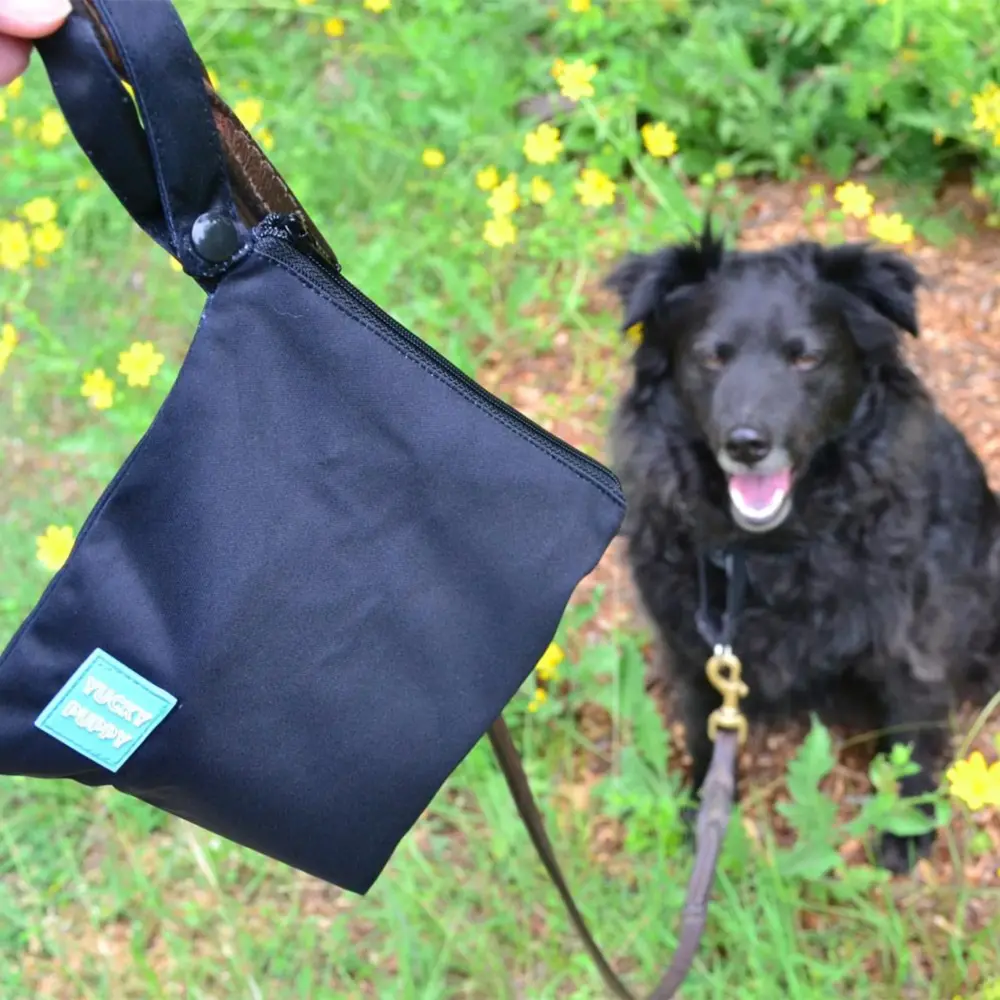
Waterproof Poop Bag Holder, Choose size
Price range: $23.95 through $24.95
Why it fits: Holds a full bag between bins that can be blocks apart, zipped into a waterproof pouch that clips to the leash and keeps the odor in.
-
Bark Fifth Avenue
Fabulous Paws Dog Paw Cleaner Cup, Choose size & color
$31.95
Why it fits: Rinses salt and sidewalk grit from between the pads at the door, with soft silicone bristles and water that stays in the cup.
-
Mr. Peanut’s
Naturals Pet Wipes
$26.95
Why it fits: Cleans paws and legs after a city loop when a full rinse is not practical, with large, thick wipes that are made in the USA.
Currently out of stock




Related guides
-
Checklist
What to Tell Your Dog Walker: A Handover Checklist
Everything a new dog walker needs on one page: where the gear lives and how it goes on, how your dog walks, leash and route rules, medications and treats, emergency contacts, the door routine, weather rules and a first walk together.
-
How-to
Potty Training a Puppy in Winter: Cold Mornings, Snow and Dark Nights
Cold mornings, snow and early dark can stall a puppy’s housetraining. Here’s how to keep it on track: a cleared spot by the door, a trip routine that works in the cold, a winter schedule, salty paws, accidents, and what to do when your puppy refuses to go out.
-
Guide
Walking a Dog in the Rain: Gear, Short Routes and Drying Off at the Door
How to walk a dog in the rain without soaking the house: whether to go, coaxing a dog who won't step outside, covered routes, reflective gear and a zippered bag pouch, and a paws-belly-coat drying routine at the door.