Puppies & Kittens How-to
Potty Training a Puppy in Winter: Cold Mornings, Snow and Dark Nights
Short answer
Keep winter potty trips short, close and predictable: clear a patch near the door, take your puppy there on a leash at set times, stay out with them and reward the moment they finish. Carry a reluctant puppy, coat a tiny or short-coated one, rinse salty paws, and answer accidents with more trips, not scolding.
Why potty training slips in the cold
A puppy who was doing well in early fall can start having accidents once the weather turns. Usually the routine has changed, not the puppy:
- Rushed trips. Cold paws and wind send a puppy back to the door before they’ve finished, and the rest ends up on the rug.
- Solo trips. Waiting inside with the door open is tempting, but then nobody sees whether your puppy went or rewards it. VCA’s guide to house-training your puppy says to go out with them every time.
- Longer gaps. When going out is unpleasant, trips drift later, and a young bladder can’t wait.
- A spot that looks different. Snow hides the familiar smell of the potty patch and feels strange underfoot, so a puppy who learned on grass may not recognize it.
- Darkness. It’s hard to tell whether your puppy actually peed, so a trip you counted as a success may not have been one.
- A small body. The AKC says frostbite becomes a risk below 32°F and names puppies and small dogs among the dogs most at risk. A shivering puppy wants to get back in, not sniff out the right spot.
Set up a potty spot close to the door
The best winter spot is the nearest usable patch of ground, not the nicest corner of the yard. Look for one that is:
- Short and direct. The closest grass or soil to the door you’ll use every time, ideally without stairs.
- Sheltered. Beside a wall, fence or hedge that blocks the wind, so neither of you is in a hurry to leave.
- Lit. Within reach of a porch or yard light, so you can see what your puppy is doing.
- Away from the driveway. Slush and puddles there can hold ice melt and antifreeze, and the ASPCA, in its cold weather safety tips, calls antifreeze lethal for dogs and cats.
Choose it before the first heavy snow, then after every snowfall shovel a path and a patch a few feet across, down to grass or soil if you can. Don’t salt or scrub the patch itself, since the smell of earlier trips is part of what tells your puppy this is the place. For your own steps, our comparison of pet-safe ice melt and rock salt explains what to put down; keep any melt off the patch and clean paws after every trip.
Until the vaccine series is complete, the spot matters for health too. In its overview of parvovirus in puppies, the AKC advises keeping your puppy away from dogs you don’t know and busy public places until then. Use your own yard or the quietest patch you can find, and ask your veterinarian where it’s safe to set your puppy down.
What you need
- Your own boots, coat and gloves by the door. The trip that waits while you hunt for a glove is the one that ends in a puddle.
- A leash your puppy already knows, on a harness or collar. If the leash is still new, our guide to leash training a puppy comes first.
- Pea-sized treats in a coat pocket, kept for potty trips only. Thin gloves make them easier to hand over.
- A flashlight or headlamp for dark mornings and evenings.
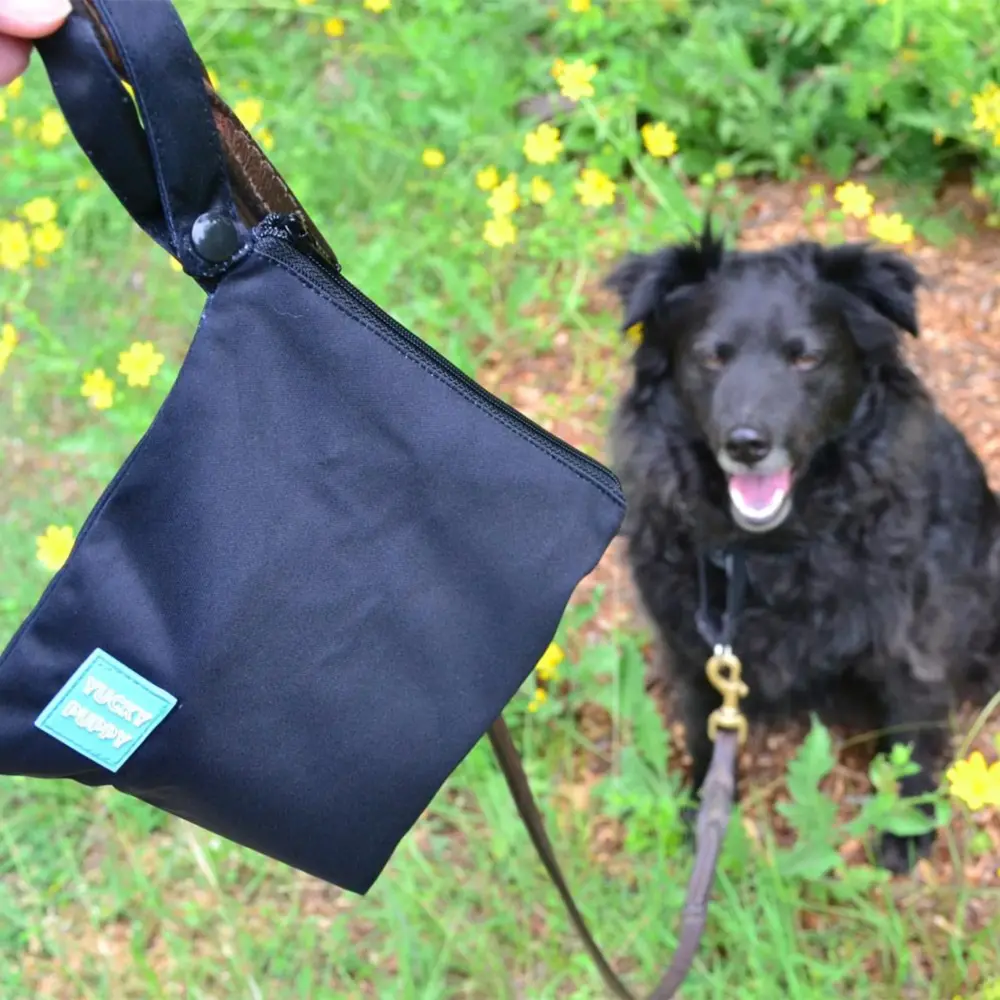
- Poop bags. If the trash is a walk away, the Yucky Puppy Waterproof Poop Bag Holder clips to the leash and zips a full bag out of sight; its waterproof fabric wipes clean after a slushy trip.
- A towel and a paw-cleaning setup at the door (more below).
- An enzyme cleaner and paper towels. Not something we carry, but worth having before the first accident.
Each winter potty trip, step by step
Use the same routine for every trip, from the first before breakfast to the last before bed. The core of it (go out together, allow about five minutes, reward outside) is VCA’s advice; the rest is about the cold.
- Get dressed first. Boots and coat on before you open the crate, so your puppy isn’t left waiting at the door with a full bladder.
- Leash on, coat on if needed. Clip the leash before the door opens. A small puppy who already accepts a coat can wear it; otherwise skip it for now.
- Go straight to the spot. Same door, same path, no detours. Carry a young puppy first thing in the morning and over icy steps.
- Stand still and wait. Stay on the cleared patch, keep the leash slack and stay quiet. Give your puppy up to five minutes to sniff and circle.
- Name it as it happens. As your puppy starts to go, say your potty word once, calmly. Over time it becomes a cue.
- Reward on the spot. Praise and a treat the moment they finish, while you’re both still outside, so the reward lands on the pee, not on the walk back in.
- Give it another minute. Some puppies go twice, or pee and then poop. Wait a moment before heading in, unless your puppy is shivering.
- Nothing after five minutes? Go back in and keep your puppy in the crate or on the leash beside you. Head straight back out if they sniff, circle or get restless, or try again in 10 to 15 minutes.
- Dry off at the door. Towel off snow, clean salty paws and check between the toes before your puppy runs off.
A cold-weather potty schedule
Cold weather doesn’t make a young bladder any bigger, so the schedule stays the same all winter. The AKC’s puppy potty training guide gives a rule of thumb: a puppy can usually hold it for about as many hours as their age in months, so roughly three hours at three months. Treat that as the longest quiet stretch, not the target. Awake and playing, puppies need to go far more often:
| Trigger | When to go out | Winter tip |
|---|---|---|
| On waking | Right away, before breakfast | Lay out your gear the night before |
| After meals | Soon after eating or a big drink | Fixed meal times make trips predictable |
| After naps | As soon as your puppy wakes | Keep the leash and coat by the crate |
| During play | About every 30 minutes | Indoor games count; pause to go out |
| Awake time | Every 1 to 2 hours | Keep them short, but keep them |
| Resting | Every 4 hours | Go even if they seem settled |
| Bedtime | Last thing before bed | Porch light on, short and calm |
| Overnight | May be needed until about 5 months | Out, potty, back to bed |
The intervals and the overnight note come from VCA’s guide; the first and last trips of the day are on the AKC’s list. Don’t ration water to cut down on cold trips; ask your veterinarian if you’re unsure how much your puppy should drink.
Tip
Short days make the late-afternoon trip the easiest one to miss. Tie it to something that happens anyway, such as switching the lights on, rather than to the clock.
A coat and a light for cold, dark trips
Does your puppy need a coat?
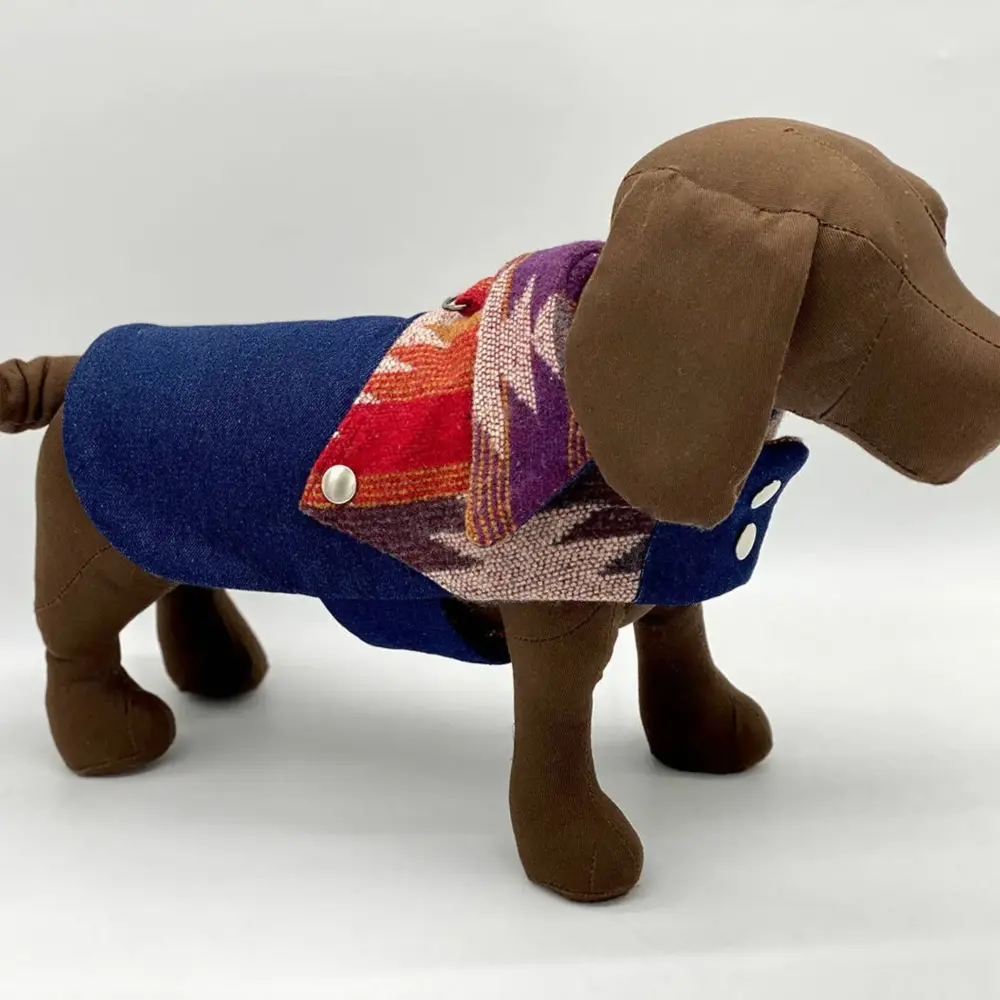
Toy and small puppies, and those with short or thin coats, often benefit from a coat on below-freezing trips, while a puppy with a thick, fluffy coat may not need one at all. The DCNY Ranch Dog Coat is sized for small dogs only (XXS through Medium) and fastens with wide hook-and-loop closures across chest and belly, which speeds things up at the door; the two smallest sizes have their own leash clip, and Small and Medium a harness opening. Introduce it at home first with the steps in how to get a dog used to wearing a coat, take it off as soon as you’re back inside, before your puppy goes back in the crate, and recheck the fit as your puppy grows.
Being seen in the dark
After daylight saving time ends in early November, the first and last trips of the day happen in the dark for months. A flashlight or headlamp shows you whether your puppy actually went, where to pick up and where the ice is. If your spot is near a sidewalk or street, reflective gear helps drivers and cyclists notice a small dog low to the ground. Make sure the collar carries ID with a current phone number, too; a puppy who slips away in the dark is hard to find.
-
Lupine Pet
Reflective Dog Collar, Choose size & design
Price range: $22.95 through $28.95
Why it fits: Reflective threads woven into the pattern show up in headlights on dark trips; the D-ring holds ID tags, and sizes start at 6 to 9 inches.
-
Mr. Peanut’s
PetTrek Padded Harness and Leash Set, Choose size & color
Price range: $24.95 through $26.95
Why it fits: Harness and leash both have reflective stitching for dark trips to the spot; sizes XS to L, so measure and recheck as your puppy grows.


Snow, salt and paws at the door
The ASPCA warns that ice-melting chemicals can be licked off bare paws, and advises washing and drying feet and stomach after every walk. That matters even more for a puppy, who licks and mouths everything. At the door:
- Snow and slush: towel off the legs and belly, then dry between the toes.
- Salt or grit: rinse the paws in lukewarm water, wipe the belly, then dry everything thoroughly.
- Ice balls between the toes: melt them with a lukewarm, damp cloth rather than pulling them out.
- Pads: look them over once a day, and ask your veterinarian about redness, cracks or limping.
Pair paw handling with a treat, so the wipe-down becomes part of the routine rather than a struggle. For drying, salt and the paw cup in detail, see our guide to cleaning dog paws after a walk.
-
Bark Fifth Avenue
Fabulous Paws Dog Paw Cleaner Cup, Choose size & color
$31.95
Why it fits: Rinses ice melt and grit from between the pads before your puppy licks it off; soft silicone bristles, in Small, Medium and Large cups.
-
Mr. Peanut’s
Naturals Pet Wipes
$26.95
Why it fits: Gives legs and belly a quick wipe after a snowy trip on unsalted ground; large, thick 6 by 10 inch wipes, 150 per container.
Currently out of stock


Safety note
Keep your puppy away from driveway puddles and anything that has dripped from a car. If you think your puppy has licked antifreeze or eaten ice melt, phone your veterinarian or an animal poison control line right away; don’t wait for signs of illness.
Indoor accidents and winter mistakes
Cleaning up without a setback
Accidents will happen, and more of them in a cold snap. If you catch your puppy starting to go, VCA suggests making a sound that interrupts without scaring, then guiding them straight to the right spot and praising if they finish there. Found it afterward? Clean up quietly: VCA warns that punishment can teach a puppy never to go to the bathroom near a person, which makes outdoor trips harder.
Blot urine with paper towels, then treat the spot with an enzyme cleaner, following the label; VCA notes that the smell of an old accident is a cue to go there again. Then check the time. An accident 20 minutes after breakfast means the after-meal trip should come sooner or last longer. Between trips, a crate, playpen or baby gate keeps your puppy where you can see them, so the next sniff-and-circle doesn’t go unnoticed.
Winter mistakes that lead to accidents
- Heading in the moment you’re cold. Give the full five minutes, and dress so you can. An accident just after you come in usually means the trip ended too soon.
- Free roaming after a trip with no result. That’s the likeliest time for an accident, so keep your puppy close until the next try.
- Switching spots with the weather. One patch, kept clear, beats whichever spot is easiest that day.
When your puppy won’t go outside
Plants their feet at the door
Carry a small puppy to the spot instead of coaxing, and make it worth the trip: cleared, lit, out of the wind, with the best treats of the day. Shorter trips help a puppy who is simply cold, and so does a coat they already accept. If your puppy goes in the yard off leash but holds it on the leash, the slack-leash approach in our guide for dogs who won’t pee on a leash works for puppies too.
Won’t go on snow
Clear the patch down to grass or soil and keep it clear; the familiar surface is often all it takes. Reward generously the first few times your puppy goes with snow underfoot, so the next fresh snowfall doesn’t stall everything.
When the weather is dangerous
In an ice storm, a blizzard or a bitter wind chill, keep trips brief and stay right by the door. The AKC’s potty training guide notes that puppy pads may be useful for very small dogs in areas with severe winter weather. If you use one, keep it in one place near the door, and go back to outdoor trips as soon as the weather allows.
When to ask your veterinarian
A winter slump in housetraining is usually about routine, but not always. Call your veterinarian if your puppy:
- starts having accidents after weeks of doing well, with no change in routine;
- pees very often in small amounts, or strains, cries or seems uncomfortable when going;
- has blood in the urine or stool, diarrhea or vomiting;
- is drinking much more than usual;
- keeps shivering after warming up indoors, or seems weak, wobbly or unusually sleepy after being out in the cold.
Pale or gray skin on the ears, tail or paws after a cold trip also needs a vet’s eye; the signs of frostbite and hypothermia are covered in how cold is too cold to walk a dog.
Safety note
If your puppy strains to pee and little or nothing comes out, call your veterinarian immediately, even at night.
Related guides
-
Checklist
What to Tell Your Dog Walker: A Handover Checklist
Everything a new dog walker needs on one page: where the gear lives and how it goes on, how your dog walks, leash and route rules, medications and treats, emergency contacts, the door routine, weather rules and a first walk together.
-
Checklist
Winter Hiking With a Dog: Checklist for Cold, Ice and Short Days
A winter trail-day checklist: plan a shorter, sheltered route around daylight, keep your dog leashed and off frozen water, pack water that won't freeze and a coat for dogs who feel the cold, check paws for ice balls and salt, and know when to turn back.
-
Guide
Walking a Dog in the City: Crowds, Crossings, Hazards and Potty Spots
Busy city sidewalks need their own habits. Learn how to keep your dog close in a crowd, teach a sit at every curb, pass doorways safely, spot glass, bones and rat bait before your dog does, and find a potty spot when grass is scarce.