How to Leash Train a Puppy: Collar, Harness and Your First Short Walks
Leash training a puppy starts in the living room, not on the sidewalk. Get your puppy used to a collar or harness in one- or two-minute sessions with treats, let a light leash trail during supervised play, and follow your puppy around the house before you ask them to follow you. That is how to leash train a puppy without a tug-of-war: by the time you step outside, the leash already means treats and attention. Keep the first walks to a few quiet minutes, and when your puppy stops or pulls, stand still instead of tugging.
Quick answer: start indoors, keep sessions to a few minutes and make the leash mean good things
Work through four stages, moving on only when your puppy is relaxed at the current one:
- Gear on. A collar or harness for a minute or two at a time, with treats, until your puppy plays and wanders about in it without scratching.
- Leash trailing. A light leash clipped on during play while you watch, until your puppy ignores it.
- Walking together indoors. You follow first, then invite your puppy along, until they trot after you on a slack leash.
- Short outings. A few quiet minutes outside once your veterinarian says your puppy is ready for public places, standing still whenever the leash goes tight.
Two or three two-minute sessions a day usually beat one long one that ends with a chewed leash. If a stage falls apart, go back a step; tired or teething puppies have off days.
Collar or harness for a puppy?
Either can carry the leash, and many owners use both: ID tags on the collar, leash on the harness.
- Collar. Light, quick to put on, and it carries the ID tag your puppy should wear whenever they might slip out the door. With the leash clipped to it, though, any pull lands on the neck.
- Harness. Spreads pressure across the chest, which matters when a puppy lunges or plants their feet. It takes a little longer to accept.
If you clip the leash to just one, the AKC’s puppy leash-training advice calls a harness generally the better option for puppies, since it keeps pressure off the neck when they pull. Skip choke chains, prong collars and anything else that works by tightening on the neck.
Puppies outgrow gear quickly. Our guide on how to measure a dog for a harness, collar or coat covers the measurements and when to re-measure a growing puppy; once fastened, two fingers should slide under the collar or each strap.
Getting a puppy used to a collar and harness
Scratching, freezing or rolling on the floor the first time is normal. It fades faster when the gear always arrives with something good.
- Put the collar or harness on the floor and give a treat when your puppy sniffs it.
- Slip the collar on while your puppy eats a treat from your other hand. For an over-the-head harness, hold a treat through the neck opening so your puppy pushes their head through to reach it.
- Feed a few treats in a row, then play or serve a meal as a distraction.
- Take the gear off after a minute or two, while your puppy is calm rather than mid-scratch, so scratching does not become the way to get it off.
- Leave it on a little longer each session, until your puppy wears it without noticing.
If your puppy flinches at the snap of a quick-release buckle, click it shut a few times away from them, with a treat after each click, before you fasten it on.
How to leash train a puppy indoors, step by step
The goal indoors is a puppy who finds that staying near you pays. Use a light leash, small soft treats and a quiet room.
- Let it trail. Let your puppy drag the leash around during play for a few minutes. Watch the whole time: a trailing leash can snag or get chewed.
- Follow first. Pick up the end and follow your puppy on a slack leash. Don’t rush this stage: it teaches your puppy that someone on the other end does not mean being pulled.
- Invite. Say your puppy’s name or a cheerful “let’s go,” step back a pace or two, and give a treat when your puppy comes to you.
- Walk together. Take a few steps, treat at your side, and repeat around the room and down a hallway.
- Wait, then stop early. If your puppy pulls toward something, stand still until the leash loosens. End the session while they are still keen.
Over a few days, add small distractions, such as another person in the room or a toy on the floor.
Your puppy’s first walks outside
When your puppy can walk in public places and meet other dogs is a vaccination question for your veterinarian. Ask, too, whether your own yard is fine for practice meanwhile, and about safe ways to socialize your puppy, such as carrying them on short trips to see the world from your arms.
Your first walk with a puppy is about learning that the outside world is safe, not about distance.
- Pick a quiet loop near home at a time with little traffic and few other dogs.
- Keep it to a few minutes and head home while it is still going well. Build up gradually, and ask your veterinarian how much exercise suits your puppy’s age and breed.
- Let your puppy sniff; it is how puppies take in a new place.
- Bring the collar with ID, treats and poop bags; our dog walking essentials list covers the rest.
- Watch body language: a tucked tail, flattened ears, freezing or hiding behind your legs means slow down or head home.
Holiday puppies start walking in the darkest, coldest months. Reflective trim on the harness, leash and collar helps drivers notice you on evening walks but does not replace care around traffic. Puppies also feel the cold sooner than most adult dogs; see how cold is too cold to walk a dog before winter outings.
When your puppy sits down and won’t walk on the leash
Almost every puppy plants their feet at some point, usually because they are unsure, tired or overwhelmed rather than stubborn. Don’t drag a puppy that won’t walk on a leash: hauling can hurt, especially on a collar, and it teaches your puppy to resist the leash.
- Let the leash go slack. Crouch down, turn sideways and give your puppy a moment.
- Look ahead. A loud truck, a barking dog or a metal grate can stop a puppy cold. Add distance or go another way.
- Make moving worth it. Toss a treat a step ahead or show a favorite toy, and praise any movement.
- Walk toward home. Many puppies walk more readily toward home, so carry your puppy 20 or 30 feet from the door and let them walk back.
- Call it a day. If your puppy is simply tired, carry them home and go shorter next time.
Check the gear, too: a rubbing strap or a collar that has become tight can make a puppy stop. The AKC explains why some puppies refuse to go on walks and how to build their confidence. If your puppy limps, seems sore or suddenly refuses walks they used to enjoy, ask your veterinarian.
Early pulling: what to do now so it doesn’t become a habit
Puppies pull because pulling works: they lean, and they reach the smell. A small puppy is easy to hold back, so the habit is easy to miss until your puppy is twice the size.
- Stand still the moment the leash goes tight; move again when it slackens.
- Reward your puppy often for being near your side.
- Use a light, fixed-length leash of about 6 feet. A retractable leash pays out more line whenever your puppy pulls, which rewards pulling, and it is risky near roads.
- Use sniffing as a reward: after a few loose-leash steps, say “go sniff.”
If your puppy is growing into a strong puller, our short-session plan to stop a dog pulling on the leash builds on the same stop-and-go idea.
The starter walking kit we carry
Two items cover the basics: a harness and leash for walks, and a collar for ID.
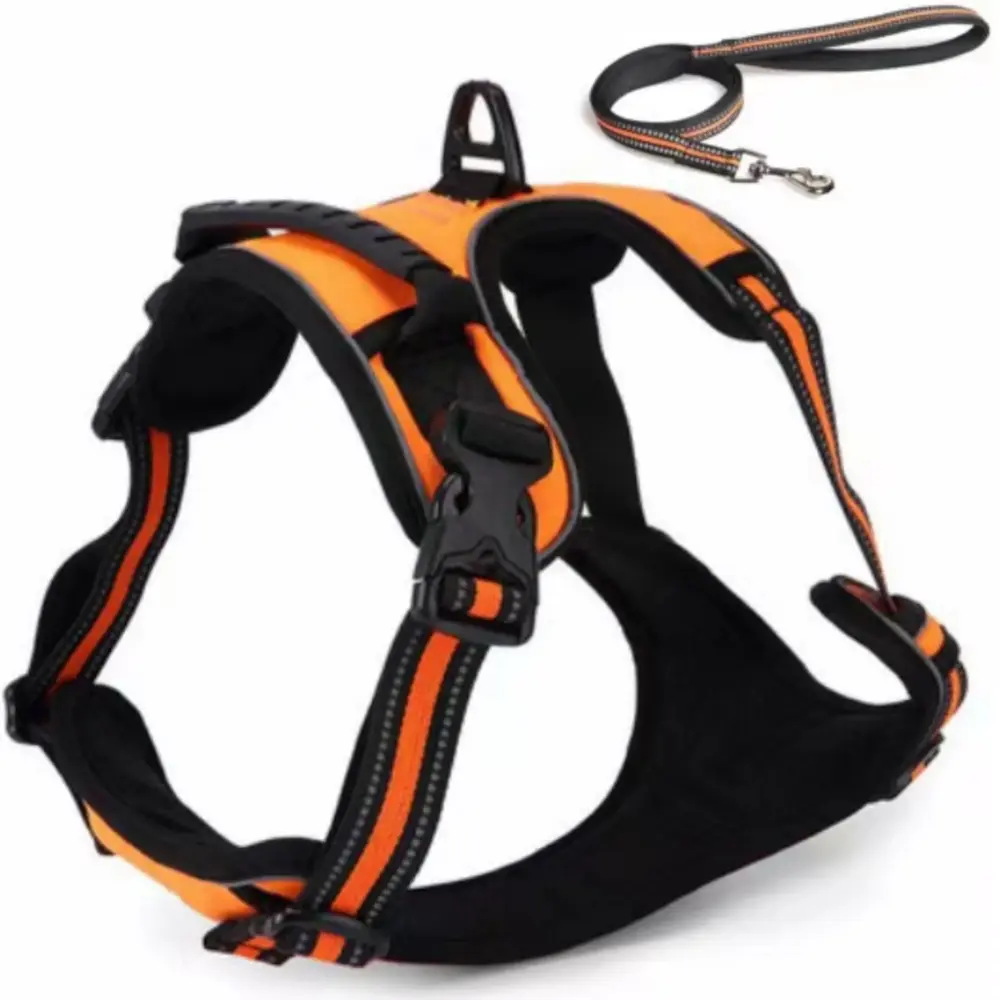
- Mr. Peanut’s PetTrek Padded Reflective Dog Harness & Leash Set: a padded oxford-nylon harness with a matching leash, reflective stitching on both pieces, quick-release buckles and adjustable straps. Four sizes, XS to Large, in Red, Blue, Black or Orange; check the size chart in the product images against your puppy’s chest measurement.
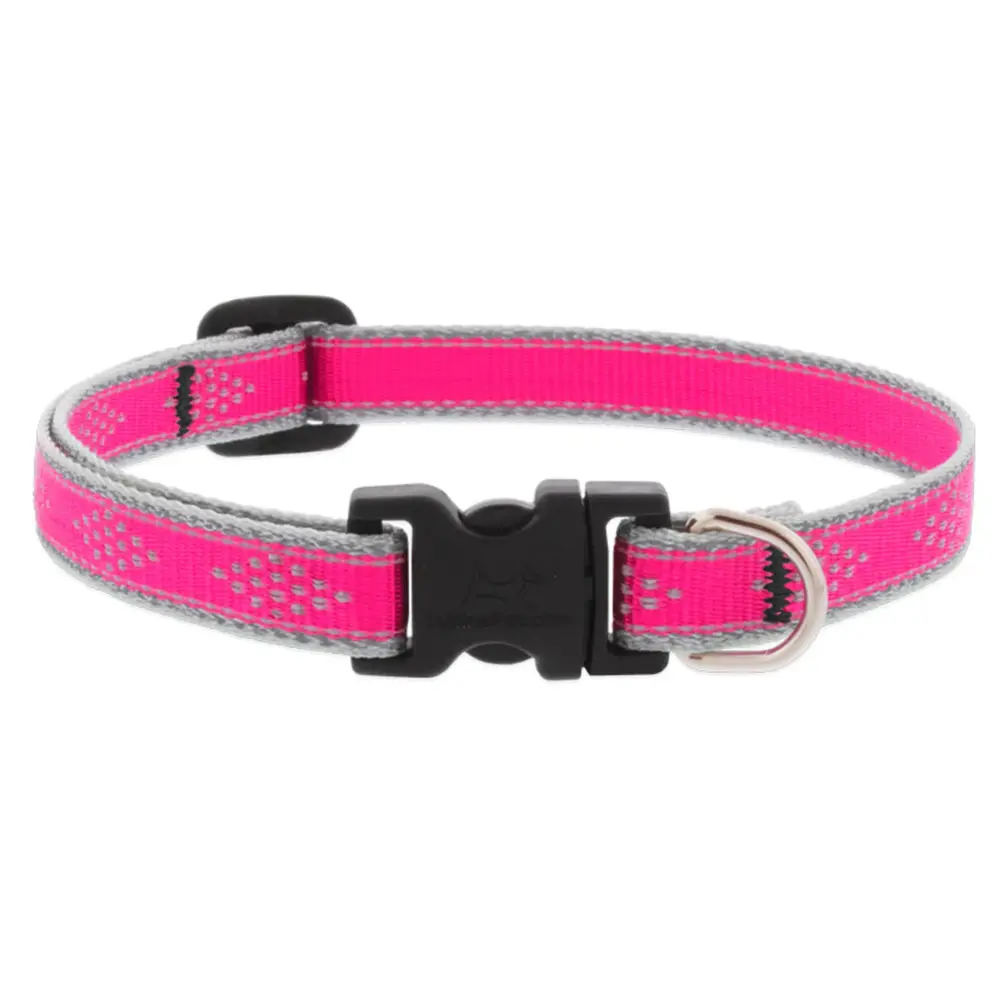
- Lupine Pet Reflective Dog Collar: an everyday flat collar with reflective threads woven into the pattern, not printed on top, and a strong D-ring for the leash and ID tags. Adjustable, in 3/4-inch and 1-inch widths, with sizes for small necks up through XXL. Made in the USA.
-
Lupine Pet
Reflective Dog Collar
Price range: $22.95 through $28.95
-
Mr. Peanut’s
PetTrek Padded Harness and Leash Set
Price range: $24.95 through $26.95


Browse more in walking and training gear. Our new puppy checklist covers everything else to have ready, and our walking and training guides pick up where this one ends.
Puppy leash training FAQ
When should you start leash training a puppy?
Indoors, as soon as your puppy comes home, which is when the AKC advises starting. Collar, harness and trailing-leash practice need no outdoor time; walks in public places wait until your veterinarian says your puppy’s vaccinations allow them.
How long does it take to leash train a puppy?
There is no set timeline. Accepting the gear is usually the quick part; walking on a loose leash past real distractions takes practice that continues through adolescence. Progress looks like fewer stops, more slack and a puppy who heads out the door happily.
Should a puppy wear a collar all the time?
Keep a collar with an ID tag on whenever your puppy goes outside or could slip out the door. Take it off in the crate, when your puppy is alone and during rough play with other dogs, because a collar can catch on crate wire, furniture or another dog’s teeth.
Why does my puppy bite the leash?
Mostly because it moves and it is right there. Pulling back turns it into tug-of-war, so keep the leash still, offer a treat and reward your puppy the moment the leash drops out of their mouth. A toy your puppy can carry gives that energy somewhere better to go.
Related guides
-
Checklist
What to Tell Your Dog Walker: A Handover Checklist
Everything a new dog walker needs on one page: where the gear lives and how it goes on, how your dog walks, leash and route rules, medications and treats, emergency contacts, the door routine, weather rules and a first walk together.
-
How-to
What to Do When an Off-Leash Dog Approaches You and Your Dog on a Walk
A loose dog is heading for you and your leashed dog. How to read its body language in seconds, walk away without running, block it with your body and a firm voice, buy time with treats or an umbrella, and what to check and report if the dogs make contact.
-
Checklist
What to Do If Your Dog or Cat Is Lost: The First Hour and First Day
A lost pet checklist for the first hour and the first day: where lost dogs and hiding indoor cats usually go, who to call, what to put on a poster, how to search at night, how to get a scared pet home safely and how to keep it from happening again.