Walking & Training How-to
What to Do When an Off-Leash Dog Approaches You and Your Dog on a Walk
Short answer
If it’s still far off, shorten the leash and calmly walk the other way, putting a car or the street between you. If it’s close, put your dog behind you, stand still with your side to the other dog and say “No! Go home!” in a deep, firm voice, or toss treats at its feet. Never reach between fighting dogs.
What to do, step by step
You usually get a few seconds between spotting a loose dog and its arrival. Work down this list, and stop as soon as a step works:
- Gather the leash. Shorten it so your dog is at your side, and if you see an owner, call out: “Please call your dog!”
- Read the dog. Loose, bouncy and slowing down usually means friendly. Stiff, silent and heading straight for your dog does not.
- Turn and walk away while it’s still some way off. Walk calmly, don’t run, with a cheerful “Let’s go” so your dog turns with you. Cross the street, or put a car, fence or gate between you.
- Step in between. If it’s close or keeps coming, move your dog behind you, stand still with your side to the other dog, keep your hands in and say “No! Go home!” in a deep, firm voice.
- Buy time. Toss a handful of treats on the ground in front of it, or pop an umbrella open toward it, then keep backing away slowly.
- If they make contact, keep your hands away from both dogs’ heads. Use noise, water or a barrier, and never grab a collar.
- Afterward, check your dog all over, call your veterinarian about any bite or scuffle and report the loose dog to animal control.
What to have with you
- Small, smelly treats in a pocket, where you can grab a handful without looking
- A compact push-button umbrella, if loose dogs are common on your route (get your dog used to it first)
- Your phone, with your veterinarian, the nearest emergency clinic and animal control saved
- A well-fitted harness, a collar with an ID tag and a fixed-length leash
Everything else for an ordinary walk is in our list of dog walking essentials.
Read the other dog in the first seconds
Plenty of loose dogs are lost, curious or simply ignoring a recall rather than looking for trouble, and their body usually tells you which kind is coming. Look at the whole dog, not one signal:
| Signal | Usually friendly | Take care |
|---|---|---|
| Body | Loose, wiggly, bouncy | Stiff, upright or frozen still |
| Approach | Curving, slowing, sniffing | Fast and straight, or stalking |
| Face | Soft eyes, open, panting mouth | Hard stare, closed mouth |
| Ears | Relaxed | Pricked forward, or pinned flat |
| Tail | Loose, swinging wag | Held high and stiff, or tucked |
| Hackles | Flat | Raised along the back |
A wag on its own isn’t a welcome; the ASPCA’s dog bite prevention advice points out that a wagging tail doesn’t always mean friendliness, and a tail held high and wagged stiffly can be a warning. Even a friendly dog can cause trouble: the AKC’s article on leash aggression explains that a leashed dog who can’t move away from a conflict may feel it has no option except aggression. If your dog is nervous, elderly, sore or in training, avoid even a happy-looking approach.
When the owner shouts “He’s friendly!”
Their dog may be; yours may not want to meet him. A loud, polite “Mine isn’t, please call him!” is fine, and so is walking away while they catch up. For greetings from your side of the leash, see our guide to dog walking etiquette.
Create distance: turn and walk away
Distance is the safest tool you have, and it works best early, while the other dog is still making up its mind.
- Walk, don’t run. When an unknown dog approaches, the ASPCA’s advice is to stay quiet and still and not to run or scream, and running can turn curiosity into a chase. Walk calmly away only while the dog is still some way off or hasn’t noticed you; once it’s close, stop and block instead (below).
- Turn your dog with you. Practice an about-turn at home: say “Let’s go,” turn and reward your dog for coming with you. On the day, a cue your dog already knows beats hauling them around.
- Put something in the way. A parked car, a fence, a gate you can close or the far side of the street breaks the other dog’s line to yours. Glance back to track it, without staring.
On a narrow trail, with nowhere to turn off, stop at the widest spot, get your dog behind you early and call ahead to the owner; our hiking with a dog checklist covers your own trail manners.
Walking a small dog? Lifting them early, while the other dog is still well away, can help, but scooping them up once it’s at your feet can bring it jumping at you; see when to pick up a small dog for the timing.
Step in between with a firm voice
If the dog closes in anyway and looks tense, make yourself the wall between the two. A body block tells many dogs the way is shut.
- Move your dog behind you on a short leash, so you are the first thing the other dog reaches.
- Turn your side toward it. The CDC’s advice on dogs and bite safety for an unfamiliar dog is to stay still and calm, avoid direct eye contact and stand with the side of your body facing the dog, which looks less like a challenge than squaring up.
- Use a deep, firm voice. “No” or “Go home” is the CDC’s own suggestion. A sharp “Sit!” is worth a try too, since many pet dogs know it well.
- Keep your hands in. The CDC suggests slowly raising your hands to your neck with your elbows in. Keep the leash hand close to your body, and never reach toward the other dog.
- Hold your ground. Stay where you are rather than stepping toward it or chasing it. If it circles, pivot slowly so you stay between it and your dog.
Once it passes, pauses or loses interest, back away slowly with your dog behind you, and turn around only when there’s a real gap.
Buy time with treats or an umbrella
A distraction gives you the few seconds you need to leave.
A handful of treats
Toss a handful of small treats on the ground in front of the other dog, so it stops to sniff and search, then back away while it forages. Aim well away from your dog, or you’ve set up a squabble over food. It won’t stop every dog, but it costs nothing and angers no one.
An umbrella as a shield
A compact umbrella that opens with a button throws a sudden, large shape between you and the dog. Once it’s open, hold it toward the dog like a shield as you back away. A jacket or a bag held out at arm’s length does a similar job in a pinch.
Tip
Teach your own dog about the umbrella before you need it. At home, pop it open a few feet away and follow with a treat. Repeat over a few short sessions until the sound makes your dog look to you for a reward instead of flinching.
Sprays and air horns
An air horn or a citronella spray can startle a dog, and the AKC lists both among ways to interrupt a fight. Before contact they’re a last resort: the noise frightens your dog too, and spray can blow back into both your faces.
If the dogs make contact
Contact isn’t always a fight; often it’s a pushy sniff. Keep the leash loose rather than tight, since a dog held tight can feel trapped, allow a second or two, then say “Let’s go” and walk off while you can. If either dog stiffens, freezes or growls, end it right away rather than waiting to see.
If they do fight, protect yourself first. The AKC’s guide to breaking up a dogfight warns that in the heat of the moment even your own dog won’t recognize friend from foe.
Safety note
Never put your hands, arms or face near either dog’s head, and don’t grab collars. That’s how people get bitten, often by their own dog.
Try these instead, from a distance:
- Noise: a sharp shout or a clap, or an air horn if you carry one.
- Water: throw what’s in your water bottle over their heads.
- Block their view: throw a jacket over the other dog, or one over each, so they can’t see each other.
- A barrier: push an open umbrella, a bag, a trash can lid or a board between their heads, keeping your hands at the far end.
- Two people, as a last resort: one person per dog comes from behind, lifts the hind legs like a wheelbarrow and walks backward, away from the other dog, until the dogs are well apart.
Once they’re apart, leave and keep going until the other dog is out of sight.
Afterward: check your dog and report it
Check your dog, then call your vet
Fur can hide a bite. Somewhere safe, run your hands over the neck, chest, legs, belly and tail, parting the fur, and look for wet spots, blood, swelling or a flinch. VCA’s guide to bite wounds in dogs says to notify your veterinarian immediately after a fight, because small punctures from canine teeth can close over quickly and be missed, so call even if you find nothing. Go straight to an emergency clinic for bleeding you can’t stop, trouble breathing, weakness, pale or blue gums or collapse. Keep your dog’s rabies vaccination up to date.
If you were bitten or scratched
Wash a minor wound thoroughly with soap and water. For a deep one, press a clean, dry cloth on it and get medical care right away, calling 911 if the bleeding won’t stop. The CDC notes that anyone bitten by a dog is at risk of rabies; see a healthcare provider if the wound is deep or becomes infected, or if you don’t know whether the dog is vaccinated against rabies.
Get details and report it
- The owner’s name, address and phone number, and the name of the dog’s veterinarian, so its rabies vaccination can be confirmed
- Photos of any injuries, plus the place and time; a witness’s number if someone saw it
- A description of the dog and where it came from, if no owner was in sight
The CDC advises reporting dog bites to your local animal control agency or police department, and calling animal control when you see a dog running loose. A dog that’s loose on your route again and again is worth a call even if it has never touched you, so there’s a record. Until it’s dealt with, change your route or the time you walk.
If your dog is nervous on walks afterward
Some dogs shrug off a scare; others start barking at every dog they see. For a while, keep walks short and quiet, reward a calm look at any dog in view with a high-value treat, and skip greetings. If the worry lasts or your dog starts lunging at dogs, talk to your veterinarian or a certified reward-based trainer.
Keep your own dog secure and identifiable
In a scare, your dog may lunge, spin or back away hard, and a harness or collar with room to spare can come off. That turns one loose dog into two.
- A snug harness. Measure the chest at its widest point behind the front legs and compare it with the size chart; our guide to measuring a dog for a harness shows how. Two fingers, no more, should slide under each strap.
- A backup attachment. If your dog has ever wriggled free, clip the leash to both the harness and a well-fitted collar. Our guide for a dog backing out of a harness covers the setup.
- A fixed-length leash. A 4- to 6-foot leash brings your dog to your side in one move; a retractable one takes time to reel in while a dog is charging.
- Current ID. A tag with your phone number on the collar, and microchip details that match your current number and address, so whoever catches a bolting dog can reach you.
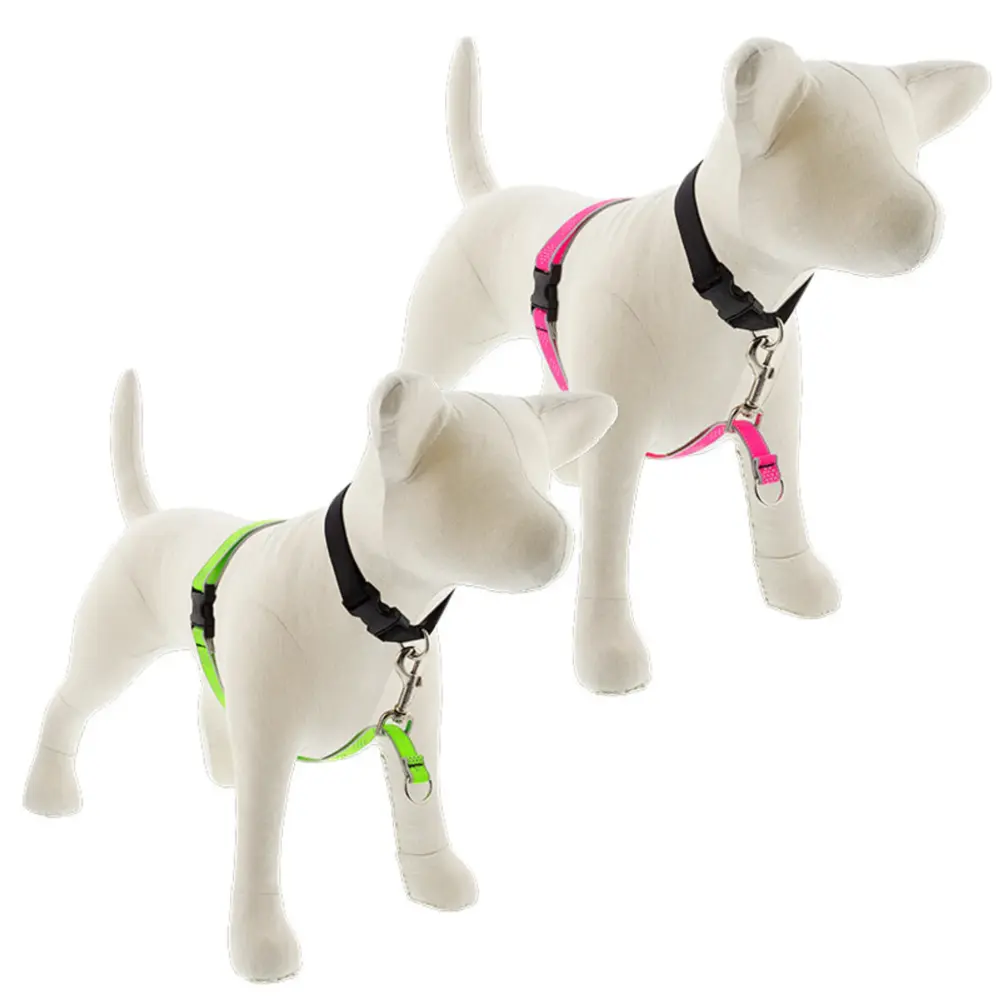
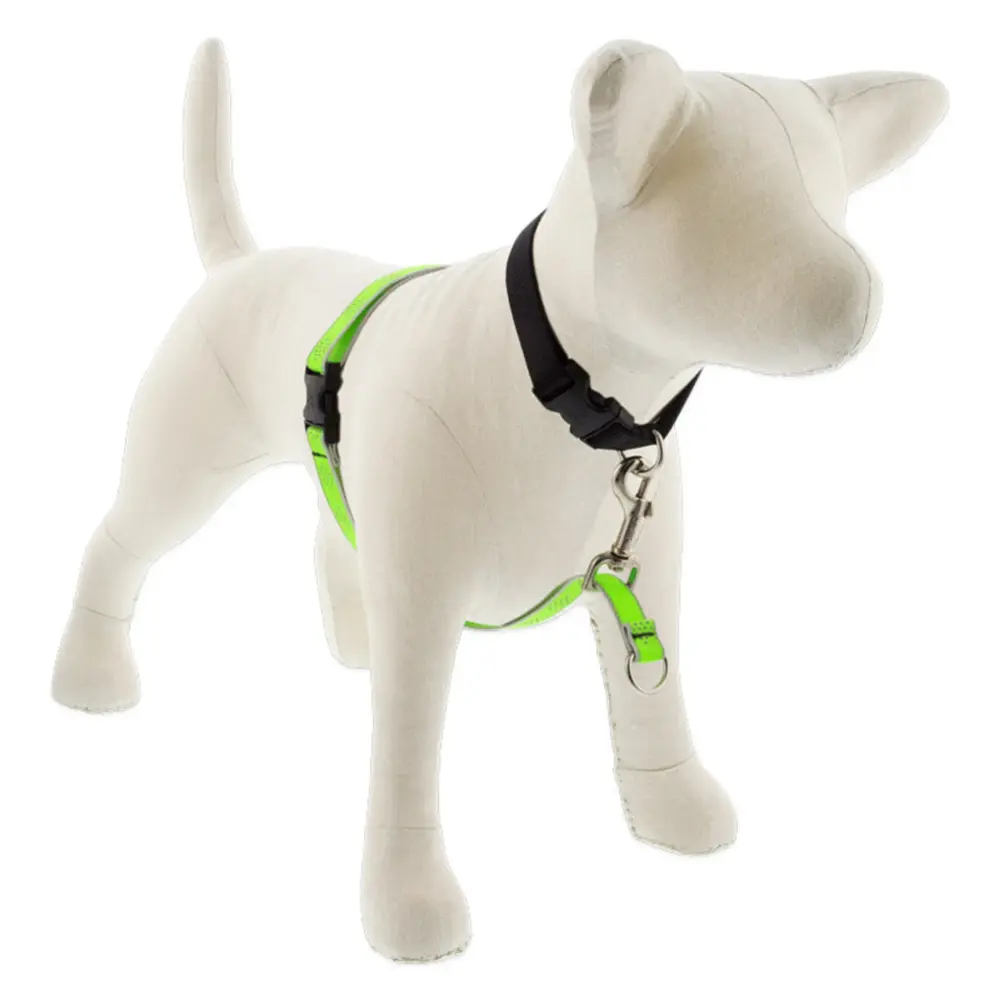
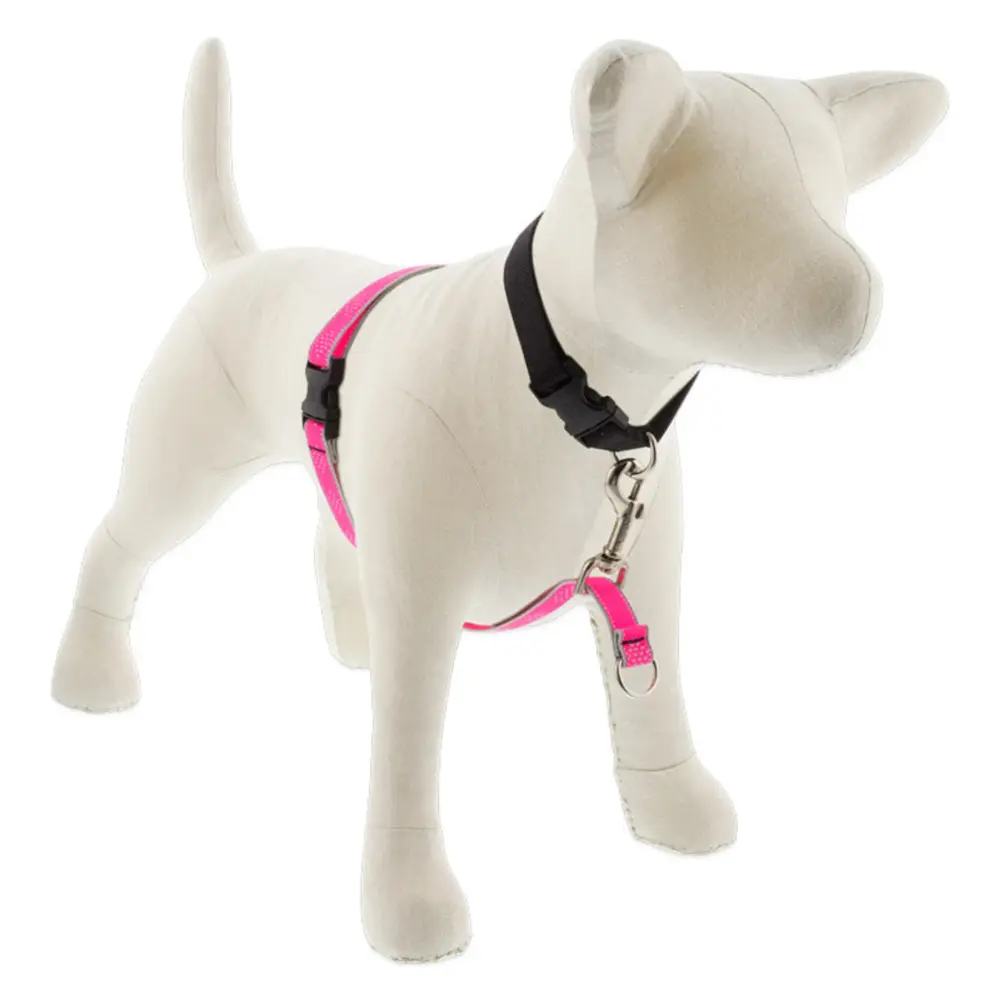
For a medium or large dog who lunges, a front-clip harness makes the about-turn easier, because it turns forward momentum back toward you. The Lupine Pet Reflective No-Pull Dog Harness works that way, comes in girth ranges of 16–26 in and 26–38 in, and attaches to your dog’s own collar and leash.
The two picks below come only from Nilosi’s catalog, and a well-fitted harness and ID collar you already own do the same job. There are more options in walking and training.
-
Mr. Peanut’s
PetTrek Padded Harness and Leash Set, Choose size & color
Price range: $24.95 through $26.95
Why it fits: Spreads pressure across the chest, not the neck, when your dog lunges, with adjustable straps for a snug fit; sizes XS to Large.
-
Lupine Pet
Reflective Dog Collar, Choose size & design
Price range: $22.95 through $28.95
Why it fits: Holds the ID tag a finder needs to call you, on a strong D-ring with reflective threads woven in; adjustable neck sizes from 6 to 31 in.


Mistakes that make it worse
- Hauling your dog up on a tight leash. The AKC’s leash aggression article also notes that tightening and pulling on the leash can create leash problems for a dog. Keep it short, not taut.
- Turning your back too soon. Walking off while the dog is still close and fixed on yours can invite it to follow and nip. Back away until there’s a gap.
- Scolding your dog for barking or growling. Your dog is telling the other one to back off. Punishing that adds stress to an already scary moment.
Related guides
-
How-to
Teaching Kids to Walk the Dog: When They’re Ready and How to Start
Your child wants to take the leash. Here’s how to tell whether your child and your dog are both ready, how to run practice walks with a backup leash, and what your child should do when the dog pulls, lunges or meets another dog.
-
How-to
How to Wash a Dog Harness, Collar and Leash by Hand or Machine
Check the care label, then hand wash nylon webbing in warm, mildly soapy water or machine wash it in a mesh bag if the label allows. Plus leather and retractable leashes, drying without heat, smells that won’t wash out and when to replace the gear.
-
How-to
How to Walk Two Dogs at Once Without Tangles or Pulling
Two dogs, two leashes and no knots: train each dog alone first, give each one a usual side, walk at the slower dog’s pace, untangle crossed leashes safely and know what to do when one dog pulls or reacts.