Walking & Training Guide
Dog Walking Etiquette: Sidewalk Manners, Greetings and Clean-Up
Short answer
Good dog walking etiquette comes down to a few habits: keep your dog leashed and close whenever someone passes, keep them off lawns, gardens and porches, and pick up every time. Ask before your dog greets a person or another dog, make room on narrow stretches, and cut the walk short on a day your dog can’t cope.
The rules most neighbors expect
- The leash stays on wherever one is required, and it gets short whenever someone passes
- Your dog walks the sidewalk; lawns, flower beds and porch steps belong to the people who live there
- Every poop gets picked up, and the bag goes in a public bin or your own trash
- Greetings with people or dogs happen only after both sides say yes
- On a narrow stretch, someone steps aside, and with a dog in tow it’s usually you
- Barking at houses, fences and passersby gets moved along, not waited out
- Posted signs in parks, shops and on patios outrank everything on this list
The AKC’s guide to dog ownership etiquette covers the same basics: a leash wherever one is required, permission before any greeting and bags for every pickup. Our list of dog walking essentials covers what to carry; this page is about how you use it once you’re out the door.
Leash length and control on shared sidewalks
On a shared sidewalk, a standard 4- to 6-foot leash, held so your dog ends up at your side when someone approaches, does most of the work.
- Shorten up before anyone reaches you. Gather the slack early, so your dog is beside you before a walker, stroller or other dog is a few steps away.
- Put yourself in between. When you pass someone, you walk on their side and your dog walks on your far side.
- Keep the leash off the walkway. A dog sniffing on one edge while you stand on the other turns the leash into a trip line, and a dog stretched across a driveway is hard for a driver backing out to see.
- Lock a retractable leash short, or leave it home. Fully extended, it puts your dog far ahead, takes time to reel in and leaves a thin cord that can wrap around a passing person’s legs.
- Walk single file when it’s busy. Two people side by side plus a dog fill most residential sidewalks.
Which side should your dog walk on? On a quiet residential street, walking your dog on the curb side keeps them off front lawns. Beside a busy road, keep them on the inside, away from traffic, and hold the leash shorter instead.
Off-leash strolls around the block are a different matter: even a dog with good recall can run up to a fearful dog or a person who’s afraid of dogs, and in many places a leash is the law. If someone else’s loose dog heads for yours, see what to do when an off-leash dog approaches.
Lawns, gardens and where your dog should go
Is it rude to let your dog pee on someone’s lawn? Usually, yes: the AKC’s etiquette guide asks owners to discourage peeing on neighbors’ lawns and leg-lifting on their property, car tires included. A front lawn is someone’s project, even when it runs right up to the sidewalk. Concentrated urine can burn brown patches into grass, male dogs in particular tend to mark upright things such as mailbox posts and shrubs, and nobody enjoys finding a puddle on the porch steps.
- Give your dog a chance to go before the loop. A few minutes in your own yard or at a spot you’ve chosen means fewer stops in front of other people’s houses.
- Steer past lawns and planted beds. Keep the leash short enough that your dog stays on the pavement. Sniffing along the edge is fine; squatting in the flower bed isn’t.
- Go easy on the curb strip. The grass between the sidewalk and the street is often planted and mowed by the homeowner. If your dog needs to go there, choose a bare or plain patch, pick up and move on.
- Skip the things people touch. Mailbox posts, porch steps, trash and recycling bins, parked bikes, strollers and car tires are not for marking.
- Watch for lawn flags. Small flags or signs on a lawn usually mean it was recently treated with a pesticide, and many ask people to keep pets and children off for a set time.
Tip
If a neighbor mentions your dog and their lawn, a quick apology and a different route will do more for next week’s walks than a debate about where their property line ends.
Picking up every time, and where the bag goes
This is the rule people notice most when it’s broken. The CDC’s Healthy Pets, Healthy People page on dogs advises picking up dog poop and disposing of it properly, even in your own yard and especially where children play, because it can carry germs that make people and animals sick.
- Every time, everywhere. On the curb strip, at the far corner of the park, in the rain and after dark, with a phone light if you need it.
- Don’t leave the bag for later. A tied bag left by a mailbox or fence post to collect on the way back often gets forgotten, and to everyone else it looks abandoned.
- Use a public bin or your own. Plenty of people would rather not find your bag in their trash or recycling bin, so ask first or carry it home.
- Get what you can of a messy one. If it’s right in front of someone’s door, a quick word beats leaving them to find it. If loose stools keep happening or your dog seems unwell, call your veterinarian.
If your nearest bin is a trash room down the hall, our guide on how to dispose of dog poop in an apartment covers carrying the bag home and the building rules.
Gear won’t make a dog polite, but it makes these habits easier to keep. These picks come only from Nilosi’s catalog, and anything similar you already use works just as well; the rest of the range is under walking and training.
-
Yucky Puppy
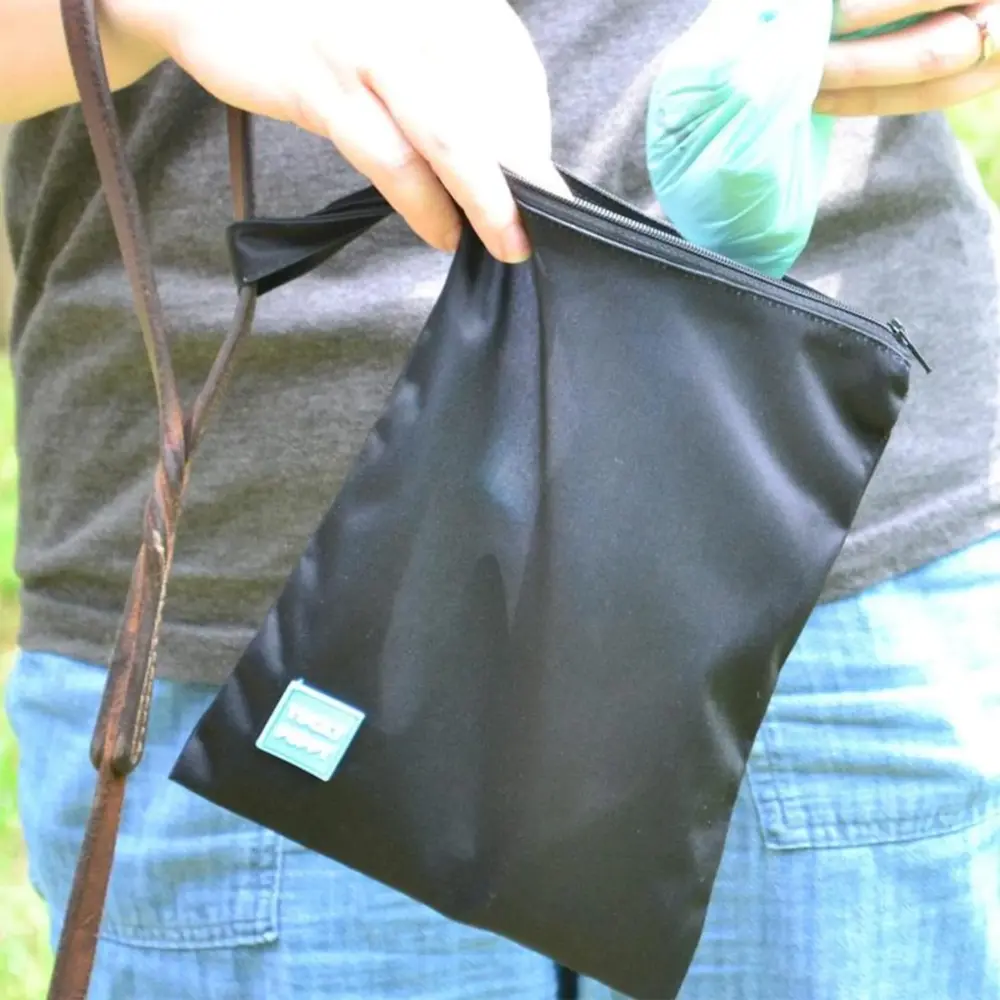
Waterproof Poop Bag Holder, Choose size
Price range: $23.95 through $24.95
Why it fits: Makes picking up every time easier on long routes, since the full bag zips into a waterproof pouch on the leash until you pass a public bin.
-
Lupine Pet
Reflective Dog Collar, Choose size & design
Price range: $22.95 through $28.95
Why it fits: Carries the ID tags that let a neighbor call you if your dog ever gets loose, on a strong D-ring with reflective threads woven in.
-
Mr. Peanut’s
PetTrek Padded Harness and Leash Set, Choose size & color
Price range: $24.95 through $26.95
Why it fits: Spreads the pull across the chest when you shorten up to let people pass, with padding, a matching leash and sizes from XS to Large.
-
Lupine Pet
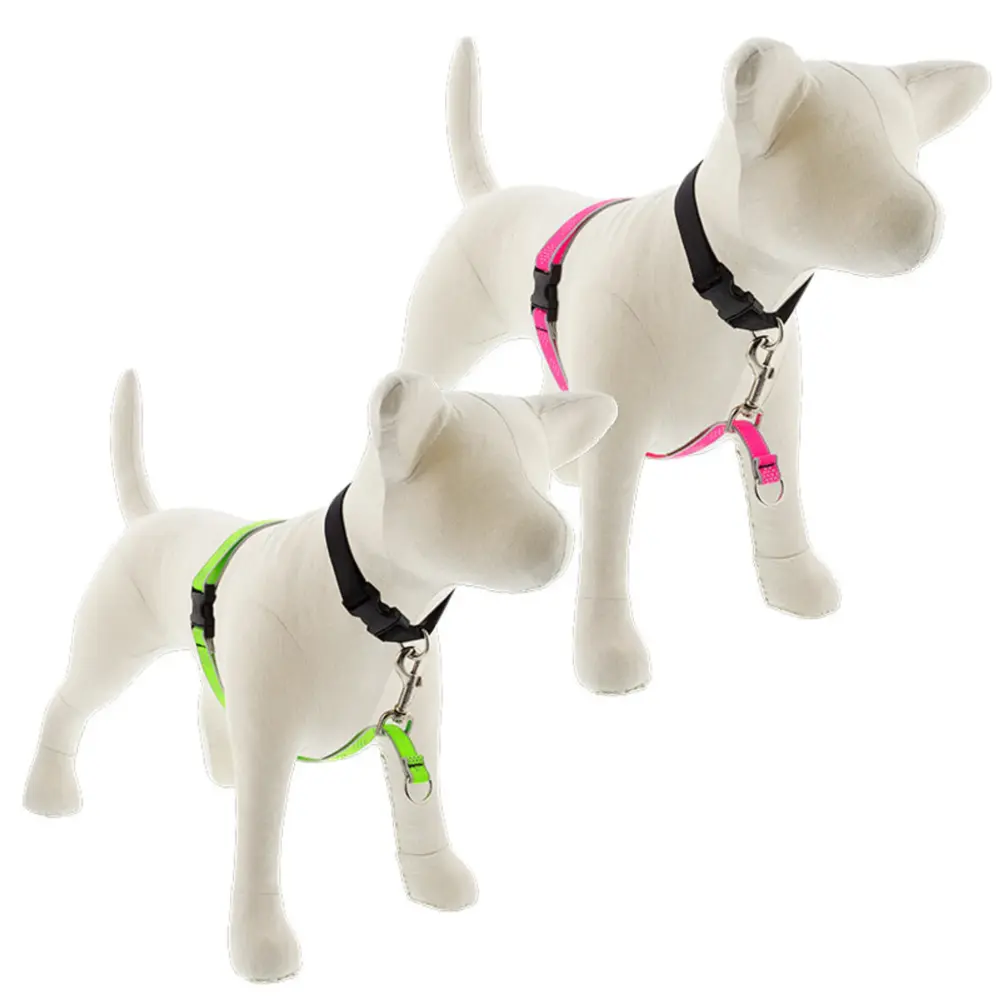
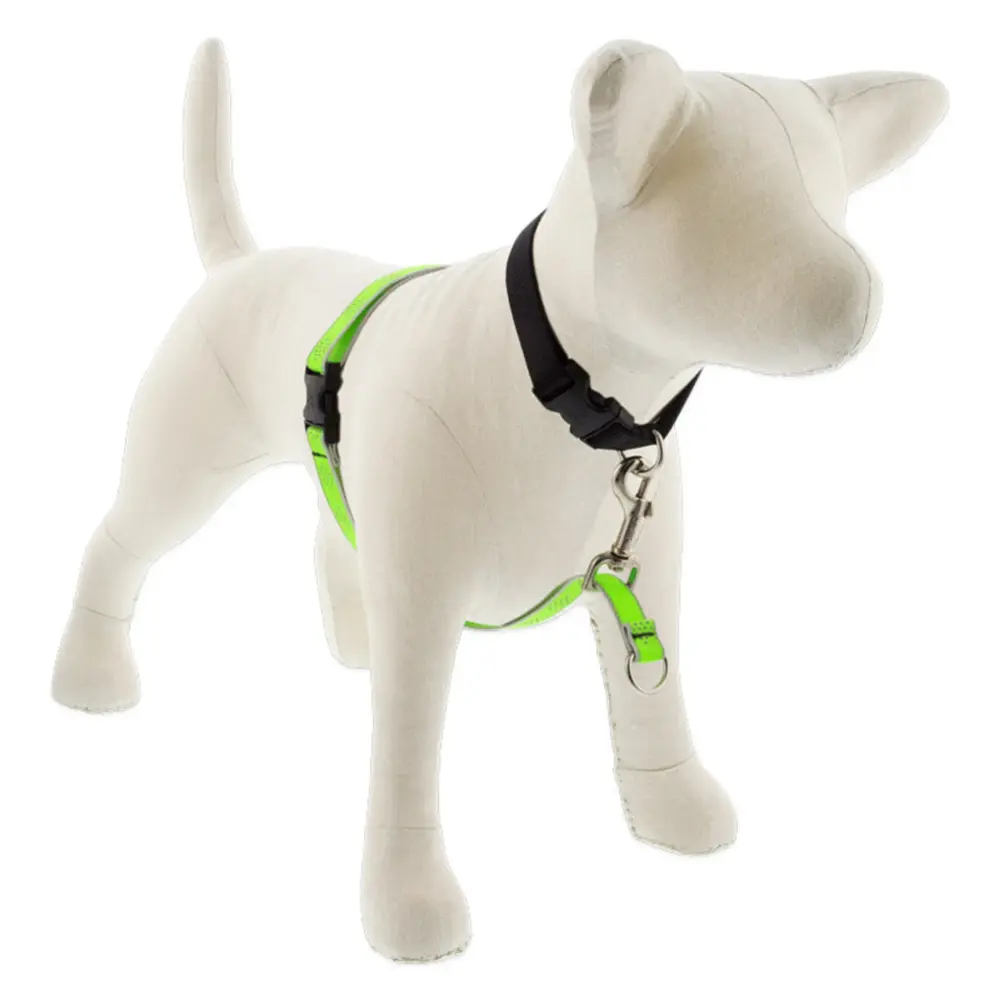
Reflective No-Pull Dog Harness, Choose size & design
Price range: $41.95 through $45.95
Why it fits: Turns a pulling dog back toward you as people pass, while you teach a looser leash; for medium and large dogs, it clips to your own collar.




Passing people, kids, runners and bikes
Most people pass a leashed dog without a second thought, but some are afraid of dogs, carrying groceries, pushing a stroller or simply don’t want paws on their clothes. Don’t leave them to work out whether your dog is friendly; make room before they have to ask.
| Who’s coming | What to do |
|---|---|
| Pedestrian | Shorten up; you walk on their side |
| Runner | Step to the edge; hold your dog still |
| Cyclist | Pull your dog in close until they pass |
| Stroller | Give them the full width of the path |
| Wheelchair | Wait at a wide spot and let them by |
| Small child | Move your dog to your far side |
| Mail carrier | Keep your dog back from them and the bag |
| Service dog | No staring, sniffing or approaching |
A runner or cyclist coming up from behind can catch a dog off guard. On shared paths, glance back now and then, and if your dog chases or spooks at fast movement, step aside and reward a sit until they’re past.
Greetings: ask first, and it’s fine to say no
Ask before your dog says hello to anyone, person or dog, and accept a no without argument. Some people are afraid of dogs or allergic, and some dogs are old, sore, nervous or in training; you can’t tell which from across the sidewalk.
When someone wants to pet your dog
You can say no, for any reason. “Not today, thanks, we’re practicing walking past people” is plenty. If you say yes and your dog enjoys it, the AKC’s advice on greeting a dog you don’t know is worth passing on: let the dog come forward and sniff, pet the side, neck or chest rather than reaching over the head, and never hug.
Before the greeting starts, take up enough leash that your dog can’t jump on the person. If your dog jumps anyway, the greeting ends and you walk on.
Children who rush up
Kids often run straight at a dog with their hands out. Step between them, smile and ask them to check with their grown-up first. If your dog is unsure of children, “he’s a bit shy” and a step back is the kind answer for both.
Signals that a dog needs space
Some owners tie a yellow ribbon to the leash or use a yellow leash or vest to say “give us room.” Not everyone knows the signal, so don’t count on others reading yours, but if you see one, don’t approach. Give a working service dog the same space, and keep your dog from staring at it or walking up to it.
Meeting another dog on a narrow path
The tightest moment on many walks is two leashed dogs meeting on a sidewalk between a hedge and parked cars. Decide early, while the other dog is still half a block away:
- Cross the street if your dog is excitable or nervous around dogs, or the other dog looks tense. The AKC’s etiquette guide gives the same advice for reactive or nervous dogs, to give everyone more space.
- Step aside at a wide spot, such as the foot of a driveway, with your dog on your far side and sitting for treats until the other dog has passed.
- Turn back a few steps to the last wide spot if there’s nowhere to go ahead.
- Call out early. “Mind if we pass?” or “We need a little room” lets the other owner plan too.
Should leashed dogs say hello at all? Only if both owners agree and both dogs look loose and relaxed. On a leash, neither dog can step away when a meeting gets uncomfortable, and the AKC’s article on leash aggression names that missing exit as one reason some dogs bark, lunge or snap on leash. If you do say yes, keep both leashes slack, allow a few seconds of sniffing and move apart with a cheerful “let’s go” before either dog stiffens. Skipping on-leash greetings altogether is a perfectly good choice.
Barking, lunging and bad-day walks
Your route passes a few yards from people’s front doors and bedroom windows, so noise is part of walking manners too.
- Keep early and late walks quiet. Move briskly past houses, and keep your own phone calls and conversations low.
- Don’t linger by a fence dog’s yard. If a dog charges the fence barking, keep walking or cross the street. Two dogs barking through a fence wind each other up, and the people inside hear all of it.
- Move away from whatever sets your dog off, then reward a calm glance at it. Turning around with a cheerful “let’s go” is often the fastest way out of barking or lunging at a passing dog or bike; a yank or a scolding only adds tension.
On a bad day, change the walk
Some days are harder: trash day, a construction crew down the block, a week of fireworks or a fright on yesterday’s walk. A shorter loop at a quieter hour, a sniff around a park edge or a game in the yard beats forcing the usual route and spending it apologizing.
Safety note
A dog with a history of biting or snapping at people or dogs should skip greetings altogether. Ask your veterinarian whether pain or illness could be part of it, and for a referral to a qualified behavior professional; do the same if barking or lunging starts suddenly in a dog who used to walk calmly.
Parks, shops and patios: posted rules come first
Everything above is the default. Where there’s a sign, the sign wins.
- Leash laws and park rules. Leash rules are set by your city or county and by each park, and some set a maximum leash length. Check your local animal services or parks department website and the signs at each entrance. Off-leash areas and hours apply only inside their boundaries.
- Dog-free spots. Playgrounds, sports fields and school grounds are often off-limits to dogs, even on a leash, so look for signs before you cut across.
- Shops. Look for a dogs-welcome sign or ask at the door. Keep the leash short, keep your dog off displays and out of the aisle, and step outside if they start barking. Shops have to admit service animals, but they can still say no to pet dogs.
- Patios. Restaurant patios set their own rules about dogs, and they can change from one day to the next. Our guide to taking a dog to a restaurant patio covers the table, the leash and when to leave.
- Your building and downtown. Hallways, elevators and lobbies have their own manners, covered in apartment dog etiquette, and busy crossings, crowds and sidewalk hazards are in walking a dog in the city.
Related guides
-
Checklist
What to Tell Your Dog Walker: A Handover Checklist
Everything a new dog walker needs on one page: where the gear lives and how it goes on, how your dog walks, leash and route rules, medications and treats, emergency contacts, the door routine, weather rules and a first walk together.
-
How-to
Teaching Kids to Walk the Dog: When They’re Ready and How to Start
Your child wants to take the leash. Here’s how to tell whether your child and your dog are both ready, how to run practice walks with a backup leash, and what your child should do when the dog pulls, lunges or meets another dog.
-
How-to
How to Wash a Dog Harness, Collar and Leash by Hand or Machine
Check the care label, then hand wash nylon webbing in warm, mildly soapy water or machine wash it in a mesh bag if the label allows. Plus leather and retractable leashes, drying without heat, smells that won’t wash out and when to replace the gear.