Walking & Training How-to
Taking Your Dog to a Restaurant Patio: Manners and What to Bring
Short answer
Practice a settle on a mat at home, check that the patio allows dogs that day and walk your dog there. Bring the mat, water, a bowl and a quiet chew, and ask for an edge table away from servers. Keep the leash with you, never tied to the table, and leave while your dog is still calm.
Is your dog ready? A patio-readiness check
A patio is a hard place for a dog to relax. Plates pass at nose height, chairs scrape on concrete, strangers brush past a foot away, and the dog at the next table may be only a leash length off. Before you book, be honest about whether your dog:
- Lies on a mat for 30 minutes or more while you eat at home, about the length of a coffee or a quick lunch
- Leaves a dropped piece of food on a “leave it”
- Stays lying down when someone walks close by
- Looks at a passing dog, then settles again without barking or lunging
- Recovers quickly from a clatter, such as a dropped fork or a chair dragged across pavers
- Ignores strangers, or greets them calmly with four paws on the ground
- Is healthy and comfortable in the day’s weather
Keep practicing at home if your dog barks or lunges at dogs or people, guards food or toys, or is frightened in busy places: a crowded patio with nowhere to retreat is a poor place to work on any of those. For a young puppy, ask your veterinarian whether busy public spots are a good idea before the vaccine series is complete.
Build up with practice runs
- Teach a settle at home. During your own meals, reward your dog for lying on a portable mat, with a treat placed between the front paws, and build the time slowly. The AKC’s guide to teaching the “place” cue notes that a portable mat lets you use the behavior anywhere; it is also the core skill for bringing your dog to work.
- Take the mat outside. Sit on your front steps or a park bench with a coffee for 10 minutes and reward lying down.
- Add people and dogs, without food. Use a public bench near a busy sidewalk or plaza, so your dog watches the world go by with nothing tempting on the table.
- Keep the first patio visit short. A drink or a coffee on a quiet weekday afternoon, for 20 to 30 minutes.
- Then try a meal. Once your dog settles within a few minutes and stays down, stay for lunch. Save busy weekends for later.
Before you go: the patio’s dog policy and a walk
Check the policy for that day
Whether a pet dog may sit on a restaurant patio depends on state and local health rules and on the restaurant itself, and a patio that welcomed dogs last summer may only allow them in one section, at certain hours or not at all today. Call or check the restaurant’s own website the same day, and ask:
- Are dogs allowed on the patio today, at any table or only in one area?
- Can we reach the patio without walking through the dining room? Pet dogs are generally kept out of indoor areas; service animals are covered by separate rules.
- Is there shade, and can we have a table at the edge?
- Are there limits on size, number of dogs or hours, or an event such as live music that day?
Walk first, and pick a quiet hour
A dog who has just had a sniffy walk and a bathroom break usually settles more easily than one who left the couch five minutes ago, so plan your dog’s usual walk to end at the restaurant. If the route runs through downtown crowds, see our guide to walking a dog in the city; if your dog drags you all the way there, start with how to stop a dog pulling on the leash.
Don’t skip your dog’s usual meal to make treats more tempting: a hungry dog finds the next table’s burger much harder to ignore. Mid-afternoon on a weekday is usually calmer than weekend brunch or happy hour, and a brewery is usually quieter before trivia, live music or food-truck nights.
On a hot afternoon, skip the visit if the only open tables are in full sun. Dogs lie close to the ground, and the ASPCA’s hot-weather safety tips warn that hot surfaces heat them quickly and can burn paw pads.
What to bring: a small patio kit
Our list of dog walking essentials covers the everyday basics. A patio adds a long stretch of sitting still, so pack for that:
- A harness and a standard fixed-length leash, not a retractable one
- A collar with a current ID tag
- The mat or folded towel your dog practiced on
- A long-lasting chew your dog works on quietly and doesn’t guard
- Small, soft treats that don’t crumble
- Water and a bowl, or a bottle with one built in
- Poop bags and a pouch to carry a full one
Leave squeaky toys and balls at home; they wind up your dog and every other dog on the patio. The picks below come from Nilosi’s own range, so treat them as examples: a harness, leash and bottle you already own will do the same job. More options are in our walking and training gear.
-
Mr. Peanut’s
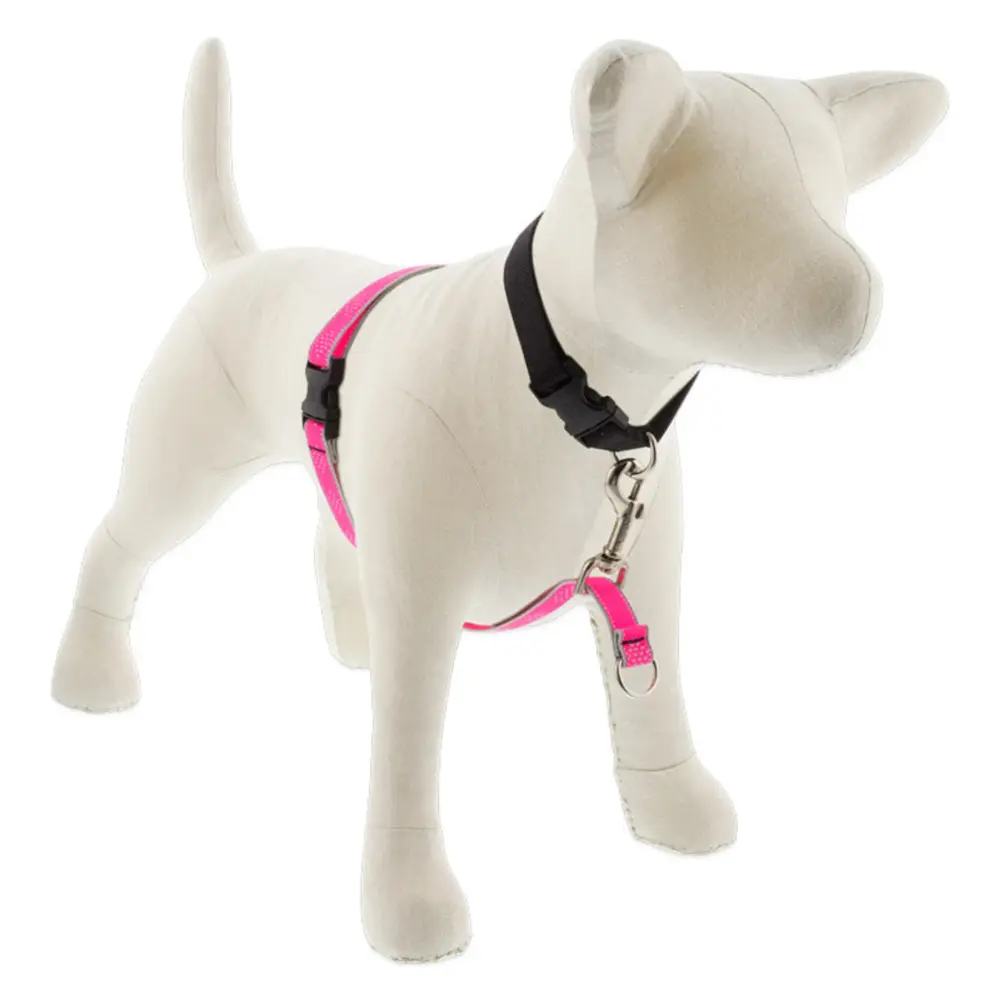
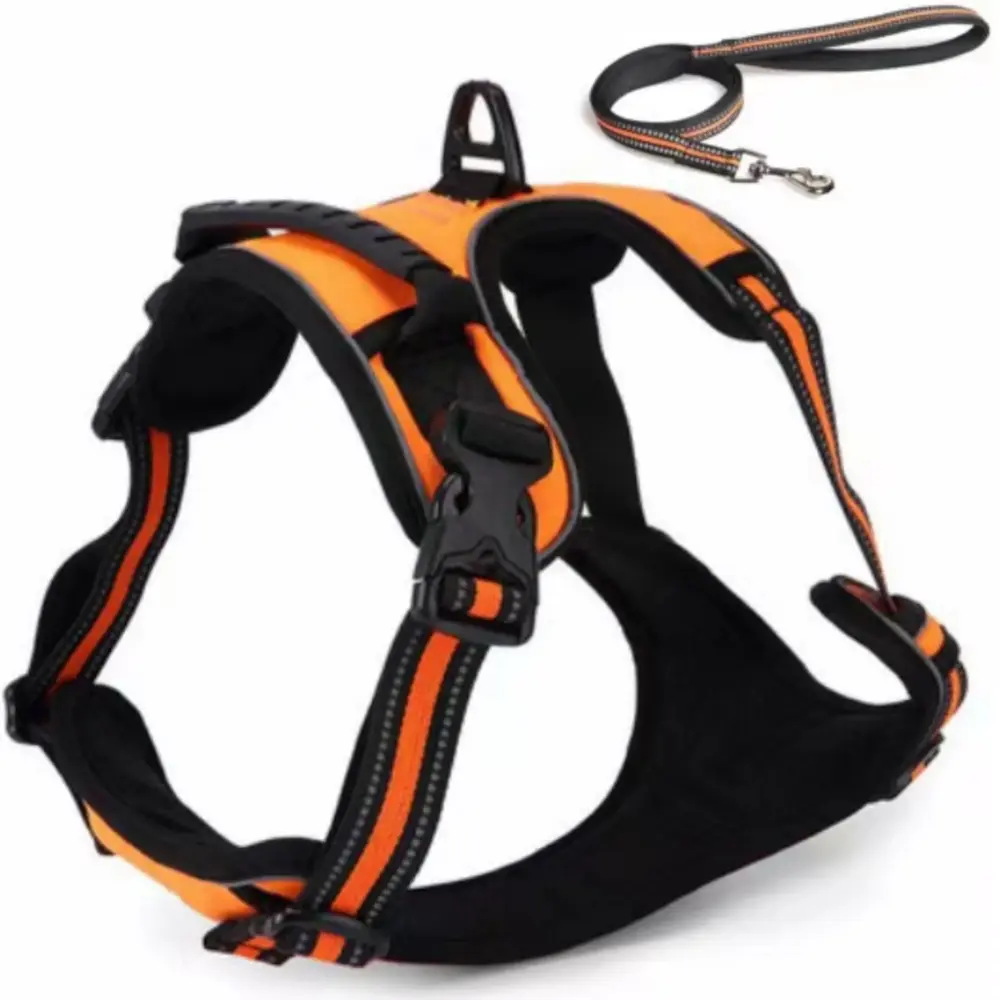
PetTrek Padded Harness and Leash Set, Choose size & color
Price range: $24.95 through $26.95
Why it fits: A padded harness and matching leash in one set, with reflective trim for the walk home after an evening on the patio. Four sizes, XS to Large; check the chest size chart first.
-
Flipo
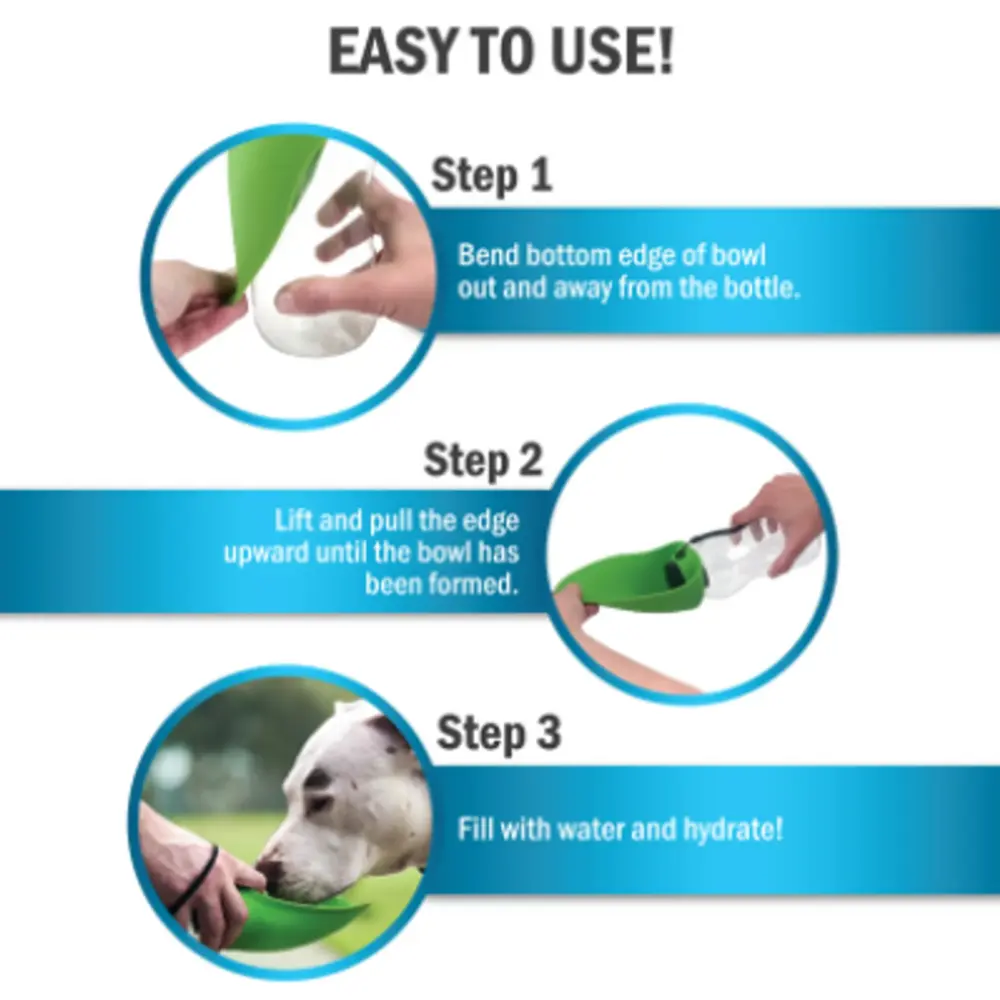
Fold-A-Bowl Dog Water Bottle with Fold-Out Bowl, Choose color
$28.95
Why it fits: Water from your own bottle instead of a shared patio bowl: the cover folds out into a bowl, and the push-button closure keeps 26 oz from leaking in the bag at your feet.
-
Yucky Puppy
Waterproof Poop Bag Holder, Choose size
Price range: $23.95 through $24.95
Why it fits: If the walk there ends with a full bag and no bin by the restaurant, it zips into this waterproof pouch on the leash instead of sitting next to your table.
-
The Green Pet Shop
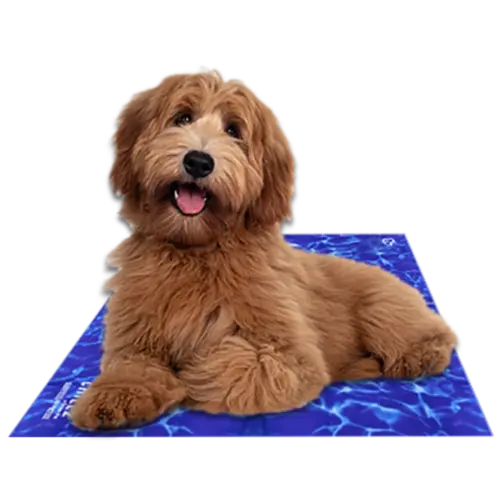
Chillz Cooling Gel Mat for Dogs & Cats, View product
$45.95
Why it fits: A light, foldable gel mat to practice the settle on at home and lay under the table; it cools as your dog lies on it on a warm day. Skip it for a dog who chews or digs at mats.



Choosing a table and settling your dog
- Ask for an edge or corner table, ideally with a wall or planter on one side, away from the door, the server station and the main path between tables.
- Sit so your dog can lie between your chair and the wall, not in the aisle. If the patio borders a sidewalk, put yourself between your dog and the people walking past.
- Before you order, check the ground for dropped food, napkins and anything sharp.
- Lay the mat down, cue the settle and reward the moment your dog lies down.
- Hand over the chew once your dog is down, and keep a few treats for quiet moments, such as staying put while a server passes.
- Tell your server there’s a dog under the table, so nobody steps on a tail.
Keep your dog on the ground, not on your lap, a chair, a bench or the table. Many dog-friendly patios make that a rule, and it applies to small dogs too.
Where to put the leash: with you, never on the table
Clip the leash to the harness and leave ID tags on the collar. A harness spreads the force of a sudden lunge across the chest rather than the throat, which matters when a squirrel or a skateboard appears.
- Keep the handle with you. Hold it, slide it under your thigh or loop it around the leg of the chair you’re sitting in, so your own weight anchors it. With a large, strong dog, keep it in your hand.
- Never tie it to the table, an umbrella pole, a railing or a planter. A dog that bolts can drag the table, the drinks and the umbrella with it.
- Leave just enough slack for your dog to lie down and shift, but not enough to reach the next table, the aisle or the sidewalk.
- Skip the retractable leash. It gives too much line, and the cord runs where servers walk.
- Never leave your dog tied up while you step inside. Hand the leash to someone at your table, or use the restroom before you sit down if you’re eating alone.
Water, treats and the food on your table
Water: bring your own
Offer water when you sit down and again before you leave. Many dog-friendly patios put out a shared bowl; our guide to whether communal water bowls are safe explains why your own is the better choice. If you run out, ask for a cup of tap water and pour it into your bowl.
Your plate stays yours
A bite from the table teaches a dog that staring, whining and pawing pay off, at home as well as out; our guide to stopping a dog begging at the table has a plan. Restaurant food is risky too. The ASPCA’s list of people foods to avoid feeding pets includes onions, garlic and chives, which turn up in many sauces and seasonings, along with salty and fatty foods, bones, grapes, chocolate, coffee and alcohol. Reward your dog with their own treats.
Some patios offer a dog menu or a “pup cup” of whipped cream. Keep it small and occasional: whipped cream is dairy, which the same ASPCA list notes can cause diarrhea or other digestive upset. Skip it if your dog has a sensitive stomach or a special diet from your veterinarian.
Dropped food, and brewery patios
Patio floors collect fries, chicken bones and the odd piece of gum, and sugar-free gum can contain xylitol, which the ASPCA warns can cause low blood sugar and liver damage. Keep the leash short enough that your dog can’t forage under other tables. At a brewery, keep your dog away from spilled beer and from any hops within reach: hops are on the ASPCA’s list of plants toxic to dogs.
Safety note
If your dog swallows something worrying, from a cooked bone to sugar-free gum or a puddle of beer, call your veterinarian or the ASPCA Animal Poison Control Center at (888) 426-4435 right away rather than waiting for signs. A consultation fee may apply.
Patio manners: other diners, servers and other dogs
- Servers come first. Keep your dog tucked in so trays and feet pass freely.
- Greetings by invitation only. Your dog stays at your table rather than visiting others. If someone asks to say hello and your dog enjoys it, keep it brief and stay seated; it’s fine to say no.
- Dogs at different tables stay apart. Under a table, leashes tangle, food sits at nose height and neither dog can back away, which is how scuffles start. Put the chew away if another dog comes close, and if the dog next to you is fixated on yours, ask to move.
- Ask kids kindly not to feed your dog, before the fries arrive.
- Barking ends the visit. One alert bark happens; repeated barking spoils everyone’s meal and is your signal to go.
- Clean up accidents at once, and tell your server so staff can rinse the spot.
When to pack up and leave
Plan your exit before you arrive. Ask for the check when the food comes, so you can pay and go in a minute, and aim to leave while your dog is still relaxed rather than once they’ve had enough; on a first visit, that may be after one drink. Leave, or step away for a short walk, if you see:
- Signs of stress from the AKC’s guide to how to tell if your dog is stressed: pacing, whining, panting when it isn’t hot, yawning or lip-licking, a tucked tail, pinned-back ears or the whites of the eyes showing
- Repeated barking, growling or lunging at a person or another dog
- A dog who still can’t settle after about 10 minutes and keeps standing up or circling
- A change around you: a big party sits down next to you, a band starts up, or a dog arrives that yours can’t stop watching
A lap of the block often resets a restless dog, and you can come back if they settle. If not, have your food boxed up, and next time go at a quieter hour and keep it shorter.
Safety note
Heavy panting, drooling, weakness or trouble breathing on a warm patio can be signs of overheating, according to the ASPCA. Move into shade, offer water and call your veterinarian right away.
Mistakes that make patio visits harder
- Making the first visit a group meal, a birthday or weekend brunch, when your attention is on everyone but your dog
- Bringing two dogs before each one can settle on a patio alone; two leashes under one table tangle fast
- Scrolling your phone instead of watching your dog, when the early signs of stress are easy to miss
Troubleshooting: a dog who won’t settle, barks or jumps up
My dog won’t lie down
Don’t repeat the cue over and over. Move to a quieter table or one with a wall at your dog’s back, offer the chew and reward any moment of lying down. If nothing helps within 10 minutes, take a short walk, and next time go back a step to bench practice.
My dog barks or lunges at passing dogs
Sit with your body between your dog and the walkway, and reward your dog for glancing at a passing dog and back at you before any reaction. If it happens more than once, leave. If it happens on every outing, a qualified trainer or your veterinarian can help you plan the next step.
My dog jumps up when the server comes
Shorten the leash as the server approaches so your dog can’t reach them, cue the settle and reward once they leave. At home, practice with family members walking past carrying plates.
Related guides
-
How-to
How to Walk Two Dogs at Once Without Tangles or Pulling
Two dogs, two leashes and no knots: train each dog alone first, give each one a usual side, walk at the slower dog’s pace, untangle crossed leashes safely and know what to do when one dog pulls or reacts.
-
How-to
How to Start Running With Your Dog: Readiness and a Walk-Run Plan
Get your veterinarian's okay, wait until a young dog has finished growing and teach a loose leash first. Then build from walks with one-minute jogs to a steady, easy run over several weeks, with warm-ups, cool-downs, water breaks and clear signs to slow down or stop.
-
Checklist
What to Tell Your Dog Walker: A Handover Checklist
Everything a new dog walker needs on one page: where the gear lives and how it goes on, how your dog walks, leash and route rules, medications and treats, emergency contacts, the door routine, weather rules and a first walk together.