Walking & Training Checklist
Bringing Your Dog to Work: Readiness, Packing and Etiquette
Short answer
Your dog is ready for the office if they settle on a mat for long stretches, greet people without jumping, stay calm around other dogs and noise, and are reliably house-trained. First read the dog policy and ask deskmates about allergies or fear of dogs. Then pack a familiar mat, water, a lick mat, a leash and poop bags.
The office-dog checklist at a glance
This assumes a pet dog and a workplace that already welcomes dogs; the sections below explain each group.
Is your dog ready?
- Settles on a mat for an hour or so while you work at home
- Greets people with four paws on the floor
- Glances at other dogs, then looks away: no lunging or guarding
- Recovers quickly from a slammed door
- Leaves dropped food alone on a “leave it”
- Fully house-trained, with no recent accidents indoors
- Stays settled with a familiar person while you step away
- Healthy, up to date on vaccines and parasite prevention, not in heat
Before the first day
- The dog policy read, and your manager’s OK in writing
- Deskmates asked, privately, about allergies and fear of dogs
- A spot away from aisles, doors, the kitchen and the printer
- Cords, bags, bins, plants and snacks out of reach
- The nearest relief area and outdoor trash bin located
In the bag
- A standard leash and a collar with a current ID tag
- A mat or bed your dog already knows
- A desk water bowl, plus a bottle for breaks
- A lick mat or long-lasting chew, prepared at home
- Poop bags and a zippered pouch for full ones
- Wipes, paper towels and a pet enzyme cleaner
- Your dog’s midday meal, if they eat one
- A baby gate or small pen, if your space has an opening to block
Is your dog ready for the office?
An office asks a dog to lie still for hours in an unfamiliar place, with people, phones, rolling chairs, other dogs and food at nose height. The first rule in the employer dog policy quoted in the AKC’s tips for Take Your Dog to Work Day is to bring only well-trained, socialized dogs, and the skills that count are mostly about doing nothing, politely, for a long time.
- Settling on a bed. The core office skill. If your dog can’t lie on a mat at home while you work, a room full of new smells won’t help. Teach the “go to bed” cue from our guide to getting a dog to sleep in their own bed on the mat you plan to take.
- Polite greetings. A jump that is cute at home can spill a coffee or snag work clothes, and many coworkers would rather walk past without a hello.
- Neutral with other dogs. Office aisles put dogs closer together than most parks, with nowhere to retreat. A glance and a return to you is the goal, with no guarding of toys, food or your desk.
- Composure around noise. A startle is normal; quick recovery is what matters. Repeated barking, trembling or hiding means the office is too much for now.
- Leaving food alone. Snacks sit in bags, bins and low drawers all over an office, so “leave it” has to be reliable.
- House-training and short separations. No recent accidents indoors, and no barking for you each time you step away while a familiar coworker sits with your dog.
The trainer interviewed in that article recommends the AKC’s Canine Good Citizen test as preparation for office life. Most of its ten test items, from accepting a friendly stranger to reaction to distraction and a three-minute supervised separation, are office skills. Your dog doesn’t need the certificate, but the list makes an honest self-check.
Ask your veterinarian whether your dog’s vaccines and parasite prevention suit a building shared with other dogs, and keep copies of the records in case your workplace asks. Puppies need frequent bathroom trips and naps and may not have finished their vaccines, so get your veterinarian’s advice before a puppy’s first visit.
Tip
A dog who adores people can still find a full day of passers-by tiring, and some well-mannered dogs simply prefer home. If yours does, the office is a poor fit, and there is nothing to fix.
Preparing for the first day
Read the policy, then ask
Check the written dog policy for off-limits areas, leash or gate rules, vaccination or registration requirements, how many dogs can be in at once and how complaints are handled. If nothing is written down, ask your manager and keep the answer in an email. In a shared building, management may have its own rules for the lobby, elevators and grounds.
Ask your deskmates first
Ask the people who sit nearest you, privately and before the first visit, whether anyone has a dog allergy, is afraid of dogs or would rather not have one nearby, and make it easy to speak up. A coworker’s allergy or fear outranks your dog’s office day: move to a spot farther away, or leave your dog home.
Choose the spot and dog-proof it
Pick a corner where your dog can see you and won’t be stepped over, away from doors, the kitchen and the printer. Then get down to dog height and look around:
- Cords and chargers. Bundle them out of reach of teeth and paws.
- Bags on the floor. Gum, mints, medication and snacks go in a closed drawer. The ASPCA’s list of people foods to avoid feeding pets warns that xylitol, a sweetener in some gum and candy, can cause low blood sugar and liver damage, and that chocolate and caffeine can make dogs seriously ill. If your dog swallows any of these, call your veterinarian right away.
- Trash cans, candy dishes and coffee cups. Lidded, or up on the desk.
- Plants. Golden pothos and peace lily, both office favorites, are on the ASPCA’s list of plants toxic to dogs. Look up anything your dog can reach.
The AKC article treats baby gates and a leash as the starting kit, and the policy it quotes asks for a gated area or a leash. Across a cubicle or office doorway, a gate or small pen keeps your dog in place while they can still see you.
Do a dress rehearsal
For the first visit, choose a quiet day, walk your dog well beforehand and stay an hour or two. Arrive before the office fills up, leave while things are still going well and add time over several visits. While you are there, find the nearest relief area the building allows and the closest outdoor trash bin. If other dogs come in, introduce yours to them outside first: the trainer in the AKC article had her dog meet the other office dogs outside and take quick walks together.
Driving in? Use your usual car restraint, and never leave your dog in a parked car during the workday, in any season.
What to pack for an office day
Pack the night before, in one bag that lives by the door on office days. The picks below are limited to what Nilosi stocks; a mat or bed your dog already loves does the job just as well.
A mat or bed that already smells like home
Use a bed or mat your dog already sleeps on, or give a new one a few weeks of “go to bed” practice at home first. For carrying, thin and foldable beats thick and plush, and a base that grips stays put on hard floors. If the spot is under your desk, measure the footwell before buying anything; more options are in our beds and comfort range.
-
The Green Pet Shop
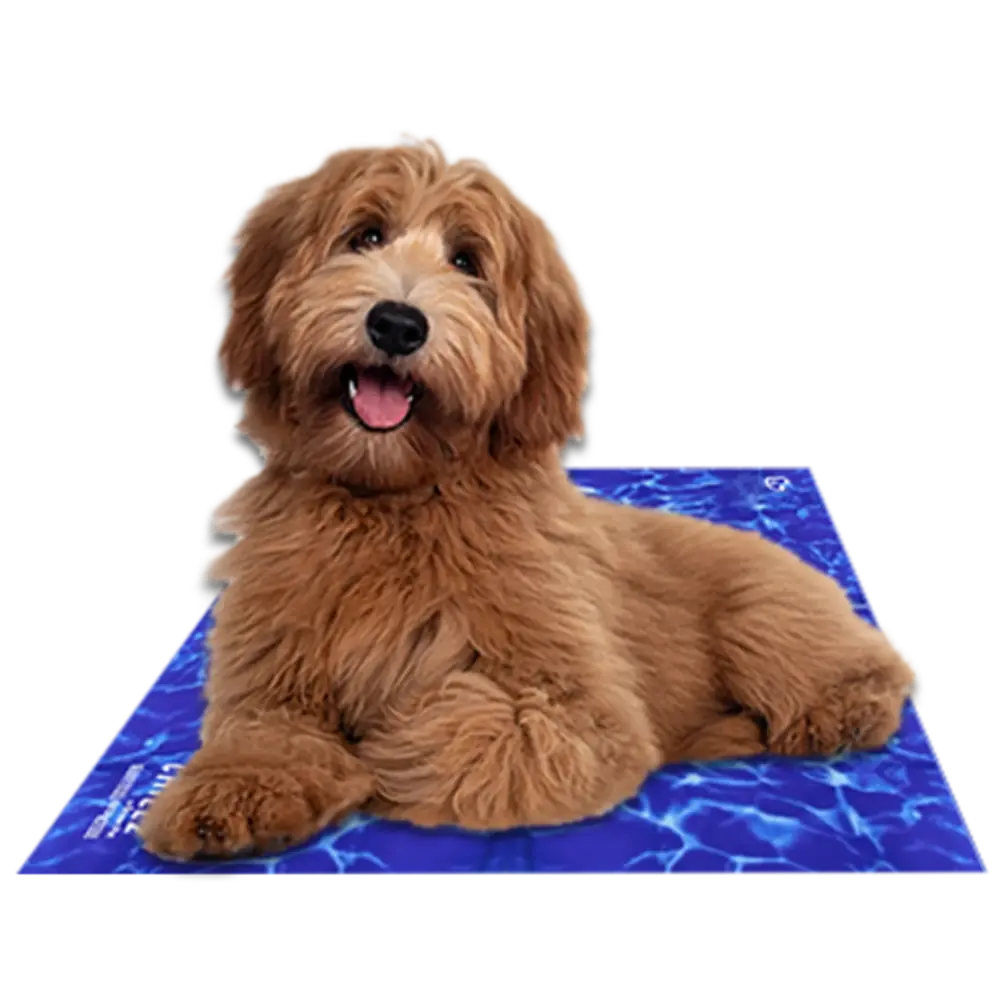
Chillz Cooling Gel Mat for Dogs & Cats, View product
$45.95
Why it fits: Light and foldable for the commute, with pressure-activated gel that needs no water, ice or power. Suits a dog who runs warm; in a chilly office, a bed is kinder.
-
Armarkat
Ultra-Plush Cuddler Bed for Cats & Small Dogs, Choose size
Price range: $55.95 through $72.95
Why it fits: For a small dog in a chilly office: thick plush that holds warmth, a raised rim and a skid-free base. Small is 22 x 22 x 8 in, so measure the desk footwell first.

Gel mats are for lying on, not chewing. If your dog digs at the cooling mat or mouths its edges, swap it for a bed, and retire any mat with a torn cover.
Water at the desk and on breaks
Set a bowl against the wall or under the desk where nobody will kick it, and refill it through the day. For the commute and outdoor breaks, a bottle with a built-in bowl, such as the Fold-A-Bowl water bottle shown below, saves hunting for a tap.
A quiet job for calls and meetings
A dog with something to do is less likely to nose a coworker’s bag or bark at the door. Lick mats suit an office because licking is quiet: no squeak and no crunching on a call. Spread the mat at home, freeze it overnight for a longer session and carry it in a sealed container. Choose a filling that won’t scent the room, and skip peanut butter if anyone nearby has a peanut allergy; our guide to what to put on a lick mat covers safe fillings and what to leave off. Stay with your dog while they lick, and wash the mat at home rather than in the shared kitchen sink.
-
Flipo
Fold-A-Bowl Dog Water Bottle with Fold-Out Bowl, Choose color
$28.95
Why it fits: Water for the commute and outdoor breaks: the cover folds out into a bowl, a push-button closure keeps the 26 oz in the bottle, not your work bag, and a wrist strap frees a hand.
-
SodaPup
Jigsaw Enrichment Lick Mat for Dogs & Cats, Choose color
$25.95
Why it fits: A silent job for a long meeting: soft food pressed into the jigsaw grooves keeps your dog licking slowly. Load and freeze it at home the night before; dishwasher safe.


Leash, ID and clean-up
Keep a standard leash at your desk all day, even if your dog is gated: every trip outside starts with it, and if the fire alarm sounds you’ll take the stairs with your dog clipped on. A collar with an ID tag showing your cell number goes on every office day.
Carry bags and a zippered pouch, so a full bag waits for an outdoor bin instead of riding the elevator back up. Keep wipes and paper towels in a drawer for muddy paws after a rainy lunchtime walk, plus a pet enzyme cleaner for accidents (Nilosi doesn’t stock one).
-
Yucky Puppy
Waterproof Poop Bag Holder, Choose size
Price range: $23.95 through $24.95
Why it fits: A full bag zips into this waterproof pouch on the leash and waits for an outdoor bin, not the office trash. It comes as a set of two, so a spare can live in your work bag.
-
Mr. Peanut’s
Naturals Pet Wipes
$26.95
Why it fits: Large, thick wipes for paws and legs after a wet lunchtime walk, before your dog steps back onto the office carpet. 150 per container, so one can live in a desk drawer.
Currently out of stock


What to leave at home
- Squeaky and rattling toys. The whole floor hears them.
- A retractable leash. Too much line for doorways, elevators and rows of desks.
- Smelly or prized chews. Strong smells fill a room, and a prized chew is worth guarding if another dog wanders over.
- A food bowl left out all day. Feed breakfast at home, and bring lunch only if your dog normally eats at midday.
- A second dog, until the first is a seasoned office dog.
Walks and breaks through the workday
A dog who has had a real walk before work, with time to sniff and stretch, usually settles more easily for the morning. A day might run like this:
- Before work: a long walk, a bathroom trip and breakfast at home.
- On arrival: a short loop outside, then straight to the mat with the lick mat or a chew.
- Mid-morning: a bathroom break, a few minutes of sniffing and back to the mat.
- Lunch: a proper walk rather than a lap of the parking lot.
- Mid-afternoon: another break, plus a minute of desk-side training: a few sits, downs and “go to bed” repeats.
- Before the trip home: one last bathroom stop.
How often your dog needs to go out depends on age, size and health, so match at least what your dog gets at home, and add a trip after a big drink, play or a burst of visitors. Puppies and older dogs usually need more. If your dog starts pacing, whining or circling, go now.
Around the building, pick up every time and keep off planted beds and away from entrances; our guide to dog walking etiquette covers passing people and greetings, and our dog walking essentials list covers the kit for every outing.
If your dog has an accident indoors, clean it right away with the enzyme cleaner, tell facilities if it landed on carpet, and add breaks or shorten tomorrow’s visit.
Office etiquette for dog owners
- Greetings are opt-in. Let people come to your dog, and keep hellos short. A dog who learns that good things happen on the mat stops touring desks.
- Leash on in shared spaces: hallways, lobbies, elevators and stairwells. If someone would rather ride without a dog, wait for the next elevator.
- Kitchens, break rooms and restrooms stay dog-free, even where the policy doesn’t say so.
- No snacks from coworkers. Ask early and kindly that nobody feeds your dog: people food can be dangerous, and a dog fed at one desk soon visits them all.
- Food within reach. If there are donuts on a low table, leash or gate your dog, however good their “leave it” is.
- Meetings. Bring your dog only if they settle on a mat and the organizer agrees. Otherwise ask a willing coworker to sit with them, or gate them for a short meeting if they stay settled when you leave. Never leave a dog loose and unattended.
- Other office dogs. Keep dogs apart at desks unless both owners agree. Tight-leash greetings in a narrow aisle are where scuffles start, so chews and toys go away when another dog is near.
- Barking. One bark at a knock happens. For repeated barking, take your dog outside, and if it keeps up, call it a day.
- Hair and furniture. Brush your dog the evening before, keep them off shared chairs and sofas, and keep a lint roller handy. Our guide to cleaning a dog without a bath has a five-minute routine.
When to leave your dog at home
The policy quoted in the AKC article is blunt: leave your dog home when you’ll be busier than usual, and take them home if they misbehave. In practice, that means:
- Days packed with meetings, client visits, deadlines or travel, when you can’t step out for breaks
- Office parties, catered lunches, moves and days when work crews are in
- When your dog is unwell, in heat or recovering from an illness, injury or surgery
- The days after a scare or a scuffle at work, until you know what happened
- Heat waves and storms that make the commute or outdoor breaks hard on your dog
- Any morning your dog seems tired, sore or not quite themselves
Safety note
Barking, whining, panting or pacing whenever you leave the room, or chewing and scratching at doors when left, can be signs of distress rather than bad manners. Keep that dog home and talk to your veterinarian, who can check for medical causes and refer you to a qualified behavior professional.
Working from home on the days your dog stays behind? Our guide to keeping a dog busy while you work from home builds a home-office routine around the same mat, quiet jobs and short breaks.
Related guides
-
Checklist
Dog Camping Essentials: A Packing Checklist for Tent and Car Camping
What to pack for your dog for a night or two at a campground, and why: pet rules to check before you book, ID that stays on after dark, dog food stored like your own, a pad off the cold ground, a tent-door clean-up routine, safe tie-outs and what to leave at home.
-
Checklist
What to Tell Your Dog Walker: A Handover Checklist
Everything a new dog walker needs on one page: where the gear lives and how it goes on, how your dog walks, leash and route rules, medications and treats, emergency contacts, the door routine, weather rules and a first walk together.
-
How-to
Staying in a Hotel With Your Dog: A Calm Room and Quiet Hallways
How to keep a dog calm and quiet in a hotel room: the policy questions to ask before you book, a quiet corner, hallway noise and knocks, elevators and late-night potty breaks, and when you can leave your dog alone.