Walking & Training How-to
How to Start Running With Your Dog: Readiness and a Walk-Run Plan
Short answer
Many healthy dogs can learn to run with you once your veterinarian agrees, they’ve finished growing (about 6 to 24 months by size, per the AKC) and they walk on a loose leash. Build over several weeks from walks with one-minute jogs to an easy, steady run. Slow down or stop for heavy panting, lagging or limping.
Is your dog ready to run? Age, build and breed
Start with a veterinary check
Running asks more of joints, paws and lungs than walking does, so book a check-up first, especially if your dog is overweight, older, has had joint or breathing trouble or hasn’t exercised much lately. VCA’s guide to healthy exercise for dogs advises making sure the heart and lungs are ready for more activity, and notes that overweight dogs are more prone to joint injuries and have a hard time cooling off.
Wait until a young dog has finished growing
VCA warns that puppies with growing bones can suffer skeletal trauma from long runs. The AKC’s guide to puppy exercise says to hold off on jogging or running with a puppy on a leash until it is mature:
- Small breeds: about 6 to 8 months
- Medium breeds: 12 months
- Large breeds: 12 to 18 months
- Giant breeds: 18 to 24 months
The AKC’s guide to training your dog to run with you is more cautious, suggesting about 1.5 years for most breeds, so for a mix or a dog of uncertain adult size, ask your veterinarian. Until then, supervised free play in a securely fenced area is the better outlet: off the leash, a young dog sets its own speed and stops when tired, which a puppy jogging beside you can’t do.
Build, breed and temperament
Lean, athletic dogs, often from sporting and herding breeds, tend to take to steady running, but breed is only a rough guide: plenty of mixes love it, and some dogs of so-called running breeds would rather stroll. A few builds need extra care:
- Flat-faced breeds such as Pugs and Bulldogs. VCA notes they need a different conditioning program from a Golden Retriever, and the ASPCA’s hot weather safety tips warn that flat-faced dogs can’t pant as effectively and are more susceptible to heatstroke. Ask your veterinarian before any running.
- Giant and heavy dogs put a lot of weight on every stride and finish growing last; ask your veterinarian how much running suits them, and favor shorter runs on softer ground.
- Short-legged dogs, from Dachshunds to Corgis, take many more strides than you do, so your jog can be their sprint. Keep their runs shorter and slower.
Gear for running with a dog: harness, leash, water and bags
Your everyday walking kit covers most of this (see what to bring on every dog walk), but at running pace a lunge can pull you off your feet and both hands are busy, so a few details matter more:
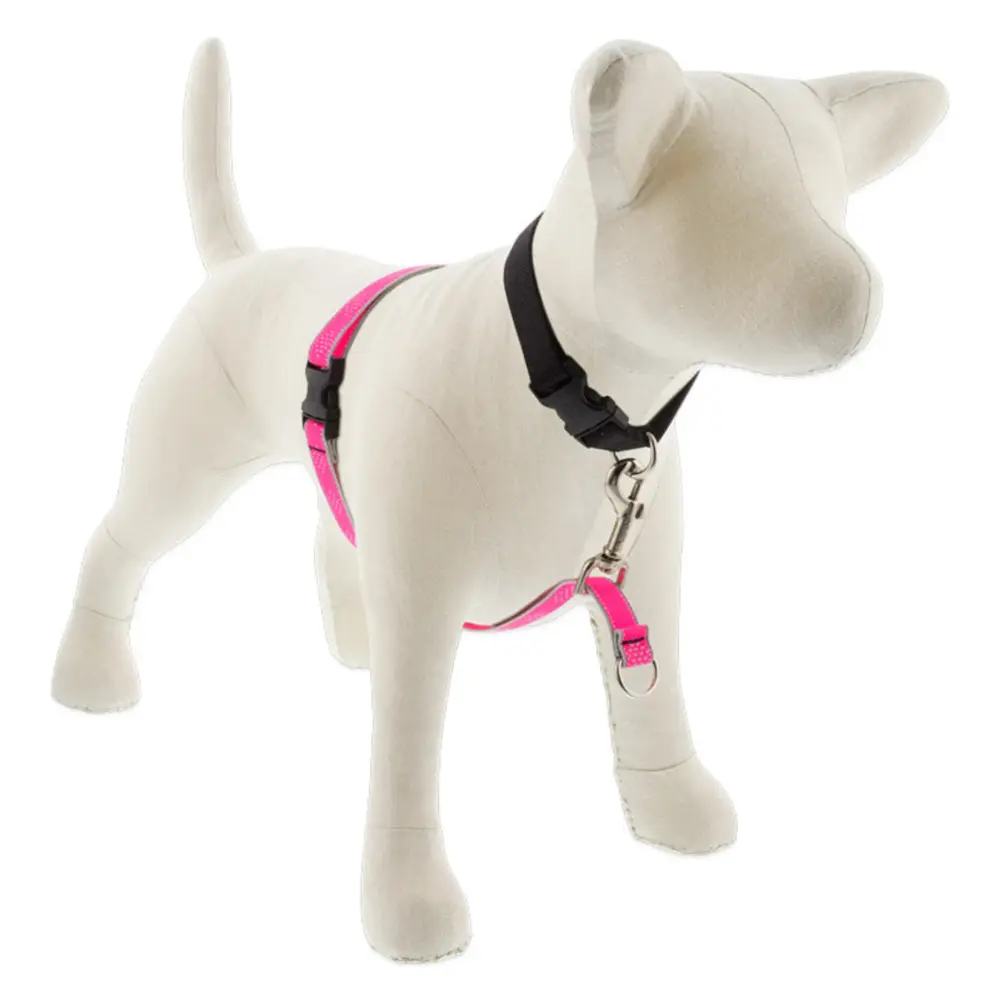
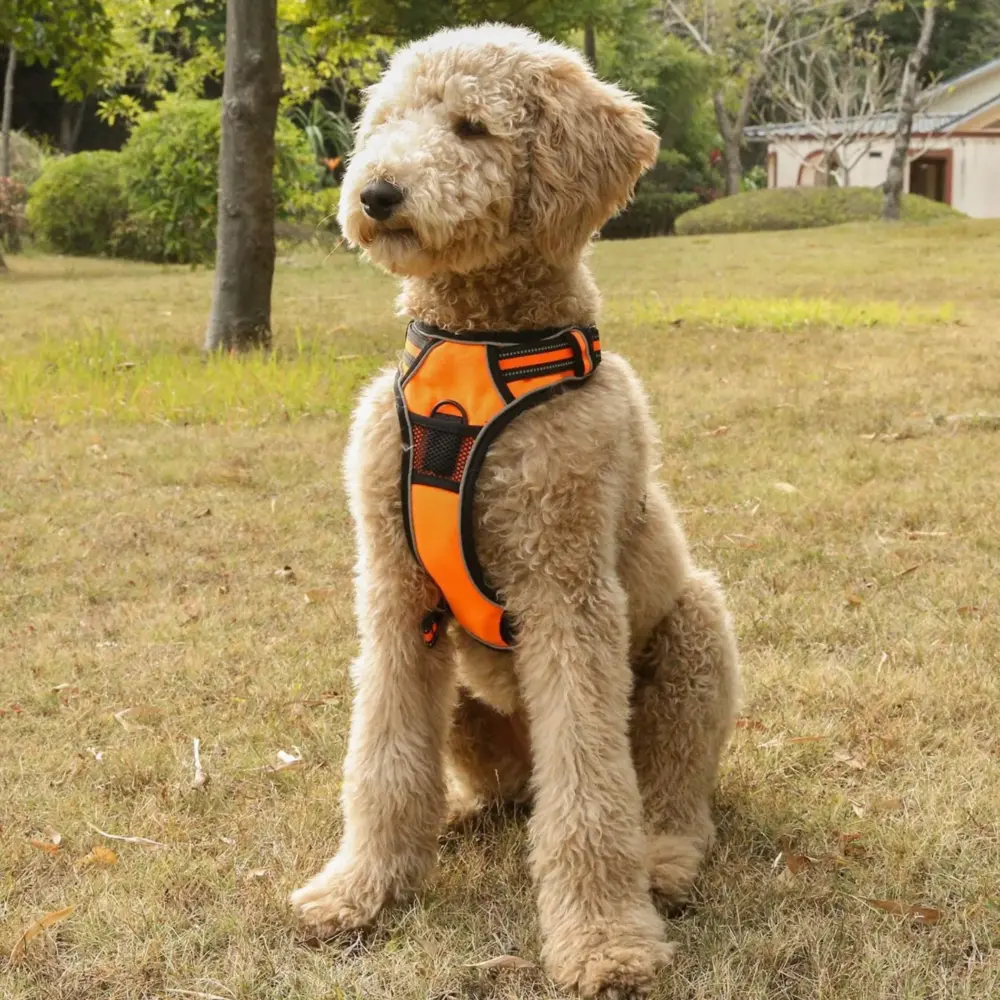
- A harness that fits closely, so a sudden lunge lands across the chest rather than the throat. Check behind the front legs for rubbing after the first few runs. Our front-clip vs back-clip harness guide explains why a back attachment usually suits running.
- A fixed-length leash, not a retractable one. Four to six feet leaves a relaxed curve of slack without loops to trip over. A hands-free waist leash can work once your dog runs reliably at your side; we don’t stock one, but if you use one, clip it to the harness.
- ID tags on a flat collar, with the leash clipped to the harness, so your phone number goes wherever your dog does if the leash slips out of your hand.
- Water you can carry and pour one-handed, because the other hand holds the leash.
- A clip-on pouch for a full poop bag, so you aren’t running with it in your hand until the next bin.
- Small, soft treats for rewarding position and cues in the early weeks.
- Reflective gear for your dog and a light for you on dawn and dusk runs.
The picks below are limited to Nilosi’s own catalog, one for each of those jobs. Check the sizing on each listing before you order, or browse all our walking and training gear.
-
Mr. Peanut’s
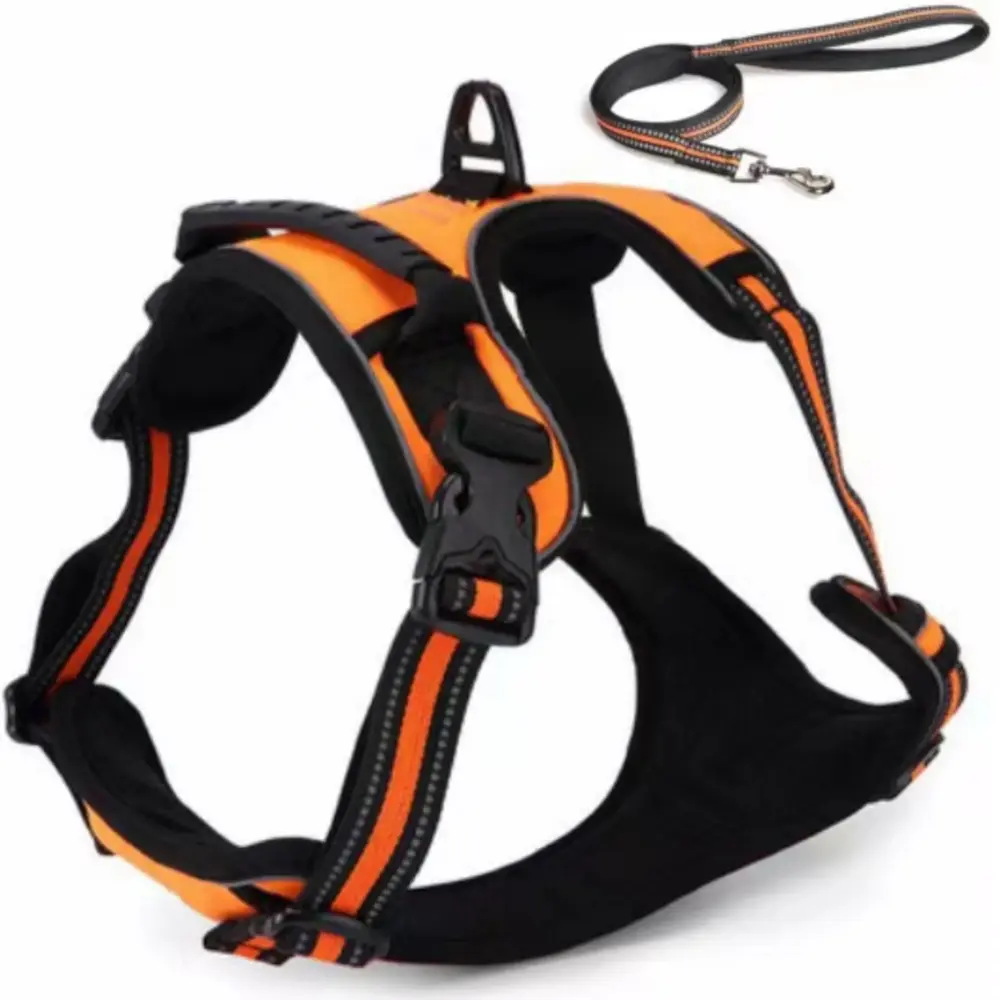
PetTrek Padded Harness and Leash Set, Choose size & color
Price range: $24.95 through $26.95
Why it fits: A padded harness and matching leash in one set, so a lunge mid-jog lands across the chest rather than the neck, with reflective stitching on both for dawn and dusk runs. XS to Large.
-
Lupine Pet
Reflective Dog Collar, Choose size & design
Price range: $22.95 through $28.95
Why it fits: A flat collar that keeps ID tags on your dog while the leash clips to the harness, with reflective threads woven into the pattern so drivers can spot your dog at dusk. Made in the USA.
-
Flipo
Fold-A-Bowl Dog Water Bottle with Fold-Out Bowl, Choose color
$28.95
Why it fits: A 26 oz bottle whose cover folds out into a bowl, so there is no separate bowl to carry, and a wrist strap lets you hold the bottle and the leash at the same time.
-
Yucky Puppy
Waterproof Poop Bag Holder, Choose size
Price range: $23.95 through $24.95
Why it fits: Clips to the leash or your belt and zips a full bag into a waterproof pouch, so you are not running with it in your hand until the next bin. Extra-large, set of two.




One caveat: the PetTrek harness and leash set listing doesn’t say where the leash attaches, so if you want a back attachment for running, check the product photos or ask us before you order. Keep a front-clip no-pull harness for training walks: a chest ring that turns your dog toward you mid-stride works against a steady run.
Skills to practice at a walk before you add speed
The AKC’s running guide puts loose-leash walking first; it is what keeps a run from turning into a tow. Practice these on ordinary walks until they are easy, and work on lunging at squirrels or other dogs at a walk before you add speed:
- A loose leash. If your dog still pulls at a walk, work through how to stop a dog pulling on the leash first; pulling only gets harder to manage at speed.
- One side, every time. Pick a side, ideally away from traffic, and deliver every treat at your hip on that side. A dog who switches sides mid-run can trip you both.
- A speed-up cue. The AKC suggests a phrase such as get running just before a few jogging steps, with praise when your dog matches you. If let’s go already means walk on, pick a different word for running.
- A slow-down cue. The AKC uses whoa: say it, slow to a walk and reward your dog for slowing with you.
- A wait at every curb, so you never jog into the road together.
A walk-run plan for the first few weeks
The AKC’s approach is to mix short jogging bursts into walks, then run more and walk less over several weeks; VCA adds that a slow, steady increase in time and intensity helps avoid injury. The times below are one example, not a prescription: run two or three days a week with walks in between, and move up a stage only when your dog finishes sessions keen and isn’t stiff or sore the next morning. Many dogs need more than a week at a stage.
- Stage 1: walks with one-minute jogs. After a five-minute warm-up walk, jog for about a minute, then walk for two or three. Repeat four to six times and finish with a five-minute walk.
- Stage 2: longer jogs. Jog for two or three minutes, then walk for two; repeat four or five times.
- Stage 3: mostly running. Jog for about five minutes, then walk for one or two; repeat three or four times.
- Stage 4: a steady, easy run. Fifteen to twenty minutes of easy jogging between the warm-up and cool-down walks, with a walk break whenever your dog needs one.
- Add time slowly from there. Add a few minutes a week or one more run day, not both, and change one thing at a time: time, pace, hills or surface.
- Check your dog the day after every run. If they are stiff, slow to get up, sore on their paws or less keen to go, drop back a stage. If it happens again, ask your veterinarian.
Tip
Run at your dog’s pace, not yours. A medium or large dog should be able to stay beside you at a relaxed trot; if yours has to gallop to keep up or keeps dropping behind, slow down. Small dogs reach that point much sooner.
Every run: warm up, cool down and keep checking in
- Start with a sniff and a bathroom break, and let your dog sniff at walk breaks with a release cue such as go sniff, so running stretches are for running. The AKC also suggests frequent breaks along the way.
- Warm up and cool down by walking for about five minutes. The AKC recommends several minutes of walking before and after each run.
- Keep the leash in a J. A relaxed curve of slack means your dog is running with you; a tight leash means you are too fast or your dog’s attention is elsewhere.
- Pass people, dogs and bikes with your dog on the far side, slowing to a walk if your dog gets excited. If a loose dog comes at you, stop running and see what to do when an off-leash dog approaches.
- Keep runs away from big meals. VCA’s guide to bloat in dogs notes that exercise after a large meal or a lot of water may increase the risk of gastric dilatation and volvulus, a life-threatening emergency most common in large, deep-chested breeds. Ask your veterinarian how long to wait.
Surfaces, paws and weather
- Mix in softer ground. Grass, dirt paths and packed trails are easier on paws than concrete and asphalt, and the AKC warns that sustained running on sidewalks or blacktop is especially hard on young dogs whose bones are still maturing. If trails are the goal, how to train your dog for hiking builds trail fitness at a walk.
- Check pads after every run. Pads used to short walks can scuff, crack or tear once runs add more pavement, so look them over and watch for licking at a paw. Rest a sore pad until it heals, and ask your veterinarian about any cut or bleeding.
- Swap runs for walks in the heat. The AKC points out that dogs can’t handle heat and humidity as well as people can, and the ASPCA warns that paw pads can burn on hot asphalt. Run early or late on warm days and skip hot, humid ones; how hot is too hot to walk a dog covers the pavement check.
- Slow to a walk on ice. Icy sidewalks are slippery for both of you, and salt and de-icers can irritate paws, so wipe them when you get home.
Water on the run
The AKC advises carrying water and offering it regularly. Don’t wait for your dog to ask: a dog busy keeping up with you may not stop to drink on its own.
- Offer a drink at walk breaks and at least once mid-run, more often on warm days.
- Let your dog drink a little at a time, then offer more a few minutes later, rather than a bowlful gulped at the end.
- Don’t count on puddles, ponds or streams: standing water can carry germs and parasites, and in warm weather some ponds and lakes grow algae that can be toxic to dogs.
Signs to slow down or stop
The AKC warns that dogs may keep running to please their owners even when they want to stop, so the call is yours. Slow to a walk, find shade and offer water if you notice:
- Heavy panting that doesn’t ease after a short walk break
- Lagging, so the leash goes tight behind you instead of in front
- A tail carried lower than usual, or a dog who keeps looking at you and slowing
- Limping, a shorter or uneven stride, or favoring one paw
- Lying down, heading for shade or refusing to go on
- Stumbling, or seeming confused or unsteady
If your dog perks up quickly, walk the rest of the way and make the next session easier. After limping, stumbling or a slow recovery, stop for the day, and call your veterinarian if a limp or stiffness lasts.
Safety note
Excessive panting or difficulty breathing, drooling, weakness, confusion or collapse can be signs of heatstroke, and a swollen belly with restlessness, drooling and retching that brings nothing up can be bloat. Both are emergencies: stop running, move your dog into shade, and call your veterinarian or the nearest emergency clinic right away, then head straight there.
Mistakes to avoid
- Running only on weekends. A long Saturday run after a quiet week skips the build-up that regular, shorter sessions provide.
- Following the calendar instead of your dog. A race date or an app’s schedule doesn’t know how your dog moved this morning; the day-after check outranks both.
- Clipping the leash to the collar for a quick run. One lunge at a squirrel lands on the throat; use the harness every time.
Troubleshooting: surging, weaving and a dog who quits
- Your dog surges ahead once you speed up. Walk that stretch, reward position at your side and bring jogging back in shorter bursts. First-minute excitement often eases after the warm-up.
- Your dog weaves or cuts across in front of you. Take up a little slack while keeping the J, treat only at your hip on the running side and try a slightly different pace, which settles some dogs.
- Your dog was keen but now lags or won’t start. Go back a stage, check the weather, your dog’s paws and the skin under the harness for red or bare patches, and keep rest days between runs. If it continues, see your veterinarian. Some dogs simply prefer walks, hikes and play, and that is fine.
Running with your dog: FAQ
How far can my dog run with me?
There is no single number: it depends on age, build, fitness, weather and surface. Build by time rather than distance, add it slowly and let the day-after check decide. For a dog with any health concern, your veterinarian can help set a limit.
Can I run with my dog every day?
Not at first: walks between runs give paws and muscles time to adapt. A fit adult who has built up gradually may run more often, with some easy days kept in the week.
Related guides
-
How-to
How to Walk Two Dogs at Once Without Tangles or Pulling
Two dogs, two leashes and no knots: train each dog alone first, give each one a usual side, walk at the slower dog’s pace, untangle crossed leashes safely and know what to do when one dog pulls or reacts.
-
Checklist
What to Tell Your Dog Walker: A Handover Checklist
Everything a new dog walker needs on one page: where the gear lives and how it goes on, how your dog walks, leash and route rules, medications and treats, emergency contacts, the door routine, weather rules and a first walk together.
-
Guide
Dog Walking Essentials: What to Bring on Every Walk, Including After Dark
What to bring on every dog walk, from an ID collar and harness to water and a way to carry full poop bags, plus reflective gear and a light for darker evenings after the clocks change in November.