Seasons & Gifts Guide
How Hot Is Too Hot to Walk a Dog? Pavement, Timing and Warning Signs
Short answer
There’s no single cutoff, but the AKC says the ground may be too hot for walking at 85°F or above if the pavement hasn’t had a chance to cool. Hold your hand on it for ten seconds: if that’s uncomfortable, walk early or late on shaded grass, carry water and turn back if your dog lags or pants hard.
The forecast is only part of the answer. Whether today’s walk is safe depends on how hot the ground is, how humid the air is and how well your dog copes with heat, and the ground can change from one block to the next. This guide is about the summer walk itself; for the winter version, see how cold is too cold to walk a dog.
Check the ground, the air and your dog
Run through these three before you pick up the leash:
- The ground. Pavement in the sun gets far hotter than the air. In its guide to protecting paws from hot pavement, the AKC cites a reading of 135°F asphalt on an 86°F day, and Dr. Jerry Klein, the AKC’s Chief Veterinarian, says that at 85°F or more, with no chance for the pavement to cool down, the ground may be too hot for safely walking a dog.
- The air. Dogs cool themselves mainly by panting, and the AKC notes that humid air makes that evaporative cooling less effective. Check the heat index as well as the temperature: the National Weather Service uses it to describe how hot it really feels once humidity is factored in, and says full sunshine can raise it by up to 15°F.
- Your dog. A flat-faced, heavy-coated, older or overweight dog reaches their limit well before a lean, short-coated young one. The next section covers who struggles first.
Then match the walk to the conditions:
- Mild, and the pavement passes the hand test: the usual walk, with water and shade breaks.
- 85°F or warmer, or the pavement fails the test: walk in the early morning or late evening, keep to grass and shade, and shorten the route.
- Hot and humid, a heat advisory, or a high-risk dog on a warm day: short bathroom trips on shaded grass, with the real exercise saved for the coolest hour or for indoor games.
- At any temperature: head home at the first sign of overheating (signs below).
Which dogs struggle first in the heat
Some dogs hit their limit long before others. The ASPCA, the AKC and VCA Animal Hospitals point to the same groups:
- Flat-faced breeds such as Pugs, French Bulldogs, Boxers and Bulldogs. The ASPCA’s hot weather safety tips explain that they can’t pant as effectively, and VCA’s guide to heat stroke in dogs says they can show signs of heat stroke when temperature and humidity are only moderately raised.
- Thick, double or dark coats. All three appear in the AKC’s guide to signs of overheating and how to prevent it, which notes that dark coats absorb more sunlight.
- Small and short-legged dogs. Their bodies sit close to the hot ground and absorb heat from it, the AKC’s pavement guide says.
- Puppies, seniors and overweight dogs. All three are on the AKC’s list of dogs at higher risk of heatstroke.
- Dogs with health conditions. The ASPCA singles out heart and lung disease, and the AKC adds conditions such as hypothyroidism and laryngeal paralysis. If your dog has one, ask your veterinarian how much summer exercise is safe.
- Dogs wearing a muzzle. VCA notes that a muzzle restricts panting, so keep muzzled walks short and in the coolest hours.
- Excited or hard-working dogs. VCA warns that excited or heavily exercised dogs can be at risk even when the weather doesn’t seem especially hot. A dog who lives for the ball won’t stop on their own, so you set the limit.
Hot pavement: the hand test and safer surfaces
Paw pads are tough, but not heatproof: the AKC warns that hot asphalt and artificial grass can cause blisters and burn them. Its check takes ten seconds:
- Test where your dog will actually walk, in full sun, at the time you plan to go.
- Rest your hand flat on the surface and hold it there for ten seconds.
- If you can’t keep it there comfortably, it’s too hot for your dog’s paws. Pick another route or another time.
- Test again along the way when the route crosses a parking lot, a blacktop path or a long sunny stretch.
The AKC says the same test works on sand, metal and concrete. A rough guide to what’s underfoot on a summer walk:
| Surface | In summer sun | Best approach |
|---|---|---|
| Asphalt | Dark and slow to cool | Avoid in the heat; test even at dusk |
| Concrete | Hot in sun, cooler in shade | Use the shady side and test it |
| Synthetic turf | Can get very hot, the AKC says | Test before any play on it |
| Sand | Dry sand heats up in the sun | Test before a beach walk |
| Metal | Grates, plates and covers | Step around them |
| Dirt path | Cooler under trees | A good shaded route; test sunny gaps |
| Grass | The AKC’s pick, with shade | First choice on hot days |
If your dog starts lifting paws, hopping or steering for the grass, believe them. Move onto grass or into shade, and carry a small dog over a hot stretch you can’t avoid. Look at the pads once you’re home: blisters, raw patches or a limp that doesn’t ease are reasons to call your veterinarian.
A summer walk plan: early, late, shaded, shorter
The AKC’s advice for hot days is to walk in the early morning or evening and to choose grassy or shady areas. Our comparison of the best time to walk a dog sets out the full daily schedule; in a heat spell, it comes down to these habits:
- Make the morning walk the main one. The ground has had all night to lose the previous day’s heat, so early morning is usually the coolest window.
- Go later in the evening than feels necessary. Pavement that baked all afternoon can stay hot after the air cools, which is exactly the case the AKC’s 85°F guideline warns about. Hand-test before you leave.
- Plan the route around shade. Tree-lined streets, park paths and the shady side of the street beat a sunny loop, even if the walk is shorter.
- Stay close to home. Short loops near your door let you turn back the moment your dog flags, instead of facing a long walk home in the heat.
- Slow down. A slow, sniffy walk gives your dog plenty to think about with far less exertion than a brisk one. Save running and long fetch sessions for cooler days.
- Keep midday to a bathroom break on shaded grass.
- Be seen at the edges of the day. In high summer the early walk may start before sunrise and the late one end after sunset. Reflective detail on your dog and a light for you help drivers spot you both; our dog walking essentials list covers the low-light kit.
On the worst days, skip the walk. Short bathroom trips and a few indoor games will do for a day or two, and our plan for keeping a dog cool without AC covers the hours in between. If the cooler walk means driving to a shady park, cool the car first and never leave your dog alone in it once parked: the ASPCA warns that a parked vehicle can lead to fatal heatstroke.
Water on the walk: carry it and offer it often
The AKC’s heatstroke guide advises bringing enough water for your dog’s size and activity level and planning breaks into any outdoor activity. On a summer walk, that means:
- Carry it from home. Don’t count on a tap, a fountain or a bowl outside a shop along the route.
- Offer it at every shady stop. Don’t wait for your dog to look thirsty; a dog busy sniffing may walk straight past a chance to drink.
- Pack enough for a long rest. If your dog needs a break in the shade, you still want water left for the walk home, and some for yourself.
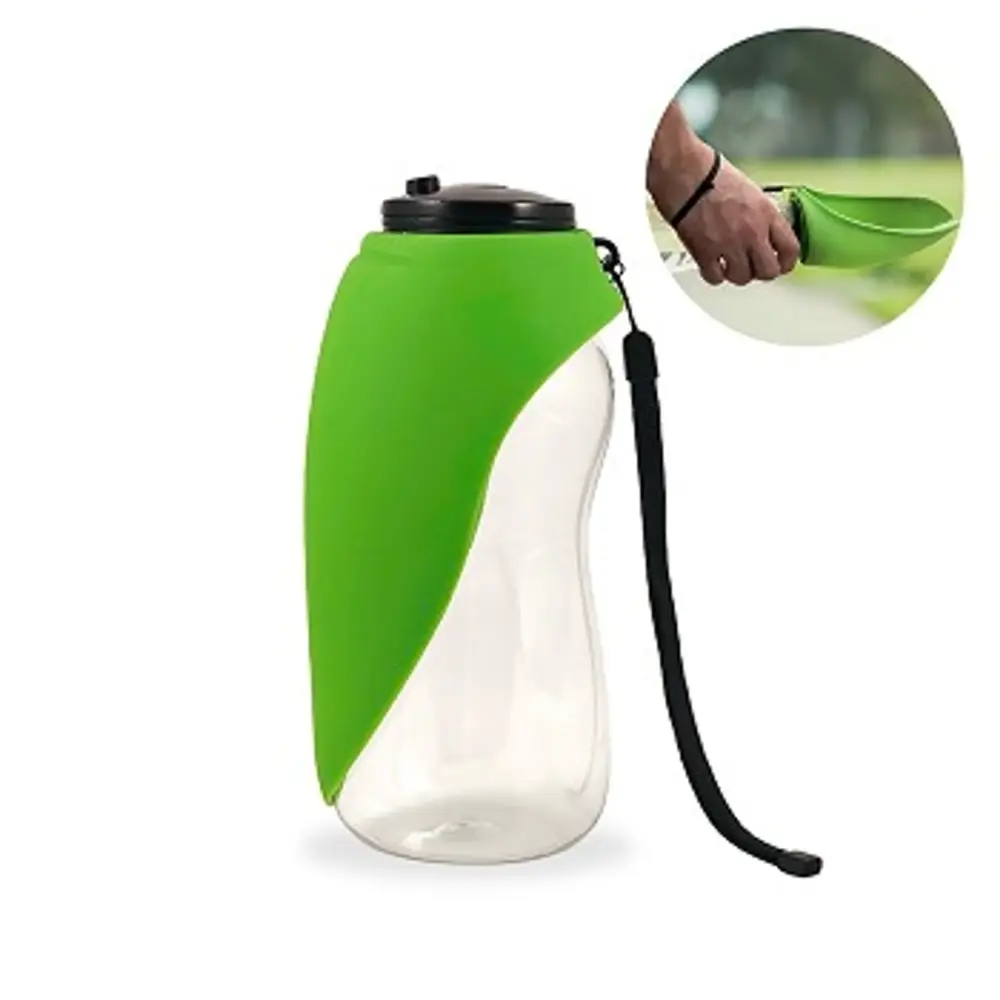
A bottle with its own bowl saves juggling a separate dish, a leash and a bag. The Flipo Fold-A-Bowl we carry holds 26 oz (770 ml), its cover folds out into the bowl, and the listing says its push-button closure doesn’t leak in a bag.
Overheating signs and what to do on the way home
Overheating can build quickly, so watch your dog more than the clock. Before any of the medical signs, many dogs slow down, lag behind or lie down in the shade. Treat that as your cue to turn around.
Early signs of overheating
The AKC lists these as early signs. If you see any of them, stop and start cooling your dog:
- Frantic or excessive panting, or labored breathing.
- Heavy drooling or thick saliva.
- Bright-red gums or tongue.
- Weakness or trouble standing.
- Vomiting or diarrhea.
The later signs on the AKC’s list, such as gray or purple gums, seizures or collapse, mean a dog is in serious danger.
What to do right away
- Stop and get your dog into shade or air conditioning. Carry a small dog, and don’t make an overheated dog walk home.
- Wet them with cool, not cold, water on the head, belly, armpits and paws. VCA advises against ice packs and against covering the dog with wet cloths.
- Get air moving over them: a fan, a car’s air conditioning or a breeze in the shade.
- Offer room-temperature water if your dog is alert and able to drink, as the AKC advises. Don’t force it.
- Call your veterinarian or the nearest emergency clinic, and travel there in an air-conditioned car.
Safety note
Don’t wait to see whether your dog bounces back. VCA calls hyperthermia an immediate medical emergency, so call while you are cooling your dog, not after.
Tip
Before the first heat wave, save your veterinarian’s number and the nearest 24-hour emergency clinic in your phone. On longer walks, know who could pick you up in a cool car.
After the walk: a cool place to rest
Cooling down continues at home. Top up the water bowl, let your dog choose a cool spot, and keep an eye on them for a while: panting that doesn’t settle once they are resting somewhere cool is a reason to call your veterinarian. If the route crossed hot ground, check the pads now.
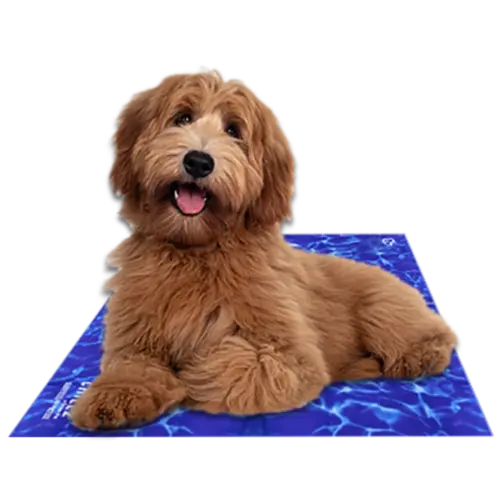
Many dogs head straight for the kitchen tile. A gel cooling mat puts a cool surface wherever you want it; our guide to whether cooling mats work for dogs explains what they can and can’t do, and cooling mat vs elevated dog bed compares the two usual options. Either one is a comfort for a warm dog, not treatment for an overheated one.
Summer walk gear from our catalog
These picks are limited to what Nilosi carries, and each one covers a part of the summer routine above. Measure before you order: the harness is sized by chest girth, the collar by neck size.
-
Flipo
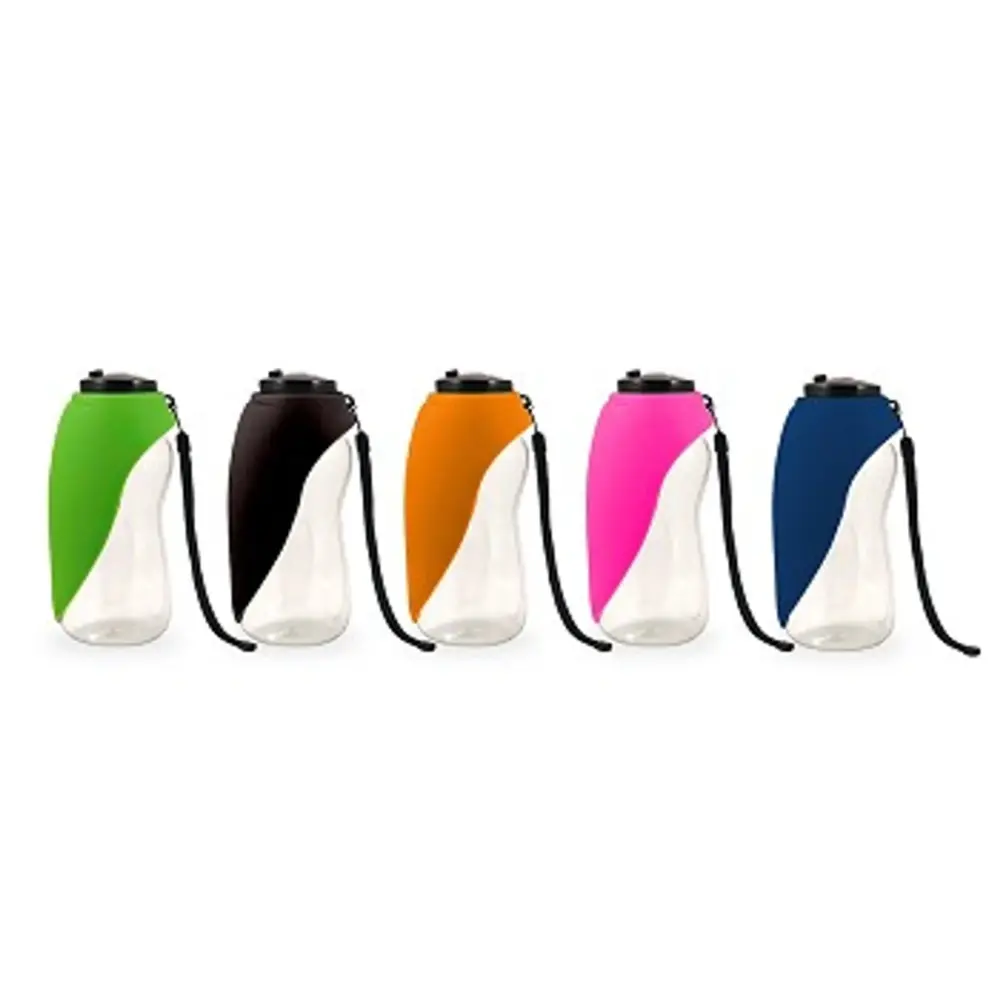
Fold-A-Bowl Dog Water Bottle with Fold-Out Bowl, Choose color
$28.95
Why it fits: Serves water at every shady stop without a separate dish; the cover folds out into the bowl and a wrist strap frees a hand for the leash.
-
The Green Pet Shop
Chillz Cooling Gel Mat for Dogs & Cats, View product
$45.95
Why it fits: Gives a warm dog a cool place to lie after the walk; the pressure-activated gel needs no water, ice or power and recharges on its own.
-
Mr. Peanut’s
PetTrek Padded Harness and Leash Set, Choose size & color
Price range: $24.95 through $26.95
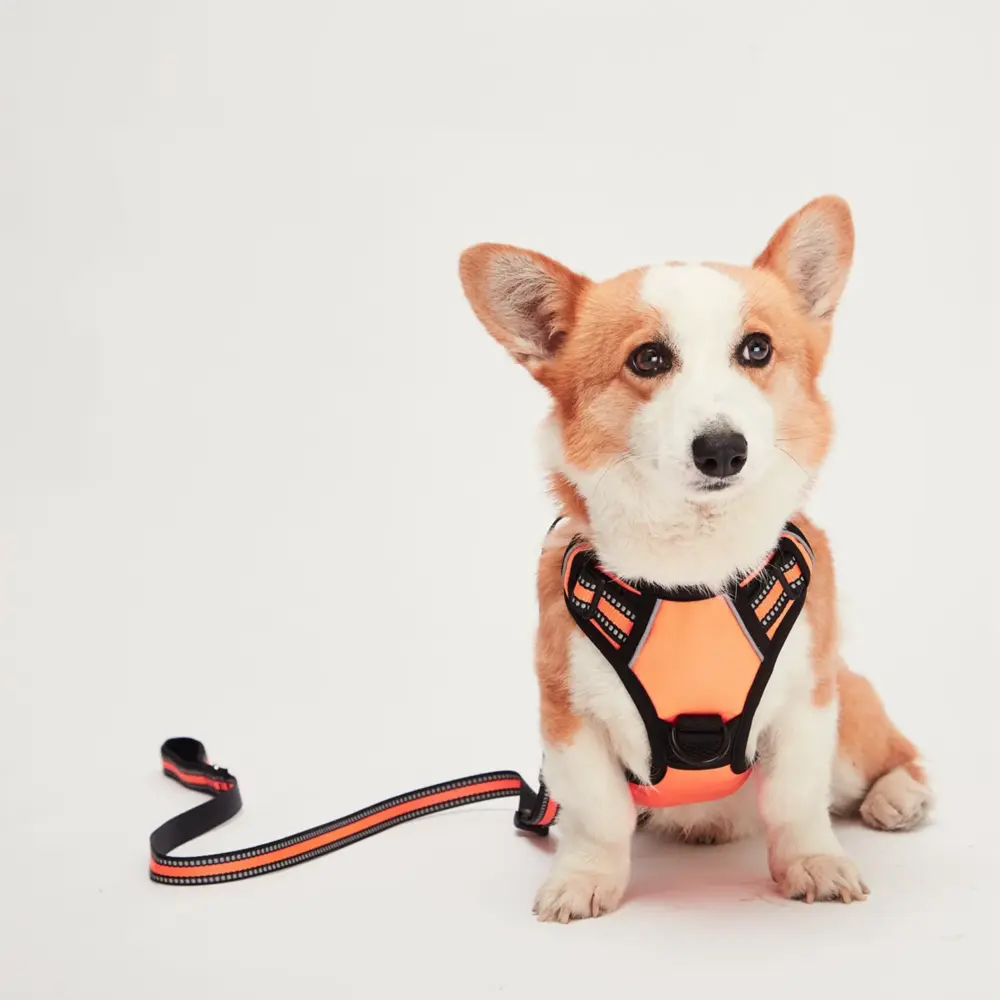
Why it fits: Makes your dog easier to spot on walks moved to dawn and dusk, with reflective stitching on the padded harness and its matching leash.
-
Lupine Pet
Reflective Dog Collar, Choose size & design
Price range: $22.95 through $28.95
Why it fits: Carries ID tags on every early and late walk, with reflective threads woven into the pattern so your dog is easier to see at dusk.



Browse more walking and training gear.
Hot-weather walking FAQ
Is 80 degrees too hot to walk a dog?
Not automatically. It’s below the AKC’s 85°F guideline, but full sun and humidity can make it feel much hotter, dark pavement can be far hotter underfoot, and flat-faced, thick-coated, older and overweight dogs may struggle at 80°F. Do the hand test, walk early or late, and keep it short for a high-risk dog.
Can I walk my dog when it’s 90 degrees?
Not for a proper walk in the heat of the day. 90°F is above the AKC’s 85°F guideline, and the AKC cites asphalt at 135°F when the air was only 86°F. Keep outings to short bathroom trips on shaded grass, and save the real walk for early morning, once the pavement passes the hand test.
Do dogs need booties in summer?
They can help on hot stretches you can’t avoid, such as a parking lot or a city sidewalk. The AKC says booties should fit snugly, but not too tight or too loose, and leave the feet some room to breathe; let your dog get used to them at home first. Booties protect paws, not the rest of your dog, so they don’t make a hot walk safe. We don’t sell booties.
Related guides
-
Guide
National Parks With a Dog: Where Dogs Can Go, Rules and What to Bring
Most national parks welcome leashed dogs on roads, in campgrounds and at picnic areas, but not on most trails. See how the rules differ across 11 parks, what the B.A.R.K. Ranger principles mean in practice, why your dog never waits in the car and what to pack.
-
Guide
How Long Should You Walk a Senior Dog? Pace, Routes and Signs to Stop
Older dogs usually do best on shorter, slower walks spread through the day. Here's how to find your dog's comfortable length, pick easier routes and a harness, adjust for heat, ice and dark evenings, and spot the signs that mean head home or call your veterinarian.
-
Guide
Hiking With a Small Dog: How Far, What to Bring and When to Carry Them
Small dogs can hike, on the right trail. Plan by time and climb rather than miles, clip the leash to a snug small harness with ID on the collar, offer water and tiny snacks often, watch heat and cold closely, give big dogs and coyotes room, and bring a backpack your dog already knows for the way back.