Seasons & Gifts Comparison
Cooling Mat vs Elevated Dog Bed: Which Keeps a Dog Cooler?
Short answer
For most dogs indoors, a gel cooling mat is the better choice: it adds a cool surface to carpet, a crate or a car seat. A raised mesh cot wins outdoors in the shade, lifting your dog off hot patios and campsite ground so air moves underneath. Neither cools the air or replaces water and shade.
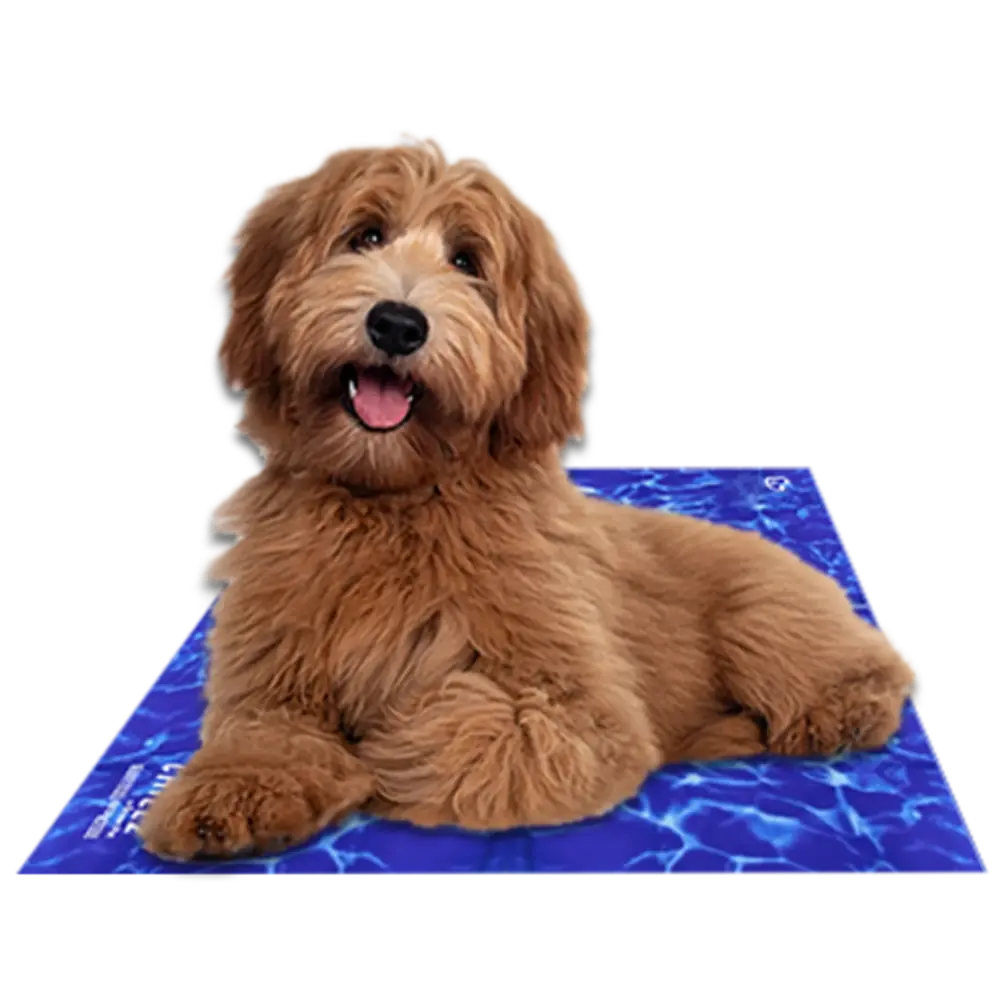
Here, an elevated dog bed means a raised cot: breathable mesh or tough fabric pulled taut over a metal or plastic frame on short legs, not a padded bed on feet. A cooling mat means a pressure-activated gel mat, the kind that needs no water, freezer or power. Each keeps a dog cooler in a different way, which is why each wins in different places.
Cooling mat vs elevated bed at a glance
How they cool
| Option | How it cools | Feels cool? | Works best | Weak spot |
|---|---|---|---|---|
| Gel mat | Gel takes in heat where your dog lies | Yes, until the gel warms | Warm rooms, crates, car seats | Slows down in a hot room or sun |
| Raised cot | Air moves underneath; off hot ground | No; it stays at air temperature | Shaded patios, decks, campsites | Little help in still, hot air |
Living with each one
| Option | Chewing risk | Carrying | Cleaning | Sizing |
|---|---|---|---|---|
| Gel mat | A torn cover can expose the gel | Light; most fold for travel | Usually wipe-clean; check the label | Cover the spot where your dog sprawls |
| Raised cot | Mesh, corners and feet can be chewed | Bulkier; some frames come apart | Wipe or hose, per the maker | Fabric area, weight limit, height |
How a gel cooling mat works
A gel mat works by contact. The gel under the cover starts at room temperature, cooler than your dog’s skin, and draws warmth from wherever their body touches it, mostly the thinly furred belly. When your dog gets up, the gel gives that heat back to the room and recharges, with no water, freezer or power.
So a mat cools your dog only where they touch it, and best at the start of a nap: the gel warms as it works, and in a sunny or stuffy room it starts out warm and recovers slowly. How long the cool lasts depends on the room, the mat and how much of it your dog covers; the AKC’s guide to cooling mats for dogs notes that cooling varies from product to product.
Because it brings its own cool surface, a mat helps most where your dog has none: a carpeted room, a padded bed, a crate tray or a car seat. Our guide to whether cooling mats work for dogs covers the gel in more depth, including how to get a wary dog to lie on one.
How a raised cot keeps a dog cool
A cot never feels cold to the touch. It cools by taking things away: the warm floor or ground under your dog, and the padding that would hold their body heat against them. With taut mesh or fabric holding your dog a few inches up, air reaches their belly from below as well as above, and their heat has no cushion to build up in. The AKC’s guide to choosing a dog bed notes that cot-style beds can help keep dogs cool and suggests one that is durable, breathable and easy to clean.
That matters most outside. Concrete, pavers and decking soak up the sun, and the ASPCA’s hot weather safety tips warn that a dog lingering on hot asphalt can heat up quickly, being so close to the ground. A cot in the shade keeps your dog off surfaces like these and lets any breeze do its work.
Its limits follow from the same idea. A cot only helps your dog lose heat to the air around them. In shade with moving air, that is a real help; in still, hot air it does little, and in direct sun the fabric warms and a metal frame can get hot to the touch. A cot has no padding, either, so a dog who likes to curl up or burrow may still want a soft bed nearby.
Where each one works best
Carpet, rugs and tile floors
Indoors, the mat usually wins. On carpet, a rug or your dog’s regular bed, it adds a cool patch where there wasn’t one, and it can follow your dog to the spot they like best, such as the floor by your desk. On bare tile or stone, your dog already has a cool surface, so a mat adds less.
A cot can work indoors under a ceiling fan or across from a floor fan, where air flows beneath it. On a cool tile floor, though, it lifts your dog away from what may be the coolest surface in the house.
Inside a crate
A gel mat fits a crate more easily: it is thin, so it takes no headroom, and it lies flat on the tray. Lay it out without folding, and leave a strip of bare tray so your dog can move off it when they want to.
Crate-sized cots exist, but check two things before buying one: that the frame fits the floor inside the crate, and that your dog can still sit, stand without ducking and turn around with the extra height. A cot’s airflow also depends on air reaching the crate, so one inside a covered crate in a warm room gains little. For the rest of the setup, see what to put in a dog crate.
In the car
Here the mat wins outright. It is light, lies flat on the back seat or cargo floor, and gives your dog a cooler surface while the air conditioning runs. A cot’s legs won’t sit level on a sloped, cushioned seat, and a rigid frame can slide around when you brake hard.
Neither is a restraint, and neither makes a parked car safe, even for a few minutes. Our guide to keeping a dog cool in the car covers pre-cooling, getting air to the back seat and rest stops on hot days.
Patios, decks and yards
Outdoors, the cot wins. Set it in full shade, where it keeps your dog off sun-warmed concrete or decking and catches whatever breeze there is, and move it as the shade moves through the day.
A gel mat outside takes in heat from two directions, your dog above and a warm surface below, so it uses up its cooling sooner. If you put one on a patio, keep it in deep shade and bring it in when you go inside. Before you settle your dog anywhere outdoors, rest your palm flat on the surface for ten seconds: if that is uncomfortable, it is too hot for your dog to lie on. It is the same hand test used for sidewalks, as how hot is too hot to walk a dog explains.
Campsites and days out
A cot keeps your dog off hot sand, damp ground and burrs, and many frames fold or come apart for packing. The mat is the lighter thing to carry and suits a shaded tent or the drive there; lay it on a blanket rather than bare ground, where stones and twigs are hard on any cover.
Safety for chewers, puppies and diggers
Neither is made to be chewed, and each fails in its own way:
- Gel mat. The risk is the gel. Stop using a mat once its cover is torn or punctured. For a mouthy dog, the AKC suggests a durable nylon cover over a plush, cotton-based one, which a puppy could tear open.
- Raised cot. Dogs can chew through mesh and gnaw the frame’s corners, end caps and plastic feet, and the pieces can be swallowed. A dog who digs at bedding before lying down can also wear through the fabric. Choose a frame that stands steady, with feet that grip a smooth floor.
Watch the first few sessions with either one. Keep both away from puppies who mouth everything, adult chewers and dedicated diggers whenever you can’t supervise, and whatever your dog lies on, leave room to step off it onto bare floor or ground.
Safety note
If your dog swallows gel, fabric or a piece of the frame, call your veterinarian right away, even if they seem fine.
Using both, and what neither can do
A mat and a cot together
Many dogs do best with a choice. You can lay a mat on top of a cot, but it covers the mesh, so your dog trades the airflow beneath for a cool surface; set side by side in the same patch of shade, the two let your dog pick. Keep their regular bed nearby as well, since a gel mat is thin and a cot has no padding.
What neither can do in a heat wave
A mat and a cot both make a warm dog more comfortable. Neither cools the air, replaces water and shade, or helps a dog who is already overheating. The ASPCA advises keeping flat-faced, older and overweight pets, and those with heart or lung disease, in air-conditioned rooms as much as possible in hot weather. If your home has no air conditioning, keeping a dog cool without AC covers the coolest room, fans, damp towels and when to leave.
Safety note
Frantic or excessive panting, thick drool, bright-red gums, labored breathing and weakness are among the signs in the AKC’s guide to overheating in dogs. Move your dog somewhere cool and call your veterinarian; don’t wait to see whether a mat or a cot helps.
Verdict: which one to choose
- Choose a gel mat if your dog spends hot afternoons indoors on carpet or a padded bed, sleeps in a crate, rides in the car, or needs one cool spot that moves from room to room.
- Choose a raised cot if your dog spends warm days on a patio, deck or lawn where you can keep the cot in shade, or comes camping with you.
- Use both if your dog splits the day between indoors and out: the cot outside in the shade, the mat inside.
- Supervise either one at first with a dog who chews or digs at bedding, and take it away at the first tooth marks or torn fabric.
Size matters for both. Measure your dog stretched out, since a hot dog sprawls rather than curls, and compare that with a mat’s full surface or the fabric area inside a cot’s frame, not its outer size. How to measure a dog for a bed walks through it.
The cooling mat we carry, and what we don’t sell
Nilosi sells one side of this comparison: the Chillz Cooling Gel Mat for Dogs & Cats from The Green Pet Shop. We don’t carry raised cots, so use the points above if you shop for one elsewhere.
- How it cools: your pet’s weight activates the gel, which cools the spot they lie on and resets by itself after a few minutes off the mat; no water, freezing or power needed.
- Where it goes: on a bed, in a crate or on the floor, and it is lightweight and folds for the car. The listing names indoor spots and the car, not the yard.
- Size: Medium, in the Wave color. The listing gives no dimensions, so measure the crate floor or the spot it is for and ask us before you order.
- Care: wipe it with a damp cloth.
Everything we carry for resting and sleeping is in beds and comfort.
Related guides
-
How-to
How to Keep a Dog Cool Without AC in a Heat Wave
Without air conditioning, a heat wave comes down to one well-chosen room: shaded windows, moving air, water in several places, frozen food for the hottest hours and a damp towel underneath. Here's how to set it up, when it stops being enough and which heat-stress signs need a vet.
-
How-to
How to Keep a Dog Cool in the Car, and Why a Parked Car Is Never Safe
A summer drive with a dog starts with one rule: never leave them in a parked car, even briefly. Then pre-cool the car, shade the rear windows, get cold air to the back seat, plan shaded water stops and know the overheating signs that mean pulling over and calling a vet.
-
How-to
How to Keep a Cat Cool in Summer: Cool Spots, Water and Heat Signs
A hot-day plan for indoor cats: why panting is a red flag, heatstroke first aid, blinds and safe airflow, extra water, a cool floor or gel mat, brushing instead of shaving, play at the cool ends of the day, and leaving your cat home in the heat.