Senior Pets Guide
How Long Should You Walk a Senior Dog? Pace, Routes and Signs to Stop
Short answer
There’s no set number of minutes for an older dog. Keep each walk a little shorter than the point where yours starts to lag, and walk two or three times a day instead of once; for a dog with arthritis, VCA suggests starting at about 10 minutes, three times a day. Next-morning stiffness means it was too much.
How walks change as dogs age
An older dog still needs to get out; the walk just has to fit a body that tires sooner and takes longer to recover. In the AKC’s guide to how often to walk your dog, veterinarian Dr. Emily Wilson says the pace for older dogs simply needs to be slower, and the AKC adds that seniors still benefit from new sights, sounds and smells. The outing matters as much as the exercise.
Size sets the timing more than the birthday: large and giant breeds reach their senior years well before small dogs, and our guide to when a dog counts as a senior has ages by size. In practice, you often notice it on the walk first: a slow start after a nap, lagging on the way home, a pause before curbs and steps, or a longer sleep once you get back.
That is a reason to adjust the walks, not drop them. VCA Animal Hospitals’ senior dog care guide notes that less exercise can mean less muscle tone, which makes jumping and climbing harder still. If your dog is slowing down and hasn’t had a checkup recently, book one before you settle on a new routine: stiffness and tiring early can have causes your veterinarian can treat.
How long and how often: splitting the daily walk
The AKC’s advice on walking senior dogs doesn’t set a minute target, and for good reason: two ten-year-olds can be worlds apart. The one concrete starting point comes from VCA’s guide to exercising dogs with osteoarthritis: about 10 minutes of walking three times a day, lengthened week by week only if your dog doesn’t get stiffer. VCA’s reasoning is that short, frequent walks leave less resting time for joints to stiffen in between. Your veterinarian may adjust that for your dog.
For a senior without arthritis, the number that matters is how long your dog walks comfortably today. For adult baselines and how age, size and energy shift them, see how long to walk a dog at any age. To find your senior’s own length:
- Walk your usual route at your dog’s pace and note when they first lag, slow right down or start steering for home.
- Make each walk a little shorter than that, using small loops close to home rather than a long out-and-back, so your door is never far away.
- Split the day’s walking into two or three of these outings, with short bathroom trips in between.
- Check your dog the next morning. Stiff, slow to get up or reluctant at the door means the last walk was too much; drop back for a few days.
- If mornings stay easy, add a few minutes a week. Review the plan every few weeks, and again after any change in health, weight or medicine.
For example, a dog who used to manage a 45-minute loop but now lags after about 20 minutes might do well with a 15-minute walk in the morning, another in the evening, and a slow sniff around the block at midday.
Pace, routes and surfaces for older legs
Let your dog set the speed, and walk the first few minutes slowly, especially in the morning or after a nap, when stiffness is often at its worst. For dogs with arthritis, Dr. Wilson notes that slow, frequent movement is beneficial, which is one more reason to favor several easy walks over one brisk one.
Route choice does a lot of the work. To spare the joints of puppies and older dogs, the AKC suggests a casual pace and less time on asphalt or concrete, in favor of grass or wooded trails. For a senior, look for ground that is both soft and even.
| Route feature | Easier on a senior | Harder on a senior |
|---|---|---|
| Ground | Mown grass, packed dirt, flat paths | Concrete, loose gravel, roots |
| Slope | Flat or gentle | Steep hills, long stairs |
| Crossings | Curb cuts and ramps | High curbs, broken sidewalk |
| Route shape | Short loops near home | Long out-and-back routes |
| Time of day | The mildest hours | Midday heat, icy dusk |
Curbs deserve a plan of their own, since trouble with them is one of the AKC’s signs of pain and fatigue in older dogs: cross at curb cuts where you can, and slow right down at the ones you can’t. The slick hallway or porch steps on the way out count too.
Keep the nails short as well. VCA notes that long toenails make dogs stand and walk abnormally and reduce traction, and shorter walks wear them down less, so check them more often than you used to.
Finally, let the nose lead. Plenty of sniff stops keep a short walk interesting without adding distance, and our guide to enrichment for senior dogs has sniff-walk and scent-game ideas for the days when the route has to be very short.
Harness or collar for an older dog
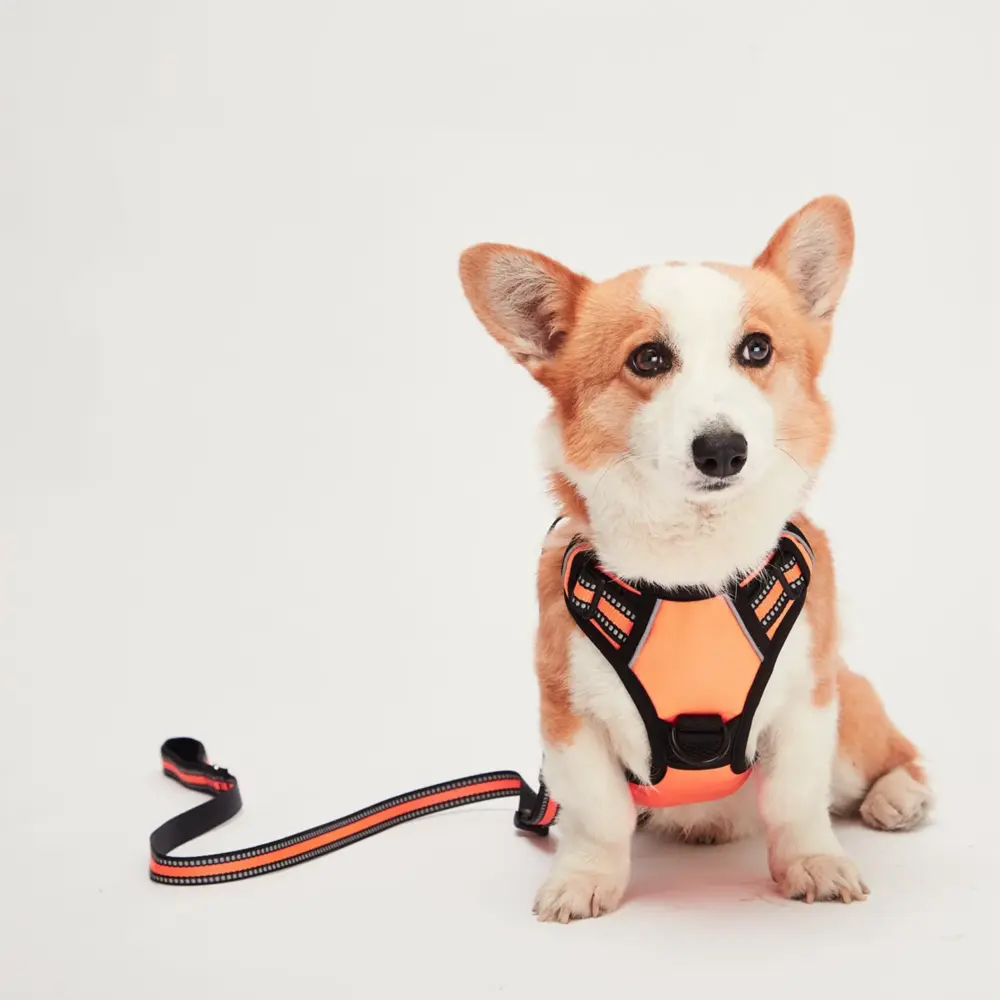
For most older dogs, clip the leash to a harness. The AKC’s guide to choosing the right harness explains that a harness puts less pressure on the neck than a collar and spreads it across the chest and shoulders, and it suggests one for older dogs and for dogs with neck pain, breathing problems or heart disease. Keep a collar on as well, for the ID tags.
- Recheck the fit. Older dogs can lose muscle or change weight, and a harness that fit last year may now slide or rub. Measure the chest at its widest point behind the front legs, and make sure two fingers slide under each strap.
- Dress your dog on a rug, not a slick floor, and go slowly with any strap your dog has to step into if lifting a paw is hard.
- Still pulls? A front-clip harness can help redirect pulling, but ask your veterinarian first if your dog has shoulder or neck problems.
- Needs help standing? An ordinary walking harness is not a support harness. If your dog struggles to get up, manage stairs or get into the car, ask your veterinarian about a lifting harness or sling; we don’t stock those.
These two picks are limited to Nilosi’s own catalog and cover the harness-plus-collar setup; the rest of the range is in our walking and training gear.
-
Mr. Peanut’s
PetTrek Padded Harness and Leash Set, Choose size & color
Price range: $24.95 through $26.95
Why it fits: Moves leash pressure from the neck to the chest, with padding, reflective trim and a matching leash. Sizes XS to L; measure the chest first.
-
Lupine Pet
Reflective Dog Collar, Choose size & design
Price range: $22.95 through $28.95
Why it fits: Keeps ID tags on your dog once the leash moves to a harness, with reflective threads woven in. Adjustable sizes from tiny dogs to XXL.


Heat, cold, ice and dark evenings
VCA advises caution with outdoor activity in extreme weather for senior dogs. Where you can, move the walk to a better hour rather than skip it, and shorten it on the worst days.
Heat
The ASPCA’s hot weather safety tips name elderly pets, along with overweight and flat-faced pets and those with heart or lung disease, as ones to keep cool, and advise keeping walks to a minimum in very hot weather because hot asphalt can burn paw pads. In summer, walk in the cooler early and late hours, on shaded grass. Our guide to how hot is too hot to walk a dog has the pavement hand test and summer timing.
Safety note
An older dog who pants hard and can’t settle, struggles to breathe, drools heavily, wobbles, seems dazed or collapses on a warm day may be overheating, and that is an emergency. Get your dog into shade or air conditioning, offer water and call your veterinarian or an emergency clinic without waiting to see if it passes.
Cold and ice
The AKC counts senior dogs, along with small and short-haired dogs and puppies, among those at the biggest risk of frostbite once the temperature falls below 32°F, and unsteady legs make ice more dangerous. In winter, move the main walk to the warmest, brightest part of the day, stay close to home, and turn back at the first shiver or lifted paw. Walk on cleared paths, slow down on slopes, and wipe paws afterward to remove ice and salt. Our guide to how cold is too cold to walk a dog covers temperatures, coats and road salt in detail.
A small, short-coated senior may be more comfortable in a coat. The DCNY Ranch Dog Coat comes in small-dog sizes only, XXS to Medium, with wide hook-and-loop closures at the chest and belly that make dressing easier.
Dark evenings
Winter walks often fall in the dark. If your dog’s eyesight is fading, dim light can make curbs, steps and dips harder to judge, so carry a flashlight and light the ground just ahead of their front paws. For drivers, reflective gear helps: both picks above have reflective trim or threads.
Water, rest stops and carrying the bags
Bring water on anything longer than a quick loop and on every warm day; the ASPCA notes that pets can get dehydrated quickly when it’s hot or humid. Offer a drink at each stop rather than waiting for your dog to ask.
Plan the stops along the route: a shady bench, a patch of grass, the corner halfway round. A pause to stand and sniff is fine. Watch what your dog does with it, though. VCA’s guide to signs of pain in dogs lists preferring to sit rather than stand, or to lie down rather than sit, when stopping during a walk. If that becomes the pattern, shorten the walks and mention it to your veterinarian.
Slow walks with more stops also mean carrying a full bag for longer, just when you want a hand free to steady the leash at a curb. From our catalog, these two keep that hand free:
-
Flipo
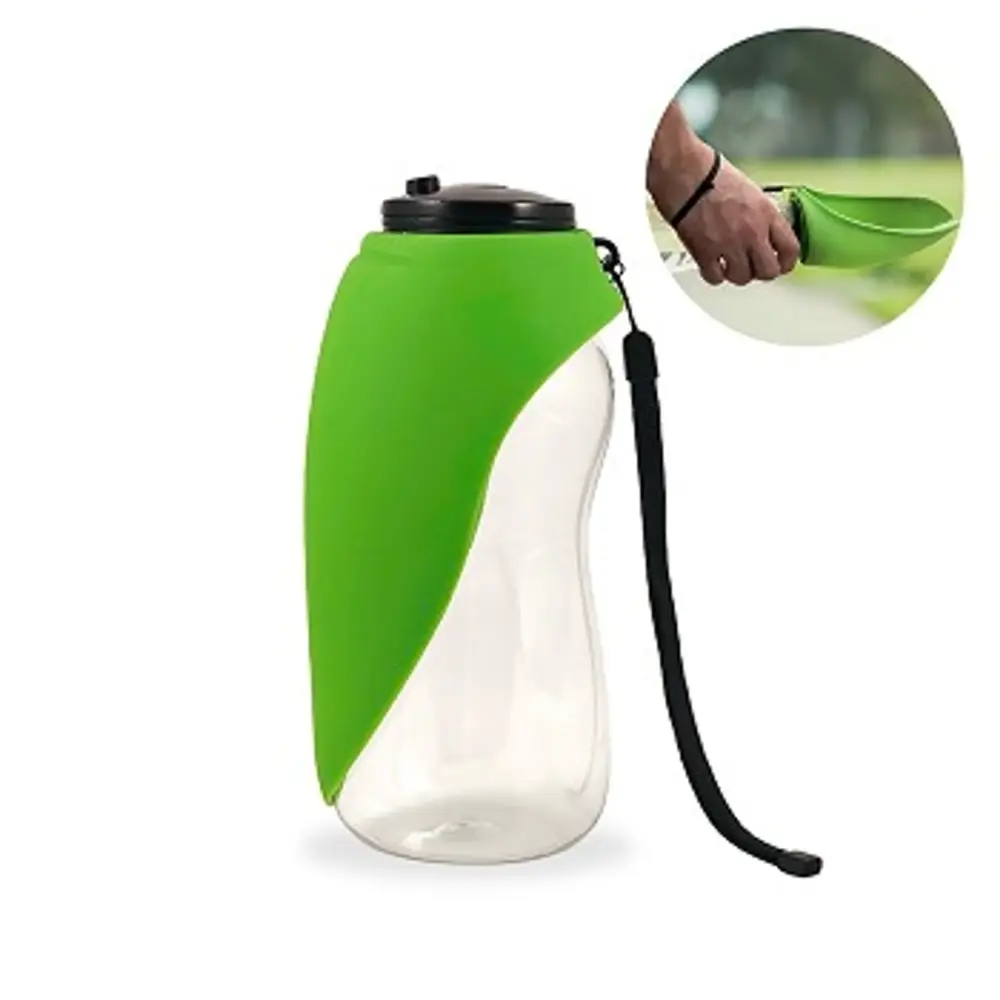
Fold-A-Bowl Dog Water Bottle with Fold-Out Bowl, Choose color
$28.95
Why it fits: Lets you offer water at every rest stop without a second bowl: a 26 oz bottle, a fold-out bowl and a wrist strap that frees a hand.
-
Yucky Puppy
Waterproof Poop Bag Holder, Choose size
Price range: $23.95 through $24.95
Why it fits: Carries a full bag on the leash for the rest of a slow walk, in a zippered, waterproof pouch. Extra-large size, set of two, machine washable.


Signs to turn around, and what to tell your vet
Turn for home, at an easy pace, if you see any of these signs of pain or fatigue, drawn from the AKC’s advice on older dogs and VCA’s guide to pain:
- Limping, or favoring one leg
- Stopping, sitting or lying down and not wanting to go on
- Hard panting on a cool day, or after only a short distance
- Hesitating at, or struggling with, curbs and steps
- Trembling legs, particularly the back legs
If your dog can’t go on, rest somewhere cool and call for a lift rather than pushing through.
A sign that keeps coming back is worth a veterinary visit. Your veterinarian will get more from the appointment if you bring:
- How long your dog walks before the first sign, and whether that has shrunk over recent weeks
- Which sign you saw, on which leg, and whether it eases as your dog warms up or gets worse
- How your dog seems the following morning
- A short phone video of your dog walking toward and away from you on flat ground
- Anything you have changed lately: route, harness, food, weight or medicines
Safety note
Collapse, labored breathing, signs of heatstroke, or a dog who suddenly can’t stand or put weight on a leg needs veterinary care right away. Don’t give your dog a pain reliever from your own medicine cabinet; several common human pain medicines are dangerous for dogs.
When walks get very short
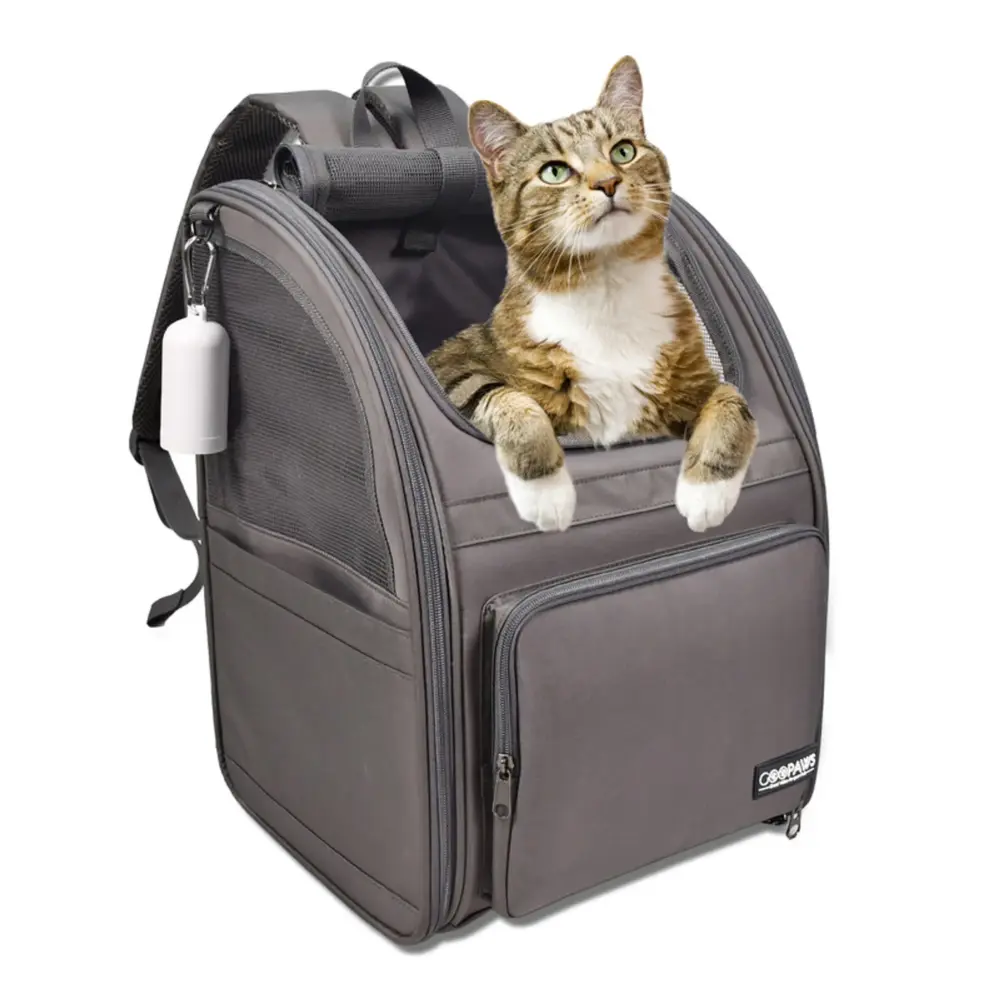
There may come a stretch when your dog still wants to go out but can only manage a few minutes. The AKC suggests a wagon or stroller for the part of the walk that is too long or strenuous, so your dog still gets the sights and smells and stays part of the family routine. For a dog you can comfortably carry, a backpack carrier is another option; our comparison of a backpack carrier vs shorter walks covers who it suits and who is better off on the ground.
Senior dog walking FAQ
Should I walk my senior dog every day?
Most days, yes, if your dog is willing and able: the AKC calls exercise an excellent way to keep such a dog fit and active. A short walk most days is easier on an older body than a quiet week followed by a long Saturday, which often shows up as a stiff Sunday. On a tired day, keep the bathroom trips and swap the walk for a sniff around the yard.
Can a senior dog still go on long walks?
Some can. A fit older dog who has kept walking may still enjoy a long weekend ramble. Build up to it, add rest stops and water, and judge it by how your dog moves the next morning, not by how keen they were at the start.
Is walking good for a dog with arthritis?
Gentle walking is often part of the plan, but your veterinarian should set the limits for your dog. Short, frequent walks on soft, level ground, like the VCA starting point above, usually suit better than one long one. If your dog limps during or after a walk, stop and call your vet.
Why does my old dog stop partway through walks?
Tiredness, heat, pain, fading eyesight or a frightening noise can all do it. Note where and when it happens and tell your veterinarian, especially if it is new or getting more frequent, since VCA lists lower endurance for walks among the signs of pain.
Related guides
-
Checklist
What to Tell Your Dog Walker: A Handover Checklist
Everything a new dog walker needs on one page: where the gear lives and how it goes on, how your dog walks, leash and route rules, medications and treats, emergency contacts, the door routine, weather rules and a first walk together.
-
Guide
National Parks With a Dog: Where Dogs Can Go, Rules and What to Bring
Most national parks welcome leashed dogs on roads, in campgrounds and at picnic areas, but not on most trails. See how the rules differ across 11 parks, what the B.A.R.K. Ranger principles mean in practice, why your dog never waits in the car and what to pack.
-
Guide
Hiking With a Small Dog: How Far, What to Bring and When to Carry Them
Small dogs can hike, on the right trail. Plan by time and climb rather than miles, clip the leash to a snug small harness with ID on the collar, offer water and tiny snacks often, watch heat and cold closely, give big dogs and coyotes room, and bring a backpack your dog already knows for the way back.