Senior Pets Guide
When Is a Dog a Senior? Ages by Size, Aging Signs and What to Change
Short answer
It depends on size. The American Kennel Club puts senior age at roughly the last quarter of a dog’s expected lifespan: as early as 6 or 7 for giant breeds, 8 to 12 for small ones. An eight-year-old Lab is starting his senior years, so book a checkup, then adjust walks, footing, nails and bedding as needed.
Senior ages by size
Big dogs age faster than small ones, so a single “senior at seven” rule fits some dogs and misses others. Two widely used guides draw the line in slightly different places:
| Size (adult weight) | Typical breeds | VCA chart | AKC guidance |
|---|---|---|---|
| Small (up to 20 lb) | Chihuahua, Shih Tzu | About 9–11 | 8–12 |
| Medium (21–50 lb) | Beagle, Cocker Spaniel | About 7–9 | Last quarter of lifespan |
| Large (51–100 lb) | Labrador, German Shepherd | About 6–7 | Labs: about 8–9 |
| Giant (over 100 lb) | Great Dane, Mastiff | About 4–5 | As early as 6–7 |
The ages come from VCA Animal Hospitals’ senior age chart and the AKC’s article on how to tell when your dog is a senior. They differ by a year or two, most of all for big dogs, but they agree on the pattern: the bigger the dog, the earlier its senior years begin. By either guide, an eight-year-old Lab has reached them. Cats run on a different scale, with size mattering far less; see when a cat counts as a senior.
Working out your own dog’s senior age
- Look up your dog’s life expectancy. The AKC lists one on each breed’s page; for a mixed breed, start from your dog’s adult weight and the chart above.
- Multiply the lower number by 0.75. For a Lab, 11 years gives just over 8, in line with the 8 or 9 the AKC gives for the breed.
- Treat the result as the point to start talking with your veterinarian about senior care, not as a deadline. Your vet may move it earlier or later depending on your dog’s health.
Tip
Senior is a life stage, not a diagnosis. A dog can cross the line and still run, swim and steal socks. What changes is how closely you watch, and how early you act on what you see.
Physical signs of aging
Aging rarely announces itself. It shows up as small changes over months, often first on the walk or at the bottom of the stairs. The AKC lists these as common signs:
- Stiffness, especially when getting up after a rest, or a slow start to the morning walk.
- Hesitating at stairs, the car or the couch your dog used to jump onto without a second thought.
- More sleep and less stamina: shorter bursts of play and an earlier turn for home.
- Weight change in either direction.
- Less interest in walks and games that used to bring your dog to the door first.
- Fading hearing or eyesight: sleeping through your arrival home, missing a tossed treat or startling when touched.
Two more are easy to miss. Nails grow longer once shorter walks stop wearing them down, and long nails make slick floors harder to grip. And teeth: VCA notes that gum disease is common in senior dogs, so bad breath is worth raising at the next visit rather than covering up with a chew.
Changes that need a veterinarian sooner
Some changes look like ordinary aging but can point to illness, and they are worth a call rather than a wait for the next checkup. VCA’s list of special considerations for senior dogs includes:
- Drinking noticeably more water, or a clear change in how often or where your dog urinates.
- Weight loss you can’t explain, or a change in appetite.
- Repeated vomiting, or diarrhea that keeps going.
- Limping or lameness.
- Coughing, or breathing that looks like hard work.
- New lumps, bumps or skin changes.
- A sudden change in eyesight, such as bumping into furniture.
- Seizures.
Safety note
Get veterinary care right away for collapse, a seizure, labored breathing or a dog who suddenly can’t stand. And don’t reach for your own medicine cabinet: several common human pain relievers are dangerous for dogs. Ask your veterinarian before starting any medicine or supplement.
Behavior and memory changes to mention to your veterinarian
Older dogs can also change in how they think and behave. Veterinarians call a slow, age-related decline in thinking and memory cognitive dysfunction syndrome, and VCA uses the shorthand DISHAA for the signs to watch for:
- Disorientation: seeming lost in a familiar room, getting stuck in corners or behind furniture, or waiting at the hinge side of a door.
- Interactions: becoming clingier than before, or withdrawing from people and other pets.
- Sleep-wake changes: sleeping more by day, then pacing or restless at night.
- House soiling, learning and memory: accidents from a house-trained dog, sometimes right after coming in from a walk, or forgetting cues learned years ago.
- Activity: less interest in play, or restless, aimless wandering.
- Anxiety: new fears, or distress at being left alone that your dog never showed before.
No single sign settles anything, and other problems can look similar: VCA points out that a dog with sore joints may stop getting up to greet you, and that kidney disease can cause accidents indoors. That is why the next step is a veterinary visit, not a guess. VCA recommends a physical and behavioral evaluation for a dog showing more than one of these signs.
Tip
Keep a simple log on your phone: the date, what happened and the time of day. A short video of night-time pacing or a stuck-in-the-corner moment shows your veterinarian more than a description can.
Vet visits for a senior dog
Many adult dogs see the vet once a year, and that usually changes in the senior years. The AKC notes that around age 7 is often when veterinarians start talking about twice-yearly visits and more regular lab work, and recommends senior checkups once or twice a year; VCA recommends an exam at least twice a year for senior dogs, because health changes can be subtle. Because dogs age faster than we do, a year between visits is a long gap for an older dog. Your veterinarian will set the schedule that suits yours.
What to bring to a senior checkup
According to the AKC, senior visits keep an eye on mobility, weight, eyesight, teeth, cognitive function and overall wellbeing, often with blood work. You will get more from the visit if you bring:
- Your log of changes, with dates and any videos.
- The name of your dog’s food, the treats and the portion sizes, plus any medicines or supplements and their doses.
- Notes on how walks are going: how far, how fast, and how your dog seems the next morning.
- A question about weight. VCA notes that keeping a dog at a healthy weight can reduce signs of osteoarthritis and suggests weighing older dogs at least every two months on the same scale, so ask what your dog’s target should be.
Walks, home and grooming: what to adjust
Most senior adjustments are small, and you can make them one at a time as your dog shows you they’re needed. The AKC’s suggestions come down to lower-impact activity, supportive bedding, non-slip footing and easier access to the places your dog likes to be.
Walks
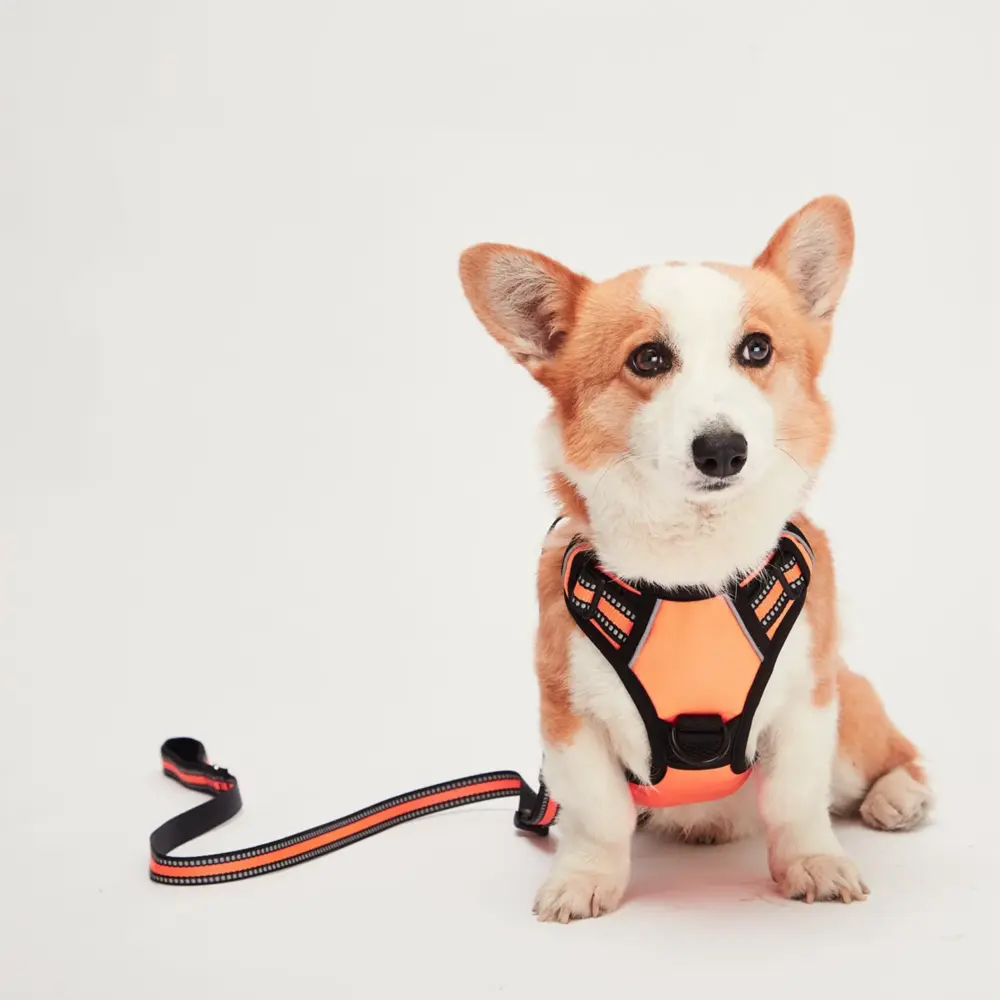
Keep walking, but shorten and split. Two or three shorter outings with time to sniff tend to suit an older dog better than one long loop, and flat routes are kinder than hills and steps. In summer, walk in the cool of the day; in winter, keep outings brief. Stiffness the morning after is your signal to make the next walk shorter. If your dog still walks on a collar, consider a padded harness that keeps leash pressure off the neck. Our guide to how long to walk a senior dog covers pace, surfaces, weather, the harness-or-collar question and the signs to turn for home.
Home
Slick floors are often the first obstacle an older dog meets. Runners or rugs along the routes your dog uses most, a mat by the water bowl, and a step or ramp where they used to jump all help keep them confident on their feet. VCA also suggests ramps or stairs for furniture and water bowls on each floor. For the full room-by-room list, including lighting for fading eyesight, see how to senior-proof your home for an older dog.
Grooming
Check nails more often than you used to: if you hear clicking on a hard floor, they’re probably due. Older dogs often have less patience for standing, so groom with your dog lying on a mat, use a lighter touch on thinner skin, and split the job into short sessions. Brushing time doubles as a lump-and-bump check; mention anything new to your veterinarian. The full routine, nails included, is in how to groom a senior dog at home.
Beds and rest
Older dogs tend to sleep more, so the bed matters more now than it did. What to look for:
- Support: thick, firm padding that doesn’t flatten under the hips and shoulders. If you can feel the floor when you press down where your dog lies, it is too thin.
- Easy entry: a low front edge your dog can step onto rather than climb over.
- Room to stretch: big enough to lie flat out, not only curled up. Measure your dog lying on their side and add a few inches.
- Grip and washability: a non-slip base on hard floors, and a removable, washable cover for the accidents that can come with age.
- Placement: on the main floor, out of drafts and near the family, so your dog doesn’t have to choose between comfort and company.
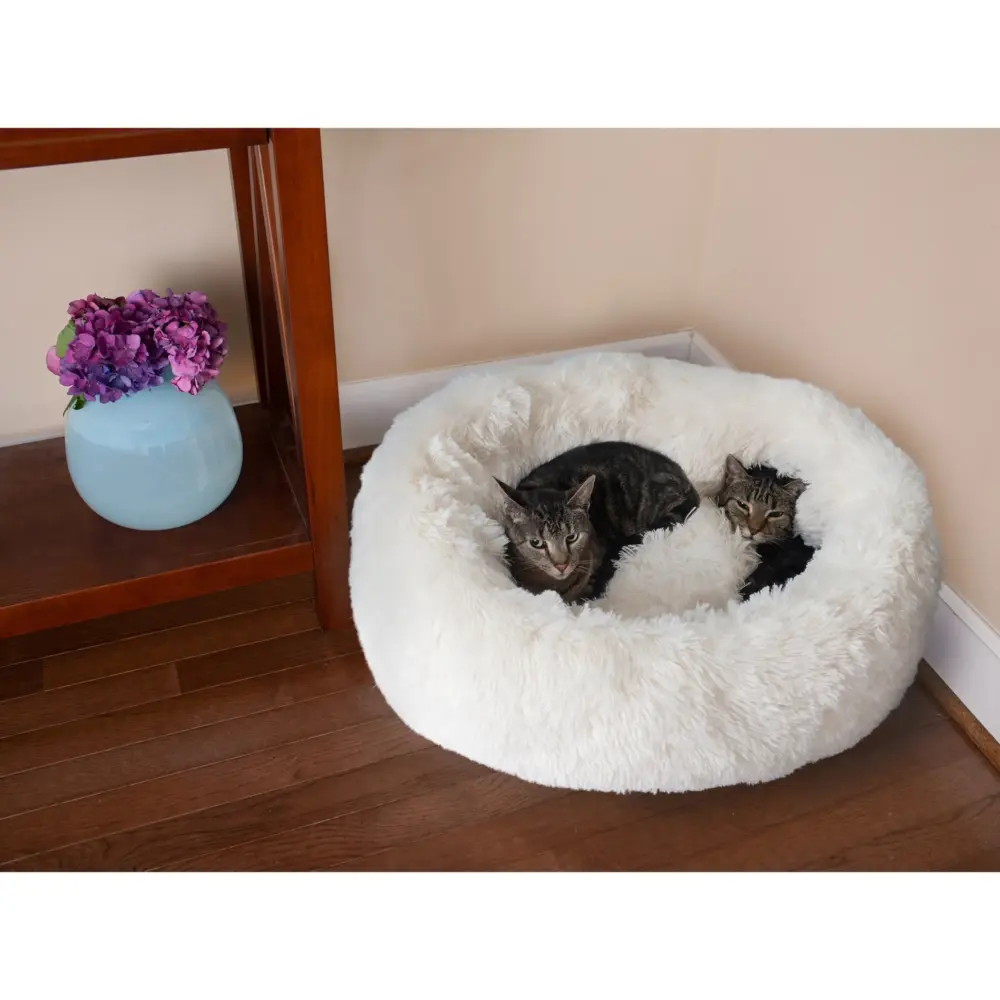
Some older dogs feel the cold more, especially lean or short-coated ones; how to keep a dog warm at night indoors covers getting the bed off a cold floor, blankets and safe heat. Nilosi’s beds are sized for cats and small dogs, so for a Lab-sized senior, look elsewhere for a large bed with thick, supportive foam.
Keeping the mind busy
An aging body doesn’t mean a bored brain. Sniffing, searching and licking are mental work with very little strain, which makes them a good fit as walks get shorter: let your dog take their time on a sniff walk, hide a few treats at floor level in one room, or spread a thin layer of their usual wet food on a lick mat they can work lying down. Our guide to enrichment for senior dogs has the full set of gentle games, from the cup game to one-minute trick refreshers.
If you’re updating gear for an older dog, these three pieces from Nilosi’s catalog match the changes above. The picks are limited to what we stock, not a survey of the whole market.
-
Quiet Rechargeable Pet Nail Grinder, View product
$50.95
Why it fits: Shorter senior walks wear nails down less. This quiet two-speed grinder takes them back a little at a time, so each session can stay short for a dog who tires of standing.
-
Mr. Peanut’s
PetTrek Padded Harness and Leash Set, Choose size & color
Price range: $24.95 through $26.95
Why it fits: Padded harness that moves leash pressure from the neck to the chest, with reflective trim for dim early or late walks. Sizes run XS to L, so check your dog's chest against the chart.
-
SodaPup
Jigsaw Enrichment Lick Mat for Dogs & Cats, Choose color
$25.95
Why it fits: A calm job a senior can do lying down: spread soft food in the jigsaw grooves for a rest day, or to keep your dog settled during a nail session.



Senior dog FAQ
Is a 7-year-old dog a senior?
It depends on size. On VCA’s chart, a large dog is senior by 7 and a giant breed well before that, while a small dog usually isn’t until about 9 to 11. Seven is still a sensible age to ask your veterinarian whether it’s time for senior checkups, whatever your dog’s size.
Do dogs really age seven years for every human year?
No. The AKC calls the seven-to-one rule outdated, because size changes how fast dogs age. A rough guide it cites from the AVMA, for a medium-sized dog: the first year equals about 15 human years, the second about 9 and each year after that about 5. By that math, an eight-year-old medium-sized dog is roughly 54 in human terms, and a large dog ages faster still. More in the AKC’s guide to calculating dog years.
Should my senior dog switch to a senior food?
There’s no birthday on which every dog needs a new food. Whether to change, and to what, depends on your dog’s weight, health and test results, so ask at the senior checkup rather than switching on your own. If you do change, ask your veterinarian how to make the switch gradually.
Is it normal for an older dog to sleep more?
More sleep and lower energy are common as dogs age, and the AKC lists both among the usual signs. What is not typical is a sudden change: a dog who starts sleeping most of the day within a few weeks, sleeps by day and paces at night, or struggles to get up should see the veterinarian.
Related guides
-
Checklist
How to Senior-Proof Your Home for an Older Dog: A Checklist
A room-by-room checklist for an older dog: runners on slick floors, short nails and trimmed paw fur for grip, steps, a ramp or a gate instead of jumps, the bed and water on the main floor, night lights to the door, and the changes to raise with your veterinarian.
-
How-to
How to Groom a Senior Dog at Home: Brushing, Nails and Lump Checks
Many older dogs tire of standing, and shorter walks wear their nails down less. Here is how to set up a comfortable spot, brush gently by coat type, keep nails short, clean up between baths, check for lumps as you go and know when a groomer or veterinarian should take over.
-
How-to
How to Groom a Senior Cat: Gentle Brushing, Mats and Nails
When an older cat stops grooming, the fur on the lower back turns greasy and starts to mat. Here's why it happens, why a vet check comes first, and a gentle routine for thin skin, mats along the spine, thick overgrown claws and a clean back end.