Senior Pets How-to
How to Groom a Senior Dog at Home: Brushing, Nails and Lump Checks
Short answer
Keep sessions to five or ten minutes, let your dog lie down on a non-slip mat, and brush with a softer tool and a lighter hand than you once did. Check the nails every week, because shorter walks wear them down less, freshen up with wipes between baths, and show your veterinarian any new lump or sore spot.

What changes when you groom an older dog
The jobs stay the same as your dog ages: brushing, nails and cleanups. What changes is how comfortable your dog is while you do them.
- Joints. Standing through a long brush-out, or holding a leg up for a nail trim, is hard work for stiff hips, elbows and backs. VCA Animal Hospitals lists avoiding or resenting being brushed among the signs of pain in dogs, so a dog who now walks away from the brush may be sore rather than difficult.
- Coat and padding. A senior coat may grow thinner, drier or coarser, and some dogs lose muscle over the spine and hips, so the same stroke lands closer to bone.
- Tangles. A dog who lies down for longer can tangle where they lie: hips, thighs and the side that is usually down. VCA’s senior dog care advice is to brush often to prevent mats, which can contribute to skin infections and hide skin tumors.
- Hearing and eyesight. If either is fading, a hand arriving from behind can startle. Let your dog see and sniff you first.
Set up a comfortable, non-slip spot
- Groom on the floor. Lay a yoga mat, a rubber-backed bath mat or a rug where your dog already likes to rest. A grooming table or a slick kitchen floor makes stiff legs brace the whole time.
- Let your dog lie down. Most brushing works with your dog on their side or lying like a sphinx, with a folded towel under the head or against a bony hip.
- Pick the right moment. Many stiff dogs settle best after a short, easy walk. Stiffness is often worst right after a long rest, such as first thing in the morning.
- Keep it short and warm. Five to ten minutes on one area, in a draft-free room: the side that is up today, the other side tomorrow, nails on another day.
- Small dogs on furniture. Put a non-slip mat down, keep one hand on your dog, and lift them down rather than letting them jump.
Tip
If your dog won’t settle, give them something to do lying down. A lick mat such as the SodaPup Jigsaw Enrichment Lick Mat, spread thinly with their usual wet food, keeps many dogs still through a few minutes of brushing. On a special diet? Ask your veterinarian what to use.
What you need
- A non-slip mat, rug or yoga mat, and a towel or two.
- A brush that suits the coat (see the table below), plus a metal comb for long or curly coats.
- A nail grinder or clippers, with styptic powder or cornstarch in case you nick a quick.
- Pet wipes, soft treats and your phone for photos of anything new.
We don’t sell combs, clippers or non-slip mats, so those come from elsewhere.
How to brush an older dog, step by step
- Wait for your dog to settle. Bring the brush to wherever they have lain down on the mat, rather than pulling a stiff dog into position.
- Start with your hands. Stroke slowly from head to tail, noticing tangles, lumps, scabs, warm spots and anywhere your dog flinches, licks their lips or turns to look.
- Begin where it feels good. Start with a few strokes on the chest, neck and shoulders, then work back toward the hips.
- Use short, light strokes. Brush with the lie of the coat and let the brush’s own weight do most of the work, especially over the spine, hips and elbows.
- Brush only the side that is up. Don’t roll a stiff dog over to reach the other side. Do it when they next lie the other way, or tomorrow.
- Reach underneath gently. Slide the brush in for the belly and armpits without lifting a leg higher than your dog offers. Skip it if they tense.
- Pause every few minutes. Let your dog shift, stand or drink. If they get up and walk off, that session is over.
- Stop while they are relaxed. Finish with a treat, and note anything you found for the lump check below.
Coat type still sets how often to brush, and our brushing schedule by coat type has the baseline. For an older dog, keep the frequency and shorten each session: three five-minute brushes a week are kinder than one tiring half-hour.
Tools and pressure by coat type
| Coat | Main tool | Senior adjustment |
|---|---|---|
| Short coat | Soft or mist brush | Light strokes over bony spots |
| Double coat | Slicker, then de-shedding tool | De-shed lightly, in shedding season |
| Long or silky | Slicker plus metal comb | A few minutes daily, before tangles set |
| Curly coat | Slicker plus metal comb | A shorter clip means less brushing |
| Wire coat | Slicker or bristle brush | Ask about clipping instead of stripping |
Go easy with a de-shedding tool. Its edge is made to reach through a thick double coat, so over a thinning coat or bony hips it can scrape. If your dog still has a full double coat, use the JESPET De-Shedding Tool with short, light strokes along the back and sides, and less often than you used to. Small tangles can come out a minute at a time with the method in our guide to getting mats out of dog hair; leave tight mats to a groomer.
For everyday brushing, these two from our own catalog cover most senior coats. We chose them for a soft touch and easy control, not by comparing them with every brush sold elsewhere.
-
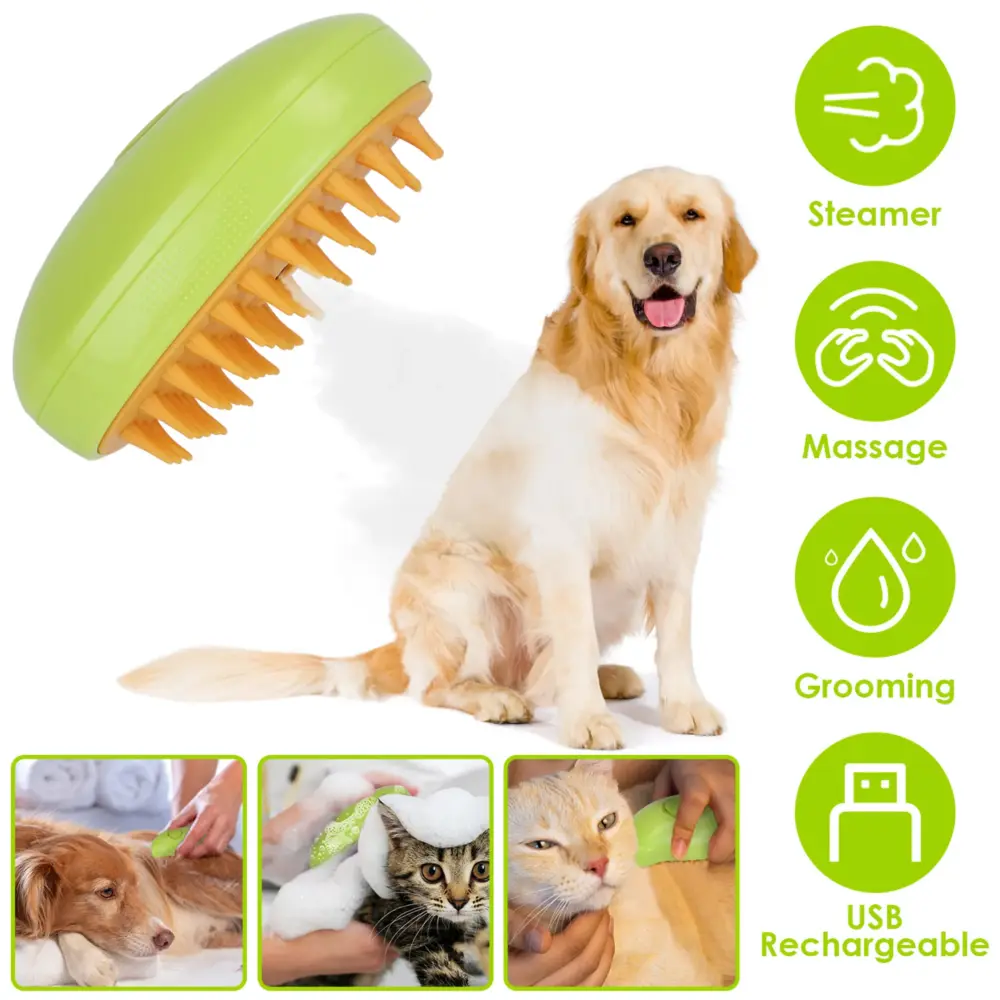
3-in-1 Steam Grooming Brush for Cats & Dogs, View product
$36.95
Why it fits: A gentle brush for short-coated older dogs, with soft silicone pins rather than wire and a fine mist that only sprays when you press for it.
-
Sakabase
Curved Slicker Brush, View product
$39.95
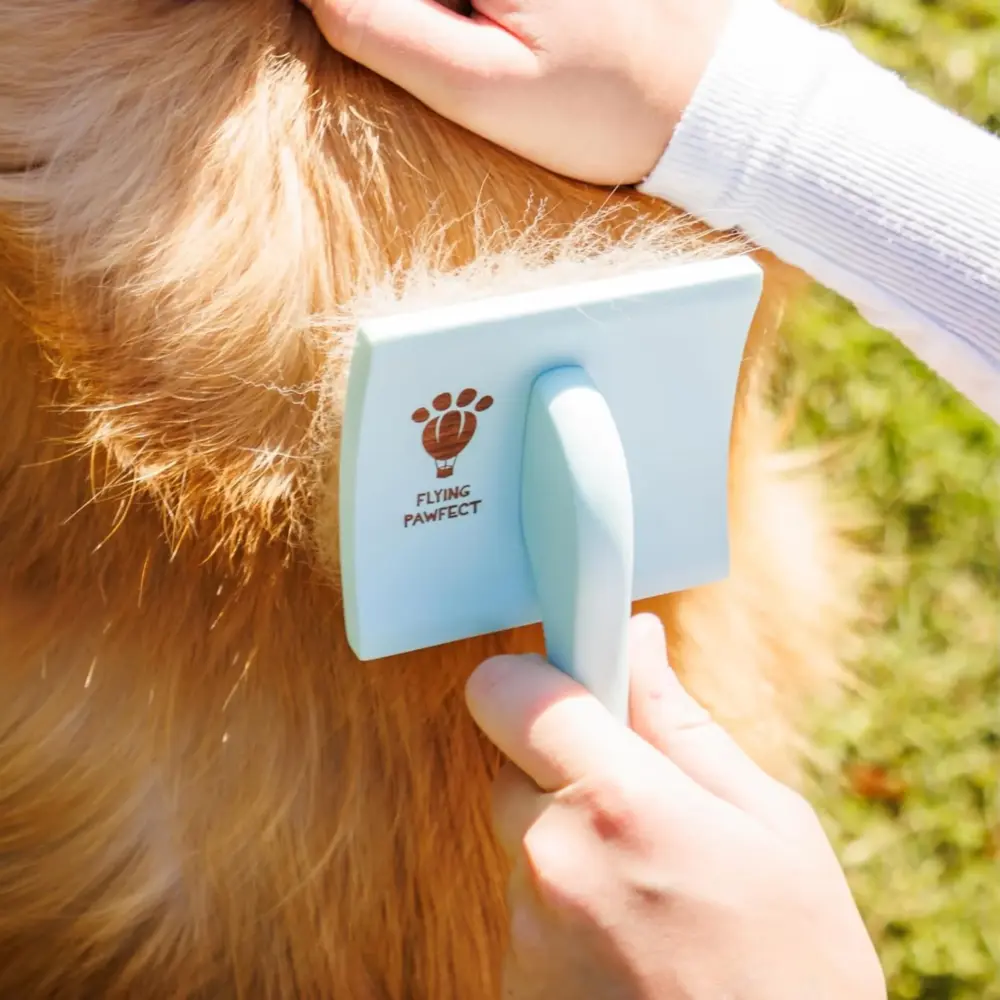
Why it fits: Works tangles out of medium to long coats in fewer strokes, thanks to its curved head; use the lightest touch over the hips and spine.


Why nails grow longer as walks get shorter
Regular walks on pavement help file a dog’s nails down. An older dog on shorter, slower walks, often on grass, gets far less of that wear, so nails that once looked after themselves now need regular attention. VCA’s senior care advice notes that long nails make dogs stand and walk abnormally, cause discomfort and poor traction, and can worsen arthritic changes, so short nails are one of the simplest comforts for a stiff dog on a smooth floor.
Checking and trimming a stiff dog
- Check every week. Listen for clicking on hard floors and look at the nails while your dog stands. Our guide to how long a dog’s nails should be shows the length to aim for and the signs they are overdue.
- Trim lying down. Let your dog lie on their side and bring your hands to the paw. Keep it close to the body and hold the toe, rather than pulling the leg forward or out to the side.
- One paw a day is fine. Spread the job over several days if you need to, and don’t skip the dewclaws, which don’t touch the ground and so never wear down.
- Take a little, often. If the nails have grown long, the quick has grown with them. The AKC explains that regular trims make the quick recede, so take a thin slice every week or so instead of one big cut. Expect some clicking for a few weeks while it does.
- Consider a grinder. It takes the nail down in thin layers and leaves a smooth edge. Our guide to using a dog nail grinder covers holding the paw, keeping fur clear and getting a wary dog used to the sound.
Fur growing over the pads makes smooth floors more slippery too; a groomer can trim it level with the pads.
Cleanups between baths, and easier baths
A full bath asks a lot of an older dog: climbing into a tub, standing on a wet surface and staying warm while the coat dries. Brushing and a wipe-down stretch the time between baths, and our guide to cleaning a dog without a bath has the zone-by-zone routine. For a senior, adjust it:
- Wipe your dog where they lie, the side that is up first.
- If your dog has stiff hips, check under the tail daily; the area may not stay as clean as it used to.
- Towel off anything damp, since a damp coat on a cool floor can chill an older dog.
- Use pet wipes or plain warm water, not baby wipes or scented sprays: your dog will lick off what stays on the coat.
When a bath is needed
- Brush out tangles first; once wet, they tighten.
- Put a rubber mat in the tub or shower, and lift a small dog in and out instead of letting them jump.
- For a bigger dog, a walk-in shower or a helper avoids a scramble over the tub edge; if you lift, support the chest and hindquarters together.
- Use lukewarm water and keep it short, then towel well and let your dog dry fully in a warm room. If you use a dryer, keep it on a cool or low setting.
If standing through a bath is now beyond your dog, hand it to a groomer or your veterinary clinic. For the nail and cleanup jobs you can still do at home, two more tools from our catalog:
-
Quiet Rechargeable Pet Nail Grinder, View product
$50.95
Why it fits: Shortens nails a little at a time while your dog lies on their side, with a quiet motor and two speeds for thin or thick nails.
-
Mr. Peanut’s
Naturals Pet Wipes
$26.95
Why it fits: Freshens an older dog between baths without the tub, with large 6 × 10 in wipes thick enough to do a whole zone without tearing.
Currently out of stock


The lump-and-bump check while you groom
Brushing every few days puts your hands over every part of your dog, which makes it the easiest time to catch changes early. Once a week, slow one session into a deliberate check: flat hands, head to tail, including under the collar, the armpits and belly as far as you can reach, between the toes and under the tail. Feel and look for:
- Any new lump or bump, however small.
- An older lump that has changed in size, shape or firmness.
- Scabs or sores that don’t heal, or skin that looks red, darkened, flaky or bare.
- Warm, swollen or tender spots, and places your dog keeps licking.
Keep a record your veterinarian can use: the date, where the lump is (say, on the left side just behind the last rib), and a photo with a coin beside it for scale. Recheck the same spot each week.
Don’t try to work out what a lump is by feel. The Merck Veterinary Manual says that identifying skin tumors in dogs should be left to a veterinarian, who can examine cells drawn with a fine needle or a small biopsy. Book a visit for any new lump rather than waiting to see whether it grows, and don’t squeeze or pick at it meanwhile.
Safety note
If touching one spot makes your dog flinch, growl or snap, stop there and tell your veterinarian, since it may be sore. Don’t treat stiffness or soreness with human pain relievers: several common ones are dangerous for dogs, so ask your veterinarian what is safe.
Mistakes and troubleshooting
Common mistakes
- Saving everything for one long weekend session.
- Lifting a stiff leg high, or out to the side, to reach a nail or the belly.
- Grooming on a slick table, tile floor or bare tub.
- Calling new reluctance stubbornness instead of asking whether something hurts.
Your dog gets up after a minute
Let them go and try again later with an even shorter session. Brush wherever they choose to lie, add a lick mat, or fold a few strokes into ordinary petting on the sofa.
Your dog is stiff after grooming
The session was probably too long or the position too awkward. Halve it next time and use a thicker mat. Stiffness that lingers or seems to be getting worse is a question for your veterinarian.
When to hand over to a groomer or your veterinarian
Jobs for a groomer
Book a groomer for haircuts on long, silky or curly coats, tight or widespread mats (never cut them out with scissors), sanitary trims, and a full bath for a big dog you can’t safely lift. When you book, mention your dog’s age, arthritis, heart or breathing problems, fading hearing or sight, and any lumps, and ask whether they can keep the appointment short and let your dog lie down. For a frail or very anxious dog, the veterinary clinic may be the better place: VCA’s nail-trimming guide notes that clinics trim nails and can offer sedation for a dog who is very upset by it.
Call your veterinarian about
- A new lump, or a change in one you have been watching.
- Open sores, scabs that don’t heal, or red, flaky, greasy or bare skin.
- Flinching, growling or crying out when one area is touched, or a sudden dislike of being handled.
- A nail grown into the pad, a split nail or a swollen toe.
- Limping, or stiffness that is getting worse.
VCA recommends a veterinary exam at least twice a year for senior dogs, because health changes can be subtle, so bring your grooming notes and photos. The brushes, grinder and wipes above are in our grooming tools. Caring for an older cat as well? The routine is different; see how to groom a senior cat.
Related guides
-
How-to
How to Get a Puppy Used to Grooming: Touch, Brushing and the Groomer
Short, rewarded sessions that teach a puppy to accept grooming before any dislike sets in: touch for paws, ears, mouth and tail, a first brush matched to the coat, wipes between baths, groomer practice at home, and the signs your puppy needs a break.
-
How-to
How to Groom a Senior Cat: Gentle Brushing, Mats and Nails
When an older cat stops grooming, the fur on the lower back turns greasy and starts to mat. Here's why it happens, why a vet check comes first, and a gentle routine for thin skin, mats along the spine, thick overgrown claws and a clean back end.
-
Checklist
Dog Grooming Checklist: The Essentials by Week, Month and Season
Every home grooming job sorted by how often it comes around: brushing by coat, a weekly nose-to-tail check, teeth, nails and paw fur, after-walk cleanups, baths and shedding season, plus what to skip and which jobs to hand to a groomer or veterinarian.