Puppies & Kittens How-to
How to Get a Puppy Used to Grooming: Touch, Brushing and the Groomer
Short answer
Start in your puppy’s first week home with handling sessions of a minute or two: touch a paw, an ear, the mouth or the tail, and feed tiny treats while your hand is there. Add a soft brush, wipes and a brief, gentle hold the same way, and end every session before your puppy starts to squirm.
Puppyhood is the easy window for this. VCA Animal Hospitals calls puppies ideal candidates for socialization between 3 and 16 weeks of age, and being handled, brushed and wiped is part of that learning. A puppy who learns at ten weeks that a hand on the ear means a treat is usually far easier to groom at full size.
Start with touch: paws, ears, mouth and tail
Hands come before tools: a puppy who is relaxed about being touched everywhere treats a brush as one more touch. Work on one or two areas per session, a few touches each, and spread the list over a week or two:
| Area | What to practice | What it leads to |
|---|---|---|
| Paws | Touch, cup, gently press a toe pad | Nail trims, wiping feet |
| Ears | Hold the flap, peek inside | Ear checks, ear drops |
| Mouth | Lift a lip, touch a tooth | Tooth brushing, vet exams |
| Eyes and face | Wipe below each eye, cup the chin | Tear-stain wipes, face trims |
| Tail | Slide a hand from base to tip | Brushing, rear cleanups |
| Collar | Hold the collar for a second | Being steadied by a groomer |
| Whole body | A loose hug, a short lift | Exams and the grooming table |
VCA’s puppy handling exercises put the timing simply: the start of a touch switches the treats on, and the end of the touch switches them off. Feed tiny pieces while your hand rests on the ear or paw, and stop the moment your hand leaves. Choose a time when your puppy is calm but still interested in food, such as after a nap.
Tip
Teething changes the mouth work. While adult teeth are coming in, keep lip lifts to a second or two. Ask your veterinarian about gums that bleed or a baby tooth still in place beside its adult replacement.
Practice a gentle hold
Groomers and veterinarians sometimes need your puppy to stay still. Build up to it the way VCA describes: while your puppy eats from your other hand, rest one arm loosely around them for a second, then let go and stop the treats. Over later sessions, add a little more pressure, then a second arm, then a slight lift off the floor. Support the chest with one hand and the hindquarters with the other, and let go while your puppy is still soft in your arms.
If your puppy already pulls a foot away every time you reach for it, slow down with the plan for a dog who doesn’t like their paws touched, which works for puppies too, at an even gentler pace.
What you need for short sessions
- Tiny, soft treats your puppy already eats, so lots of rewards don’t upset a young stomach; some of the day’s kibble works for easy steps.
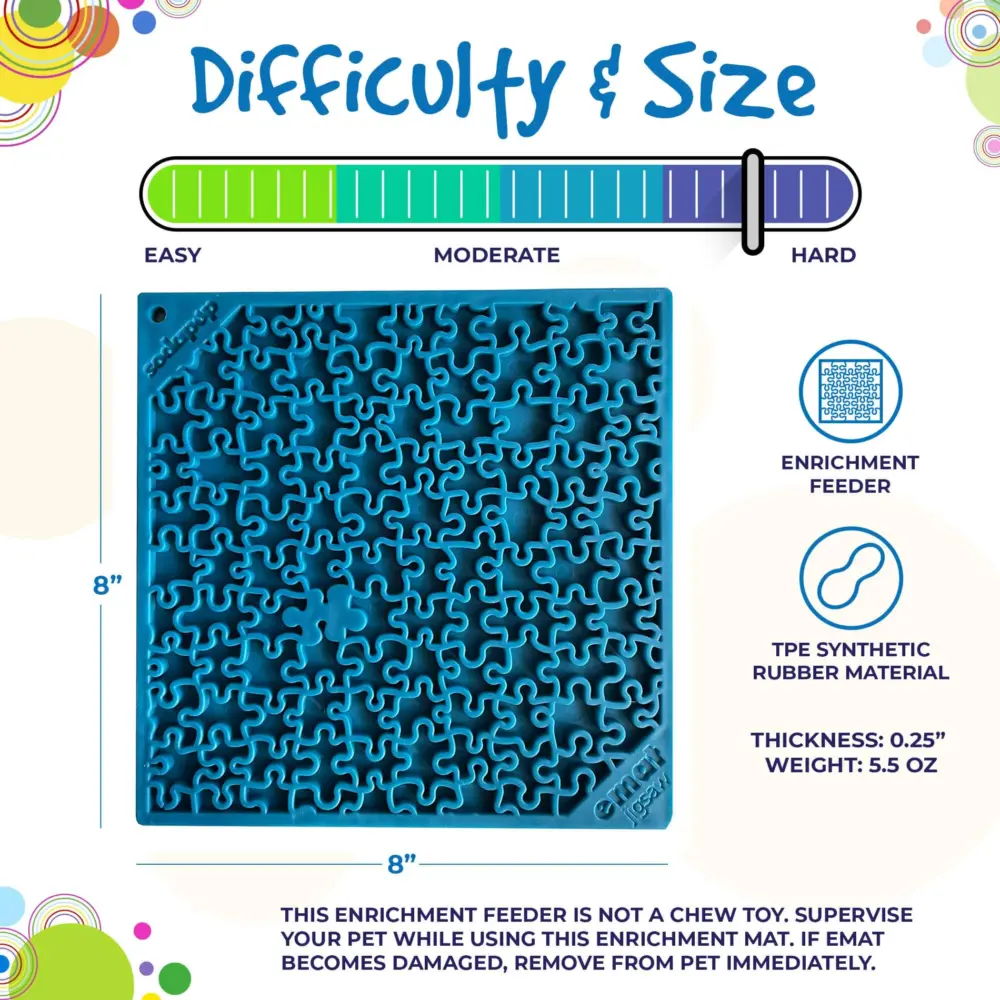
- A lick mat, such as the SodaPup Jigsaw Enrichment Lick Mat, for steps that need both hands. Spread a little of your puppy’s usual wet food, and never anything that contains xylitol.
- A soft brush for the coat your puppy has now; the next section matches one to each coat type.
- Pet wipes for paws, faces and small messes between baths.
- Non-slip footing: a bath mat, yoga mat or folded towel on the floor, and later on a raised surface.
Our picks come only from Nilosi’s catalog. None of them is made just for puppies, so each is matched to a step in this plan. We don’t sell combs, clippers or toothbrushes; your groomer or veterinarian can suggest ones that suit your puppy.
-
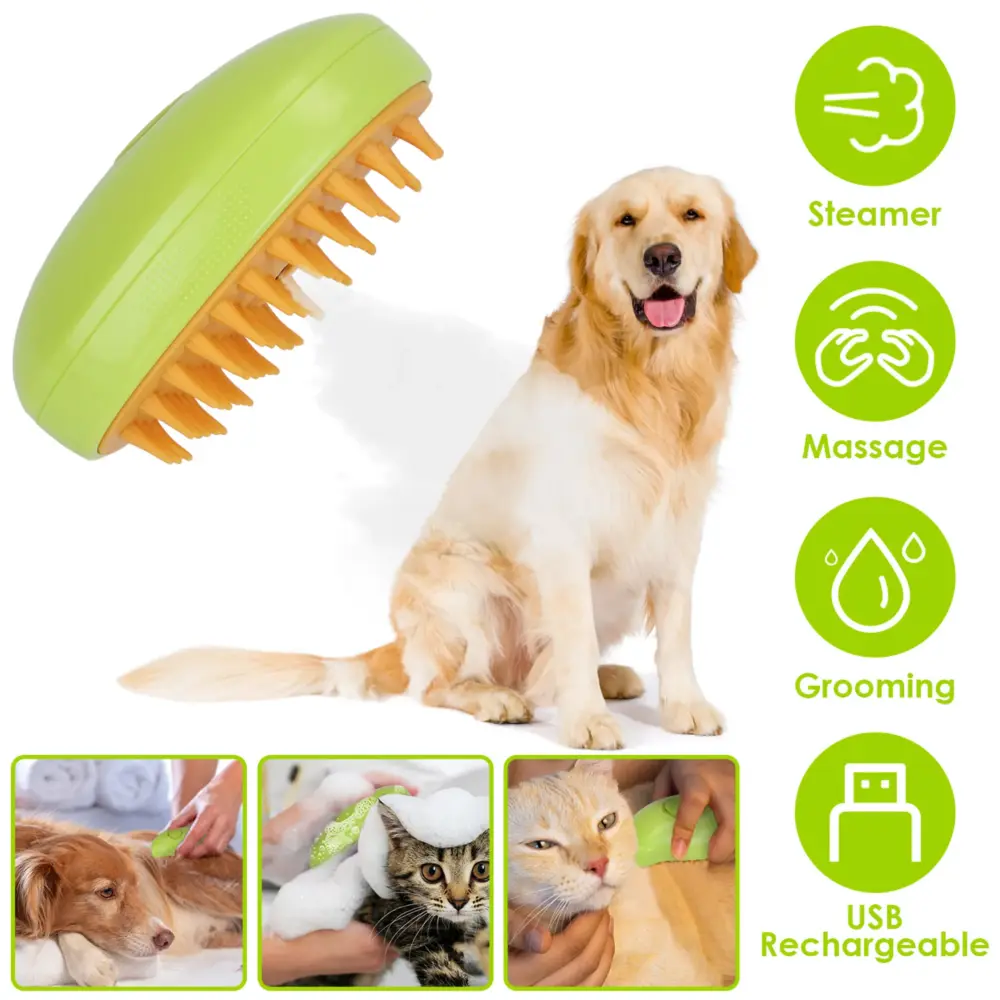
3-in-1 Steam Grooming Brush for Cats & Dogs, View product
$36.95
Why it fits: Soft silicone pins that gently massage a short coat; brush dry while your puppy learns the routine, and add the press-to-mist spray later.
-
Sakabase
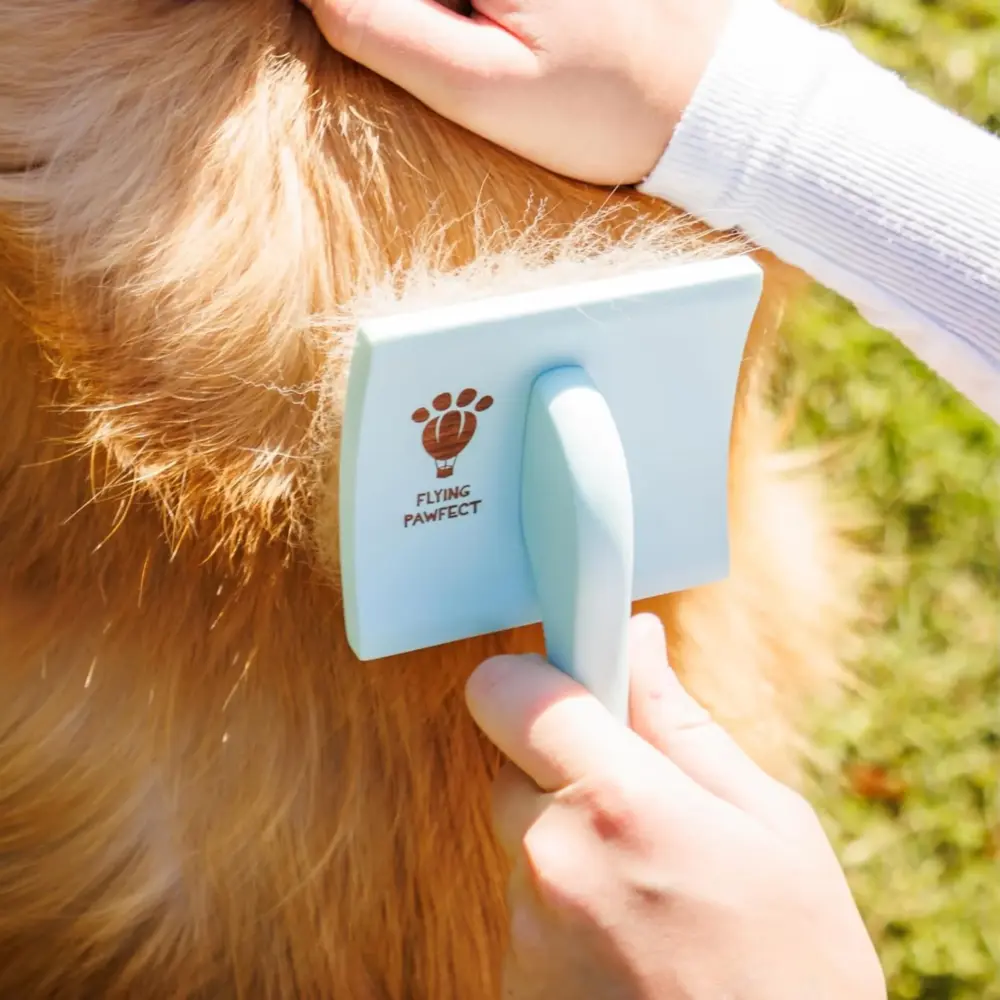
Curved Slicker Brush, View product
$39.95
Why it fits: Suits puppies growing a medium or long coat; the curved head covers more coat per stroke, so keep the fine, firm pins feather-light.
-
Mr. Peanut’s
Naturals Pet Wipes
$26.95
Why it fits: Easy cleanups between baths for muddy paws and messy faces; each large, thick wipe doubles as a short, rewarded touch session.
Currently out of stock
-
Quiet Rechargeable Pet Nail Grinder, View product
$50.95
Why it fits: A quiet buzz to get used to long before nail trims; run it across the room with treats, then do one or two nails at a time.




A first brush for your puppy’s coat
Most puppies start with a soft, fluffy coat. The AKC’s article on why puppies shed puts the change to the adult coat at about 4 to 6 months, though timing varies widely between breeds. For now the goal is a brush your puppy accepts, not a finished groom, so brush the coat they have today:
| Coat | Examples | First brush |
|---|---|---|
| Smooth, short | Boxer, Boston Terrier | Soft silicone pins, used dry |
| Double coat | Golden Retriever, Husky | Slicker, gliding over the top |
| Long or silky | Shih Tzu, Yorkshire Terrier | Slicker, short and feather-light |
| Curly | Poodle, doodles | Slicker, in small sections |
Pressure matters more than the tool. Fine, firm slicker pins like the Sakabase’s need almost no pressure on thin puppy skin, so test a stroke on your forearm first. The steam brush mists only when you press for it: brush dry at first, and add the mist, away from the face, once strokes are routine. Save the de-shedding tool for when an adult double coat starts to shed.
Long, silky and curly puppies have the most riding on this practice, since those adult coats need brushing every day or close to it and most need regular groomer trims. Check behind the ears, under the collar and in the armpits, where the first tangles form. What the coat change itself looks like is in when puppies lose their puppy coat.
How to get a puppy used to brushing, step by step
Keep to a minute or so at first, once or twice a day. Move to the next step only after a session in which your puppy stayed loose and kept eating.
- Pick a sleepy moment. After a nap, a meal or a walk, once your puppy has been out to potty. Sit on the floor with them beside you, or a small puppy on your lap.
- Introduce the brush. Hold it still near their nose, treat when they sniff or look at it, then put it away. Repeat a few times over the day.
- Pet, then let the brush follow. Stroke the shoulder with your hand and follow straight after with one light brush stroke along the lie of the coat. Treat during the stroke.
- Stay on the back and sides. Two or three strokes per treat, for about a minute. End while your puppy is still relaxed, before the first wriggle.
- Add one new area per session. The chest, then the legs, then the tail, then the belly with your puppy on your lap or lying on their side. Leave the ears and face for last, with the softest tool.
- Bring in the lick mat. Once a minute is easy, press soft food into the mat so both hands are free and sessions can stretch to a few minutes.
- Change places and positions. Brush on the floor, on their bed, and standing on a raised, non-slip surface with one hand on your puppy, so a grooming table isn’t new.
- Grow toward the adult routine. As the adult coat comes in, lengthen sessions and add days until you match what that coat needs.
Tip
A puppy who grabs the brush is usually playing or teething, not protesting. Keep the brush low and still rather than waving it near their face, hand over a chew toy and try again after a nap. Never let the brush turn into a tug toy, or it stops being a grooming tool.
Wipes and spot cleaning between baths
Puppies get dirty in small, frequent ways: muddy feet after a potty trip, breakfast on the chin. A wipe handles most of it, and every wipe-down doubles as handling practice, with the same touch-and-treat rhythm:
- Paws after outdoor trips: one foot at a time, the top first, then the pads, then between the toes.
- Face after meals: the chin and lips, then below each eye, wiping away from the eye rather than across it.
- Ears: only the parts of the flap you can see, never down into the ear canal.
- Coat: a quick pass with the lie of the hair for dust, drool or a small mess.
Hold the wipe in your palm for a few seconds so it doesn’t feel cold. The Mr. Peanut’s Naturals Pet Wipes in the picks are large (6 × 10 in) and thicker than standard pet wipes, so one usually covers a paw or a face without tearing. For bigger messes, how to clean a dog without a bath has more techniques, and when a real bath is due, how to bathe a puppy covers water temperature, the face and drying off.
Safety note
Stop using any wipe or product that leaves your puppy’s skin red, itchy or flaky, and ask your veterinarian. The same goes for an ear that smells, looks red or has discharge, and for eyes that stay runny or red: those need a checkup, not a wipe.
Nails: where they fit in
Nail trims are the last step of paw handling, not a separate project. Once you can hold a paw and gently press a toe pad while your puppy keeps eating, you’re ready for the trim itself; how to trim puppy nails covers when to start, choosing clippers or a grinder, and dewclaws. A grinder can earn its place early: switch it on across the room while your puppy eats, so the buzz is familiar long before it touches a nail.
Getting ready for the first groomer visit
Ask your veterinarian when your puppy’s vaccinations make a salon visit sensible, and ask the groomer which records they need. Then book early, especially for a long or curly coat: a short, easy first appointment is a much gentler start than a full haircut on a tangled six-month-old.
Practice these at home first
- Standing on a raised surface for a few seconds: a sturdy table with a non-slip mat, your hand on your puppy the whole time.
- The dryer. Run a hair dryer on a cool, low setting across the room while your puppy eats, a little closer over later sessions, never aimed at the face.
- A buzz near the body. Hold the grinder, switched on, a short distance from the shoulder as a stand-in for a groomer’s clippers.
- A chin hold. Cup the chin for two or three seconds, the way a groomer steadies the head to trim around the eyes.
- New hands. Let a friend your puppy likes do the easiest steps, so a stranger’s touch isn’t brand new.
Safety note
Never step away from a puppy on a table or counter, even for a second. A jump or a slip from that height can injure a small puppy.
When you book
- Ask whether the salon offers a short puppy appointment, such as a bath, brush-out and nail tidy, instead of a full cut.
- Tell the groomer what your puppy already accepts and what is still new.
- Ask how they handle a puppy who gets worried, and whether they’ll pause or call you if yours does.
- Pick a quiet time of day if the salon has one, and arrive after a walk and a potty break.
Signs your puppy needs a break, and how to restart
VCA’s handling guide lists the signs to ease off: squirming or struggling, cowering, whining, mouthing or nipping, leaning or turning away, and taking treats roughly or not at all. It calls hiding, yelping, growling and nipping signs of extreme distress. Treat squirming as a signal too, even when it looks playful.
When you see one, don’t push on to finish the job. End on something easy, such as a single touch on the shoulder and a treat, and let your puppy go. Next session, restart a step back:
- Return to the last step that went smoothly, with half as many repetitions.
- Use a better treat or the lick mat, and pick a sleepier time of day.
- Split the hard step smaller: a half-second touch instead of a full second, or one stroke instead of three.
- Try a tricky spot only at the end of a session that went well, then finish on an easy one.
If your puppy stops taking treats, VCA’s advice is to make the handling a little easier first and, if they still won’t eat, to end the session and ask a professional for a modified plan. Talk to your veterinarian if your puppy reacts sharply to one spot, which can be a sign of pain, and to a trainer who uses reward-based methods if fear or growling keeps coming back.
Mistakes that make grooming harder later
- Handling only when it’s needed. If paws are touched only when they’re muddy and the brush comes out only for tangles, your hand starts to predict the hard part. Easy sessions on clean days keep grooming ordinary.
- Holding on through a struggle. Plan sessions short enough that you let go first. Pinning a puppy teaches them that grooming means being trapped.
- Adult tools and adult pressure. A de-shedding edge on puppy fluff, or slicker pins pressed into thin skin, can make the brush something to avoid.
Once the adult coat is in, how often to brush a dog sets the routine by coat type. Brushes, wipes and the grinder are all in our dog and cat grooming collection.
Related guides
-
How-to
How to Groom a Senior Dog at Home: Brushing, Nails and Lump Checks
Many older dogs tire of standing, and shorter walks wear their nails down less. Here is how to set up a comfortable spot, brush gently by coat type, keep nails short, clean up between baths, check for lumps as you go and know when a groomer or veterinarian should take over.
-
How-to
How to Bathe a Puppy for the First Time, Step by Step
When a puppy can have a first bath, why a warm washcloth comes before shampoo, and how to set up the sink, keep the face and ears dry, dry off fast and end on a treat, plus how often to bathe and what to do if your puppy panics.
-
How-to
How to Groom a Senior Cat: Gentle Brushing, Mats and Nails
When an older cat stops grooming, the fur on the lower back turns greasy and starts to mat. Here's why it happens, why a vet check comes first, and a gentle routine for thin skin, mats along the spine, thick overgrown claws and a clean back end.