Senior Pets Comparison
Older Dog Can’t Keep Up? Shorter Walks vs a Backpack Carrier
Short answer
Shorten and split the walks first: many older dogs do better on two or three short, slow outings than one long one, and walking keeps stiff joints moving. Add a backpack carrier only for the stretch your dog can’t manage, once your veterinarian has ruled out pain. A carrier is for low stamina, not a sore dog.
Shorter walks vs a backpack carrier at a glance
The choice is rarely all or nothing, so compare three setups: walks cut down to what your dog can manage, a walk-and-carry outing where your dog walks the part they can and rides the rest, and outings where your dog mostly rides.
| Option | Exercise and sniffing | Joint load | Heat | Limits and cost |
|---|---|---|---|---|
| Shorter walks | All on foot; ground sniffing stays | Set by your dog’s own pace | Dog can stop in shade or lie down | Your time only; free |
| Walk and carry | Walks what they can, rides the rest | Walking stretch, plus lifts in and out | Rider can’t seek shade; check often | Pack limits, your back, a purchase |
| Mostly carried | Little exercise; sights and smells | Lifts, then one position throughout | Held against your body the whole way | Pack limits, your back, a purchase |
Cost rarely decides it. The weight on your back and how your dog copes with being held rule a carrier in or out long before price does.
What shorter walks keep, and what they cost
Splitting one long walk into two or three short ones is the first change for most slowing dogs, and often the only one they need. Your dog sets the pace, stops when they want to and keeps the nose-to-the-ground sniffing that makes a walk worth taking.
There’s a joint-health case for it, too. For dogs with osteoarthritis, VCA Animal Hospitals’ guide to exercising dogs with osteoarthritis suggests starting with about 10 minutes of walking three times a day rather than fewer, longer outings, because shorter gaps between walks give joints less time to stiffen. It also counts controlled, regular exercise among the core treatments for the condition, which is the strongest argument against letting riding replace walking.
What your dog gives up is distance: the long loop, the family hike, the walk to the far side of the park. If those outings still matter to your dog, that’s where a carrier earns its place. To set the length, pace and route, see how long to walk a senior dog. To pack more into ten minutes, try the slow sniff walks in enrichment for senior dogs, or the sniff stretches and curb waits suggested for seniors in dog walking games.
Whichever way you go, know when to stop. The AKC’s advice on how often to walk your dog lists limping, stopping, lying down, panting hard and trouble getting on or off curbs as signs of pain and fatigue in older dogs, and suggests a ride in a wagon or stroller as a break when a walk is too long or strenuous. A backpack is the same idea for a dog small enough, or a person strong enough, to carry.
When a backpack helps: stamina, not pain
A carrier makes sense when the problem is how far your dog can go, not how it feels to go. A typical pattern: your dog sets off keen and moving normally, fades partway through, perks up after a rest and isn’t stiff or sore the next morning. Even that can have a medical cause, and VCA counts reduced stamina on walks among the possible signs of pain, so raise it with your veterinarian first.
A backpack suits a dog who:
- walks comfortably for part of the outing, then tires;
- is happier coming along than being left at home;
- relaxes when lifted and held, or learns to with practice;
- fits the carrier’s size and weight limits; and
- has a person who can carry that weight for the whole planned stretch, uphill included.
Tip
Spend the walking where it counts. For a dog with only a few good minutes in them, carry them past the plain sidewalk to the park or trail, let them poke around and sniff there, then carry them home. Stop the walking part when your dog first starts to flag, not when they quit.
Questions for your veterinarian first
Stiffness and fading stamina have many possible causes, and some are treatable. Before you plan around them, ask:
- What could be behind the slowdown, and is anything worth testing or treating?
- How much walking suits my dog now, and split into how many walks?
- Is it OK to lift my dog and have them sit upright in a pack, given their back, hips or any past surgery?
- Could pain relief, weight loss or physical rehabilitation help them walk farther?
- Which signs on a walk mean we should stop, or call you?
Who shouldn’t ride in a backpack
Some dogs are better served by shorter walks alone, at least until a veterinarian has had a look.
- A dog in pain. A carrier hides the symptom without treating it, and lifting a sore dog can hurt. VCA’s guide to how to tell if a dog is in pain lists signs such as reluctance to get up, reluctance on stairs, trembling in the rear legs and lashing out when handled. Limping, or stiffness that keeps getting worse, belongs on the same list.
- A dog with breathing trouble. Flat-faced breeds and dogs with heart or lung disease are already more prone to heatstroke (more in the heat section below), and a pack holds your dog against your body, where it’s harder to cool down. Being lifted can be stressful, too, and a stressed dog pants harder. A dog who coughs or breathes noisily needs a veterinarian’s opinion before any carry.
- A dog who hates being held. A dog who stiffens, struggles, growls or tries to climb out can fall from shoulder height or throw you off balance. Some dogs come around with slow practice at home; others never do, and that’s an answer in itself.
- A dog outside the size limits. No pack fits every dog. Ours stop at 25 lb for small dogs and at the manufacturer’s 80 lb maximum for large ones. For a bigger senior, the AKC’s wagon or stroller idea may suit better; we don’t stock either.
- A person who can’t carry safely. Your back, knees and balance set the real limit, not the pack’s maximum. If carrying is a struggle on a flat sidewalk, pick routes with an easy way home instead.
Heat, time limits and rest breaks
A walking dog cools down by slowing, lying on cool ground or moving into shade. A riding dog can’t do any of that. They’re held against your back, close to your body heat, and in an enclosed carrier they’re inside a bag as well. The ASPCA’s hot weather safety tips say elderly, flat-faced and overweight pets, and those with heart or lung disease, are more susceptible to heatstroke, which describes many of the dogs who end up in a carrier.
- Skip the carry on hot days. Walk a short loop at the coolest time of day instead. A dog who can’t walk far in the heat shouldn’t be carried farther in it.
- Set your own time limit. Neither of our listings gives a maximum riding time, so keep the first rides to a few minutes close to home and build up only while your dog stays relaxed.
- Unload at every rest. Let your dog stand, stretch, sniff, pee and drink before the next stretch.
- Check your dog often. Look for heavy panting, restlessness, whining or attempts to climb out, and check more often in warm weather.
- Mind the cold, too. A riding dog isn’t moving to keep warm, so a small or thin-coated senior can chill on a winter outing even while you’re warm from carrying.
Safety note
Frantic panting that doesn’t ease with rest, thick drool, bright-red, gray or purple gums, weakness, stumbling or vomiting can mean heatstroke, an emergency. Unload your dog in the shade, wet the coat with cool, not cold, water and call your veterinarian or nearest emergency clinic right away. The AKC’s guide to overheating in dogs advises a vet check even if your dog seems to recover.
What a backpack carrier is not
- Not a car restraint. Take your dog out of the pack for the drive and use their usual crate or restraint. Neither of our backpacks is sold as a vehicle restraint or as crash protection.
- Not a substitute for vet care. Slowing down is easy to put down to age. If it’s new or sudden, or comes with a limp, weight change, a cough or labored breathing, call your veterinarian rather than buying a way around it; when is a dog a senior lists the changes that need a vet sooner.
- Not a place to leave your dog. A carrier is for supervised use while you’re wearing or holding it. Never leave your dog clipped into a pack you’ve set down, or in a pack in a parked car.
The two backpacks we stock, and who each fits
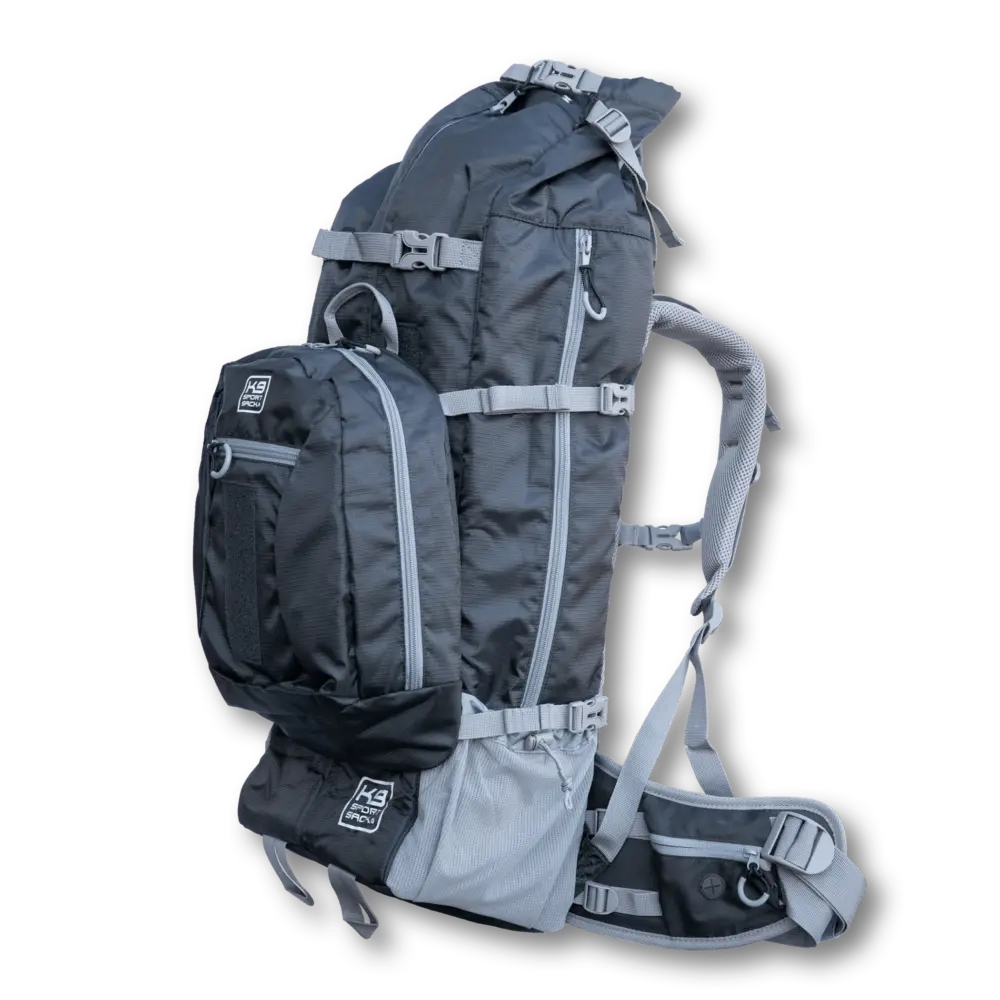
These picks are limited to Nilosi’s own catalog: two carriers for two very different sizes of dog, plus a water bottle for the rest stops. The GOOPAWS pack takes pets up to 25 lb; the K9 Sport Sack Kolossus comes in Large to XXL by collar-to-tail length, with an 80 lb manufacturer maximum. A dog over 25 lb but shorter than 20 inches from collar to tail falls between the two, and one over 80 lb or longer than 29 inches is beyond both, so ask us before you order if you’re unsure. How to measure, and how to introduce the pack step by step, are in how to get a dog used to a backpack carrier.
-
K9 Sport Sack
Kolossus Dog Carrier Backpack, Choose size & color
$264.95
Why it fits: Carries a medium to large senior for the stretch they cannot walk; Large to XXL, 20 to 29 in collar to tail, 80 lb manufacturer maximum.
-
GOOPAWS
Cat and Small-Dog Carrier Backpack
$51.95
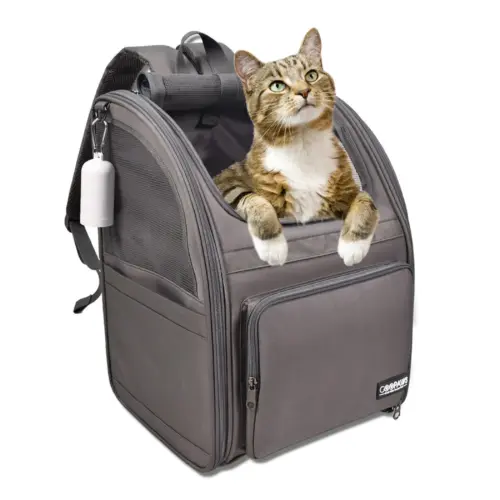
Why it fits: Brings a small senior up to 25 lb home from the end of a walk; top and side openings for air and checking in, plus an inside safety strap.
Currently out of stock
-
Flipo
Fold-A-Bowl Dog Water Bottle with Fold-Out Bowl, Choose color
$28.95
Why it fits: Offers water at every rest stop on a split or carried walk; a 26 oz bottle whose cover folds out into a bowl, plus a wrist strap.

Small seniors up to 25 lb
The GOOPAWS Cat & Small-Dog Carrier Backpack carries your dog inside the bag on a fleece-lined pad, with large top and side openings for air and for checking on them. There’s a safety strap inside; clip it to a harness rather than a collar. Treat 25 lb as the load limit, not a fit check: your dog should be able to sit and settle without being folded up. Lift a stiff dog in rather than asking them to climb or jump.
Medium and large seniors
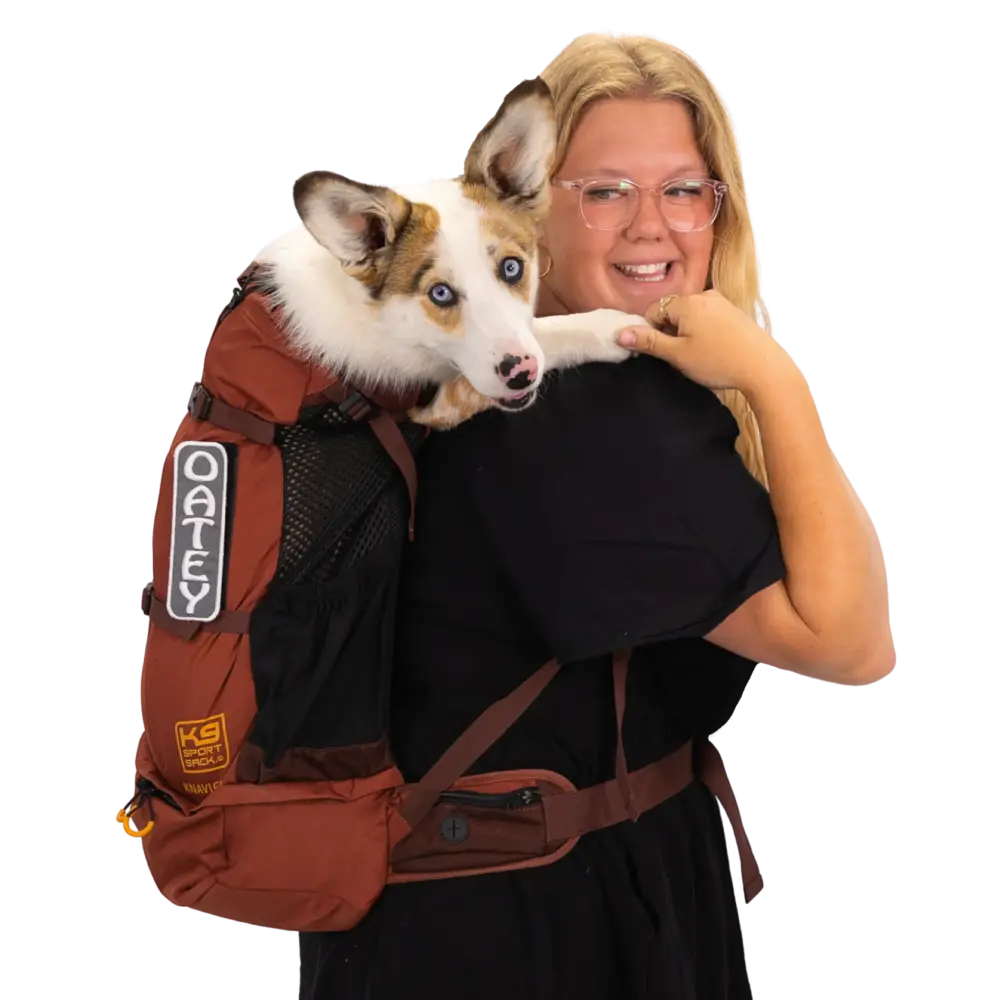
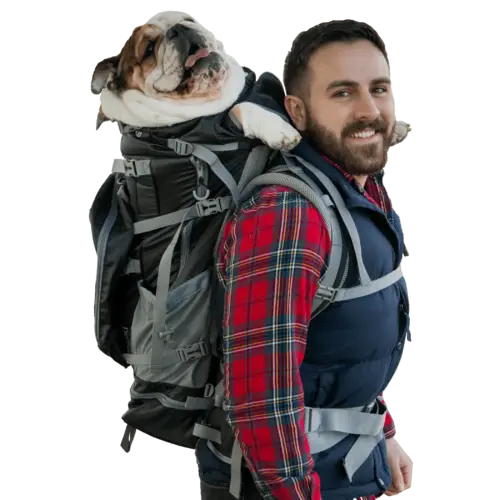
The K9 Sport Sack Kolossus Dog Carrier Backpack is designed for medium to large dogs. In K9 Sport Sack’s how-to-use guide, the dog sits with its front paws through leg openings and its head and upper body out of the pack, so ask your veterinarian whether that upright position suits a dog with back or hip trouble. Go by body length and the fitting instructions, not weight alone.
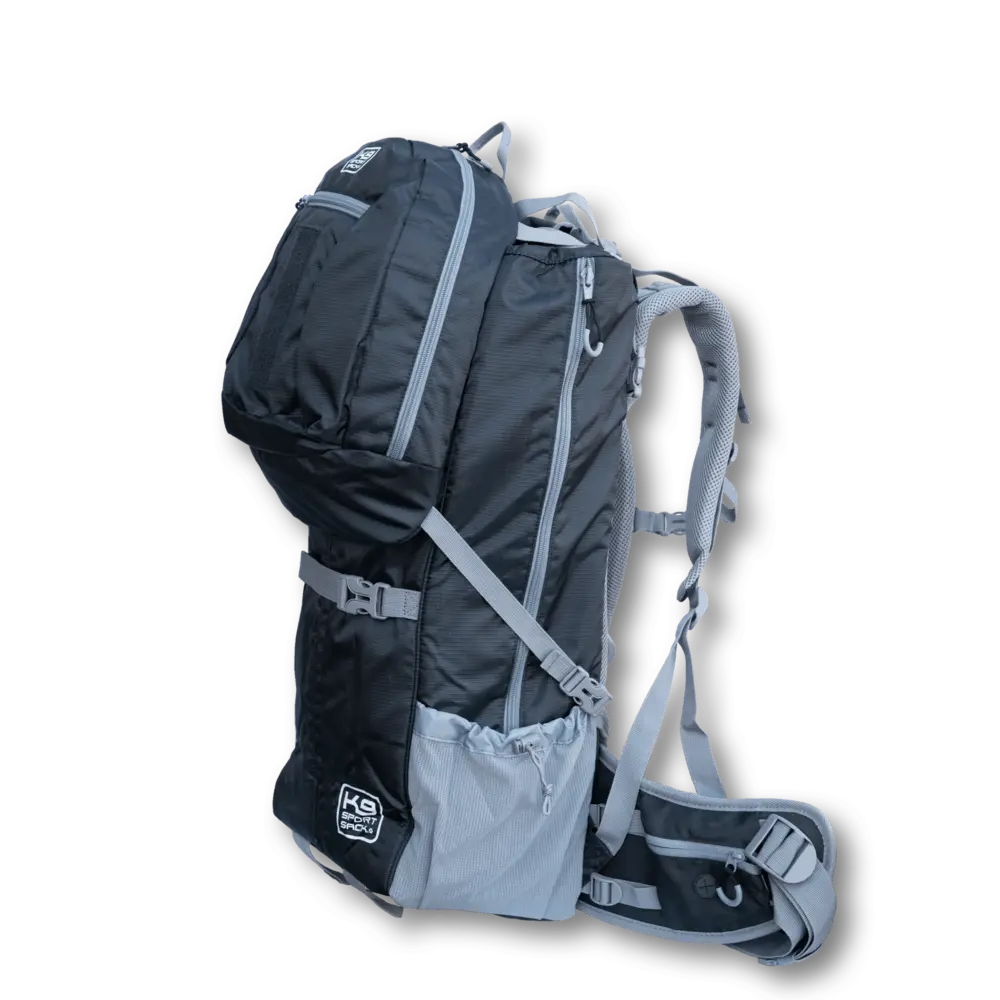
Two details suit a walk-and-carry outing. The pack adjusts at the shoulders and torso for the person wearing it, and it converts to a gear backpack with up to 60 liters of space, so you can wear it as your daypack while your dog walks and load your dog for the way home. Getting a big dog in and onto your back takes practice, and often a second person at first.
Verdict: walk first, then carry the rest
- Shorter, split walks win for most older dogs: free, kind to stiff joints and full of sniffing. They’re also the safer choice for a dog in pain, with breathing trouble or who hates being held.
- Walk and carry wins when your dog tires partway but is otherwise comfortable, your veterinarian is happy with the plan, and your dog fits a pack you can carry. On a trail, plan the carry before you set out; our hiking with a dog checklist covers turnaround times.
- Mostly carried suits a dog with only a few minutes of walking left who still lights up outdoors, as long as your veterinarian agrees, they ride calmly and the outing stays short.
Whatever mix you choose, judge it by the next morning. A dog who comes home content and gets up without extra stiffness had the right amount of walking; one who is sore or listless needs a shorter plan, and a word with your veterinarian.
Related guides
-
Checklist
Winter Hiking With a Dog: Checklist for Cold, Ice and Short Days
A winter trail-day checklist: plan a shorter, sheltered route around daylight, keep your dog leashed and off frozen water, pack water that won't freeze and a coat for dogs who feel the cold, check paws for ice balls and salt, and know when to turn back.
-
Guide
Hiking With a Dog: A Day-Hike Checklist for Water, Waste, Trail Manners and Tired Legs
What to bring hiking with a dog, and how to use it on the trail: park rules, a harness and 6-foot leash, water offered at every rest (even to a dog who won't drink), full bags packed out, passing hikers and horses, a tick check, and when to carry a tired dog.
-
Comparison
Framed vs Unframed Pet Carrier Backpacks
A frame changes where the weight sits, not how much there is. This comparison covers shoulder load versus hip load, when a simple pack is genuinely enough, and the dog size at which the question answers itself.