Car Travel Comparison
Framed vs Unframed Pet Carrier Backpacks
Short answer
An internal frame and hip belt move the dog’s weight from your shoulders onto your hips and stop the pack pressing into your back. For trips under about half an hour with a small dog, an unframed pack is fine. For longer walks, hills or a dog over about fifteen pounds, the frame is worth it.
Where the weight goes
Shoulder straps alone carry the load on two narrow points at the top of your back. That works for a short distance and becomes uncomfortable quickly, because your shoulders are not built for sustained load the way your hips are.
A hip belt shifts a large share of the weight onto the pelvis, which is the same principle that makes a proper hiking rucksack bearable. The frame is what makes the belt work, because without something rigid the load cannot transfer downward.
What a frame actually changes
- Shape. The pack holds its form instead of collapsing around the dog.
- Contact. The dog is held off your spine rather than pressed against it.
- Load path. Weight travels through the frame to the hip belt.
- Stability. Less swaying when you turn, step up or lean.
- Dog comfort. A structured interior means the dog is not squeezed as you move.
- Weight. The pack itself is heavier before the dog is in it.
Hip belts and shoulder load
The belt only helps if it is positioned correctly, which means sitting on top of the hip bones rather than around the waist. Worn too high it does nothing and feels tight; worn correctly it takes a surprising proportion of the load.
If more than one person will carry the pack, check the adjustment range covers both of you. A belt that fits one person and not the other effectively makes it an unframed pack for the second.
Side by side
| Framed | Unframed | |
|---|---|---|
| Weight on you | Hips and shoulders | Shoulders only |
| Comfortable duration | Hours | Twenty to forty minutes |
| Pack weight empty | Heavier | Lighter |
| Bulk in storage | Larger | Packs down |
| Price | Higher | Lower |
| Best for | Hiking, bigger dogs | Errands, small dogs |
Trip length decides this
The honest rule is time rather than distance. If you will carry the dog for less than half an hour at a stretch, almost any well-made pack is comfortable enough. Beyond that, shoulder-only carrying becomes the limiting factor, and you will cut trips short because of your own back.
Think about the trips you actually take rather than the ones you intend to. A pack bought for a hypothetical hiking holiday and used weekly for the vet is the wrong purchase; so is a light pack bought for errands and taken up a mountain.
Dog size decides the rest
Below about ten pounds, the frame question is mostly about your comfort over long distances. Between ten and twenty pounds it starts to matter on any walk over half an hour. Above twenty pounds, carrying without a hip belt is unpleasant quickly, and above thirty it is genuinely hard work regardless of the pack.
Dog length matters alongside weight. A long-bodied dog needs a longer pack, and a long pack without a frame sags in the middle, which is uncomfortable for the dog as well as for you.
-
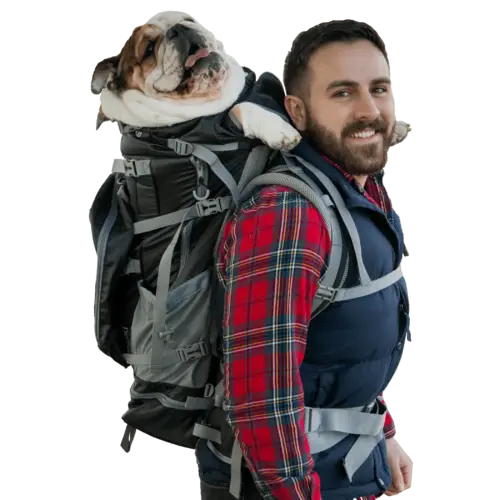
K9 Sport Sack
Knavigate, Choose size
Price range: $180.95 through $200.95
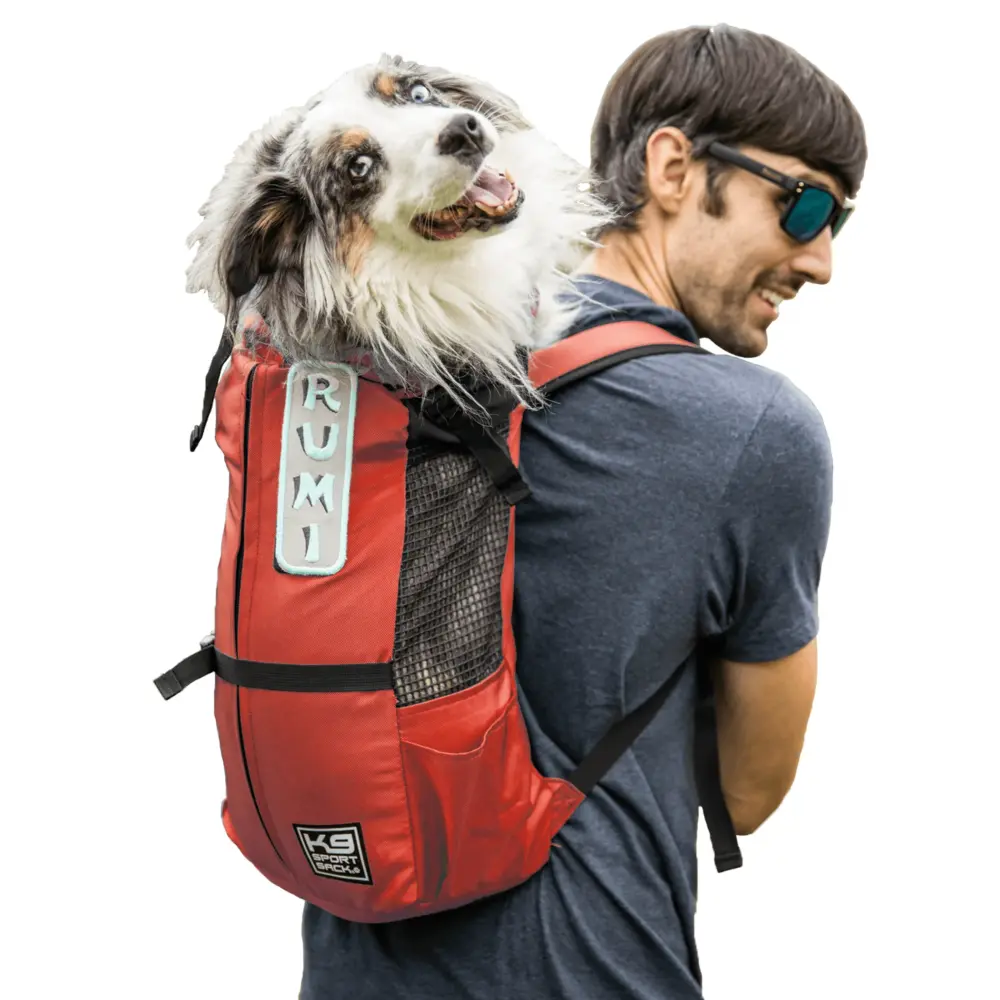
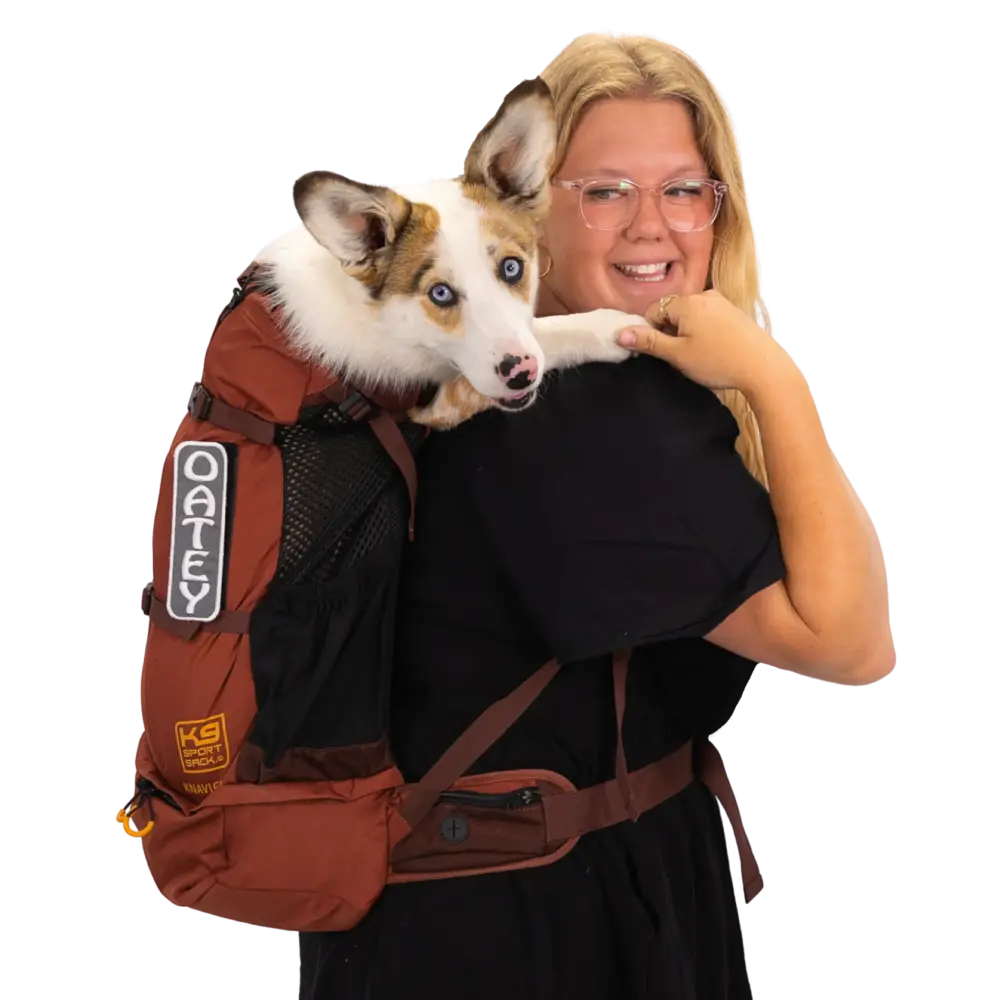
Why it fits: An internal frame with a padded hip belt across five sizes, which is the framed option in this range.
-
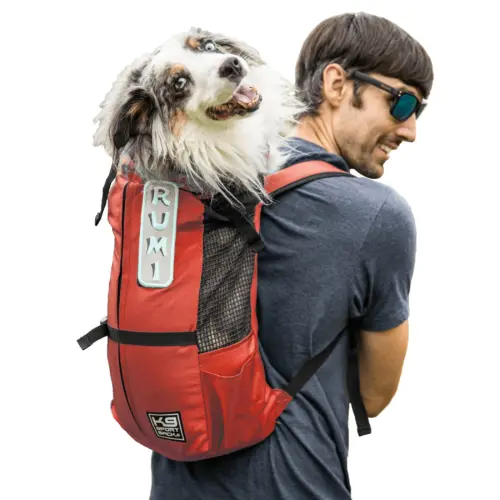
K9 Sport Sack
Trainer, Choose size & color
$60.95
Why it fits: The unframed counterpart for short, non-strenuous trips with dogs from 4 to 30 pounds.
-
K9 Sport Sack
Kolossus Dog Carrier Backpack, Choose size & color
$264.95
Why it fits: A large-breed framed carrier, for dogs beyond the size most packs are built to handle.
-
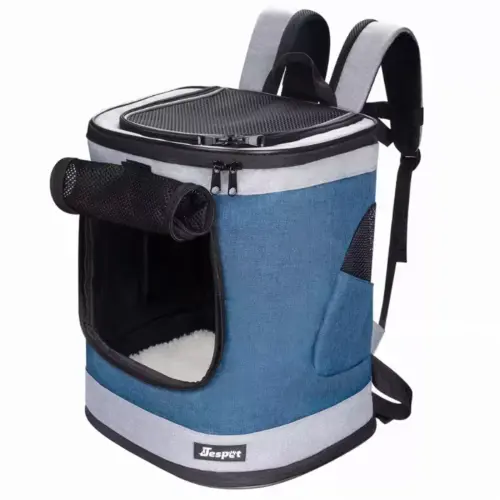
JESPET
Soft Dog Backpack Carrier, Choose color
$65.95
Why it fits: A soft unframed pack with mesh panels, room to stand and a padded shoulder strap.
-
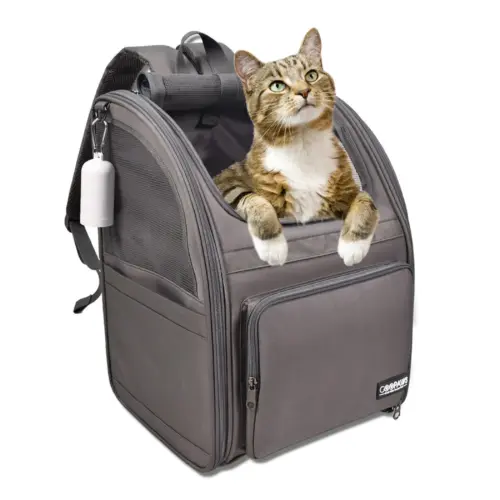
GOOPAWS
Cat and Small-Dog Carrier Backpack
$51.95
Why it fits: Top and side openings with an internal safety strap, for cats and small dogs up to 25 pounds.
Currently out of stock
-
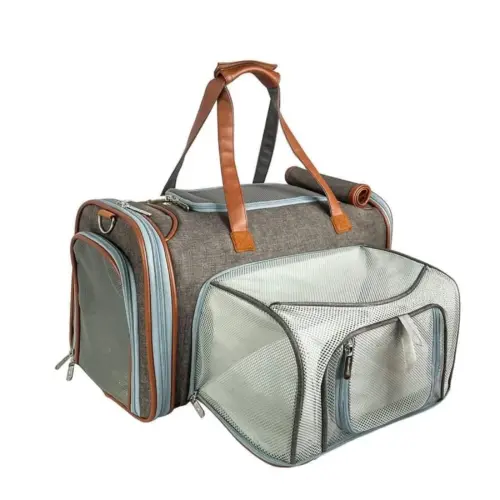
Mr. Peanut’s
Gold Series Mini Expandable Pet Carrier, View product
$130.95
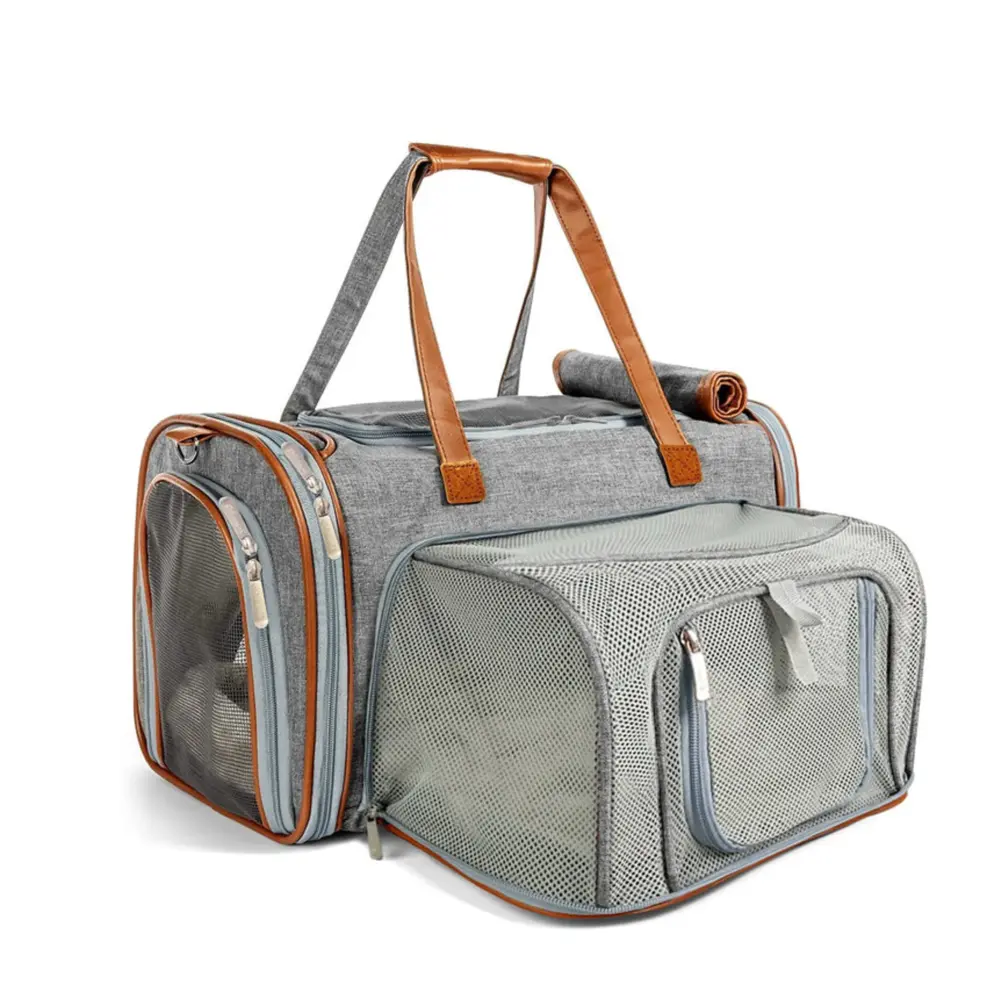
Why it fits: A hand-carried structured carrier, which beats both for short trips where you are not walking far.
Loading and unloading, which differs
The two types load differently and it is worth thinking about before buying. An unframed pack collapses when empty, so it usually needs holding open with one hand while the dog is lowered in with the other, which is awkward alone. A framed pack stays open on its own, which makes solo loading considerably easier.
This matters most with a dog who does not sit still. If you will usually be loading without help, stand the pack against a wall or a chair leg so it cannot slide, and teach the dog to step in themselves rather than lifting them every time. Most dogs learn that in a few sessions and it removes the hardest part of the process permanently.
Heat, airflow and the limits of both
A dog in any carrier backpack is against your back, which is a warm place, with restricted airflow and no ability to move away from the heat. In summer that is the main constraint on both types rather than comfort or load.
- Carry in the cooler parts of the day where you can
- Stop in shade every twenty to thirty minutes and let the dog out
- Offer water at every stop rather than at the end
- Watch for heavy panting, drooling or restlessness and stop if you see them
- Avoid enclosed designs with limited mesh in hot weather
- Remember flat-faced breeds cool themselves poorly and need shorter sessions
Safety note
A dog cannot tell you they are overheating until it is already a problem, and they cannot move to cool down inside a pack. In warm weather, treat the breaks as compulsory rather than optional.
What neither one fixes
No pack makes a dog comfortable who has not been introduced to it, and no frame compensates for the wrong size. Both of those matter more than the frame question: how to choose a dog carrier backpack covers measuring and fit.
Heat is the other shared limitation. A dog in any pack has limited airflow and cannot move to cool down, so both types need shade, water and regular breaks in warm weather.
The honest recommendation
Most households buying their first carrier backpack are doing it for vet trips, public transport and the occasional walk, and an unframed pack serves that well for considerably less money.
Buy framed if you intend to hike, if your dog is over roughly fifteen pounds, or if you already know you will be carrying for more than half an hour at a time. In those cases the frame is not a luxury; it is what makes the pack usable.
Trying one before you commit
Carrier backpacks are difficult to assess from a product page, because the experience depends on your back as much as the dog. If you can, try one loaded before buying, and if you cannot, test at home before the packaging goes in the bin.
- Load the pack with the dog’s weight in books and bags of rice.
- Wear it around the house for fifteen minutes.
- Walk up and down stairs with it.
- Check where it presses after ten minutes, which is where it will hurt after an hour.
- Adjust the hip belt and straps properly before deciding it does not fit.
- Only then try it with the dog, indoors, for a short session.
Looking after either type
- Empty and air it after every use; they hold moisture and smell
- Spot clean rather than machine washing unless the label allows
- Check buckles and stitching at every load point monthly
- Check the internal tether and its attachment point
- Store it dry and out of direct sunlight
- Replace any pack with a cracked frame or a failed buckle
The internal tether is the part most often forgotten and the one that matters most. Check its stitching whenever you check the straps.
Common questions
Can I add a hip belt to an unframed pack?
Some packs offer one, and without a frame it helps far less, because there is nothing rigid to transfer the load through. Treat an add-on belt as stabilisation rather than weight transfer.
Is a framed pack more comfortable for the dog too?
Generally yes. The structure stops the sides collapsing inward as you walk, so the dog is held rather than squeezed, and there is usually more airflow around them.
How heavy is the frame itself?
Typically a pound or two more than the equivalent unframed pack. That is a meaningful difference on a short errand and irrelevant once you are carrying a dog for an hour.
Will a framed pack fit in a car boot or a locker?
It takes more space and does not pack flat. If storage is tight and your trips are short, that is a legitimate reason to choose unframed.
Do cats need a framed pack?
Rarely, since most cats are light and most cat trips are short. Ventilation and a secure internal strap matter far more: see are cat backpacks safe.
For the wider buying decision, see how to choose a dog carrier backpack; for the car rather than your back, cargo liner versus back seat cover; and for the trip itself, the hiking with a dog checklist.
Related guides
-
Buying guide
How to Choose a Dog Carrier Backpack
Carrier backpacks are sized by back length rather than weight, and the right one depends on how long you intend to carry. This guide covers measuring, frames, ventilation and the fit on you rather than only on the dog.
-
Guide
When to Call the Vet About a Dog: Emergency and Same-Day Signs
Sorting a worrying symptom into emergency, same-day or monitor is the decision every owner faces at ten at night. This guide groups the common ones, explains what to have ready when you call, and does not attempt to diagnose anything.
-
How-to
How to Measure a Pet for a Carrier So It Actually Fits
Carrier sizing catches people out because the weight limit and the internal dimensions are separate constraints and a pet can fail either. This covers the three measurements that matter, the height mistake almost everyone makes, and how to test the fit before a journey.