Car Travel How-to
How to Measure a Pet for a Carrier So It Actually Fits
Short answer
Measure body length from the nose to the base of the tail, height from the floor to the top of the shoulder, and weight. The carrier needs to be a few inches longer than the body length, tall enough for the pet to stand without the head touching, and rated for more than their weight. If the pet cannot stand up, turn around and lie down inside it, the carrier is too small whatever the chart says.
The three measurements
Carrier makers publish internal dimensions and a weight limit, and you need all three numbers from your pet to use them. Do the measuring when your pet is standing naturally on a flat floor, not sitting, and get someone to help if your animal will not stay still.
| Measurement | From | To | Used for |
|---|---|---|---|
| Body length | Tip of the nose | Base of the tail | Carrier length |
| Shoulder height | The floor | Top of the shoulder blade | Carrier height |
| Weight | Structural limit and airline limits |
Write them down. You will need them again for harnesses, coats and beds, and they all use slightly different reference points, which is why guessing from one to the other goes wrong.
Body length, measured properly
Measure along the body, not over the curve of the back, and stop at the base of the tail rather than the tip. Tail length is irrelevant and including it is the most common reason people buy a carrier two sizes too big.
For a cat, the usual figure is somewhere between twelve and eighteen inches for an adult, which is why the common small carrier sizes cluster where they do. For a dog, measure while they are standing square; a dog leaning forward will measure longer than they are.
Add two to four inches to the body length for the carrier. That gives room to lie down with the legs slightly extended rather than being packed in nose to tail.
Height, and the mistake everyone makes
People measure to the top of the head. That gives a number that is too large for a dog and the wrong shape of answer for a cat.
Measure to the top of the shoulder, then add a couple of inches for a dog who will carry their head above that line when standing alert. For cats, the practical test is whether they can sit upright without the ears pressing the roof, since sitting up is a position cats want in a carrier and dogs mostly do not.
Too much height is a real problem on a soft carrier, not just wasted space. A tall bag with a light structure wobbles, and a pet who cannot brace against anything gets thrown around more on a journey.
Weight limits are structural, not a suggestion
The weight rating on a carrier is about the base, the seams and the handle, and it is the number people most often ignore because the pet fits dimensionally.
A soft carrier carrying more than its rating sags in the middle, which is uncomfortable for the animal and puts the load onto stitching rather than the frame. Handles and shoulder straps fail at the attachment points, usually while you are carrying the bag, which is the worst possible moment.
Check the rating against your pet’s actual current weight rather than what you think they weigh. If your pet is close to the limit, go up a size or choose a carrier with a rigid base insert rather than padding alone.
Tip
Airline weight limits are separate and usually include the carrier itself. A soft carrier can weigh several pounds empty, which eats into the allowance. If you are flying, weigh the loaded bag rather than the pet.
The stand, turn and lie down rule
This is the test that overrides every chart. The pet must be able to stand up fully, turn around completely without having to reverse, and lie down in a natural position. It is the standard used in animal welfare guidance and in most airline rules, and it is a good rule for a half-hour car trip as well as a long flight.
A carrier that passes the numbers and fails this test is the wrong carrier. The usual reason is shape: a bag with sloping sides, a curved roof or thick internal padding has much less usable space than the external dimensions suggest.
- The pet can stand without the head or ears touching the roof
- They can turn a full circle without reversing
- They can lie on their side with the legs extended
- There is room for a pad without losing the standing height
- The pet is not pressed against a side when lying down
- You can get the pet in and out without tipping the bag
Reading a size chart
Compare like with like. Some makers publish external dimensions, some internal, and the difference on a padded soft carrier can be two inches on every axis. If the listing does not say which, assume external and subtract.
Watch for the order of the numbers too. Carriers are usually listed length by width by height, but not always, and a bag listed as sixteen by ten by ten is a very different shape depending on which number is which.
Where a maker gives a maximum pet size as well as a weight, use it. A carrier described as suiting pets up to fourteen inches lying down and twelve pounds is giving you both constraints explicitly, which is more useful than dimensions alone.
Between two sizes
For carriers, size up, with one exception. More room is almost always better for the animal, and the stand-turn-lie test is easier to pass.
The exception is flying, where the under-seat space is a hard limit and a bag that is one size too big simply will not go. In that case size down to fit the aircraft and accept a tighter bag for the duration, or choose a different model whose proportions suit your pet better at the required external size.
The other exception is a very nervous cat, who often prefers a snug, dark space to a roomy one. For those, a correctly sized carrier with a privacy cover beats a larger bag.
Cats are measured differently
Cats need height for sitting up, length for lying stretched out, and almost no extra width. They also need to be able to see out or to hide, depending on the individual, which is a feature question rather than a sizing one.
Most adult cats fit a carrier in the region of sixteen to eighteen inches long. Larger breeds and long-bodied cats are the ones who need a longer bag rather than a bigger one in every direction, which is exactly the case expandable carriers and extra-long models are built for.
Do not size a carrier for two cats. Two cats in one bag cannot move away from each other, and if one panics you cannot separate them.
Our picks
-
Mr. Peanut’s
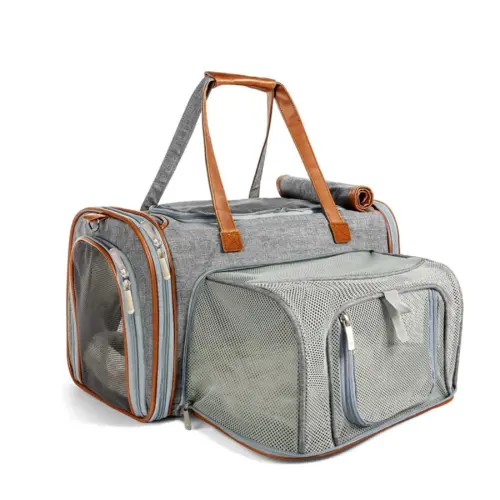
Gold Series Mini Expandable Pet Carrier, View product
$130.95
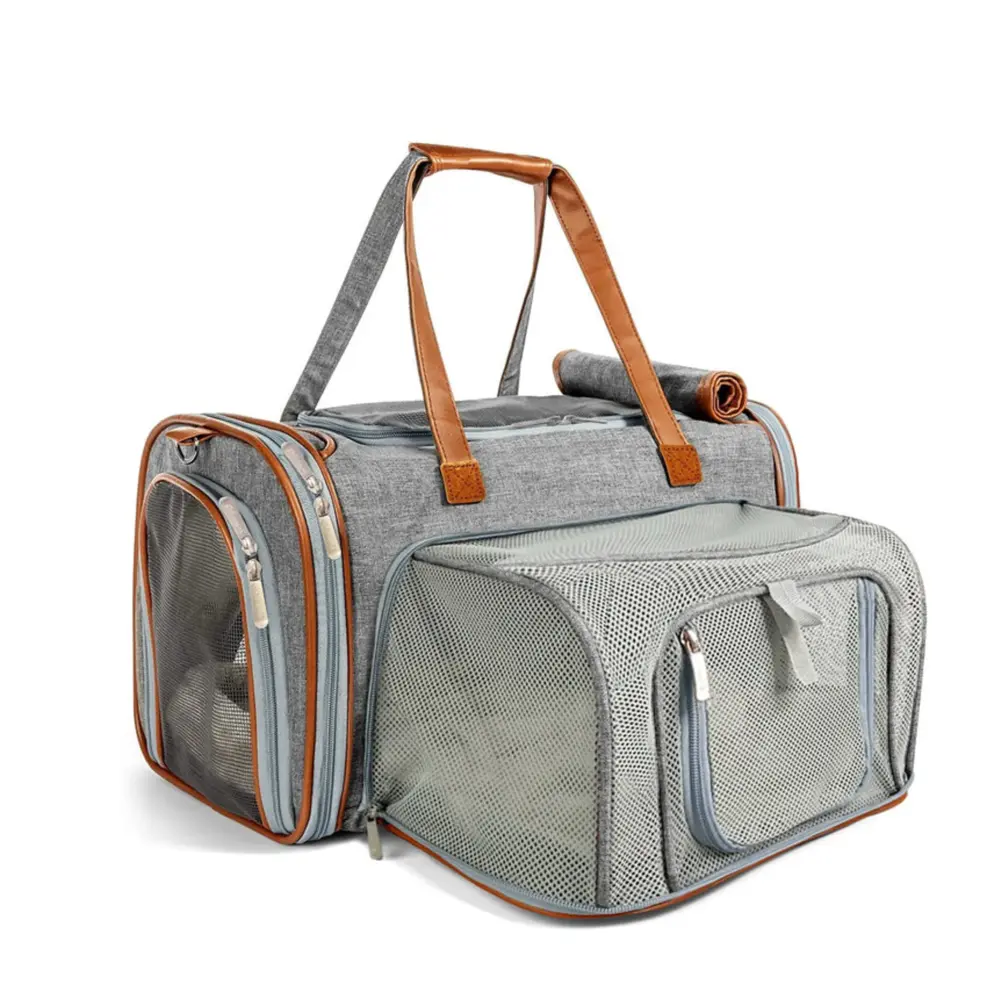
Why it fits: Sixteen by ten by ten inches with a plywood base insert and self-locking zips, sized for pets under fourteen inches lying down and up to twelve pounds.
-
Mr. Peanut’s
Gold Series Big Apple Expandable Pet Carrier, Choose color
$150.95
Why it fits: Two inches longer than the other models in the range, with the same height and width, for pets who are long rather than large.
-
JESPET
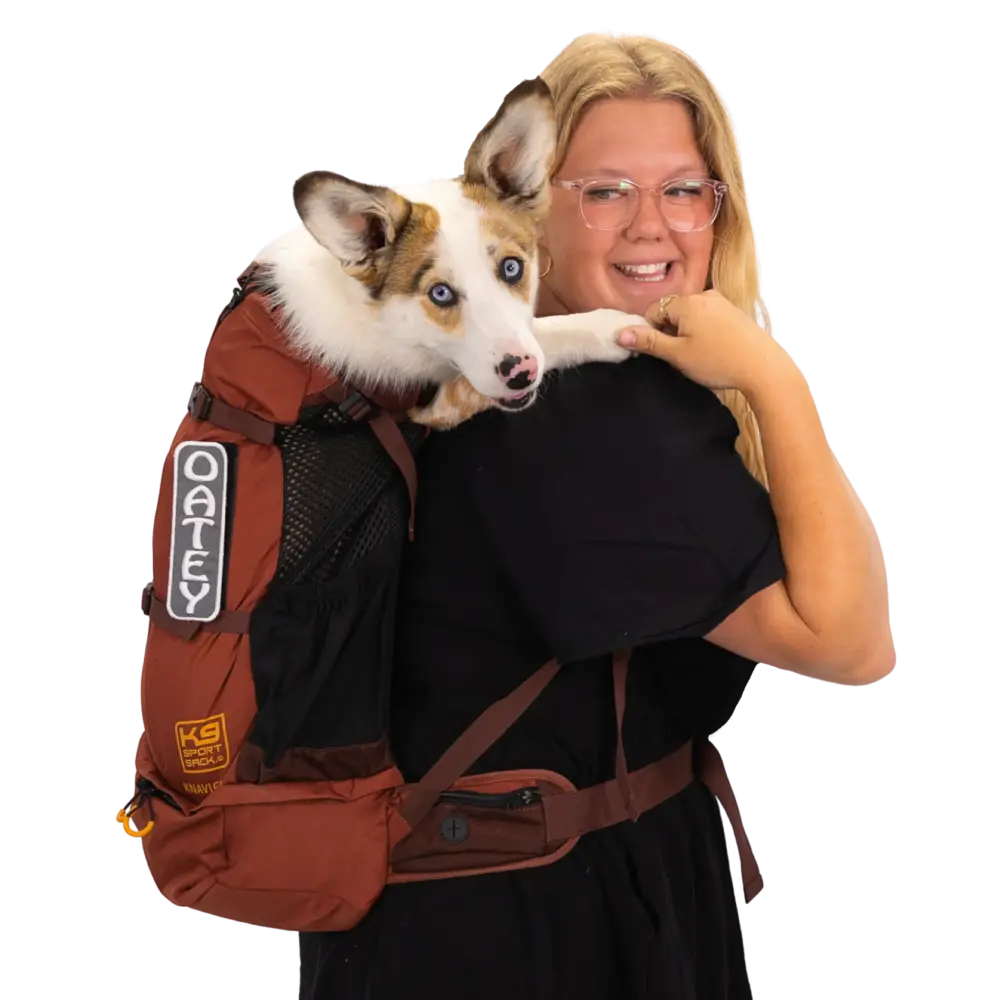
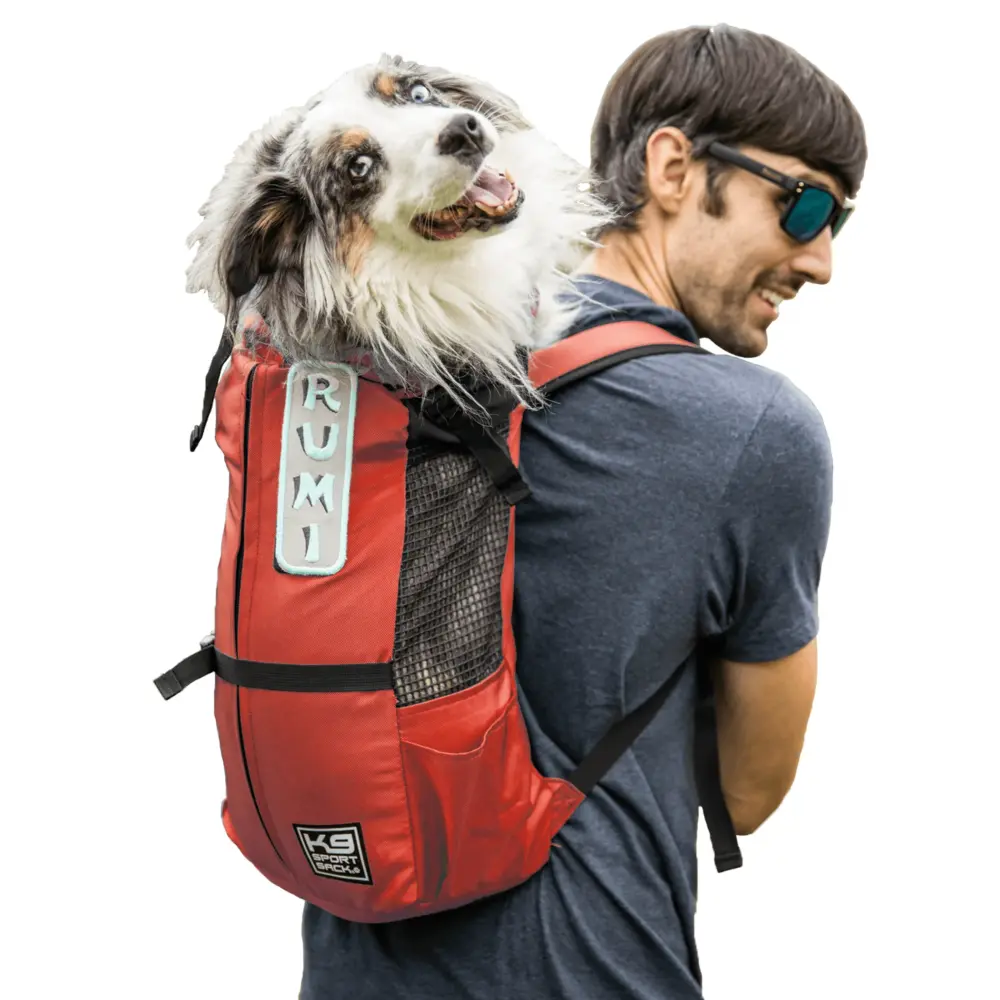
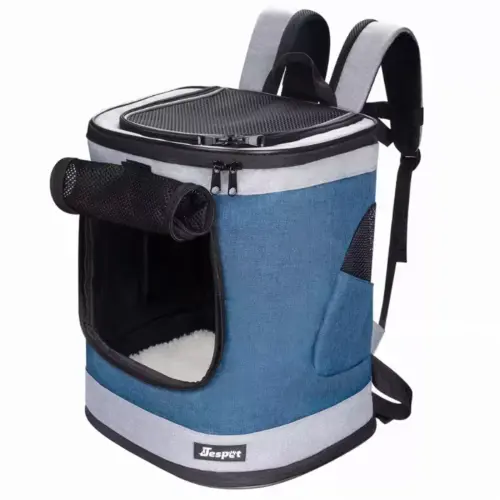
Soft Dog Backpack Carrier, Choose color
$65.95
Why it fits: Thirteen by twelve by seventeen inches inside, with mesh on the door and sides, roomy enough for a small dog to stand up and turn around.
-
Armarkat
Soft-Sided Pet Carrier, View product
$65.95
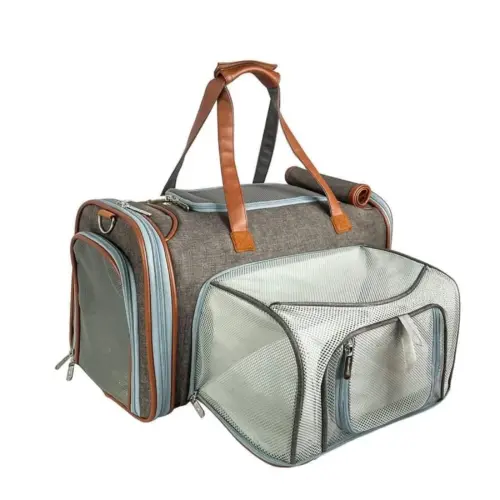
Why it fits: Three zip openings and an expandable canopy, with a removable lounge pad so you can check the internal height with the bedding in place.

Checking the fit at home
- Put the carrier on the floor with the door open and the pad inside, and leave it for a day before testing anything.
- Feed a meal beside it, then inside it, so the first entry is voluntary rather than forced.
- Once the pet goes in willingly, watch them stand, turn and lie down with the pad in place.
- Close the door for thirty seconds while you stay beside the bag, then open it and reward.
- Lift the bag a few inches with the pet inside and watch the base; it should stay flat, not sag.
- Carry it around the house for a minute and check the shoulder strap and handle attachment points.
- Only then use it for a real journey, starting with a short one that does not end at the vet.
If your pet will not go in at all, the carrier is not the problem yet. Getting a cat used to a carrier covers the training, and for dogs choosing a dog carrier backpack covers the different sizing rules for a backpack.
Common questions
Should I buy a bigger carrier for a growing puppy or kitten?
Buy for the size they are now or slightly larger, and expect to replace it. A carrier that is far too big is unstable and offers nothing to brace against, which makes early journeys worse rather than better.
Can I use a carrier that is slightly too small for a short trip?
If the pet cannot stand, turn and lie down, no. A ten-minute trip in a bag that forces an unnatural position teaches a pet that carriers are unpleasant, which is a problem you will be paying for at every vet visit afterwards.
Does the pad count against the internal height?
Yes. Measure with the bedding in, because a thick pad can take an inch or more off the usable height and that inch is often the difference between a pet standing comfortably and ducking.
Related guides
-
Guide
Expandable Pet Carriers Explained: When the Extra Room Is Worth It
Expandable carriers add a zip-out side panel so a cat or small dog can stretch. This explains the two states and when to use each, why the feature is worth little in an aircraft footwell, how stability changes when the sides are open, and who should skip it.
-
Comparison
Framed vs Unframed Pet Carrier Backpacks
A frame changes where the weight sits, not how much there is. This comparison covers shoulder load versus hip load, when a simple pack is genuinely enough, and the dog size at which the question answers itself.
-
Buying guide
How to Choose a Dog Carrier Backpack
Carrier backpacks are sized by back length rather than weight, and the right one depends on how long you intend to carry. This guide covers measuring, frames, ventilation and the fit on you rather than only on the dog.