
How to Get a Cat Used to a Carrier, So Vet Day Starts Calmly
To get a cat used to a carrier, change what it predicts: a nap and a meal instead of a car ride and a vet visit. Leave it open as a bed, put treats and meals inside, then build up over one to three weeks of five-minute sessions to a closed door, a carry around the house and a drive around the block. On vet day, lower a reluctant cat in through the top instead of pushing it through the front.
Short answer: make the carrier part of the furniture, then practice in tiny steps
Two rules do most of the work: the carrier stays out where your cat spends time, and every step is small enough that your cat stays relaxed. End each session while your cat is still calm, move on after two or three calm sessions in a row, and go back a step at the first flattened ear or dash for the exit.
You need very little: a carrier that opens from the top, so you can lower your cat in rather than push; bedding that smells of home, plus an absorbent pad on travel days; small treats and a wand toy; a light towel to cover the carrier; and five minutes, once or twice a day.
Why cats learn to hate the carrier
For most cats, the carrier appears a few times a year: it comes out of storage smelling of dust, someone chases the cat into it, the car sways and the trip ends at a clinic full of strange smells and handling. With no pleasant trips to balance those visits, hiding is a learned prediction, not stubbornness, and it can change.
If your cat urinated or vomited in the carrier last time, wash it thoroughly (an enzyme cleaner suits fabric); traces you can’t smell may still bother your cat. If your cat hates the carrier you own, a new style, such as soft-sided in place of hard plastic, can be a fresh start; use the old one for any trip that comes up mid-training.
Set it up as a bed: where it goes and what goes inside
Open the carrier fully and set it on the floor beside a favorite napping spot or in a quiet corner, away from the litter box and busy walkways. Roll back and secure any zip flap so it can’t fall shut; with a hard carrier, remove the door or the top half for the first few days.
Inside, lay the carrier’s pad topped with a towel your cat has slept on. Familiar smells help a cat accept a new resting spot, which is why our guide to choosing a cat bed your cat will actually use suggests the same trick.
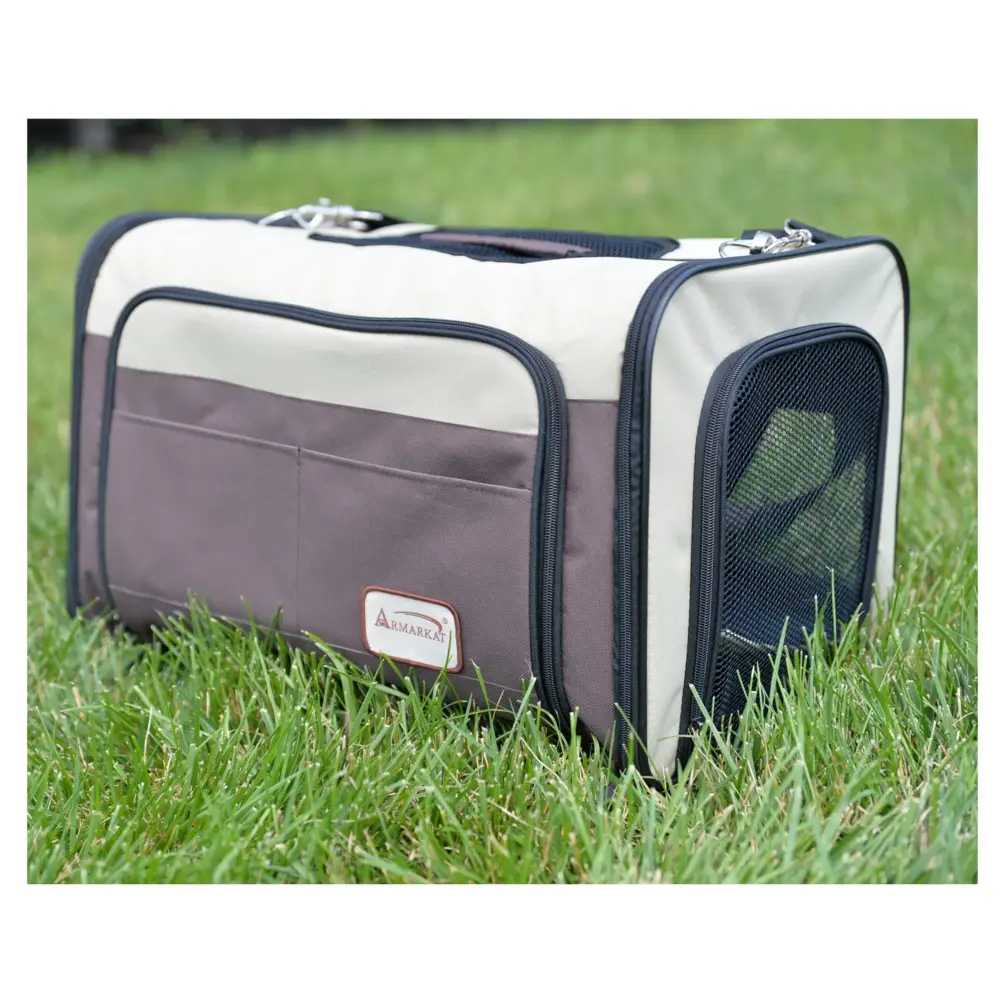
The Armarkat soft-sided carrier we stock has three zip openings, at the top and on either side, mesh panels for airflow and a view out, and a lounge pad inside with a pocket for a toy or treats. It folds flat for storage, but leave it set up while you train: a carrier that disappears and reappears starts predicting trips again.
-
Armarkat
Soft-Sided Pet Carrier
$65.95

How to get a cat used to a carrier: a step-by-step plan
Run cat carrier training sessions when your cat is hungry or playful, such as before a meal. The meals-first, door-last order follows the ASPCA’s advice on teaching a cat to ride in a carrier.
- Treats around it. Drop treats beside the carrier, then at the opening, then just inside.
- Meals inside. Set the food bowl by the opening, then a little farther in every few meals, until your cat eats with all four paws inside.
- Play through it. Draw a wand toy in and out of the openings.
- Get past the zipper noise. While your cat eats nearby, zip and unzip an empty opening a few inches at a time until your cat ignores the sound.
- Close it briefly. While your cat eats inside, close it for a second or two, then open it. Build to a minute, then five, then 10 or 15 calm minutes with you beside it. Always let your cat walk out; never reach in and pull.
Signs you moved too fast:
- Ears flattened or turned sideways, or wide pupils.
- A low crouch, or a tucked or lashing tail.
- Scrabbling at the mesh, hissing or growling.
- Panting or drooling.
Open the carrier, let your cat leave and go back a step next time. Cats rarely pant, so call your veterinarian if panting or drooling doesn’t settle quickly once your cat is somewhere cool and quiet.
Practice trips: lifting, carrying and a short drive
Being lifted is where many cats who happily sit in a carrier fall apart, so give it its own stage. End every practice at home with the carrier open and a treat inside.
- Lift the closed carrier an inch, set it down and reward, until it is boring.
- Carry it across the room, held level against your body with an arm underneath, not swung by the handle.
- Walk a lap of the house, then to the front door.
- Sit in the car with it for a minute, engine off, with the car at a comfortable temperature.
- With the car outdoors, never in a closed garage, start the engine, wait a minute, then go back inside.
- Drive around the block and come straight home.
VCA Animal Hospitals’ article on crate training and travel for cats suggests at least 10 pleasant car trips for every one that might end somewhere scary.
Secure the carrier so it can’t slide, keep it off the front seat and never leave your cat alone in a parked car. A carrier is not a crash restraint; our guide to traveling with a cat in the car covers placement and longer drives.
Vet day: getting a reluctant cat in through the top
If training went well, drop a treat in, let your cat walk in and zip it closed. If not, here is how to get a cat in a carrier for the vet without a chase.
Before the carrier comes out
- If the carrier was in storage, set it up as a bed several days before the visit.
- An hour or so before you leave, and before keys or bags come out, shut your cat in a small room without deep hiding spots, such as a bathroom, with the carrier inside.
- Unzip the top before you go in, and move slowly and quietly.
How to get a cat into a carrier through the top
- Set the carrier on the floor, top unzipped and side openings closed.
- Pick your cat up with one hand under the chest and the other under the hindquarters.
- Lower your cat in rear end first, and let go once all four feet are on the pad.
- Zip the top closed in one smooth pull, keeping fur and paws clear.
- Drape a light towel over part of the carrier, leaving some mesh uncovered, and offer a treat.
If your cat braces its legs against the edges, don’t push; wrap your cat loosely in a familiar towel and lower the bundle in. With a hard carrier that has a removable top, lift the top off, settle your cat in the bottom half and replace the lid.
At the clinic, set the carrier on a chair or your lap rather than the floor. At home, open it, leave a treat inside and let it go back to being a bed. If another cat hisses at the returning one, which may smell of the clinic, keep them apart for a while and reintroduce them gradually.
Getting a cat used to a backpack: the same steps, plus wearing it
A backpack adds one stage to the same plan: wearing it. It sways when you turn and carries your cat at shoulder height, far more motion than a carrier in your arms.
- Open on the floor, with treats, meals, play and a worn T-shirt on the pad.
- Zipped on the floor for several calm minutes, with you beside it.
- Lifted to your chest while you kneel, then held while you stand.
- Worn indoors for a few seconds, building to slow laps of the house.
- Outside, briefly: a minute or two on a quiet, shaded porch, then back in for a treat.
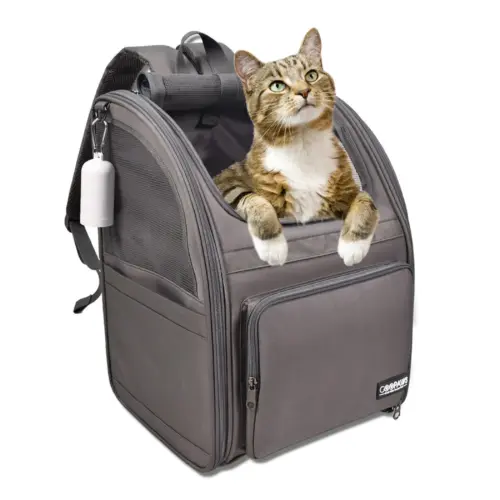
The GOOPAWS carrier backpack has large top and side openings, a fleece-lined pad and an inside safety strap, and takes cats and small dogs up to 25 lb. Clip the strap to a harness, never a collar, once your cat wears one calmly; see how to harness train a cat. Keep outings short, skip hot days, and read whether cat backpacks are safe for time limits and which cats suit one.
-
GOOPAWS
Cat and Small-Dog Carrier Backpack
$51.95
Both carriers are in our travel and car accessories; for more on life with a cat, see our cat care guides.
None of this works in a carrier that is the wrong size. How to measure a pet for a carrier covers the three measurements and the stand, turn and lie down test.
Cat carrier FAQ
How long does it take for a cat to get used to a carrier?
Plan on one to three weeks of short daily sessions, from treats beside the carrier to a calm drive. A cat that already fears carriers can take several weeks or longer, while kittens often learn faster. With a new kitten, start on day one; our new kitten checklist covers the rest.
Should I cover my cat’s carrier with a blanket?
Usually yes, while you travel: many cats settle better when they can’t see everything around them, though a few prefer to look out. Cover the top and part of the sides, leave some mesh open and cover less on warm days.
Should I leave the cat carrier out all the time?
Yes, if you have room. A carrier that lives in the room stops predicting trips, and many cats start napping in it.
How do I get my cat in the carrier if it hides?
Don’t drag your cat out of hiding, which confirms the fear and risks a scratch or bite. In training, restart with treats at whatever distance your cat stays relaxed. On vet day, if your cat is already out of reach, ask the clinic about moving the appointment, and ask your veterinarian for help if the fear seems extreme.
Related guides
-
How-to
How to Clean a Cat Carrier After an Accident and Get the Smell Out
A cat that pees, vomits or soils the carrier needs a cleanup that removes the smell, not just the stain. Taking the carrier apart, enzyme cleaner for urine, washing soft-sided, backpack and hard carriers by the label, drying it fully, and lining it for the next trip.
-
Guide
When to Call the Vet About a Cat: Signs That Cannot Wait
Cats hide illness, so by the time something looks obvious it is often urgent. This guide sorts common signs by urgency, covers the feline emergencies people miss, and explains how to get a reluctant cat to the clinic.
-
Guide
When to Call the Vet About a Dog: Emergency and Same-Day Signs
Sorting a worrying symptom into emergency, same-day or monitor is the decision every owner faces at ten at night. This guide groups the common ones, explains what to have ready when you call, and does not attempt to diagnose anything.
