Cat Care How-to
How to Clean a Cat Carrier After an Accident and Get the Smell Out
Short answer
As soon as you can, remove the pad and bedding, lift off any solids, and treat urine with an enzyme cleaner made for pet urine, not ammonia, vinegar or scented sprays. Wash fabric as its care tag allows and plastic with unscented dish soap, then let everything dry fully before adding bedding that smells of home.

Taking the carrier apart
What you need: disposable gloves, paper towels, an enzyme cleaner made for pet urine, unscented dish soap, fragrance-free laundry detergent, a soft brush, an old toothbrush and a few old towels.
The sooner you start, the less time urine has to work into the padding. Put on gloves, work in a laundry sink, a bathtub or the yard rather than the kitchen sink, and separate everything that comes apart.
- Bedding and towels. Shake solids into the trash, rinse in cool water and machine wash as their labels allow, with fragrance-free detergent. For urine-soaked washables, Humane World for Animals suggests adding baking soda to the detergent, then a second wash with an enzymatic cleaner if the soiling still shows or smells.
- The pad or liner. If it lifts out, clean it separately by its own tag; if it’s sewn in, it goes with the shell.
- A floor board. Some soft carriers have a stiffening panel under the pad. Plastic washes; a cardboard panel that urine soaked into is hard to save, so replace it if the maker sells one.
- Pockets, straps and hair. Empty the pockets, unclip any shoulder strap, and shake out or vacuum loose hair and litter so you aren’t scrubbing it around wet fabric.
The care tag decides the washing method. Neither cat carrier we stock lists care instructions in its listing, so check the tag, the packaging or the maker’s site rather than guessing; with no guidance at all, hand washing in cool water is the gentlest choice.
Removing the smell of urine, vomit and stool
Fear and motion make a messy combination: VCA Animal Hospitals lists urination and defecation among the physical responses to fear, and some cats get carsick. Treat the soiled spot before the all-over wash, so the cleaner reaches the source first. A carrier can look spotless and still smell of urine to your cat, so the aim is to break the odor down, not cover it.
Urine: blot, rinse, then an enzyme cleaner
- Blot up all you can with paper towels, pressing down rather than rubbing.
- Rinse the spot with cool water and blot again. Humane World for Animals warns that heat, such as a steam cleaner, can set urine stains and odor in synthetic fibers, so keep hot water and steam away.
- Apply an enzyme cleaner made for pet urine, after testing a hidden spot. Use enough to reach everywhere the urine went, padding and seams included, and leave it on as long as the label says.
- Let it air dry completely. The ASPCA notes that most enzyme cleaners can cause mild stomach upset, so keep your cat away until it’s dry.
- Sniff it once dry, nose against the fabric. If you still smell urine, treat it again before you wash the whole carrier.
What to leave out:
- Ammonia-based cleaners. Urine contains ammonia, and the ASPCA warns that cleaning with ammonia could draw a cat back to urinate in the same spot.
- Vinegar and other strong-smelling chemicals, which Humane World for Animals advises against because strong odors can encourage a pet to mark the spot again.
- Scented sprays, fabric fresheners and perfumed detergent. They mask the smell for you, not your cat, and the ASPCA notes a cat can develop an aversion to a scent.
Urine on a rug or the sofa too? The same enzyme method works there; see our checklist for keeping a house clean with cats.
Vomit
Scrape up solids with a paper towel, rinse with cool water, then wash as below; an enzyme cleaner made for pet messes lifts any lingering smell. If your cat vomits on most car trips, ask your veterinarian about motion sickness. VCA’s advice on road trips with a cat is to travel on an empty stomach to lower the risk of nausea, but ask your veterinarian first about a kitten or a cat with a medical condition or medication given with food.
Stool
Lift solids into a bag for the trash, then use an enzyme cleaner on what’s left and wash as below. Call your veterinarian if diarrhea carries on after the trip, or if you see blood in stool, urine or vomit.
A strong smell with no mess you can see
If the carrier reeks but the pad looks clean, fear may be the reason: the same VCA list of fear responses includes the release of strong-smelling secretions from the anal sacs. Wash the bedding and clean the shell as you would after urine. If the smell keeps coming from your cat at home, or your cat scoots or keeps licking under the tail, ask your veterinarian.
Safety note
Sometimes urine in the carrier isn’t about the trip. Straining in the litter box, passing only drops, crying or restlessness while trying to urinate, or blood in the urine can be signs of a urinary problem, including a blockage, which the ASPCA calls a life-threatening emergency; male cats are more at risk. Call your veterinarian or an emergency clinic right away if you see any of these.
Cleaning soft-sided carriers and backpacks
International Cat Care points out that fabric carriers can be difficult to clean if a cat soils on a journey: urine soaks past the surface into padding and seams. Once the soiled spot is treated, wash the whole carrier.
- Wash it the way the tag allows. Machine washable: zippers closed, a gentle cool cycle, fragrance-free detergent and no fabric softener. Hand wash, or no tag: a tub of cool water with a little of that detergent. Spot clean only: sponge the fabric without soaking the padding.
- Work a soft brush along the seams and into the corners, going gently over mesh.
- Rinse until no suds appear when you squeeze the fabric, since leftover detergent holds dirt and scent.
- Roll the carrier in old towels to press the water out. Don’t wring padded panels.
- Dry it with every zipper open, as in the drying section below.
Backpack carriers: three extra checks
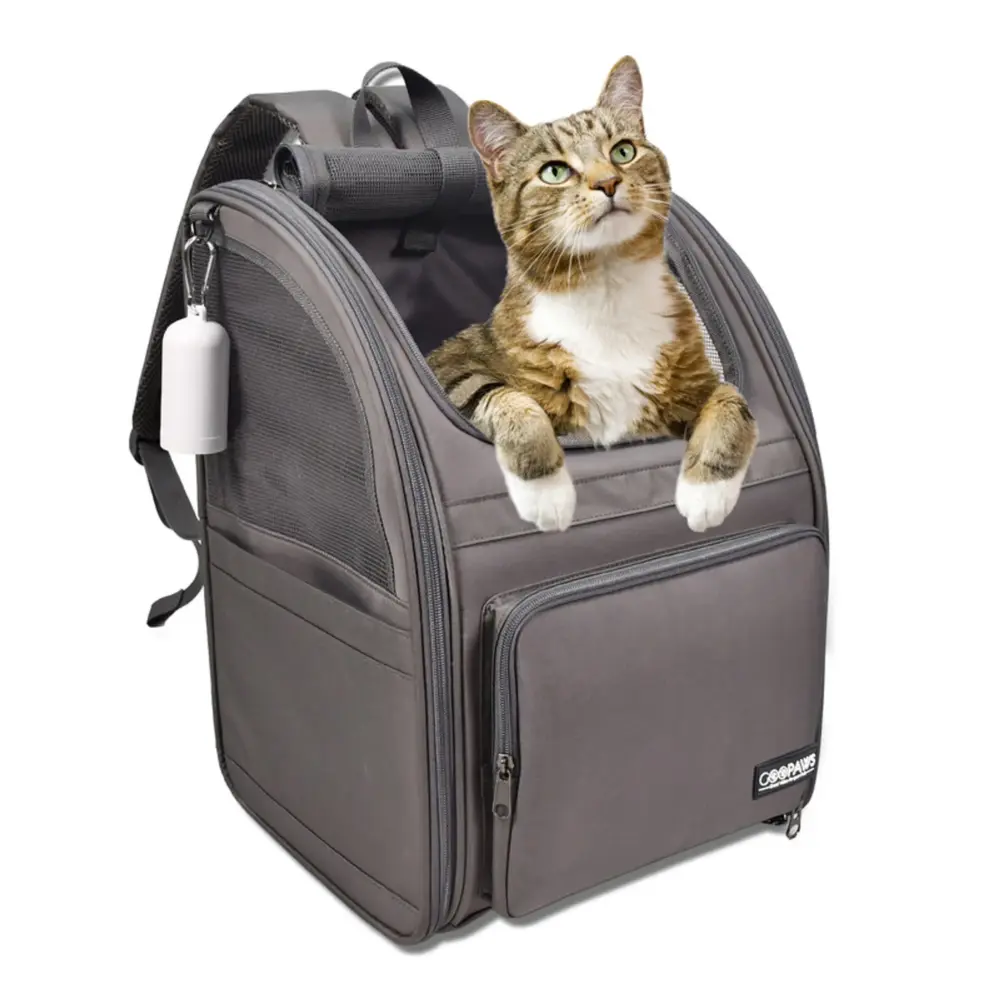
A backpack carrier washes like any soft carrier, with three extra checks. Take off add-ons first, such as the poop bag dispenser that comes with the GOOPAWS backpack we stock. Give the shoulder straps and back panel extra drying time, since the padding there is thick. And check the inside safety strap for fraying and make sure it still fastens securely; stop using the backpack if it doesn’t. If you’re unsure a backpack suits your cat at all, see our guide to whether cat backpacks are safe.
Cleaning hard carriers
VCA notes that hard carriers are easier to clean if a cat gets carsick or needs to go on the way. Plastic doesn’t soak up urine, but vent slots, door bars and the groove where the halves meet still hold it.
- Take it apart. Remove the door and separate the halves, keeping screws and clips in a cup.
- Rinse off the mess with a garden hose or in the tub.
- Scrub with warm water and unscented dish soap, using an old toothbrush in the vent slots, along the door bars and around the rim.
- Use an enzyme cleaner on any urine, especially along seams and in scratches on the floor, following its label. Rinse, then air dry with the halves apart.
- Reassemble and test it: every screw tight, every clip latched, the door closing firmly. Replace a cracked shell or a door that pops open under pressure.
Safety note
Soap and water is enough for most accidents. To disinfect a hard carrier, say after diarrhea or before it passes to another cat, the ASPCA’s poison control team says diluted bleach can be used on kennels if it is rinsed off thoroughly and the bleach smell is gone before your pet goes back in. Use it on plastic only, at the dilution on the bottle, and never combine it with ammonia, an enzyme cleaner or any other product; the CDC warns never to mix bleach with other cleaners.
Drying, airing out and putting familiar bedding back
Padding that stays damp soon smells musty, and your cat will notice.
- Open every zipper and flap and stand a soft carrier on its end in an airy spot, by a fan or an open window. Skip the dryer, radiators and hair dryers unless the tag allows heat.
- Squeeze the thickest padding. If it still feels cold against your palm, it isn’t done; a soft carrier often needs overnight or longer.
- Leave a hard carrier in pieces until every part is dry, door included.
Then make it smell like home again. International Cat Care’s advice for vet trips is to line the carrier with bedding your cat normally sleeps on, plus a piece of clothing from your cat’s favorite person, and to wash that bedding after every visit, accident or not, to remove the clinic’s smells. Freshly washed bedding smells of detergent, so let your cat nap on it for a few days before it goes back in.
Don’t put the carrier straight back into storage; leave it open where your cat rests, with a treat or two inside, so its first new smells are good ones.
Tip
Keep two sets of carrier bedding and rotate them through your cat’s bed or favorite chair. One is always clean and already smells of your cat, so no trip starts with a carrier that smells of laundry.
Troubleshooting: when the smell or the reluctance comes back
- It still smells of urine once dry. Repeat the enzyme step, making sure it reaches the padding and seams, and give it the full time on the label.
- It smells of cleaner. Rinse again with plain water and air it another day; a strong chemical smell can put a cat off as surely as urine.
- Your cat won’t go back in. Check that it’s fully dry and free of cleaner smell, add bedding your cat has slept on, and go back to the early steps of getting a cat used to a carrier.
Before the next trip
Line the carrier in layers: an absorbent puppy or potty pad flat on the floor, as VCA suggests, then a thin towel or blanket that smells of home. In the car, International Cat Care suggests setting the carrier on a towel or padding to keep it level and soak up any accident. Then keep a small cleanup kit in the car, restocked as soon as you get home:
- Two or three spare absorbent pads.
- A spare towel or blanket your cat has slept on, to replace soiled bedding on the way.
- Zip-top bags, so the soiled pad and its smell stay sealed until you get home.
- Paper towels and disposable gloves, then soap and water for your hands at the first chance.
If it happens on the road
- Wait until you’re parked somewhere safe, with every window and door closed. Never open the carrier while the car is moving, however upset your cat sounds.
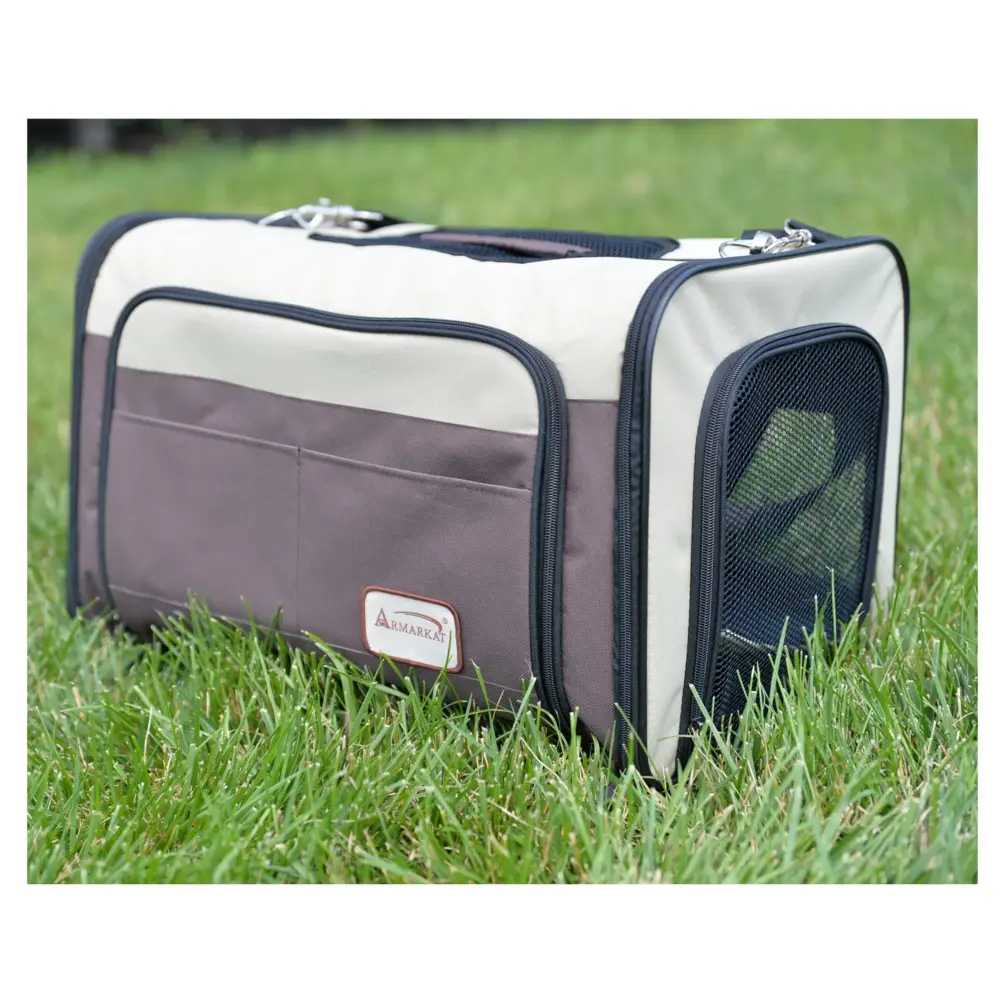
- Use the smallest opening that fits your hands, such as a side zip on the Armarkat soft-sided carrier.
- Roll up the soiled pad or towel with the mess inside, seal it in a bag and blot the rest. The real cleaning can wait.
- Lay in a fresh pad and the spare bedding, then close the carrier before you drive on.
- Check your cat. Wipe a damp paw or small soiled patch with a moistened paper towel; for more, see how to clean a cat without a bath once you’re home.
Never leave your cat alone in the parked car; our guide to traveling with a cat in the car covers rest stops and longer drives, and if you were headed to the clinic, mention the accident there and see making vet visits less stressful for your cat. Never scold a cat for an accident; it only adds to the fear that often causes them.
When it’s time for a new carrier
Replace a carrier when the smell survives two full rounds of cleaning, or when a zipper won’t stay shut, the mesh is torn or a hard shell is cracked, since those are escape risks. If your cat often soils on trips, bear in mind that International Cat Care rates solid plastic carriers as easy to clean and fabric ones as harder. Both cat carriers in our travel and car accessories are soft-sided; we don’t stock a hard plastic one. If a soft carrier suits your cat, these are the two we carry:
-
Armarkat
Soft-Sided Pet Carrier, View product
$65.95
Why it fits: Three zip openings, at the top and on both sides, let you swap a soiled pad at a stop without opening the whole carrier. Check the maker's size guidance against your cat.
-
GOOPAWS
Cat and Small-Dog Carrier Backpack
$51.95
Why it fits: Top and side openings let you check on your cat, and the poop bag dispenser it comes with keeps a bag handy for lifting out solids. Holds pets up to 25 lb; check that your cat fits.
Currently out of stock

Related guides
-
Guide
How to Get a Cat Used to a Carrier, So Vet Day Starts Calmly
Turn the carrier from a vet-day warning into a bed: where to put it, a step-by-step training plan, practice lifts and short drives, loading a reluctant cat through the top on vet day, and the same steps for a backpack.
-
How-to
Taking a Dog on Public Transit: Rules, Carriers and Practice Rides
How to get a small dog onto the bus or subway calmly: what to look for in your transit agency’s pet policy, choosing a carrier by your dog’s size and your own back, carrier training at home, short off-peak practice rides, stairs, crowds and heat, and how service animal rules differ.
-
Guide
When to Call the Vet About a Cat: Signs That Cannot Wait
Cats hide illness, so by the time something looks obvious it is often urgent. This guide sorts common signs by urgency, covers the feline emergencies people miss, and explains how to get a reluctant cat to the clinic.